
AI Doctors: Better Than Humans or a Risky Bet?
Debating the Role of Machines in Healthcare

Introduction
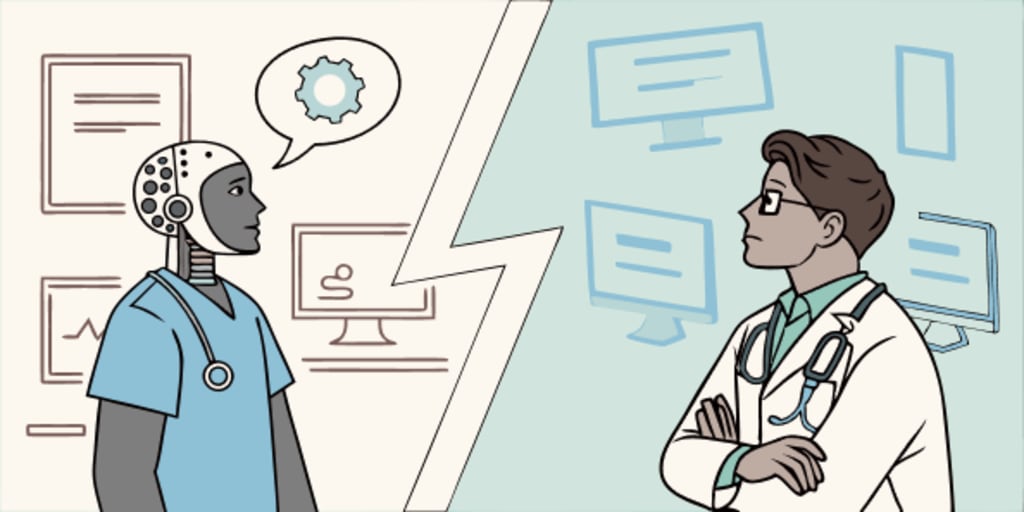
The integration of artificial intelligence (AI) into healthcare has sparked intense debate about its potential to replace human doctors. While AI excels in diagnostic accuracy and efficiency, it lacks the emotional intelligence and nuanced judgment that human physicians bring to patient care. This article explores the strengths and limitations of AI in healthcare, arguing that the future lies in collaboration rather than replacement.
AI's Strengths in Diagnostic Accuracy
AI has demonstrated remarkable capabilities in medical diagnostics, particularly in fields like radiology and pathology. For instance, AI algorithms have outperformed human radiologists in detecting diseases such as skin cancer and breast cancer, achieving higher accuracy rates. In one study, a Google AI algorithm trained on 42,000 patient scans showed a 5% higher detection rate for lung cancer compared to human radiologists. This ability to analyze vast datasets and identify subtle patterns makes AI an invaluable tool for early and accurate diagnosis, potentially improving patient outcomes and reducing healthcare costs.
The Human Element in Healthcare
Despite AI's diagnostic prowess, it cannot replace the emotional support and empathy that human doctors provide. Physicians build trust with patients, understand their unique circumstances, and offer reassurance during difficult medical decisions. The human touch in medicine is irreplaceable, as doctors consider not only medical data but also patient preferences, cultural backgrounds, and emotional well-being when making treatment decisions. This holistic approach ensures that care is personalized and compassionate, something AI cannot fully replicate.
Limitations of AI in Complex Decision-Making
AI systems struggle with complex clinical reasoning tasks that require contextual understanding and adaptability. For example, a recent study found that AI tools like ChatGPT achieved only 50.4% accuracy in handling complex obstetric and gynecological scenarios, highlighting their limitations in nuanced decision-making. Additionally, AI lacks the ability to navigate unexpected situations or ethical dilemmas that often arise in patient care.
Collaboration Between AI and Physicians
The optimal future of healthcare lies in collaboration between AI and human physicians. AI can handle routine tasks and provide data-driven insights, allowing doctors to focus on complex cases and patient relationships. For instance, AI can assist in analyzing medical images, predicting patient outcomes, and generating treatment recommendations, while physicians use their expertise to interpret and validate these insights. This synergy enhances diagnostic accuracy and ensures that patients receive both technically advanced and emotionally supportive care.
Conclusion
AI has the potential to revolutionize healthcare by improving diagnostic accuracy and efficiency, but it cannot fully replace the irreplaceable human element of medicine. The future of healthcare lies in harnessing AI's strengths while preserving the empathy, judgment, and holistic care provided by human doctors. By working together, AI and physicians can create a healthcare system that is truly superior to either alone, delivering better outcomes for patients.
Recommended books
Genesis: Artificial Intelligence, Hope, and the Human Spirit
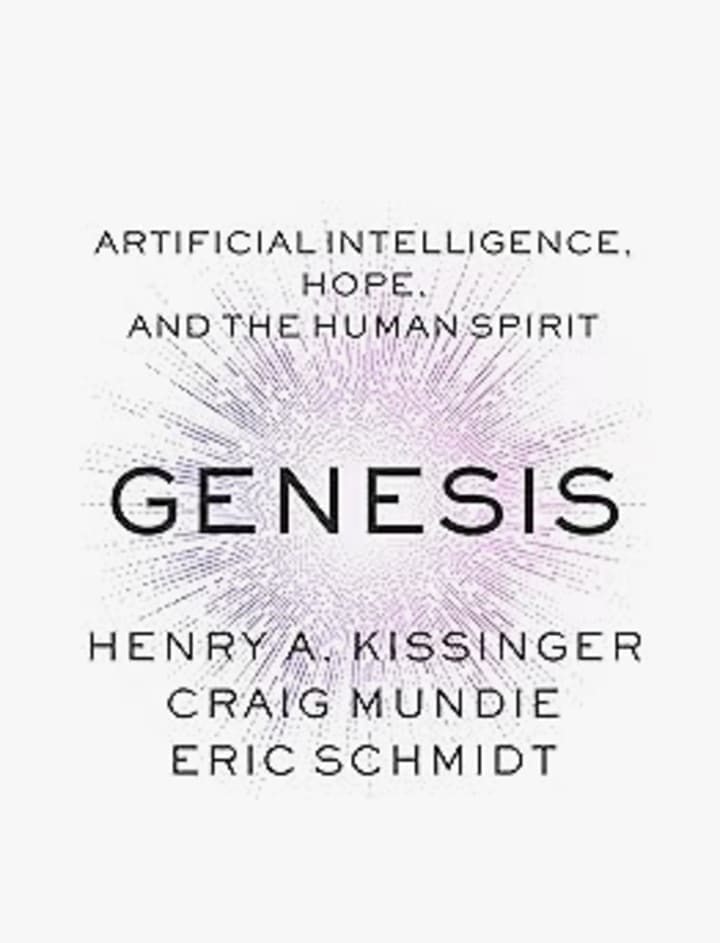
As Artificial Intelligence (AI) becomes more dynamic and ubiquitous, it is dramatically empowering people in all walks of life while also giving rise to urgent questions about the future of humanity—a historic challenge whose contours and consequences are revealed by three eminent thinkers in Genesis.
About the Author: With over a decade of experience as an internet product architect, I’ve spent my career crafting innovative application solutions that bridge technology and real-world needs. Now, as a passionate advocate for artificial intelligence, I focus on exploring its transformative applications. I’m committed to pushing the boundaries of AI to empower lives and shape a smarter future. Join me on this exciting journey as we uncover the endless possibilities of intelligent technology.
About the Creator
roc chiang
I'm a tech enthusiast and entrepreneur based in Vancouver. I share original articles on technology, business and other related topics on social media to showcase my passion and insights.
Editor-in-Chief:fengtou.ca
Keep reading
More stories from roc chiang and writers in Education and other communities.
AI in Education: Innovation or Overhype?
Introduction The integration of artificial intelligence (AI) into education has been hailed as a transformative force, promising to revolutionize teaching and learning. However, as with any emerging technology, it is crucial to critically evaluate whether the claims of innovation match the reality on the ground. This article explores the potential overestimation of AI's impact in education, examining both its purported benefits and underlying limitations.
By roc chiang9 months ago in Education
Can You Really Earn Money With Transcription? The Real Income Reality
The short answer is yes—you can earn money with transcription. But the more honest, useful answer is this: transcription only becomes worthwhile when you understand how the income actually works, not how it’s often presented online.
By Mahesh Kumar6 days ago in Education
A brief history of chess
The attacking infantry advances steadily, their elephants already having broken the defensive line. The king tries to retreat, but enemy cavalry flanks him from the rear. Escape is impossible. But this isn’t a real war– nor is it just a game. Over the roughly one-and-a-half millennia of its existence, chess has been known as a tool of military strategy, a metaphor for human affairs, and a benchmark of genius. While our earliest records of chess are in the 7th century, legend tells that the game’s origins lie a century earlier.
By Munesh Yadav2 days ago in Education


Comments
There are no comments for this story
Be the first to respond and start the conversation.