
AI as Your Narrative Co-Pilot: Revolutionizing the Story Writing Process
Exploring How Artificial Intelligence Tools Can Empower Authors, From Concept to Completion.


The solitary journey of writing a story, while deeply rewarding, is often fraught with challenges. Staring at a blank page, wrestling with plot inconsistencies, or simply finding fresh inspiration can be daunting hurdles for even seasoned authors. Fortunately, the rapid advancements in Artificial Intelligence are opening new avenues for creative expression, offering powerful tools that can act as collaborators and catalysts throughout the narrative development lifecycle. This article explores the practical ways AI can be integrated into your writing workflow, enhancing creativity and streamlining the technical aspects of crafting a compelling story.
Leveraging AI Across the Story Writing Spectrum:
AI's utility in story writing extends far beyond simple text generation. Modern AI models, particularly large language models (LLMs), are trained on vast datasets of text, enabling them to understand context, generate coherent narratives, and even mimic different writing styles. Their application can be systematically broken down by the stages of writing:
Ideation and Brainstorming:
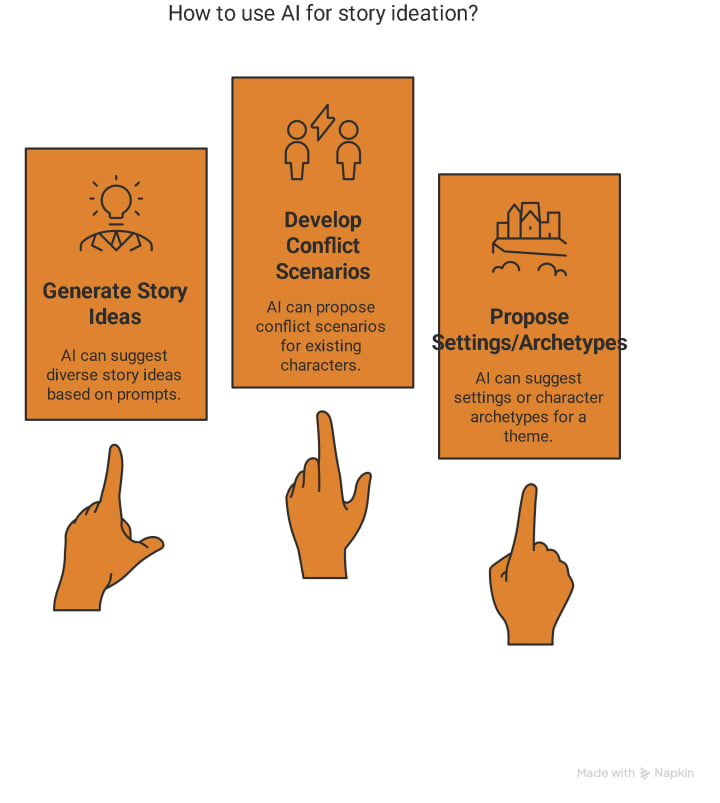
- Mechanism: AI can process prompts based on genre, themes, characters, or specific plot elements and generate a multitude of diverse story ideas. It can help explore "what if" scenarios or suggest unexpected connections between concepts.
- Application: If you have a character but no plot, AI can suggest conflict scenarios. If you have a theme, it can propose settings or character archetypes that fit.
- Tool Example: Generative AI platforms like ChatGPT, Google Gemini, or tools like Sudowrite are excellent for bouncing ideas around and overcoming initial creative blocks.
Outlining and Structure:
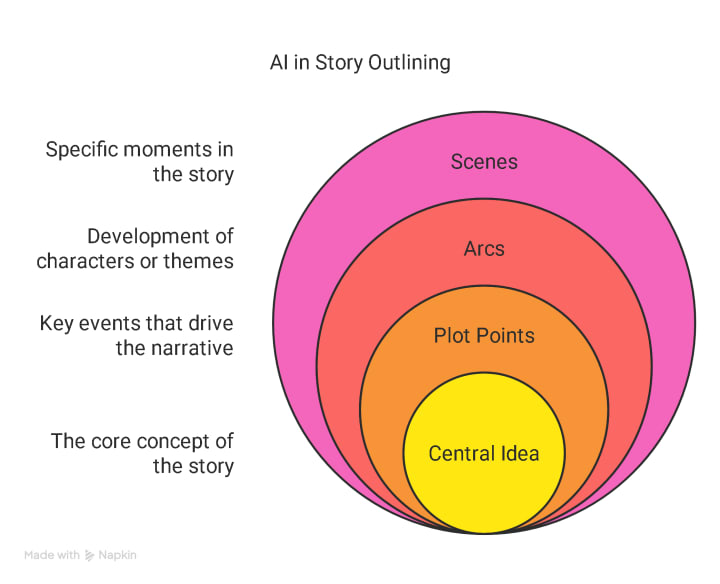
- Mechanism: AI can analyze successful story structures (e.g., hero's journey, three-act structure) and help break down a central idea into key plot points, arcs, and scenes.
- Application: Input a basic premise, and AI can suggest potential rising actions, climaxes, and resolutions. It can help ensure pacing feels right by outlining major events at logical intervals.
- Tool Example: While not always dedicated outlining tools, the conversational nature of LLMs (like ChatGPT or Gemini) allows you to interactively build and refine an outline by asking for suggestions for the next plot point or scene.
Character Development:
- Mechanism: AI can help flesh out characters by generating backstories, motivations, personality traits, and dialogue examples based on initial descriptions.
- Application: Provide basic details about a character, and AI can generate questions to consider about their past, fears, desires, or how they might react in a specific situation, adding depth and realism.
- Tool Example: Character generators (sometimes features within larger writing AI suites) or general LLMs can provide detailed character profiles or dialogue prompts.

World-Building:
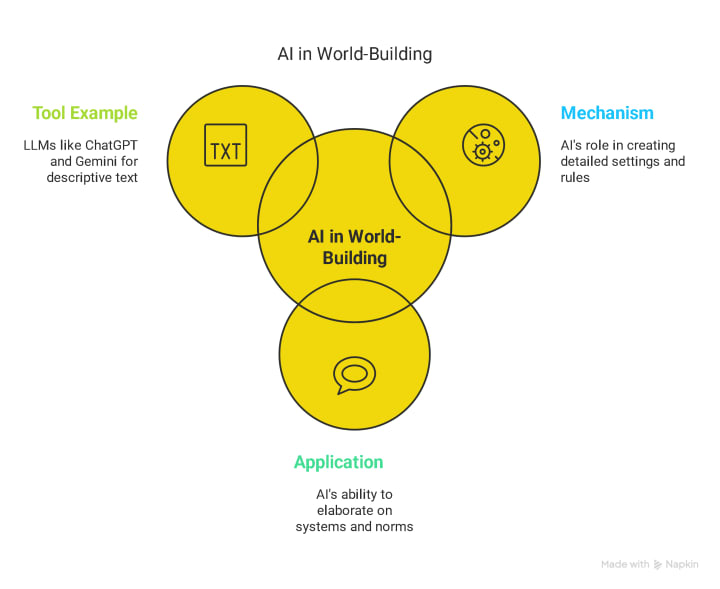
- Mechanism: For fantasy, sci-fi, or historical fiction, AI can assist in creating detailed settings, cultures, histories, and rules based on provided parameters.
- Application: Describe a magical system or a futuristic society, and AI can help elaborate on its implications, rules, and potential inconsistencies. It can generate descriptions of locations or cultural norms.
- Tool Example: LLMs (ChatGPT, Gemini) are versatile for this, capable of generating descriptive text and expanding upon conceptual ideas for world elements.
Drafting Assistance:
- Mechanism: AI can generate text based on prompts for specific scenes, dialogue exchanges, or descriptive passages. It can help translate an outline point into narrative prose.
- Application: Stuck on writing a particular scene? Give AI the context and desired outcome, and it can provide a draft or different ways to phrase interactions.
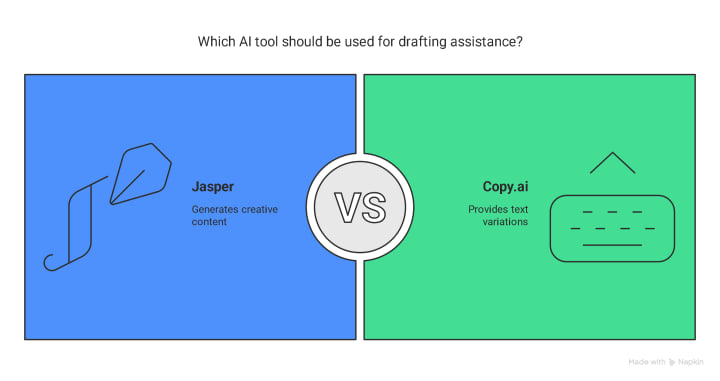
- Tool Example: Tools like Jasper, Copy.ai, Rytr, and Sudowrite are designed with features specifically for generating longer-form creative content or variations of text.
Editing and Refinement:
- Mechanism: AI-powered grammar checkers and style editors can identify errors, suggest improvements in flow, clarity, and conciseness, and even analyze reading level or tone.
- Application: After drafting, run your text through an AI editor to catch mistakes you missed or get suggestions for stronger vocabulary and sentence structure.
- Tool Example: Grammarly and ProWritingAid are leading examples of AI-enhanced editing tools.

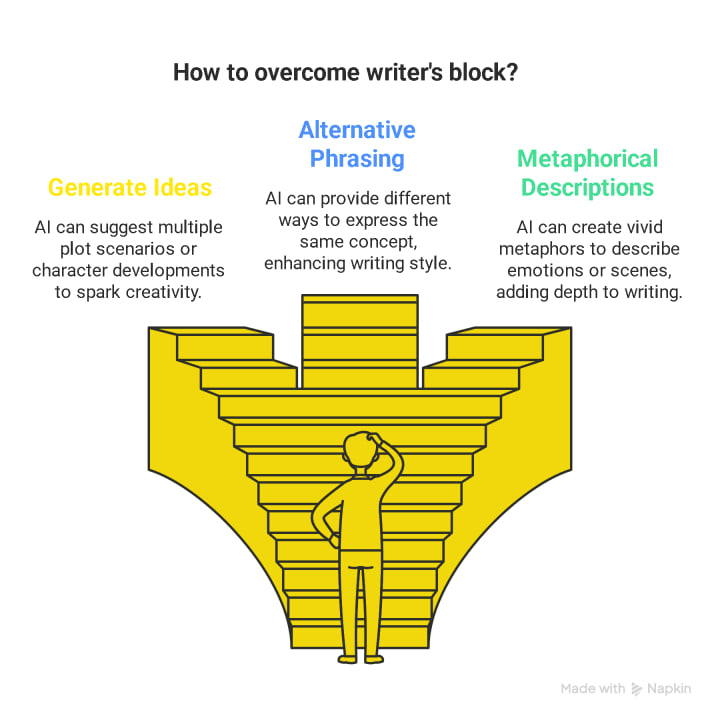
Overcoming Writer's Block:
- Mechanism: By providing a constant source of ideas, alternative phrasing, and generative capabilities, AI acts as a sparring partner to break through creative impasses.
- Application: Feeling stuck? Ask AI to suggest five different ways a scene could unfold, or to describe a character's emotions using different metaphors.
Important Considerations:
While AI is a powerful assistant, it is crucial to view it as a tool to augment human creativity, not replace it. The best results come from a collaborative process where the author provides the core vision, guidance, and critical judgment, while AI handles repetitive tasks, generates variations, or offers unexpected angles. Originality, emotional depth, and true artistic voice remain firmly in the human domain. AI-generated content should always be reviewed, edited, and shaped by the author to ensure it aligns with their vision and maintains a unique style.
Conclusion:
The integration of Artificial Intelligence into the writing process marks a significant evolution for authors. From sparking initial ideas and structuring narratives to developing rich characters and refining prose, AI tools offer unprecedented capabilities to enhance efficiency and unlock creative potential. By embracing AI as a co-pilot, writers can overcome common obstacles, accelerate their workflow, and ultimately focus more energy on the unique human elements that make a story truly compelling. The blank page is a little less intimidating when you have a powerful intelligent assistant ready to brainstorm, draft, and polish alongside you.
About the Creator
AI Lens
Exploring AI’s evolving universe—from tool reviews and comparisons to text-to-image, text-to-video, and the latest breakthroughs. Curated insights to keep you ahead in the age of artificial intelligence.
Smart Golf Strategies to Sharpen Your Skills and Lower Your Score
Golf is a game that rewards patience, technique, and thoughtful decision-making. Before focusing on advanced techniques, every golfer should become comfortable with the basic principles of the game. Understanding how to hold the club properly, position the body, and align with the target lays the groundwork for a solid performance. These fundamentals influence nearly every shot you take on the course. A balanced stance is especially important when starting your swing.
By Daniel Ladner7 days ago in Education
Understanding Thin Film Precision Resistor Arrays in Aerospace and Avionics Systems
In my experience working with aviation electronics and embedded systems, I’ve learned that some of the most unassuming components — like resistors — are actually critical to aircraft safety and performance. Among these, thin film precision resistor arrays are especially important in aerospace applications where accuracy, reliability, and durability are non-negotiable.
By Beckett Dowhan7 days ago in Education
Bomb Scare
It was 2027, and the world never thought it would happen. A missle hit the United States, but it wasn't where they had anticipated. A little town in the northeast was hit by a missile strike, they didn't know why, and they didn't know exactly where it hit, but they did know it was a coastal community, somewhere between Maine and Delaware.
By Gregory Payton5 days ago in Fiction



Comments
There are no comments for this story
Be the first to respond and start the conversation.