
Affiliate marketing for beginners: Step-by-step guide (2024)
Are all affiliates really making easy money? What’s the trick to making an affiliate marketing program work for you?

Every day you hear success stories about affiliate marketers making four and five figures monthly while working from the comfort of their homes.
While some of those stories are likely exaggerated, affiliate marketing is one of the best ways to make money online and generate passive income.
Sure, it’s not “easy money,” but it’s an easy way to make some extra money if you’re willing to put in a little hustle and find an approach that works for you.
Since you’re here, you might be wondering how affiliate marketing works and how you can successfully generate commissions and run a business.
Rest assured, in this affiliate marketing for beginners guide, you’ll get answers to the most common questions that new affiliate marketers ask. Later, we’ll highlight eleven proven affiliate program strategies to achieve success.
Specifically, we’ll look into:
- What is affiliate marketing?
- How does affiliate marketing work?
- Advantages of being an affiliate marketer
- Disadvantages of being an affiliate marketer
- How to get started in affiliate marketing
- How to choose an affiliate marketing niche
- Types of affiliate profiles and platforms
- Where to find and join affiliate programs
- Traffic sources for affiliate marketing websites
- Cost-per-action and commission models
- When and how affiliate marketers get paid
- 11 strategies to help you start and succeed
- Frequently asked questions
What is affiliate marketing?
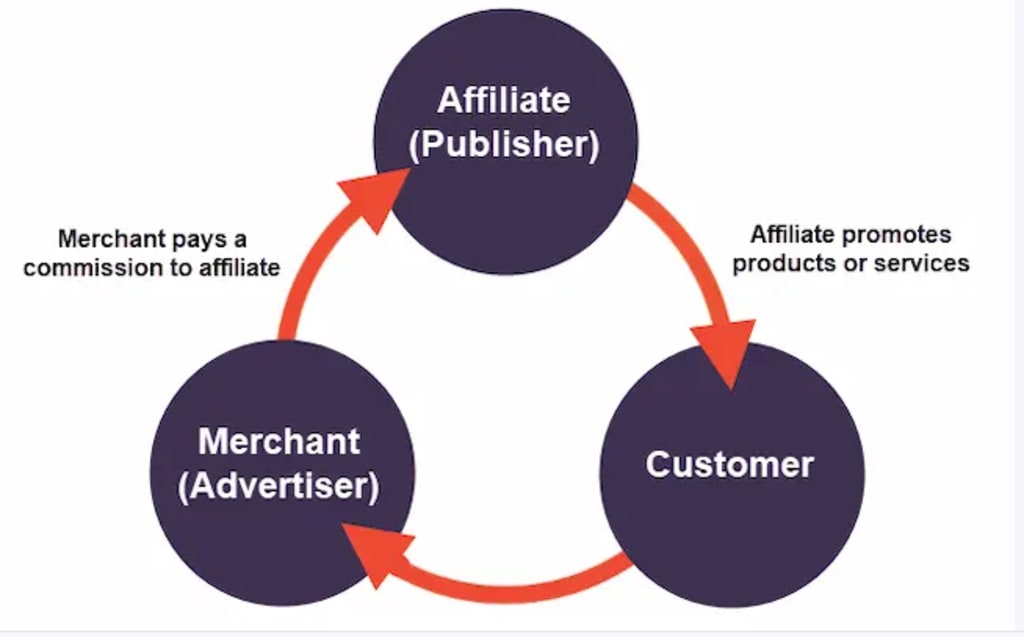
Affiliate marketing is a type of performance-based marketing where a company (a.k.a. advertiser or merchant) pays a third-party (affiliate or publisher) a commission for marketing its products or services. For example, a travel blogger promotes popular hotel websites and earns commissions for bookings on the advertiser’s site.
Affiliates typically include content creators, bloggers, YouTubers, as well as social media and email marketers.
Affiliate marketing is a billion-dollar industry and one marketing strategy merchants use to increase their revenues. Companies like the affiliate marketing model because they only pay for performance via leads and sales.
Case in point: Adidas, Amazon, Apple, eBay, Microsoft, Priceline, Samsung, Shopify, and thousands more have affiliate programs.
GetResponse has two high-paying affiliate programs that offer recurring and one-time payments, which we’ll review later.

How does affiliate marketing work?
- A merchant creates a program and uses in-house or commercial affiliate marketing tracking software to generate links for affiliates, monitor performance, tracks sales, and process payments. The merchant may manage its affiliate program with staff in-house or outsource responsibilities to an agency or network.
- Afiliates join the merchant’s program and market its products with unique links assigned to them. For instance, Jane’s GetResponse affiliate link is getresponse.com/?a=dhz74h1kd.
- Affiliates share and post links on their websites, blogs, YouTube channels, social media profiles, etc.
- Affiliate marketing software tracks clicks, impressions, conversions, sales, and other data for each affiliate. Merchants and affiliates can monitor their performance.
- Commissions are sent to affiliates for sales, leads, or other cost-per-action (CPA) objectives (for example, app installs). Affiliates must abide by the merchant’s program policies to remain in good standing and receive commissions.
Advantages of being an affiliate marketer
- An affiliate marketing business is a low-cost and low-risk venture that takes very little to start and maintain. Bloggers can use content management software (CMS) from WordPress and pay less than $10 monthly for hosting. Social media marketers can publish content on YouTube, Pinterest, Facebook, Twitter, LinkedIn, etc. Email marketers can access freemium plans from various providers, including GetResponse. You can use many marketing and business tools for free or pay a low cost (here’s a list of 40+ free marketing tools for affiliates). Therefore, it’s possible to operate your business for less than $10 to $50 monthly.
- Affiliate marketing doesn’t require you to purchase or store stock. Instead, merchants are responsible for carrying inventory, processing orders, and shipping.
- Merchants handle customer service, so affiliates don’t have to respond to or manage inquiries.
- Affiliate marketing isn’t complicated – it’s primarily about posting affiliate links. That’s it.
- It’s easy to get started. Join a few affiliate programs, create content, post links, and you’re on your way.
- There’s a wide selection of merchants and niches. From food to travel to auto parts, thousands of companies have an affiliate program in more than 30 popular product and service categories. So, affiliate marketing has something for everybody.
- You can earn high recurring and one-time payouts. It’s common to find merchants that pay 20 to 50 percent commissions on sales, depending on the industry. Case in point, GetResponse pays a 33 percent recurring commission for the life of the customer. Learn more to find out whether affiliate marketing is worth it for you.
- You can earn passive income. Online marketing and ecommerce are 24/7 operations with sales happening around the clock. Therefore, it’s possible to make money while you’re sleeping or not working.
- Your content and recommendations help people. Affiliate marketers relish the opportunity to guide and support purchase decisions with insightful and engaging blogs, videos, and social media posts.
- You can develop many in-demand skills. Most affiliates use multiple marketing strategies to generate commissions, including content marketing, social media marketing, email marketing, copywriting, SEO, paid marketing, and video marketing. Website development, graphic design, and video production skills may also be necessary.
- You don’t need to make sales calls. Selling products and services isn’t for everyone. By contrast, affiliate marketing allows you to focus on marketing, while merchants focus on converting traffic and sales.
- You can work part- or full-time. Some affiliates make full-time incomes while others do it as a side hustle to make extra money. The choice is yours.
- You can work alone or build a team. Many affiliates go it alone but can expand to include more members. For example, a YouTuber can focus on recording videos and hire an editor for video production.
- Affiliate program terms, conditions, and policies are straightforward. Programs have practical rules for affiliates to follow. For example, marketers cannot use domains containing the merchant’s name.
While being an affiliate marketer has many advantages, we shouldn’t overlook the disadvantages.
Disadvantages of being an affiliate marketer
- Affiliate marketing has a low risk/low reward profile. With any business endeavor, the lower the risk, the lower the revenue potential. Affiliates risk very little compared to merchants. So, they can’t always expect massive commissions from each sale. For instance, Amazon only pays up to 10 percent to their associates.
- You’re the first in the value chain but the last to benefit from a sale. The affiliate marketing model starts with the promotion of a good by a publisher. Next, the merchant will get a sale, and the customer will get the product. Finally, the affiliate will receive her commission payment after a month or more.
- High commission payment thresholds exist. Some merchants have ridiculous payout minimums of $100+, delaying your earnings. Additionally, unreasonable thresholds discourage affiliate participation and activation, leading to the program’s termination.
- Short cookie durations create win-lose outcomes. Many affiliate marketing apps use cookies to track performance and sales. Although GetResponse provides ample time for affiliates to get sales credit, a 120-day cookie, some merchants limit cookies to less than 30 days (the industry standard). Even more unreasonable are one-day and session-based cookies, producing unfavorable results.
- Some merchants continuously pay late or not at all. Ninety-nine percent of merchants have efficient payment processes. However, a small percentage don’t, which can make getting paid a hassle.
- Program terms and policies can become unfavorable. Occasionally, advertisers update their terms for the worse, for example, reducing commission rates or cookie durations. Therefore, the success you’re having with a program can quickly turn sour.
- An affiliate program can end abruptly. Nothing says that programs must remain active indefinitely. Airbnb and Hootsuite are examples of companies that retired their programs to cut costs or focus on other marketing initiatives.
- Affiliate marketing software isn’t failproof. Apps are prone to bugs, downtime, etc. That’s the nature of technology and software. So, it’s naïve to think that affiliate marketing apps and sales tracking are perfect. Secondly, some apps are insufficient and not viable to produce the results that merchants and affiliates desire.
- There are growing concerns in the online advertising space. For instance, a focus on browser privacy is impacting online marketing technologies, including performance marketing. How ongoing developments will shape affiliate marketing remains to be seen.
- Affiliate marketing managers can negatively impact programs. Many managers have no publisher-side experience. So, they manage programs without fully understanding affiliates’ needs, yielding lost opportunities and mistakes.
- Affiliates aren’t always a top priority. Just because a merchant has an affiliate program doesn’t mean they prioritize it. That trickles down to the treatment of affiliates. For example, the merchant notifies you about an upcoming sale only hours before the sale begins. The lack of lead time prevents you from optimizing your marketing activities.
- Affiliates help build someone else’s business. Marketers promote companies for commissions in return. That business/revenue model doesn’t appeal to everyone. A different venture or employment could prove more lucrative.
- You must rely on merchants to get things right. Ultimately, it’s up to merchants to convert traffic and sales. However, every industry has winners and losers, efficient and inefficient sales funnels, high- and low-performing teams, etc. Therefore, affiliates must hope they’re promoting companies that will produce impressive results. Otherwise, both you and the merchant will end up with lackluster outcomes.
- Choose a product/service niche based on your interests and topics that excite you.
- Choose an affiliate profile(s) and platform(s).
- Create unique, high-quality content (having some content will increase your affiliate program application approval rates).
- Apply to affiliate networks and programs — also, partner with merchants offering mutually beneficial partnership terms.
- Add affiliate links to your website, blog, social media profiles, digital assets, etc.
- Review your results monthly to identify profitable merchants. Then, create more content about them to earn more money.
What are the best ways to avoid or minimize the disadvantages of being an affiliate marketer?
First, you should partner with and promote reputable merchants that offer excellent commission rates, cookie durations, conversion results, payment terms, and affiliate marketing software. But, of course, those factors will vary, depending on the industry, competition, pricing, etc.
Second, you should monitor the landscape for new and better opportunities to make more money.
Lastly, be prepared to move away from merchants that are not meeting your goals.
How to get started in affiliate marketing
We know you’re itching to begin your affiliate marketing journey, and the following steps will support your success.
We’ll provide more details on these steps throughout the post.
How to choose an affiliate marketing niche
In affiliate marketing, a niche is a specific area of interest you focus on when promoting affiliate products or services. Focusing on a niche can attract a more targeted audience and increase your chances of success.
Here are some tips on how to choose a niche:
First, select a market, industry, sector, or category, for example, technology, fashion, food, wellness, travel, finance, pets, or online services. Next, choose a niche within the market. For instance, within personal finance, you’ll create content about credit products, including credit cards, credit reporting, lines of credit, credit scoring, etc.
Choose a niche that genuinely interests you. This will make it easier for you to create content and promote products that you are passionate about.
Choose a niche that has a large and growing audience. This will give you a larger pool of potential customers for your content marketing activities.
Choose a niche with low competition. This will make it easier to rank for relevant keywords and drive traffic to your site or platform.
Choose an evergreen niche. This means that the niche’s demand for products and services will remain strong even as trends change.
Choose a niche that you can monetize. A minimum of 30 affiliate programs are available for products and services in the niche.
Selecting a robust niche is crucial for building a successful affiliate marketing business. So, take your time, experiment, and adjust as you learn more about your audience. Combining your passion with market demand and monetization potential will also increase your passive income potential.
Types of affiliate profiles and platforms
There are various affiliate partner profiles and content models that affiliates can adopt. Some marketers concentrate on one profile, whereas others focus on multiple.
Bloggers write and publish original content to attract audiences with shared interests.
YouTubers record, edit, and produce video content for their subscribers and viewers.
Social media marketers post text, video, and images on Facebook, YouTube, and other popular online communities.
Email marketers focus on building lists for affiliate marketing and emailing their subscribers original content, offers, and deals.
Internet and performance marketers primarily pay and send traffic to a landing page to get users into their funnels.
Coupon/deal site owners offer coupons and specials to incentivize and drive sales.
Loyalty/reward site owners issue points and other rewards for purchases at select merchants.
Mobile app developers create and monetize apps with ads and affiliate links.
Freelancers and agencies recommend products to their clients using affiliate links.
Webinars and online event marketers create live and prerecorded content, then email registrants with offers and deals.
Podcasters create audio content and promote coupon codes and web pages containing their affiliate links.
Where to find and join affiliate programs
Affiliate programs are free to join, and the best place to search for them is on affiliate networks. Affiliate networks bring together thousands of advertisers and publishers to form marketing partnerships. Impact, ShareASale, CJ Affiliate, Rakuten Advertising, FlexOffers, and Awin are a few of many reputable networks.
You can also find affiliate programs on merchant websites. A company may use different menu labels, including affiliate program, partner program, affiliates, partners, and affiliate marketing. In addition, some content creators have listicles and videos about the best programs. Lastly, an online search may reveal a company’s program, for example, “GetResponse affiliate program.”
Speaking of which…
GetResponse affiliate marketing program
GetResponse has long been a pioneer and champion of affiliate marketing, having launched its program in the early 2000s. It has two of the most lucrative offers in the online marketing software and SaaS affiliate program categories. Moreover, GetResponse is unique in offering high-paying, high-ticket, and recurring affiliate programs.
The recurring program suits affiliates who want to build long-term monthly passive income. Affiliates will receive commissions for as long as their referrals stay paying customers. The bounty program suits affiliates who want to get paid more money upfront. Affiliates will receive one-time commissions for each sale. Separately, if you’re a marketing agency, GetResponse has you covered with rewarding recurring and reseller programs.

JOIN THE GETRESPONSE AFFILIATE PROGRAM
About the Creator
Sabrina
Welcome to my site on Vocal.media Story ! Here, you`ll find a curated collection of my stories and thoughts
please support me i am very hard working
Rising Graduation Rates Show the Power of Student Support
Education shapes the future of every community. In recent years, schools across the United States have reported rising graduation rates, and this progress tells a powerful story. More students are completing high school and moving toward new opportunities. As a result, educators, families, and community leaders see clear proof that focused support and better teaching methods make a real difference.
By Tom Walter Wake Forestabout 11 hours ago in Education
How Reading Fuels Lifelong Growth and Transforms the Way We Think
Reading is one of the most powerful habits a person can develop. It shapes the mind, builds knowledge, and strengthens thinking skills. Many people think reading is only for school or study, but its benefits reach far beyond the classroom. When someone reads regularly, their brain becomes more active and curious. Books introduce new ideas, stories, and lessons that help people grow every day. In simple terms, reading fuels lifelong growth by helping individuals learn continuously. Each page provides knowledge that supports personal and professional development. Reading also helps people understand the world from different perspectives. It encourages patience, focus, and deeper thinking. People who read often develop stronger minds by practicing understanding complex ideas. This simple habit becomes a powerful tool for lifelong success. Over time, reading shapes how we think, communicate, and approach life's challenges.
By Therese Marie Thompsona day ago in Education
Becca
"Everything is so... flat." Denille said stupidly as she looked around her new neighborhood. She looked around at the muted desert where even the smallest sign of life seemed to have given up. The plant life was shrubs that were half cooked by the heat and where there should have been a lawn, a mess of white rocks laid glistening in the sun. Even the sky looked stretched thin, like the sun had ironed it smooth. She’d moved from Riverside, where at least there were hills, but here in Barstow, everything felt baked and brittle.
By Sara Wilson7 days ago in Fiction


Comments (1)
Sabrina, it is comprehensive. You taught a big lesson.