
A Sheepskin Journey
One Woman's Determination to Achieve her College Dream

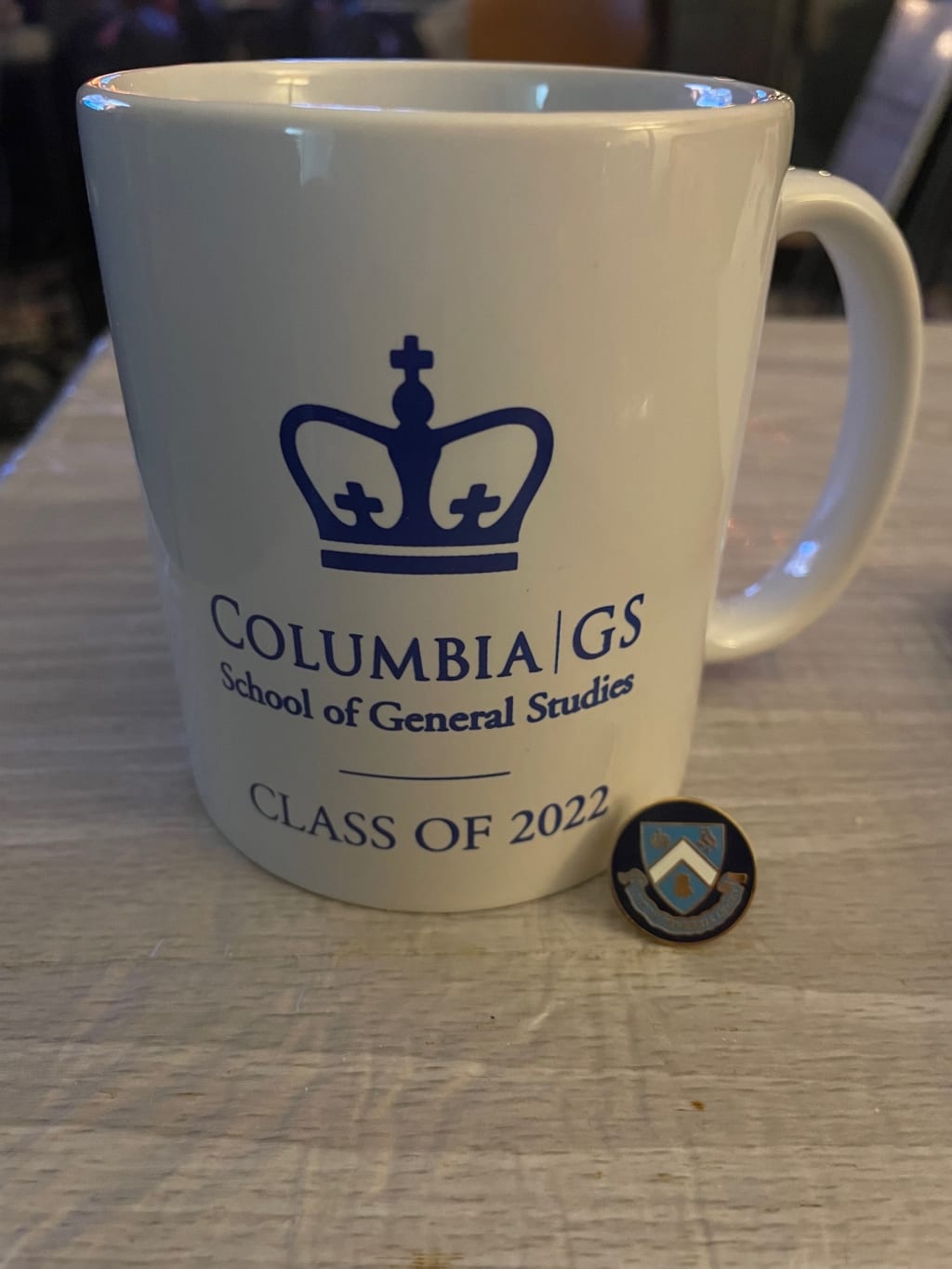
There are many things in life one lives to regret. For me, a major one was quitting my college studies back in 1982. At the time, I thought I had made the right choice. I considered factors that led me to that fateful conclusion, and at the time, at least for me, it was a justified decision. However, I would look back on it in the intervening years and see the consequences it wrought. I could not apply for roles I was well qualified for due to my lack of a degree and passed over for promotions for the same reason. I faced significant hurdles in my work-life to attain what I did, and often many well-meaning managers and colleagues reminded me that a college degree would have significantly changed my trajectory in life. So, I wondered if that was true and pondered whether I had it in me to go back and finish what I started so long ago.
In his book of inspirational quotes, author Roy T. Bennett says, Don't be pushed around by the fears in your mind. Be led by the dreams in your heart. College for me was an ambition instilled by my Abuelita Crescy. She gave up her dream of being an educator to come to this country and make a better life for herself and her daughter. Widowed at the age of 22, she went to college and completed her degree in education in Puerto Rico. She then worked a few years as a schoolteacher on the island, but times being what they were, it did not afford her the life she sought for herself and her child. So instead, in 1949, she came to the United States. Like so many other migrant workers from the island, Abuelita arrived dreaming of a better life on these shores. However, without the necessary language skills to continue practicing her profession, she toiled in a factory in the States. She did this for the rest of her work life, and in that way, supported herself and her family.
Abuelita was my first teacher. I remember sitting on her lap and learning to read books in Spanish and English at a very young age. Because of her, both my sister and I entered school reading and writing in both languages. She was our caregiver, tutor, confidante, and biggest cheerleader throughout our formative years. Whatever we wanted to do, she supported. At first, I wanted to be an educator like her. Then I discovered drawing and wanted to be an artist. She encouraged me in all my endeavors, but most of all, she planted the seed of higher education. She was the first one in her large family to go to school and obtain a degree, and she wanted that for me. Even if her aspirations never came to full fruition, she knew it would be different for me, so she gently pushed me in that direction. I always knew she wanted this for me, and I wanted it too.
I attended the High School of Art & Design in New York City from 1976 to 1980. I liked to draw, and due to Abuelita's effusive praise of my artistic skill, I thought I could make a career of it. But I was wrong. My drawing skills vastly improved over the four years I studied there, but not enough to make it a sustainable lifestyle. That meant that when college loomed, I had no idea what I wanted to do. Unfortunately, I also had no direction. Our high school probably had one guidance counselor for the hundreds of students attending, so I never availed myself of that paltry resource. Even my Abuelita, whose advice I always sought in these matters, did not know what I was capable of or how to help me navigate the college admissions process, so I did it on my own.
Back then, I was a fresh-faced 18-year-old high-achieving student seemingly ready to face the challenges of post-secondary education. But I was not prepared at all. During my high school years, our home was turbulent and chaotic, wrought by my father's final abandonment of his family in the Summer of 1977. This circumstance disrupted my sophomore year of high school and academics to the point where I attended summer school the following year. I was an honor student throughout my formative years, and the dip in my grades caused it to drop tremendously due to these circumstances. To a degree, I managed to rescue them and got back on the honor roll, but they never attained the high standard I set for myself. As a result, I only qualified for community college when I applied. I was gravely disappointed.
I first started college in the Fall of 1980, and by that point, our home life had seemingly calmed to a degree. My parents were no longer together, which was good, as theirs was always a toxic relationship, and my mother was doing her best to provide us with a stable home. Unfortunately, she had begun to suffer ailments that would eventually lead to a chronic disability and no longer being able to work. Our finances suffered. We were barely able to keep food on the table. It was the one time in our lives where we had to depend on the kindness of others to make it through the holidays as our resources were scarce. My mother applied for welfare back then to help us navigate that difficult season as she battled her illness. She had always been the one who took care of our family. Unfortunately, her struggles to do so threw her into a severe depression, which only exacerbated matters.
As the oldest of my siblings, I always felt the burden of being the example. I was supposed to finish my studies, and that included college. As it turned out, I was the only one to finish my high school studies, although eventually, my siblings obtained their general equivalency diplomas (GEDs), and my younger sister ultimately earned a college degree. I went to community college for two years with that obligation in mind, but my heart was not in it. As I tried to focus on my studies, I watched my mother struggle to keep up with the needs of our home. She tried to put on a brave face through it all, as I know she did not want me to disrupt my studies, but it was too late. All I could think about was that she had sold or pawned all she had to put food on our table. Finally, I began to feel an urgent need to help her. I was twenty years old, and I knew that my liberal arts education was not preparing me to work. So, I made a difficult and unpopular decision. My mother and grandmother were vehemently against it, but I was determined. I left my college studies for the first time in 1982, resolute to find a way to work and help my family.
In January 1983, I followed my sisters into the vocational program that helped them obtain their GEDs. The program was part of the New York Bilingual Institute at the East Harlem Council for Community Improvement. EHCCI, as it was known then, was a non-profit based in El Barrio that assisted individuals with various services, including academic and vocational training. For me, attending this program was about attaining the necessary skills to enter the workforce. After my sisters graduated, I joined the following three-month cycle to study to become a clerical worker. I excelled at everything they offered and graduated the process as co-valedictorian. I learned secretarial skills, which allowed me to find my first job as a clerk-typist at the now-defunct bank, Manufacturers Hanover Trust. Therein began my professional journey. By that point, college felt like a past attempt with not much of a future. Helping my family took precedence, so I set out to do just that.
I was 21 years old when I began my first full-time job. I was at the bank for a little over a year and a half when I heard about a Spanish-language Ad agency opportunity. Font & Vaamonde, located on Madison Avenue and 34th Street, sought secretarial staff and paid a little more than what I was earning typing all day. I applied and was offered a role as the assistant to the Senior Vice President. At first, it seemed like a dream role for someone with as little professional experience as me, but I became disillusioned in a short amount of time. I quickly learned there were internal problems with leadership and staff at the agency, and I felt very uncomfortable with my manager, who I later discovered was the primary instigator. Then, just three months into the role, in March of 1985, I learned of another opportunity at the Pharmaceutical company where both my sisters had landed jobs. It was a customer service role, and they thought I would be perfect for it. I applied, and because the Company office on Park Avenue was less than ten blocks from the agency, I walked over on my lunch hour and interviewed for the role. I recall from that experience hearing that the Company wanted degree candidates for the position; however, since I had completed two years of college studies, they considered that and offered me the role. So, I moved from the Ad agency to the Pharma company, where I remained in evolving roles for over twenty years.
I worked the first ten years in customer service and consumer affairs roles at the Pharma company, eventually ending up in their Over-the-Counter (OTC) Drugs division. Then, in 1995, I learned our department would be relocating to Pennsylvania. I married in 1991 and had our first child in 1993, so I was not looking to move out of the city. So, in early 1995, I left that role but secured a temporary position in another department at the same Company. I worked there until September 1995, when I applied for and got a permanent position as a data entry clerk in the Adverse Reactions department of the Prescription Drugs division of the same Company.
The new role felt like a bit of a step-down. To that point, I had been able to grow into more responsible positions, and now I was back in a clerical-type role. However, I was able to work my way back up in time. Until then, thoughts of a college degree had not reentered my mind. My life was too busy. With a young child at home and life being what it was, it seemed impractical to go back to school with all that was going on. But in 1997, a colleague of mine, who had also left college prematurely, expressed a desire to return to school. She found a school close to work that offered classes at night and thought we should go and check it out. So, one day, on our lunch hour, we both headed over and met with the Admissions staff. It turned out they offered degrees we could complete in an accelerated fashion. Our Company provided tuition remission for courses related to our work, so we decided to go for a Health Services Management degree. I was not enthusiastic about that course of study but knowing I would get help paying for the degree if it was related to my role at the time was a deciding factor. I enrolled and completed one semester. Unfortunately, I dropped out after discovering I was pregnant with my second child. Nevertheless, it seemed like the best decision at the time.
During those early years in the Pharma company, I recall struggling to find opportunities that offered better pay and more responsibility. Each conversation I had with my managers at the time included their lamenting that my lack of a college degree was hindering my chances to obtain these positions. Once or twice, I heard that I would never become a manager without a college degree. However, in early 1999, the Company instituted a hiring freeze just as my department needed to fill a data management position urgently. As I had done many times before, I lobbied for the role, and I don't know if they did so begrudgingly, but I ultimately got the job. Each time I found myself in these circumstances, I knew I was placing a burden on myself to prove the naysayers wrong. I needed to show that I had the experience and the capacity to do the job and do it well. Climbing the ladder of success without a degree would prove harder than I imagined, not because I could not do it but because few others were willing to believe in me.
I did well in the data management role, ultimately growing my team to four, including myself. I learned a computer language called Structured Query Language (SQL), one of the more arduous experiences I would ever have to experience, to write and run reports. We managed the information sent to the regulatory agency, meticulous work requiring several detailed steps. First, we pulled the data, sorted and formatted it, and then submitted it to our Medical team for scrutiny and narrative writing. We ultimately compiled it into a report form to send to D.C. I remained in this supervisory role until 2005 when again the Company decided to relocate. They made a very generous offer to employees that included relocation assistance and funds for a down payment on a house. Still, after a few months of consideration, my family and I decided not to go. I knew it would mean losing my unemployment once again after nearly twenty years at the Pharma company. However, it was the best decision at the time because, unknown to me just a month later, my mother, who had been battling health issues while simultaneously providing childcare for me, suffered a brain bleed. Within three months, she passed away. So, I was both unemployed and grieving, two unequal circumstances, but no less consequential for my family and me at the time.
I received a severance package, which offered me some time to mourn without the worry of caring for my family. In early 2006, when my severance ran out, I applied for unemployment for the first time. I hoped that with my many years of experience in the corporate sector and the excellent references I had compiled, I would find another position reasonably quickly, but that was not the case. I applied to many jobs in the intervening months without much success. For the most part, many of them required Bachelors' degrees, which I did not have. I felt defeated during that period and, at times, hopeless as the days progressed with no good job prospects on the horizon. Finally, in mid-September of 2006, I applied for a supervisor role at a university downtown. As I had often had to do, I went into the interview process with a sell myself mindset. I was grateful that they had considered my application despite my lack of a degree, but I also understood that I needed to demonstrate once again that I had the skills and experience to do the job. The interview went well, and I received a job offer. I accepted the supervisor role and started my work experience again, earning a salary of $25,000 less than my previous job.
I started at the university in October of 2006. In 2007, I decided to take advantage of my staff status that allowed me to enroll at their school for non-traditional students seeking to attain a college degree. I started my college studies again for the third time in 2007. I was elated! Not only was I studying for my degree, but I would not have to go into debt to pay for it. All seemed to be going well. Within a year, I received a promotion from Supervisor to Manager and had begun my classes at night. Finally, I was on track to obtain the long-sought sheepskin. Everything seemed good until the recession hit in 2008.
You know it will probably rain if you see dark clouds forming on the horizon. The year the recession hit felt just like that. The school I was working at hired someone to examine costs and make reductions. This person, without compunction, proceeded to slash staffing in the most unethical and uncaring of ways. Staffers with long tenures and presumably high salaries were the first to go. They left in circumstances that seemed unjust, most forced into retirement. Others were encouraged to leave. A pall had been cast over the school, and a toxic environment formed, all because of the actions of one individual. Still, others were biding their time wondering if they would be the next on the chopping block. I fell into that latter category. I knew my goose was cooked, so to speak, when I was directed to find a way to get rid of two union staffers under my supervision. When I refused, I could feel their eyes burning a bullseye into my back as I walked away from their presence. I saw the dark clouds, and I knew it was only a matter of time. Three years from my hire date, I was let go from my position. It was October of 2009, and once again, I was unemployed and forced to leave my college studies behind.
I began 2010 as one of the multitudes unemployed amid a terrible recession. I started collecting unemployment again and looked for work. Month after month, I submitted countless applications. So many of the positions I otherwise qualified for required degrees. I often wondered if the algorithms in these programs automatically kicked me out of the candidate process because I chose to answer truthfully I had no degree. I felt defeated and wondered if my family and I would make it for a time. My husband continued to work, but I had always been the breadwinner, paying most household bills, including rent and utilities. Unemployment compensation was not giving us enough to live on, so I pulled money out of my retirement fund, almost depleting it. Still, I could only pay the necessary bills and, unfortunately, could not pay my other creditors. Our debt grew, as did my depression, but I had to make these hard choices. Keeping a roof over our heads and feeding my family was always the priority. I am a person of faith, and it felt like a tremendous season of testing had once again arrived and was persisting. I could only trust that God would take care of our needs, and He always did. As lean as it was financially, we were never late with our rent or went hungry through that entire period. For that, I am grateful.
My daily practice became looking for employment and applying for jobs. I must have put in applications for hundreds of positions during that period, and I did not hear back from most of these employers. As a result, I went to the unemployment office more than once, seeking assistance. Finally, in June 2011, I saw a listing for an Administrative Coordinator position at another smaller college close to home. Unfortunately, according to the job description, the role once again required a college degree. I looked at the position description closely and determined that I had all the qualifications for the role. Still, I hesitated and did not apply immediately for obvious reasons. Instead, I bookmarked it and kept looking. But something gnawed at me, and I kept thinking about the role. It seemed perfect for me. Over time, I had practiced my cover letter writing skills and decided I needed to write the perfect one. In the body of the letter, I lauded my maturity and tremendous and lengthy work experience. Remarkably, it worked, and I interviewed for the position. There were many prayers before that appointment because I desperately needed a job, and they worked. Finally, after almost two years of unemployment, I was hired and started working again in July of 2011.
I became part of an incredible team working on a federal project at the college. I knew the position was grant-funded and would end by 2015, but I was so happy to be working again, so I figured I would cross that bridge when I got to it. I learned so much during that period. My immediate supervisor, a former Columbia University professor, became my mentor. The Columbia Morningside campus was just a few short blocks away from my workplace, so I began to think about the possibility of going there to finish my degree. I applied to the Columbia University School of General Studies with her encouragement and offer of flexibility. I was accepted, and in the Spring of 2015, I began my college studies for the final time.
Becoming a Columbia student was a full-circle moment for me. As a youngster, my Abuelita and I would take the bus down Broadway, and as we rode past the campus, she would look at me and say, Mija, this is where I want you to go to college. Of course, I never believed I could attend a school like Columbia despite my stellar grades because no one but my grandmother seemed to believe in my potential. I now know that she was right, and although it took me 40 years to learn this truth, I will always be grateful for her and the few along the way who saw it too. In December of 2021, I finally achieved my goal and completed all of my requirements. In February 2022, I will hold in my hands a Bachelor of Arts degree in Creative Writing with a minor in Ethnicity and Race Studies from Columbia University. Abuelita, if you are looking down from Heaven, know that I did this for you and everyone else who knew that my dream deferred was not a dream denied. A heartfelt thanks to all who came along on this journey with me. To those who continue to aspire as I once did, do not give up your ambitions and goals, whatever they may be. Even if they do not come to full fruition, know that the lessons we learn along the way will undoubtedly be worth it. Of that, I am sure.
About the Creator
Margaret Jimenez
After a lifetime working in the world of nonprofits, I now aspire to be a writer. I've earned a writing degree in creative nonfiction, although as a lifelong bibliophile, I love to read fiction. Plan to continue to dip my toe in that genre.
Keep reading
More stories from Margaret Jimenez and writers in Education and other communities.
Is Pharmacy Tech a Good Career Choice for 2026?
Given the recent shifts in the market and AI automation, people are now well aware that economic shakeups can drastically hinder their income sources. This is causing a lot of people to switch careers, and a majority of people are targeting healthcare roles. However, not all allied healthcare roles are created equal. Also, you can aim to become a medical assistant, but if you do not want to deal with patients, the ideal role for you is that of a Pharmacy Technician.
By Meaghan Howe4 days ago in Education
Wild Card Weekend Recap: What Happens Now?
I think I figured out why I love Wild Card Weekend so much. It's because it's the first playoff anything of the calendar year. The NFL season starts in the fall, and once upon a time, the champion was crowned either on or slightly before New Year's. The evolution of the NFL schedule has resulted in the playoffs starting just into the New Year, and currently, the final week of the season falls on the first weekend of the New Year, with Wild Card Weekend coming a week after that. So yes, chronologically, the NFL's Wild Card Weekend serves as the first playoff anything of the calendar year.
By Clyde E. Dawkins6 days ago in Unbalanced




Comments
There are no comments for this story
Be the first to respond and start the conversation.