
A Journey to Serenity: Study Tour to Kalam, Swat
Embracing Nature, Learning Beyond Classrooms, and Breathing the Beauty of Swat’s Mountain Air

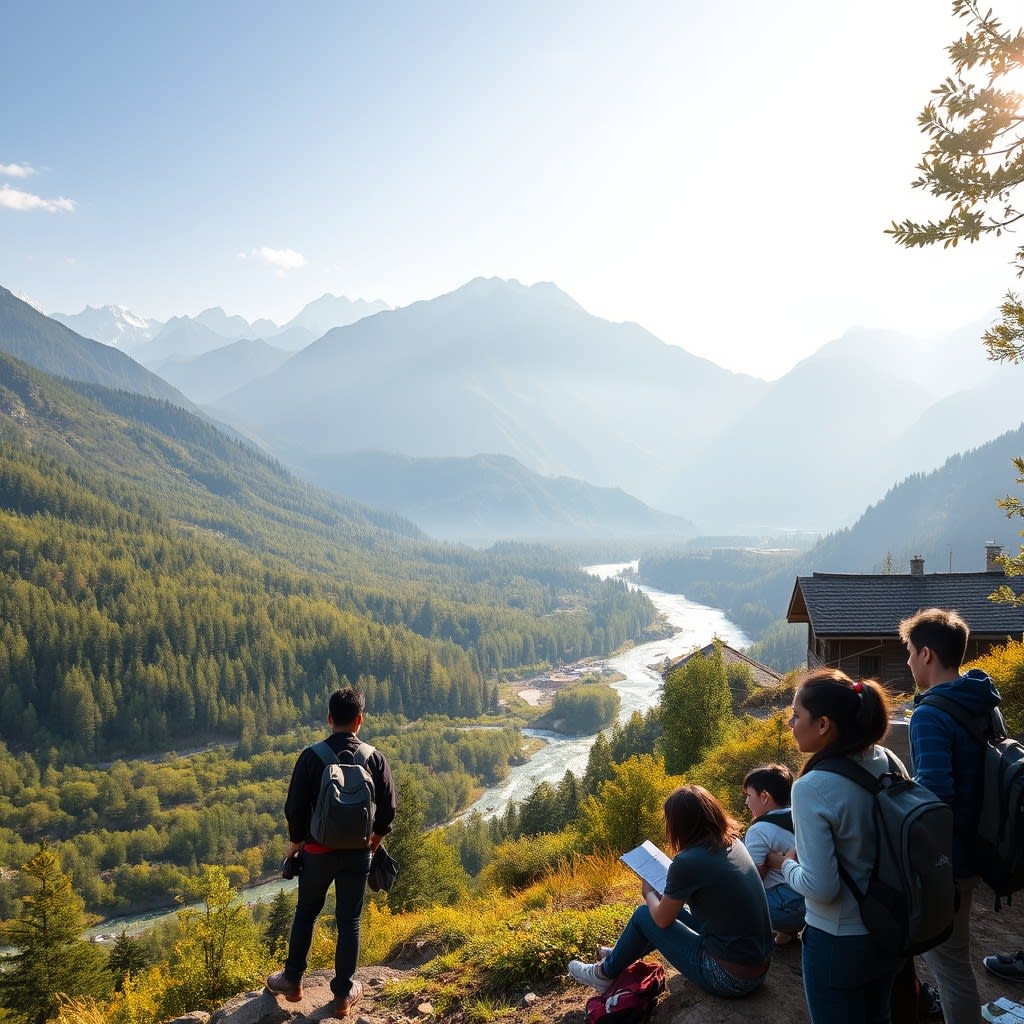
Nestled in the upper reaches of the Swat Valley, the town of Kalam stands as a jewel of natural beauty and cultural richness. Famous for its lush green meadows, snow-capped peaks, and crystal-clear rivers, Kalam has long been a favored destination for travelers seeking peace and inspiration. But beyond its postcard-perfect landscapes, Kalam offers something even more valuable for students and learners—a living classroom where nature, history, and culture intertwine. Our recent study tour to Kalam was an unforgettable journey of discovery, learning, and connection, made all the more special by the perfect weather that seemed to welcome us at every turn.
The Journey Begins: A Breath of Fresh Mountain Air
Our group set out early one summer morning from Mingora, the bustling heart of Swat. As the bus climbed higher into the mountains, the city noise faded behind us, replaced by the gentle whisper of pine forests and the cool mountain breeze. The weather was picture-perfect—clear skies, gentle sunshine, and temperatures comfortably mild. This delightful climate would remain our constant companion throughout the trip, allowing us to fully immerse ourselves in the natural surroundings without the discomfort of harsh heat or sudden storms.
The road to Kalam winds through valleys carpeted with wildflowers and alongside rivers whose waters sparkle in the sunlight. Our guides pointed out local flora and fauna, telling stories of the region’s rich biodiversity. The majestic Malam Jabba ski resort loomed in the distance, its slopes promising winter thrills even as summer bathed the valley below in warmth.
Kalam: A Town Where Nature Teaches
Upon arriving in Kalam, the first thing that struck us was the town’s peacefulness. Small wooden houses with sloping roofs dotted the landscape, surrounded by orchards and gardens bursting with fruit and flowers. The residents greeted us warmly, proud to share their homeland with visitors eager to learn.
Our itinerary was thoughtfully designed to blend academic learning with experiential activities. One morning, we visited the Gabral River, known for its pristine waters and trout fishing. Here, biology lessons came alive as we observed aquatic life, studied water quality, and discussed the importance of preserving natural habitats. The clear weather allowed us to wade safely into shallow areas, examining riverbed ecosystems firsthand.
Another highlight was a trek to Utror Valley, where we explored alpine meadows and learned about mountain ecology. The fresh mountain air invigorated our spirits as we discussed topics ranging from geology to climate adaptation. Teachers and local experts emphasized how the region’s delicate environment supports not only wildlife but also the livelihoods of communities who depend on farming, forestry, and tourism.
Cultural Encounters and Local Wisdom
Kalam is more than just a scenic location—it’s a cultural crossroads with a deep history. Our tour included visits to local schools and community centers where we interacted with students and elders. The exchange of knowledge went both ways; while we shared our studies and ideas, locals taught us traditional crafts, music, and folklore.
One memorable evening, we gathered around a bonfire under a starlit sky to hear stories from village elders. Their tales of ancient Swat, its Buddhist heritage, and more recent history brought the landscape to life. The weather was cool but comfortable, perfect for reflection and conversation.
We also sampled local cuisine, with dishes rich in fresh vegetables, grains, and mountain herbs. The crisp, clean air seemed to enhance every flavor, making each meal a celebration of the region’s bounty.
Environmental Awareness and Responsibility
One of the key lessons of the trip was the importance of environmental stewardship. Kalam’s natural beauty is fragile, and the impact of climate change, deforestation, and tourism development are growing concerns. Through workshops and discussions, we learned about sustainable practices—how locals are balancing development with conservation.
The weather, too, was a living teacher. The stable, sunny days gave way to a brief, refreshing shower one afternoon, reminding us of nature’s rhythms. We discussed how changes in rainfall patterns affect agriculture and river flow, highlighting the need for community engagement in climate adaptation efforts.
Reflection and Personal Growth
By the end of the tour, many of us felt transformed. The beauty of Kalam’s landscapes and the kindness of its people had opened our eyes to the interconnectedness of nature, culture, and education. The study tour was not just a break from routine but a profound learning experience that brought classroom theories to life.
The combination of perfect weather, stunning scenery, and meaningful interactions created an environment conducive to curiosity and reflection. It reminded us that learning is everywhere—in the flowing river, the rustling trees, and the faces of those who call this valley home.
Conclusion: A Lasting Memory and a Call to Protect
As we departed Kalam, the valley seemed to bid us farewell with its golden sunsets and cool evening breezes. Our study tour had been a journey into nature’s heart and humanity’s spirit. The experience reinforced the importance of preserving such places—not just as tourist destinations but as vital ecosystems and living communities.
For anyone seeking knowledge beyond textbooks, Kalam offers a rare gift: a place where education flows naturally from the land and sky, where every breeze carries a lesson, and where beautiful weather invites you to open your mind and heart to the world around you.
About the Creator
Keep reading
More stories from Zain Ul Abedin Khan and writers in Education and other communities.
Breaking In to Protect: The Rise of Ethical Hacking
In the early days of the digital age, computer systems were closed islands—isolated, experimental, and relatively secure by their very obscurity. But as the internet connected the world and personal computers became household essentials, those islands turned into sprawling, vulnerable continents. With the rise of connectivity came a new kind of threat: hackers. But not all hackers wore the proverbial black hat. From the shadows of early cybercrime emerged a new breed of digital warrior—ethical hackers, professionals who would break into systems not to steal or destroy, but to protect.
By Zain Ul Abedin Khan9 months ago in Education
Why the Sun Rotates Faster at the Equator: The Surprising Physics of Solar Rotation
If you watch the Sun through powerful telescopes over several days, you might notice something unusual. Dark patches known as sunspots slowly drift across the surface of the Sun as the star rotates. At first, this movement seems similar to the rotation of Earth or other planets.
By shahkar jalala day ago in Education
Cover Assembly Screened in Aircraft Systems: Function, History, and Aerospace Applications
Introduction: My Research into Cover Assembly Screened Aircraft Components While studying aircraft hardware and aerospace structural parts, I recently explored a catalog listing dedicated to Cover Assembly Screened components used in aviation systems. During my research, I realized that even small parts like protective covers are essential for the reliability, safety, and longevity of aircraft electronics and mechanical assemblies.
By Beckett Dowhan7 days ago in Education
Top tipple tricks
Been thinking a lot about drinking, lately. Not least because of a recent episode of over-indulgence and the inevitable after effects. Some readers may recall the earlier articles I wrote about beating the booze. Here I set out an experiment in techniques for cutting down on my alcohol intake. The experiment was successful, the techniques worked, and I have armed myself with an arsenal of weapons in the war against the demon drink. I have yet to fire the first round however. It's all a question of timing (perhaps procrastination).
By Raymond G. Taylor7 days ago in Psyche



Comments
There are no comments for this story
Be the first to respond and start the conversation.