
A Journey to New Home Colonizing a Distant Planet
WHAT IF WE COULD GO PLANET HOPPING FOR FUN
In the not-so-distant future, humanity has achieved the seemingly impossible: interstellar travel. With advanced spacecraft and groundbreaking technologies, humans can now explore and colonize distant planets in our solar system and beyond. One such intrepid journey takes us to the smallest planet in our solar system, Mercury, followed by Venus, Mars, and beyond. Our ultimate destination is a promising planet named "New Home," where humanity hopes to establish a new civilization and extend its presence beyond Earth.
Mercury - A Rocky Enigma:
Our journey commences with a stop on Mercury, the closest planet to the Sun. As we descend, we are mesmerized by the barren rocky surface, pockmarked with countless craters left behind by ancient asteroid impacts. Mercury's proximity to the Sun makes it a harsh and unforgiving environment, with temperatures soaring to a blistering 800 degrees Fahrenheit during the day, only to plummet to a bone-chilling minus 290 degrees Fahrenheit at night.
The reduced gravity on Mercury offers a unique experience, where every step feels like bouncing on a trampoline in slow motion. Nevertheless, despite the challenges posed by the planet's extreme conditions, explorers equipped with specialized spacesuits find solace in the awe-inspiring views of the vast universe and the imposing Sun three times its size as seen from Earth.
Venus - The Fiery Inferno:
Our next destination is Venus, the second planet from the Sun and often referred to as Earth's twin. However, the similarities end there. Venus presents a hostile and scorching atmosphere, where even robotic missions have struggled to survive. Thick clouds of sulfuric acid shroud the planet, creating a runaway greenhouse effect, resulting in a surface temperature that could melt lead.
Venturing onto Venus is nearly impossible due to its violent winds, exceeding 220 miles per hour, and the crushing pressure from its dense atmosphere. Humans would require state-of-the-art spacesuits and protective gear to endure the extreme conditions. Exploring Venus, while alluring, remains a challenge yet to be conquered.
Mars - The Red Desert:
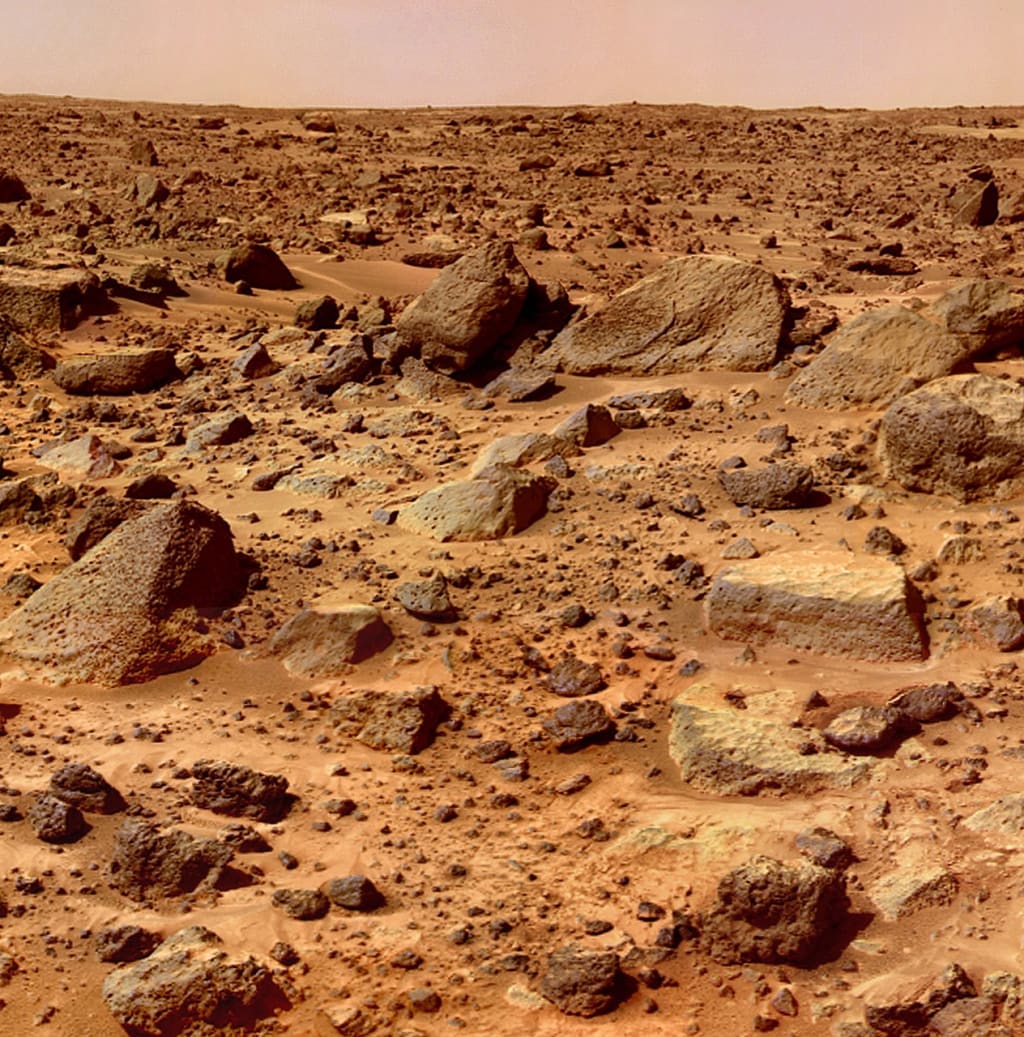
Our third stop is Mars, the red planet, long a subject of fascination and potential human colonization. As we land on its rusty surface, the barren landscape stretches as far as the eye can see. Mars' thin atmosphere, though not conducive to human survival without life support systems, has inspired dreams of terraforming and creating a habitable environment.
The frigid Martian temperatures and its weaker gravity compared to Earth pose their own set of challenges. Human settlers on Mars would require specialized habitats and technology to cope with the harsh conditions and ensure their safety. Despite these obstacles, the allure of exploring the possibilities of life on Mars beckons humanity.
Jupiter and Saturn - The Gas Giants:
As we journey further into the depths of our solar system, we encounter the gas giants, Jupiter and Saturn. These colossal planets are composed primarily of hydrogen and helium, with no solid surface to land upon. Jupiter's incredible winds, reaching up to 400 miles per hour, would make any human exploration impossible. The gravity on these gas giants is also unforgiving, and living there remains a distant dream.
New Home - A Promising Prospect:
Having explored the inner planets of our solar system, we set our sights on New Home, a planet that holds great promise for human colonization. Situated in the habitable zone of a young and sun-like star, New Home offers the potential for liquid water to exist on its surface, a crucial ingredient for supporting life.
As our spacecraft approaches New Home, we observe its diverse landscapes, from arid deserts to lush forests, all awaiting human exploration. The planet's atmosphere, though different from Earth's, appears to be breathable with the assistance of advanced life support systems. The challenge now lies in the process of terraforming - altering the planet's climate and atmosphere to suit human habitation.
Conclusion:
The journey through our solar system and the prospects of colonizing distant planets open up new horizons for humanity. From the blistering heat of Mercury to the hostile environment of Venus, and the red deserts of Mars, each planet presents its own unique set of challenges. While the gas giants of Jupiter and Saturn remain beyond our reach, the promise of New Home offers hope for a new chapter in human history. As we embark on these interstellar adventures, humanity stands on the cusp of transforming distant planets into potential new homes for the intrepid pioneers of the future. The stars await our exploration, and the universe beckons with the promise of untold possibilities.
About the Creator
Keep reading
More stories from writers in Education and other communities.
Prevention First: How Proactive Medical Care Builds Stronger Communities
Preventive medical care plays a critical role in shaping healthier communities. When people receive care before illness develops, they avoid many severe conditions. This approach improves quality of life and reduces strain on healthcare systems. Moreover, prevention supports long-term wellness rather than short-term treatment. Communities that prioritize preventive care experience lower rates of chronic disease. As a result, individuals remain active and productive. Preventive care, therefore, serves as the foundation for sustainable public health.
By St. John's Community Health8 days ago in Education
Starting Strong: Learning the Basics of Investment Management
Investment management involves managing money set aside to grow over time. It is about deciding how and where to put money so that it earns more in the future. This process includes choosing among options such as stocks, bonds, or real estate. It also involves planning how long to hold these investments and how to react when markets change. For beginners, learning about investment management is the first step toward gaining control over their financial future.
By Winston Feng7 days ago in Education
One Hard Thing
Stop me if you’ve heard this one before: You have the number, you know your schedule- you’ve even picked out the perfect day and time to make this appointment. Shoot, you’ve even picked out alternative days and times just in case their schedules can’t accommodate you!
By Taylor Rigsby2 days ago in Motivation


Comments
There are no comments for this story
Be the first to respond and start the conversation.