
A Journey Through the Cosmos: Book Review of Carl Sagan's 'Cosmos’
A Celestial Tapestry: Navigating the Cosmos with Carl Sagan's Timeless Odyssey

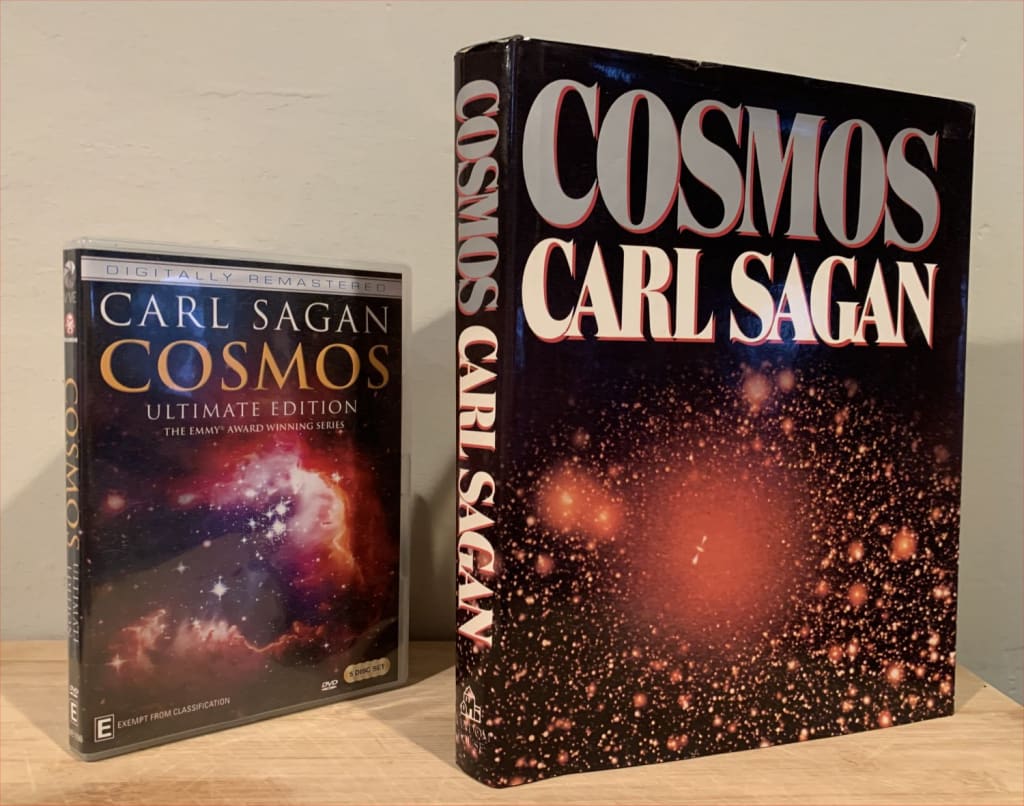
In the vast realm of scientific literature, few works have captivated the imagination and sparked a sense of wonder as profoundly as Carl Sagan's "Cosmos." Published in 1980, this groundbreaking book takes readers on a cosmic odyssey, weaving together astronomy, biology, and philosophy to explore the wonders of the universe. In this article, we embark on a journey through the pages of "Cosmos," delving into its insightful narrative, enduring relevance, and Sagan's ability to make the complexities of the cosmos accessible to all.
*Cosmic Perspective:
At the heart of "Cosmos" is Sagan's emphasis on cultivating a cosmic perspective—a profound awareness of our place in the universe. With eloquence and clarity, Sagan invites readers to contemplate the grandeur of the cosmos and our interconnectedness with the vast expanse of space. He implores us to transcend our terrestrial concerns and embrace a perspective that transcends borders, cultures, and individual differences.
Sagan's writing is infused with a sense of humility and awe, as he guides readers through the wonders of the solar system, the intricacies of DNA, and the potential for extraterrestrial life. His narrative style is both poetic and scientific, making complex concepts accessible to readers of all backgrounds. The book serves as a testament to Sagan's ability to communicate the beauty of science without sacrificing its intellectual depth.
*Interdisciplinary Exploration:
One of the strengths of "Cosmos" lies in its interdisciplinary approach. Sagan seamlessly integrates astronomy, biology, history, and philosophy, creating a tapestry that reflects the interconnected nature of scientific inquiry. As readers journey through the chapters, they encounter not only the marvels of the cosmos but also the historical and cultural context that has shaped our understanding of the universe.
Sagan's exploration of the history of science and the contributions of great minds, from Galileo to Kepler, adds a rich layer to the narrative. It underscores the collaborative and cumulative nature of scientific progress while paying homage to those who paved the way for our contemporary understanding of the cosmos.
*Relevance Across Time:
Despite being published over four decades ago, "Cosmos" remains remarkably relevant. Sagan's insights into the fragility of our planet, the potential for life beyond Earth, and the ethical responsibilities that come with scientific discovery resonate with contemporary challenges. The book serves as a timeless reminder of the importance of scientific literacy, critical thinking, and a global perspective in navigating the complexities of our modern world.
Moreover, "Cosmos" has inspired subsequent generations of scientists, educators, and science communicators. Its impact is evident in popular science programs, documentaries, and the broader movement to make scientific knowledge accessible to a wider audience. Sagan's legacy extends beyond the pages of the book, influencing the way we approach and appreciate science in the 21st century.
*Conclusion:
"Cosmos" by Carl Sagan stands as a literary masterpiece that transcends the boundaries of traditional science writing. Its enduring appeal lies in Sagan's ability to blend scientific rigor with poetic prose, inviting readers to embark on a cosmic journey that expands their understanding of the universe and their place within it. As we reflect on the book's profound impact, it becomes evident that "Cosmos" is more than a scientific exploration—it is a call to embrace a cosmic perspective that transcends time, fostering a sense of curiosity and reverence for the mysteries that surround us in the cosmos.
About the Creator
Hiba ✨
👋 Greetings! I'm hiba, a storyteller on Vocal.Media. 📝✨ Exploring life's intricacies through words. Join me on this journey of shared stories! 🌟 #Writer #VocalMedia
How the Sun Affects Asteroid Paths: Gravity, Radiation Pressure, and Orbital Changes Explained
Introduction: The Silent Influence of the Sun ☀️ Every night, thousands of asteroids quietly move through space. Most of them orbit harmlessly between Mars and Jupiter in the asteroid belt. Others travel closer to Earth, following paths shaped by invisible forces.
By shahkar jalal2 days ago in Education
The Overlooked Consequences of Weak Healthcare Program Planning
Healthcare programs are created to expand access to care, improve patient outcomes, and strengthen public health systems. Governments, hospitals, nonprofits, and health organizations invest significant resources into developing programs that address disease prevention, treatment, and community wellness. When these initiatives are carefully planned and strategically executed, they can transform healthcare delivery and improve the quality of life for entire populations.
By Evyatar Nitzany6 days ago in Education
A System That Isn’t Working Challenge Winners
Systems promise order. They organize behavior, distribute opportunity, and suggest that if everyone follows the rules, things will work. The entries in A System That Isn’t Working look closely at what happens when that promise begins to slip.
By Vocal Curation Team5 days ago in Resources




Comments (1)
. Excellent review!