
A customized artificial limb or a living organ model without a donor for surgery
"Imagine a world where you could easily get organs for your body without having to worry about them."
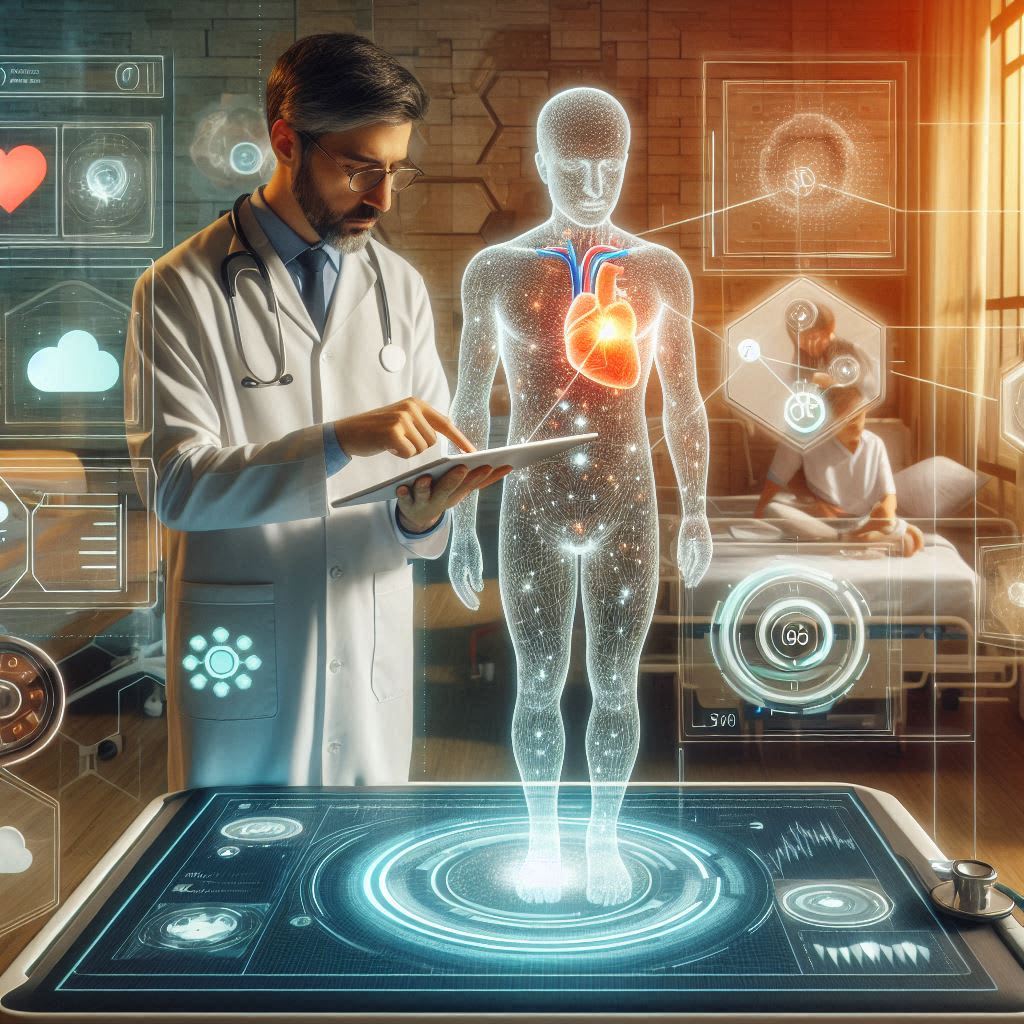
Due to a major accident or illness, many times we need organs from our body. But getting these organs is not easy. Because to implant an organ in the body, first we have to find a donor, secondly, our organ tissue has to match the donor's organ tissue And blood group etc. have to be matched. But in the future, a technology is going to be added to medical science with the help of which human body parts can be obtained very easily.
The name of 3D printing is now known to almost everyone. With the help of which a model of something can be easily transformed into reality. Currently, buildings are constructed with its help. It is a computer-controlled process where you take a picture of your favorite model and turn it into reality through a computer and a machine. This 3D printing is now going to be added to medical science.
The healthcare industry stands on the brink of a technological revolution, and at the center of this transformation is three-dimensional (3D) printing. Once the domain of industrial design and prototyping, 3D printing has found a powerful and life-changing application in medicine. This technology is changing how doctors treat patients and how patients experience care, from personalized surgical models to joint replacements to bioprinted organs.
The Rise of 3D Printing in Medicine:
Material is deposited layer by layer in the process of three-dimensional printing, also known as additive manufacturing. In healthcare, this process is now being used to produce custom prosthetics, implants, dental devices, and orthopedic aids, tailored to the unique anatomy of individual patients. These devices can be manufactured quickly and cost-effectively, significantly reducing lead time and improving the comfort and functionality of the final product.
According to market research, the 3D printing healthcare market was projected to exceed $4 billion by 2018—a clear signal of the technology’s growing importance. The surge in demand is driven largely by the increased use of personalized medical devices, as well as the broader adoption of digital workflows in hospitals and clinics.
One of the most talked-about uses of 3D printing in medicine is in the creation of lifelike models of organs. These models, based on patient-specific imaging data such as CT scans and MRIs, allow surgeons to plan complex procedures with unparalleled accuracy. For instance, a surgeon preparing for a tumor removal can study a 3D-printed model of the patient’s kidney, giving them better insight into the exact location and size of the tumor. This results in fewer surgical complications, shorter operating times, and improved outcomes for patients.
3D printing has also revolutionized the production of prosthetics, especially in underserved communities. In many parts of the world, patients wait months for a traditional prosthesis. But with 3D printing, organizations can produce affordable, custom-fit limbs in a matter of days, bringing mobility and independence back to people’s lives.
The Next Frontier: Bioprinting Organs
While the current applications of 3D printing are already impressive, the real excitement lies in bioprinting—the use of living cells and biomaterials to print tissues and organs. Scientists are now exploring the possibility of printing fully functional human organs, which could one day eliminate the need for donor organs entirely.
At the forefront of this research is Princeton University, where scientists have successfully created a prototype of an outer ear using hydrogel, human cells, and silver nanoparticles. This ear is not just cosmetic—it’s embedded with electronics to mimic the function of hearing. It represents a small but significant step toward printing more complex organs such as hearts, kidneys, and lungs.
However, the road to fully bioprinted organs is still long. The technical and regulatory challenges are considerable. Ensuring that printed organs are safe, functional, and able to integrate into the human body will take years of research and testing. Experts estimate it could take a decade or more before such organs are widely available.
Technology and Data Driving the Shift
The explosion of 3D printing in healthcare is fueled by the convergence of several technological trends, including big data, artificial intelligence, cloud computing, and connected devices. Hospitals now collect massive amounts of data on patients, which can be used to design better, more personalized treatments.
Cloud-based platforms allow surgeons, designers, and engineers to collaborate in real time, even from different parts of the world. In the meantime, smart devices gather information about how patients use their prosthetics or implants and incorporate this data into the design process to boost the effectiveness of subsequent iterations. These tools also improve patient engagement. Imagine a patient being shown a 3D model of their own heart to understand a procedure. Communication is improved, anxiety is reduced, and decisions are made with more information. A Future Layered with Possibilities
The journey of 3D printing in healthcare is only beginning. With each layer printed, we move closer to a world where organ shortages, lengthy surgical planning, and one-size-fits-all treatments become things of the past. This technology is democratizing access to care, customizing solutions for individuals, and redefining what’s possible in medicine.
The promise is clear as the industry continues to develop: the healthcare of the future is being constructed layer by layer. From prosthetic limbs in remote villages to bioprinted organs in cutting-edge labs, 3D printing is not just changing how doctors work—it’s transforming lives.
About the Creator
Keep reading
More stories from naimsarkar26 and writers in Education and other communities.
The One Lighting Move That Instantly Makes Your Photos Look Better
Photography advice often focuses on complex settings, advanced editing, or buying better equipment. While those things can help, they often distract from something far more powerful and immediate. One simple lighting habit can dramatically improve almost every photo you take, whether you’re shooting with a phone or a professional camera.
By Kelln Small7 days ago in Education
Portable Thickness Gauge Explained: Accurate Measurements Anywhere, Anytime
In modern industries, precision is not a luxury—it is a necessity. From ensuring product quality to maintaining structural safety, accurate thickness measurement plays a vital role. This is where portable thickness gauges come into focus. As the demand for on-site inspections grows, Portable Thickness Gauge Explained: Accurate Measurements Anywhere, Anytime becomes a topic every engineer, inspector, and technician should understand.
By Abdul Alim4 days ago in Education




Comments
There are no comments for this story
Be the first to respond and start the conversation.