
A Complete Overview Of DoD RMF Certification & Accreditation
Information Security RMF Certified
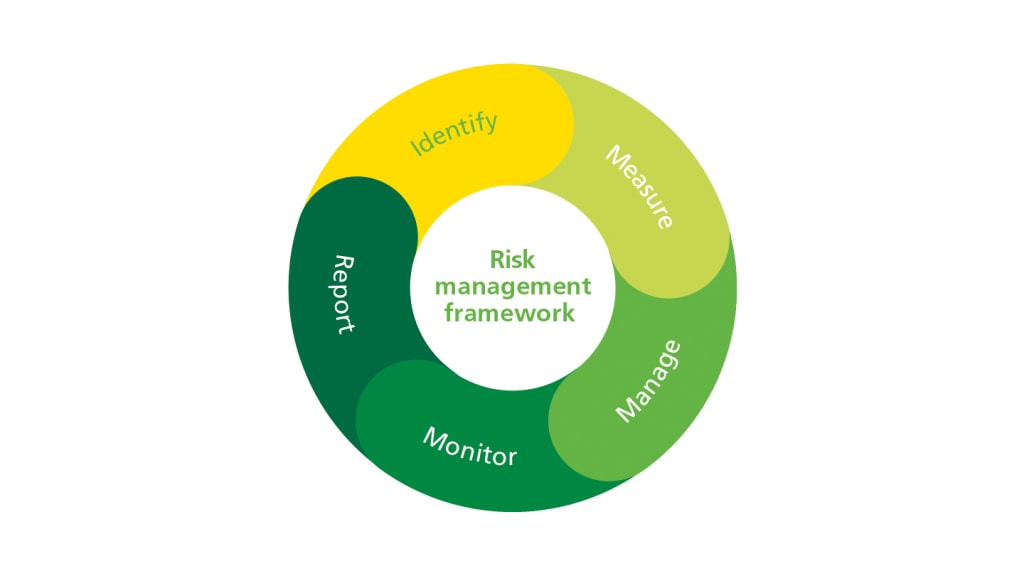
The Department of Defense (DoD) has implemented a new risk management framework called the DoD Risk Management Framework (RMF). This framework replaced the existing set of policies, procedures, and standards that govern how risks are identified, assessed, mitigated, or accepted. The Risk Management Framework (RMF) is a systematic approach to information security management that helps organizations manage risk effectively. RMF provides a framework for the operation of information systems and outlines how its components should interact with each other within this framework. It is important to understand what this means for you as an organization or individual operating within or providing products/services to the DoD.
What is DoD RMF Certification?
DoD risk Management Framework certification is a great initiative that offers the DoD community an opportunity to commit themselves to high standards of information assurance (IA).
The Department of Defense (DoD) Risk Management Framework (RMF) certification is a military-grade process for implementing the RMF. The certification is a rigorous, multi-step evaluation of an organization's ability to protect its information and comply with FISMA and NIST 800-53. It provides a thorough analysis of an organization's security posture and ensures that it meets or exceeds industry best practices in security controls, risk management processes, documentation, and training. The primary objectives of RMF are:
- To improve and modernize information security
- To strengthen and enhance the risk management processes
- To promote reciprocity among federal agencies
To become Information Security RMF Certified, your company will have to pass a series of tests that demonstrate your capabilities to apply the risk management framework across its enterprise environment.
What Is The Purpose Of DoD RMF Certification?
Risk management framework (RMF) certification is a formal program that assures you have the knowledge and skills to effectively manage IT risk. The RMF certification is designed for business leaders, project managers, and IT professionals who are responsible for managing IT projects to ensure they are successful. With the help of RMF certifications, you will be able to evaluate your current project risks, mitigate them, and deliver business value on time and within budget.
Seven-Step Risk Management Framework Approach
The RMF helps organizations standardize their risk management practices. The recent RMF version was released in 2018 that comprises seven steps which you must follow to execute it properly. The primary goal of RMF is to reach the Authorization to Operate (ATO) phase after which they’ll be allowed to go live in a governance environment. Here’s the detailed overview of seven steps:
- Prepare: This step was added in revision 2 of RMF by NIST after recognizing the need for preparing the organization to get the most from RMF. The major focus is given to communication. The "Prepare" phase, according to the National Institute of Standards and Technology (NIST), carries out critical activities at the organization, mission and business process, and information system levels to help the organization prepare to manage its security and privacy risks using the Risk Management Framework.
- Categorize: This step relates to the ways by which information is processed, stored, and transmitted. You need to define how the system communicates and works with other IT systems and networks, understand what compliance measures you should take, and demonstrate an architectural description of the system.
- Select: This step entails establishing a baseline for security policies based on the risk type identified in step one. Depending on which risk category the risk belongs to, you will make decisions about what baseline security measures you wish to install during this step.
- Implement: In this step, you’ll install the controls you choose in the previous phase. You’ll have to make sure that your implementation process and the procedure are well-documented at this stage in case you need to review it after the next step.
- Assess: It's now time to double-check that everything is working as required and that the controls are implemented properly in the system. The Assess stage involves determining if the categories and baseline security controls developed in the previous steps were correctly implemented during implementation. If not, return to the Implement phase until everything is working properly before moving on to the sixth stage.
- Authorize: This is the goal you're attempting to achieve using RMF. After you've successfully implemented your categories and security controls, the system can be awarded or refused by Authority to Operate (ATO). If you are denied, then this step will be delayed until everything checks out.
- Monitor: Once the system controls are in place, they must be monitored on a regular basis. The ATO issued in the last stage is only valid for three years, after which the entire process needs to be repeated.
According to the DoD8570 directive, all federal personnel working in the DoD Information Assurance (IA) workforce must be trained in RMF and qualified to execute RMF in the workplace. There are several programs geared to get you up to speed on RMF that you can use to get trained and certified.
Even if you aren't employed by the government, these programs can provide you with all of the information you need to adopt the RMF in your development cycle. So, if you also want to become an Information Security RMF Certified, you should enroll in the Federal Risk Management Framework (RMF) 2.0 Training Certification course now.
About the Creator
Keep reading
More stories from writers in Education and other communities.
What causes cavities
When a team of archaeologists recently came across some 15,000-year-old human remains, they made an interesting discovery. The teeth of those ancient humans were riddled with holes. Their cavities were caused by the same thing that still plagues us today: specific tiny microbes that live in our mouths.
By Munesh Yadava day ago in Education
How Business Coaching Helps Founders Scale With Clarity and Control
Business coaching assists founders to scale since hustle and reactivity are substituted with structure, systems and strategic leadership. Strategic coaching provides clarity in the marketing, operations, leadership, and decision-making roles of the business, eliminating the need to use the owner as the bottleneck, instead enabling the business to expand without havoc, burnout, or firefighting.
By Alice Adams6 days ago in Education
The CEO of Everything
They say "jack of all trades, master of none," but they forgot to mention the part where the jack of all trades is also the camera woman, the makeup artist, and the person currently yelling at a tangled Wii microphone cable in a her own bathroom while recording herself singing and trying to make it look realistic and professional. (As professional as you can make it with nothing but a cell phone camera and a mic that doesn't work)
By Sara Wilson4 days ago in Humans
Rachel Reviews: The Spiral Archive by Pieter Hendrik
It's difficult for me to know where to start with a review of this book as it was, for me, an entirely unique experience and one that I'll probably never have again. I don't want that to be interpreted as unenjoyable but it has left me scratching my head a little and ruminating on its content, its themes and its characters.
By Rachel Deeming4 days ago in BookClub



Comments
There are no comments for this story
Be the first to respond and start the conversation.