
3D Medical Animation Techniques for Effective Health Education
Exploring Advanced 3D Medical Animation Techniques That Simplify Complex Health Concepts and Transform Medical Education

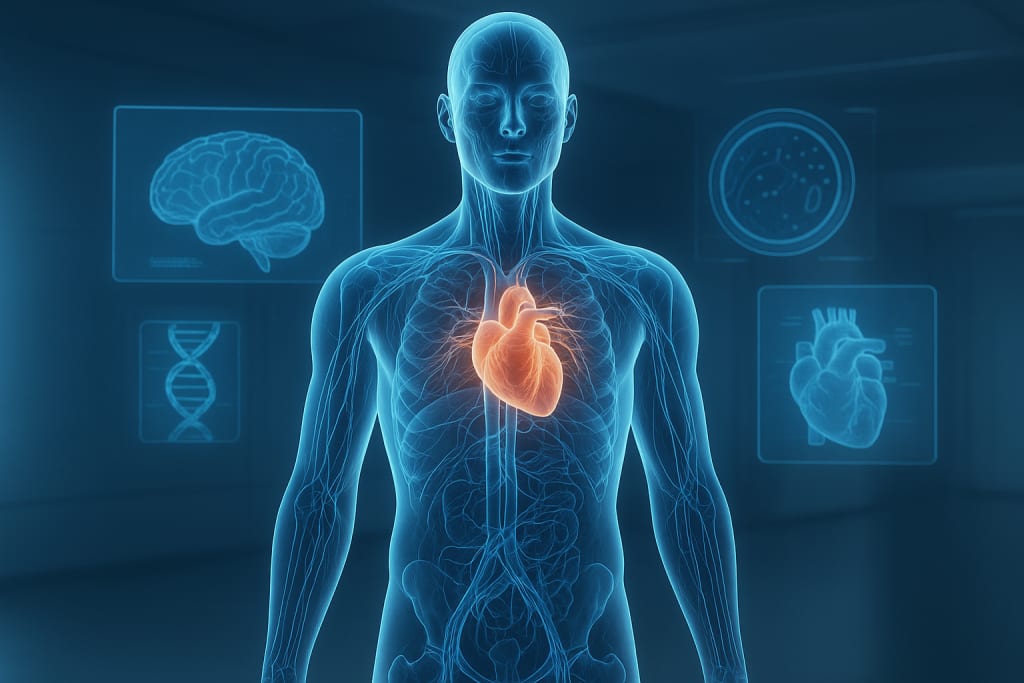
Medical education has undergone a major shift in recent years. Traditional textbooks and static diagrams no longer hold the same impact they once did.
As healthcare knowledge expands at a rapid pace, 3D medical animation has emerged as one of the most powerful tools for explaining complex biological processes, treatments, and procedures. These animations don’t just inform—they engage, simplify, and make abstract concepts tangible.
This article explores the techniques used in 3D medical animation, why they matter, and how they are transforming health education for students, patients, and professionals alike.
Why 3D Medical Animation Matters
Healthcare is filled with complexity. The human body functions through intricate systems, and many conditions or procedures are nearly impossible to explain with words alone.
3D medical animation bridges the gap between science and understanding by creating realistic, dynamic visualizations that anyone can grasp.
Some benefits include:
- Enhanced learning: Viewers retain more information when they see moving, detailed visuals.
- Patient engagement: Patients gain clarity about their conditions and treatment options.
- Consistency: Animations provide standardized explanations, reducing miscommunication.
- Accessibility: Visual learning helps audiences of different literacy levels understand complex medical topics.
Core Techniques in 3D Medical Animation
Producing medical animations requires a blend of science, artistry, and technology. Below are the most common techniques professionals use to create compelling and accurate visuals.
1. Anatomical Modeling
Before animation begins, accurate 3D models of organs, cells, or systems are built. This often starts with reference material from MRI scans, CT imaging, or medical illustrations. Precision is essential, since even small inaccuracies can mislead learners.
2. Texturing and Shading
Once the model is created, textures give surfaces a realistic appearance. For instance, the smooth sheen of cartilage differs from the layered surface of muscle. Shading and lighting add depth, making the animation feel lifelike rather than flat.
3. Motion Simulation
Animating the way organs move, blood flows, or neurons fire requires advanced simulation. Animators use physics engines and fluid dynamics software to mimic biological processes. This allows viewers to watch the heart beat or blood cells travel through vessels with natural motion.
4. Micro and Macro Perspectives
Medical animation can zoom from the microscopic level of DNA strands to the macroscopic scale of organ systems. These transitions help learners connect cellular processes with full-body health outcomes.
5. Storyboarding and Narration
Every animation follows a narrative arc. Storyboarding ensures that the visuals unfold in a logical sequence, guiding the viewer step by step. Narration—whether by voiceover or text—reinforces the educational message.
6. Interactive 3D
Some projects integrate interactivity, allowing viewers to rotate models, zoom in on structures, or explore specific regions of the body. Interactive 3D tools enhance active learning and are especially useful in medical training environments.
Applications in Health Education
The uses of 3D medical animation extend across multiple fields of healthcare.
- Medical training: Students can visualize surgical procedures before ever entering an operating room.
- Patient education: Doctors use animations to explain conditions like heart disease, joint replacement, or cancer treatments.
- Pharmaceutical marketing: Companies illustrate how new drugs interact with the body at a cellular level.
- Public health campaigns: Animations demonstrate preventive care, such as vaccination or healthy lifestyle habits.
- Virtual reality simulations: Paired with VR headsets, 3D medical animation provides immersive learning experiences.
Advantages Over Traditional Methods
While textbooks and lectures remain valuable, 3D animation surpasses them in several ways:
- Clarity: Moving images explain processes that static diagrams cannot capture.
- Engagement: Viewers remain more attentive to dynamic visuals.
- Scalability: Animations can be shared online, reaching millions instantly.
- Retention: Studies show learners remember more from visual demonstrations than from text alone.
Challenges in Creating Medical Animations
Despite its strengths, producing accurate 3D medical animations isn’t simple. Challenges include:
- Scientific accuracy: Even minor mistakes in anatomy or physiology can lead to misinformation.
- Technical complexity: Animators must combine medical knowledge with advanced design software.
- Cost and time: High-quality projects require significant resources and expertise.
- Ethical responsibility: Visuals must avoid exaggeration and remain true to scientific evidence.
The Future of 3D Medical Animation
Looking ahead, artificial intelligence, augmented reality, and real-time rendering will push the boundaries of medical education. AI may soon assist in building anatomically accurate models more efficiently.
Augmented reality will allow students and surgeons to overlay animations onto real patients for training or procedural guidance. As technology advances, 3D medical animation will not only explain health but also actively shape how professionals deliver it.
3D medical animation is more than a teaching aid—it’s a transformation in how health information is shared and understood. By blending art, science, and technology, these animations offer a powerful way to educate patients, train professionals, and promote public health.
For educators, healthcare providers, and communicators, adopting 3D medical animation means stepping into a future where clarity, accuracy, and engagement are no longer optional, but essential.
About the Creator
Richard Bailey
I am currently working on expanding my writing topics and exploring different areas and topics of writing. I have a personal history with a very severe form of treatment-resistant major depressive disorder.
Keep reading
More stories from Richard Bailey and writers in Education and other communities.
A Beginner’s Guide to Real Estate Investing
For generations, real estate has stood out as one of the most reliable ways to grow wealth. While markets shift, currencies fluctuate, and new investment trends appear, the need for housing and commercial space never disappears. That’s what makes real estate unique: it isn’t just a financial asset, it’s a physical necessity.
By Richard Bailey6 months ago in Education
Empowering Your Financial Journey: The Role of Wellness and Coaching
Financial success is not only about numbers, budgets, and investment strategies. It is also deeply connected to mindset, habits, and overall well-being. Many people work hard to improve their financial situation, yet they often overlook the emotional and behavioral aspects that influence financial decisions. Empowering your financial journey means recognizing that financial wellness and coaching can play a powerful role in building lasting stability and confidence.
By Mario Payne7 days ago in Education
How Problem-Solving Shapes the Success of Modern Entrepreneurs
Entrepreneurship today is defined by constant change and relentless challenges. Business leaders are no longer operating in stable, predictable environments; instead, they face shifting markets, evolving customer expectations, and rapid technological advancements. In this environment, problem-solving has become the cornerstone of entrepreneurial success. The ability to identify issues, analyze them critically, and create practical solutions separates thriving ventures from those that struggle to survive. Entrepreneurs who develop strong problem-solving skills are better equipped to innovate, make strategic decisions, and guide their businesses toward sustainable growth.
By Greg Warnockabout 21 hours ago in Education



Comments
There are no comments for this story
Be the first to respond and start the conversation.