
20 Reasons Why Students Should Not Wear Uniforms
Explore the disadvantages of wearing school uniforms with key 20 reasons why students should not wear uniforms.

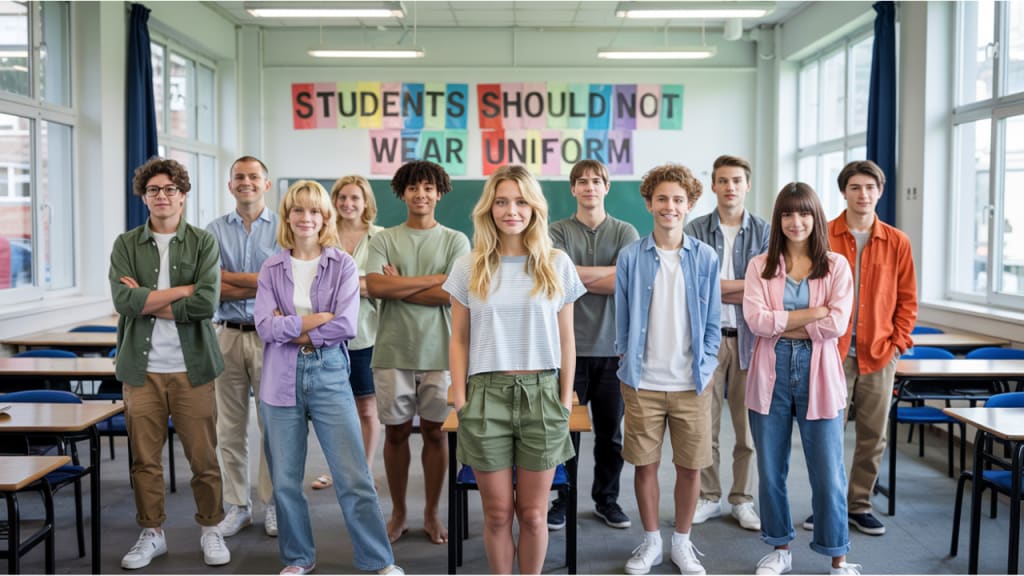
There has been a long-standing debate on whether school uniforms improve education and discipline or whether students should have the freedom to choose their clothing. Supporters argue that uniforms promote discipline, reduce peer pressure, and create a sense of equality among students. However, critics believe that mandatory uniforms restrict personal freedom, add financial strain on families, and do not necessarily improve academic performance or behavior.
In this article, we'll discuss critics top 20 reasons why students should not be required to wear uniforms:
1. Restricts Personal Identity and Self-Expression
One of the strongest arguments against school uniforms is that they limit students' ability to express their identity through clothing choices. Fashion is a powerful way for individuals to showcase their personality, interests, and emotions. When students are required to wear uniforms, they lose this form of self-expression, which can affect their confidence and creativity.
Education expert and author Alfie Kohn argues that strict uniform policies emphasize obedience over individuality and decision-making. He suggests that children develop best when they have the freedom to make choices, rather than being forced to conform. By restricting students' ability to express themselves, uniforms may hinder their sense of identity and personal growth.
Here is the full article of him about The Trouble with School Uniform
2. Can Be Uncomfortable
Many school uniforms are made from stiff or low-quality materials that can be uncomfortable to wear throughout the day. Some students find them too hot in the summer or too cold in the winter since uniforms do not always account for seasonal changes. Additionally, certain uniform designs may not fit all body types comfortably, leading to discomfort and self-consciousness.
According to a study featured in The Educator, 47% of students reported discomfort while wearing school uniforms, which can negatively affect their focus and well-being in the classroom. Education experts argue that discomfort caused by rigid dress codes can create unnecessary distractions, making it harder for students to concentrate on their studies.
3. Expensive for Parents
Contrary to the belief that school uniforms save money, they can actually impose a significant financial burden on families. Instead of purchasing affordable, everyday clothing, parents are often required to buy specific uniforms, which can be more expensive due to mandated branding and designated suppliers. When children outgrow or damage their uniforms, the need for replacements further increases the financial strain.
Research by The Children's Society indicates that parents of secondary school children in the UK spend an average of £422 per year on school uniforms, while those with primary school children spend about £287 annually. These high costs are partly due to schools requiring multiple branded items that must be purchased from specialist shops rather than more affordable retailers.
Furthermore, a study from the University of York highlights that purchasing school uniforms can be unmanageable for low-income families, often forcing them to make sacrifices on essentials like food and heating, or even leading them into debt. The clustering of uniform expenses at the start of the academic year can cause acute anxiety for families with limited budgets.
4. Not Always Practical
School uniforms, while promoting a cohesive appearance, often fall short in accommodating the diverse activities students engage in throughout the school day. Garments such as stiff dress shirts, skirts, and blazers can be restrictive during physical education, art classes, or outdoor activities, hindering students' ability to move freely and participate fully. This limitation not only affects their comfort but may also discourage active involvement in these essential aspects of their education.
A position statement by the Physical Education Association of Ireland (PEAI) revealed that over half of nearly 1,500 secondary school students surveyed indicated that their school uniform is a barrier to participating in physical activity during PE classes.
5. Does Not Prepare Students for the Real World
Most modern workplaces prioritize professionalism over strict dress codes. Employees are not required to wear uniforms unless they work in specific industries such as healthcare, law enforcement, or hospitality. Allowing students to make their own clothing choices during their school years can better prepare them for adulthood by fostering decision-making skills and personal responsibility. This approach encourages students to dress appropriately based on the setting, mirroring the expectations they will encounter in the real world.
Research suggests that denying students the opportunity to choose their attire may hinder their development in decision-making, self-expression, and independence. An article from Brighterly highlights that "denying students choices like what to wear may make them inadequately prepared for adulthood," emphasizing the importance of allowing students the freedom to express their individuality through clothing choices.
6. Potential for Discrimination
School uniform policies, while aiming to promote equality, can inadvertently lead to discrimination, particularly against students with religious or cultural dress practices. Strict uniform codes may fail to accommodate attire such as headscarves, turbans, or other cultural garments, thereby marginalizing students who wish to express their cultural or religious identity.
Legal challenges have also arisen concerning uniform policies that restrict religious expression. For instance, cases where students were prohibited from wearing religious attire have sparked debates about the balance between school dress codes and individual rights.
To foster an inclusive and respectful learning environment, it is crucial for schools to design uniform policies that honor and accommodate the diverse cultural and religious backgrounds of their student body.
7. Encourages a Rigid School Environment
Mandatory school uniform policies have been criticized for fostering a rigid, corporate-like atmosphere within educational settings. This rigidity may suppress students' creativity and self-expression, potentially hindering their overall school experience.
Critics argue that such policies can stifle individuality. For instance, Benjamin Deane emphasizes that rigid uniform policies may suppress individuality and creativity, suggesting that flexible dress codes could better support personal expression while still maintaining a respectful school environment.
8. Schools Should Focus on Education, Not Clothing
The primary purpose of schools is to educate students. Dress codes and uniforms shift focus away from academics and toward unnecessary regulations about clothing. Schools should prioritize learning over what students wear.
9. Adds Extra Stress for Parents
Beyond the financial burden, parents may feel additional stress in ensuring uniforms are always clean, properly fitted, and in good condition. If a uniform gets damaged or lost, replacing it can be a hassle, especially if the school has strict guidelines on where to purchase them.
10. Can Be Inconvenient for Extracurricular Activities
Students involved in sports, theater, or other extracurricular activities often have to change out of their uniforms before participating. This can be inconvenient and time-consuming, making uniforms an unnecessary burden.
A parent shared that their 15-year-old daughter with high-functioning autism experienced severe sensory issues with her school polo shirt, leading to meltdowns and school avoidance. Despite the school's willingness to adapt the uniform, the daughter was extremely self-conscious about appearing different from her peers.
11. Can Be Difficult to Maintain
School uniforms often require extra care compared to everyday casual wear. Many uniforms are made from materials that wrinkle easily, requiring frequent ironing. Some may even require dry cleaning, adding extra costs and inconvenience for parents. Unlike casual clothing, which can be thrown into the wash with other items, uniforms often need special washing instructions to maintain their color and fabric quality. This extra effort can be a burden, especially for busy families and students who prefer low-maintenance clothing.
12. Contradicts Lessons About Freedom and Democracy
Schools emphasize the importance of freedom, individuality, and democracy, teaching students about personal rights and self-expression. However, enforcing a strict dress code through uniforms contradicts these very principles. When students are denied the ability to choose their own clothing, it sends a mixed message: they are taught about personal freedoms but are not allowed to exercise them. This restriction can make students feel as though their opinions and choices do not matter, undermining the very values schools aim to instill.
13. Increases Resistance to Authority
Forcing students to wear uniforms can sometimes backfire, leading to increased defiance rather than discipline. As students grow older, they naturally seek ways to express their identity. When a school imposes strict dress codes, it can feel like an unnecessary restriction on personal freedom, making uniforms a source of frustration rather than unity. Instead of focusing on education, students may fixate on finding ways to push back against what they see as an unfair rule.
Strict enforcement of uniform rules can also damage student-teacher relationships. When staff members spend time policing attire instead of fostering a supportive learning environment, it creates a power struggle that erodes trust and mutual respect. Instead of feeling part of a school community, students may start viewing teachers and administrators as enforcers rather than mentors.
14. Can Increase Absenteeism
Strict uniform policies can sometimes lead to unnecessary school absences, affecting students’ education. If a student forgets or misplaces part of their uniform, they may face consequences such as being sent home or denied entry to class. This not only disrupts their learning but also creates an avoidable barrier to education over a minor dress code issue.
The primary goal of school is to provide education, yet a strict focus on uniforms can shift attention away from learning and toward enforcing dress codes.
15. Reduces Excitement for School
For many students, picking out their outfits is a small but meaningful part of their daily routine. The ability to choose what to wear gives them a sense of individuality and allows them to start the day with excitement. When students are required to wear the same uniform every day, school can begin to feel repetitive and uninspiring. The lack of variety in clothing can contribute to a sense of monotony, making school seem like a routine obligation rather than an engaging environment.
16. Fails to Address the Root Causes of School Issues
Supporters of uniforms argue that they prevent bullying, improve discipline, and enhance focus. However, these problems are often caused by deeper social and structural issues, not clothing choices. Addressing bullying through better social programs and improving teaching methods would be more effective than enforcing a uniform policy.
17. False Sense of Equality
School uniforms are often promoted as a way to reduce social class differences among students, but in reality, they do not eliminate status divisions. Even when everyone wears the same outfit, students can still identify wealthier peers based on accessories, shoes, backpacks, and even the quality of their uniforms. Those who can afford brand-name items or customized versions of the uniform may still stand out, reinforcing social hierarchies rather than erasing them.
18. Creates an Unnatural Learning Environment
Education should mirror real-world experiences, preparing students for diverse social and professional settings. However, strict school uniform policies create an artificial environment that does not reflect the reality of adult life. In most workplaces, individuals have the freedom to choose their attire within professional guidelines, allowing for self-expression while maintaining appropriateness. Enforcing uniforms in schools does not equip students with the skills to make independent clothing choices or navigate dress codes in different environments.
19. Limits Social Icebreakers and Common Interests
Fashion is more than just clothing; it’s a form of self-expression and a natural conversation starter. When students wear their favorite band t-shirts, sports jerseys, or trendy outfits, it often sparks discussions and helps them find common interests. These small but meaningful interactions can lead to friendships, making socializing easier, especially for new or shy students.
20. Increases Mental Pressure
Strict school uniform policies can place unnecessary stress on students, making them overly conscious of minor dress code violations. Instead of focusing on learning, students may worry about whether their shirt is tucked in properly, if their socks meet school regulations, or if they are wearing the correct type of shoes. This constant pressure can be distracting and create anxiety, especially for those who struggle to comply with rigid dress codes.
Conclusion
The debate on why students should not wear uniforms highlights various concerns, from restricting self-expression to adding financial strain on families. While some believe uniforms promote discipline, they often create discomfort, suppress individuality, and fail to improve academic performance. Instead of enforcing strict dress codes, schools should prioritize policies that foster confidence, creativity, and inclusivity. With at least 20 reasons why students should not wear uniforms, it's clear that allowing students the freedom to choose their attire can lead to a more comfortable and engaging learning experience. Ultimately, why school uniforms should not be required comes down to promoting a student-friendly environment that supports personal growth rather than enforcing unnecessary conformity.
About the Creator
Saif
Exploring different parts of life.
The Day Gravity Failed for 9 Seconds
At 11:42:17 a.m., the world loosened its grip. There was no warning siren. No emergency broadcast. No flicker in the sky or tremor in the ground. One moment, the Earth was doing what it has always done — holding oceans in their basins, keeping feet on sidewalks, anchoring coffee in cups — and the next moment, it wasn’t.
By Abubakar2205 days ago in Education
How the Sun Generates Energy: The Complete Guide to Solar Power Production
What Is the Source of the Sun’s Energy? The Sun generates energy through a process called nuclear fusion. Unlike Earth-based power plants that burn fossil fuels, the Sun does not rely on chemical reactions. Instead, it uses nuclear reactions that occur deep inside its core.
By shahkar jalal3 days ago in Education
Who is your "Person"?
It's important to recognize that you cannot go through life as easily on your own. My name is Elizabeth and I'm a survivor of child abuse and horrific trauma. Healing from trauma is not a quick fix and recognizing that it will take time, is part of the struggle.
By Elizabeth Woods4 days ago in Psyche


Comments
There are no comments for this story
Be the first to respond and start the conversation.