
10 Ways to Lose Weight Without Exercise
Simple Strategies to Shed Belly Fat & Stay Healthy

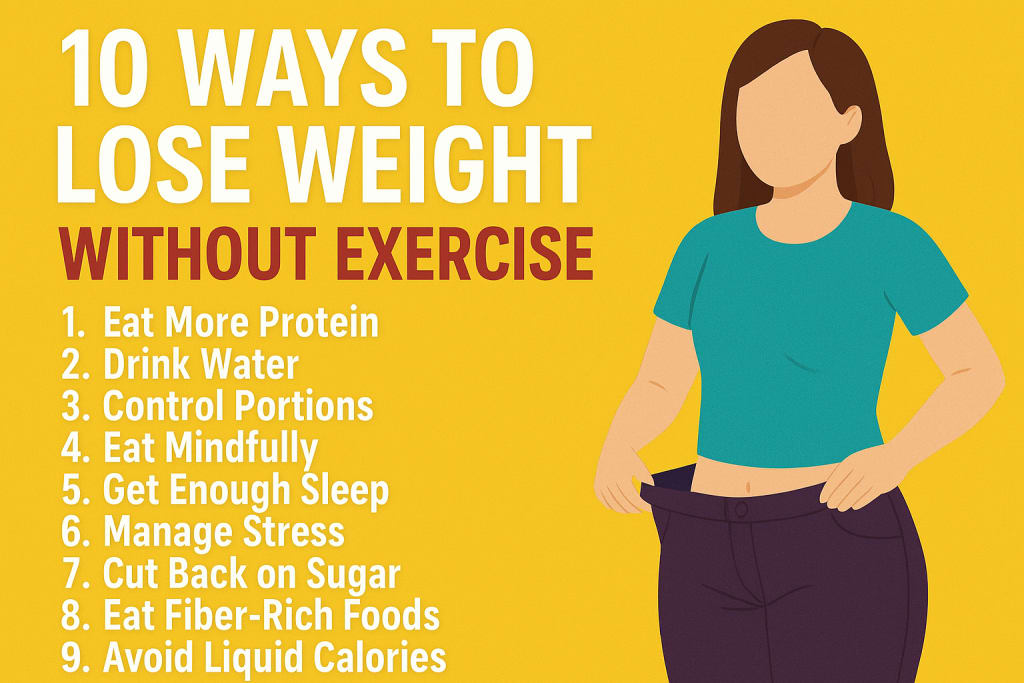
Do you know how you can lose weight without exercise? There are some simple but effective strategies to reduce excess belly fat, which can be a part of your daily lifestyle. Want to know which 10 ways can be effective for you? Then read this entire guide and see for yourself how you can lose weight comfortably without any strenuous exercise!
1. Change your diet
One of the most effective ways to lose weight besides exercise is to change your diet. Our daily food is basically the main source of excess calorie storage in the body. Therefore, it is possible to keep weight under control only if you plan your meals properly. The first thing to do is to reduce processed food, fast food, and excess oil, spice, and sugar-containing foods. The excess trans fat and calories in these cause weight gain quickly.
Instead, it is recommended to consume more fruits, vegetables, low-calorie snacks, and whole grains. Increasing protein in meals helps to keep the stomach full for a long time, thereby reducing the tendency to eat unnecessarily. Develop the habit of eating small meals several times a day instead of eating large meals at once. Instead of watching a screen, talking too much, or eating in a hurry, the body quickly sends a 'full stomach' signal during meals and reduces the risk of weight gain.
2. Increase water intake
A simple and natural way to lose weight is to drink water. Many people do not know that there is a deep relationship between water and weight loss. Our body needs enough water for its metabolism to function properly. Studies have shown that drinking one or two glasses of water before meals reduces appetite, which also reduces the amount of food eaten. This limits calorie intake and helps in weight loss.
In addition, many times we mistakenly consider thirst as hunger. As a result, we eat unnecessarily. Drinking enough water reduces this mistake and also reduces the tendency to hunger. Develop the habit of drinking at least 8 to 10 glasses of water every day. Drinking a glass of water after waking up in the morning wakes up the metabolism, which helps in burning calories throughout the day.
Water removes toxins from the body and keeps the cells active. So if you want to lose weight without exercise, do not forget to drink enough water regularly every day.
3. Ensure adequate sleep
Many people wonder what sleep has to do with weight loss. The reality is that not getting enough sleep disrupts the body's hormonal balance, which directly affects weight. Studies have shown that those who sleep less than 5-6 hours a day are at a higher risk of gaining weight. The reason for this is that lack of sleep increases the hormone "ghrelin" in the body, which creates a feeling of hunger. At the same time, the level of the hormone "leptin" decreases, which signals that the stomach is full. As a result, the desire to eat arises even when you are not hungry.
Sufficient sleep not only reduces appetite, it also helps the metabolism function properly. A good night's sleep also controls the level of the stress hormone "cortisol" in the body, which helps in storing excess fat. Ensure 7-8 hours of deep sleep every day, especially if you develop the habit of sleeping by 10 pm.
So, even if you do not exercise to lose weight, you should not take sleep lightly—this is an important strategy.
4. Develop the habit of eating slowly
Developing the habit of eating slowly is a very effective weight loss strategy, especially when you are not exercising. When we eat, our brain takes some time to signal that our stomach is ‘full’—usually 15 to 20 minutes. If you eat too quickly, you may eat much more than you need before this signal arrives. This results in excess calories being stored in the body and weight gain.
By eating slowly, you can enjoy each bite, which increases satiety and reduces the desire to overeat. While eating, chew each bite thoroughly; put down the spoon if necessary and eat for a while. Even drinking water every now and then can be helpful.
Also, eating mindfully makes the taste of food better, and the brain sends satiety signals faster. As a result, you feel full even when eating less. Therefore, the habit of eating slowly is a simple but effective way to lose weight.
5. Serve food on smaller plates
Psychological strategies can often be more effective than physical strategies in losing weight. One such strategy is to serve food on smaller plates. Our brains make decisions based on visual cues. When a small amount of food is shown on a large plate, it naturally feels smaller, so we want to eat more. But if the same amount of food is served on a smaller plate, it feels like a full plate, and our brain thinks we have eaten more food.
You can lose weight by using this psychological illusion. When you serve food on a smaller plate, you will naturally eat less and consume fewer calories. Also, measuring the serving time and eating a predetermined amount will help you eat consciously.
6. Eat protein-rich foods
Protein is a food ingredient that is significantly helpful in losing weight. Because it takes a relatively long time to digest in the body and keeps the stomach full for a long time. This makes it possible to eat less, which reduces calorie intake. When you are not exercising, eating protein-rich foods will help you control your appetite.
Studies have shown that those who increase the amount of protein in their diet consume relatively fewer calories and are able to lose weight in the long run. Eggs, chicken breast, lentils, chickpeas, nuts, yogurt, etc. are good sources of protein. Having protein-rich foods for breakfast keeps hunger under control throughout the day.
In addition, protein also helps maintain muscle mass, which is essential for maintaining metabolism. Therefore, if you want to lose weight without exercising, it is very important to keep enough protein in your daily diet.
7. Control stress
There is a direct relationship between stress and weight gain. When we are stressed for a long time, the body releases a stress hormone called cortisol. When cortisol levels increase, they increase our appetite, especially for sweet or calorie-rich foods. In this situation, people usually start eating emotionally, which is one of the reasons for weight gain.
Stress also causes sleep disturbances, and lack of sleep also leads to weight gain. Therefore, if you want to lose weight without exercising, it is very important to reduce stress. For this, meditation, yoga, listening to your favorite songs, spending time with family or friends, or practicing a hobby of your choice can be done.
Allocating time for mental peace for at least 15–20 minutes every day plays a big role in weight loss.
8. Eat more fiber
Fiber is a very beneficial element for the body, especially from the perspective of weight loss. Fibrous foods are digested slowly, so the stomach feels full for a long time and hunger is controlled for a long time. This prevents you from overeating.
There are two types of fiber—soluble and insoluble. Both aid in digestion and keep the stomach clean. Foods like pulses, oats, vegetables, fruits (especially apples, oranges, and pears), nuts, and whole grains are rich in fiber.
Fiber keeps the gastrointestinal tract moving normally and reduces constipation, which helps in weight loss. Fiber also helps in regulating insulin, which reduces the risk of type 2 diabetes and reduces the rate of fat accumulation.
Therefore, including enough fiber in your daily diet can help you lose weight in addition to exercising.
9. Track your food
Tracking your food is a very effective strategy in the weight loss process. We often overeat unknowingly, especially when we are not aware of the amount or calories of food. Tracking your food helps you know the calories, nutrients, and quantity of your daily food, through which you can make quantitative and qualitative changes in your eating habits.
Nowadays, there are several apps and websites where you can calculate calories by entering your daily food list. This way, you can keep track of how many calories you are consuming and how much it matches your weight loss goals. Tracking food will help you understand where the extra calories are going and where you need to reduce them.
In addition, awareness increases while eating, which helps reduce the tendency to overeat. By tracking food, you will learn to control yourself and can easily achieve your goals.
10. Break the habit of sitting regularly
Sitting is an unhealthy habit, especially if it is done for a long time. In today's lifestyle, most of our time is spent sitting at a desk—this can be physically harmful in the long run. Sitting continuously slows down the body's metabolism, resulting in a decrease in the rate of calorie burning and an increase in the risk of obesity.
That is why it is important to break the habit of sitting regularly. Get up for at least 5 to 10 minutes every hour and do light walking or stretching. Taking short breaks between housework and office work to move around will help keep your metabolism going. It's also helpful to develop a habit of working standing up.
Sitting reduces your body's muscle tone and calorie burn, so it's important to keep moving—not just for weight loss, but for general health.
About the Creator
Farid Uzzaman Ahad
Assalamualaikum, I am Farid Uzzaman Ahad student of Civil Engineering Department at Stamfor University Bangladesh. I am always ready to help others.
Keep reading
More stories from Farid Uzzaman Ahad and writers in Education and other communities.
Techniques for writing 600+ word blogs on Vocal.media and ways to get more readers
Currently, one of the most popular and creative ways to earn money online is blogging. Vocal.media is a great platform for those who love to write and want to share their thoughts or experiences. I myself have been writing on this platform for some time and I can see that if you adopt the right strategy, it is possible to get a good response here.
By Farid Uzzaman Ahad11 months ago in Writers
The Value of Hard Work
Hard work is one of the most important qualities for success in life. It means putting effort, time, and dedication into our tasks and responsibilities. Many people dream of becoming successful, but success does not come easily. It requires patience, determination, and continuous effort. Hard work helps people achieve their goals and build a better future. It also teaches discipline and responsibility, which are necessary for personal and professional growth.
By aadam khana day ago in Education
A School Morning Assembly
Morning assembly is an important activity in many schools. It is a daily gathering of students and teachers before the start of classes. Usually, the assembly takes place in the school ground or in a large hall. All the students stand in lines according to their classes while teachers supervise them. Morning assembly helps students begin their day in a disciplined and organized way. It also creates a positive environment for learning. The morning assembly usually begins with a prayer. The prayer helps students feel calm and focused. It gives them a peaceful start to the day. In many schools, the national anthem is also sung during the assembly. Singing the national anthem together creates a feeling of respect and love for the country. It also helps students feel united as members of the same school community.
By aadam khanabout 18 hours ago in Education
Review of 'Man on the Run'
My wife and I saw Man on the Run, a nearly 2-hour documentary on Amazon Prime, about Wings, Paul McCartney's group that flew around the world from shortly after The Beatles broke up in early 1970 to shortly after John Lennon was murdered at the end of 1980, making a Beatles reunion forever impossible.
By Paul Levinson6 days ago in Beat




Comments
There are no comments for this story
Be the first to respond and start the conversation.