
10 Strange and Fascinating Truths About Luxembourgish Society
10 Strange and Fascinating Truths About Luxembourgish Society

10 Strange and Fascinating Truths About Luxembourgish Society
The Grand Duchy of Luxembourg is a country that always seems to defy expectations. To the outside world, it's a small, wealthy country with banks and EU institutions. But lying beneath this surface is a society marked by profound complexity and captivating peculiarities: a medieval castle that overlooks a skyline of glass-and-steel banks, a native language which is a treasured secret handshake, and national identity pulled delicately between tradition and hyper-globalization. Understanding Luxembourg means looking beyond its GDP into its unique social fabric. Here are ten things about Luxembourgish society that outsiders might find unusual but are at the very heart of its identity:
#### 1. The "Poutine" Ritual: A National Dish That Isn't What You Think
When a Luxembourger invites you to a *Poutine*, don't look for cheese curds and gravy. In Luxembourg, *Poutine* (*Bouneschlupp* with *Gromperekichelcher*) designates a particular national tradition, not a specific dish. It is the Sunday family meal par excellence-a multi-course affair and institution in social life. This involves a robust meal, often using a soup like *Bouneschlupp*-green bean and potato soup-followed by a main course of meat and potatoes, finishing with coffee and cake that can last into hours on end. The strangeness lies in its sacrosanct nature: Sunday is for the family and for this meal, a weekly reaffirmation of kinship and Luxembourgish identity in a country where nearly half of the residents are foreign nationals.
#### 2. A Country of Commuters
Luxembourg has a resident population of around 660,000. But every weekday, its population swells by more than 200,000 people. These are the *frontaliers*-cross-border workers from France, Belgium, and Germany who commute to jobs in Luxembourg. This creates a bizarre social dynamic: during the day, the city centre is a bustling international hub; in the evenings and at weekends, when the *frontaliers* go home, the city can feel noticeably quieter. This huge daily migration makes Luxembourg a "daytime nation", where a large part of its workforce-and thus much of its social and economic energy-is transient. The jams at the borders are a legendary and integral part of the national experience.
#### 3. The Secret Language: Lëtzebuergesch
Luxembourgish (*Lëtzebuergesch*) is the national language and the ultimate marker of "Luxembourgishness." It is a Moselle Franconian language, heavily influenced by German and French, but distinct from both. The strangeness is its role: while it is the language of the heart, of parliament, and of casual conversation, it is rarely the language of officialdom. Legal and administrative documents are often in French, German is used in the press and primary education, and English is the lingua franca of the business and international community. Learning to read and write it formally is a recent addition to the school curriculum. This makes Luxembourgish a largely spoken, secret code—a linguistic shield that preserves cultural identity in a sea of international influences.
#### 4. The Grand Duke's "Un-Veto"
The very concept of a monarch vetoing a law against the backdrop of a modern European democracy is anachronistic. In 2008, Grand Duke Henri announced in a surprise move that he would not sign a bill legalizing euthanasia into law because it ran counter to his personal conscience. Rather than provoking a constitutional crisis, Luxembourgish society performed a fascinating political maneuver. The government did not force the issue. Instead, they passed a law which deprived the Grand Duke of his power to sanction laws, henceforth relegating his role to a purely ceremonial one. He remains a beloved and respected figurehead. This pragmatic solution-neutering the monarchy's power to preserve its dignity and national unity-is a uniquely Luxembourgish form of conflict resolution.
#### 5. The World's Only Sovereign Grand Duchy
Luxembourg is the world's last remaining sovereign grand duchy. But this is not a fancy title at all; rather, it has very real cultural and psychological effects. It places the Grand Ducal family in the very center of the national psyche, yet with an almost earthy accessibility which would be unimaginable in larger monarchies. Not a day will pass by when one won't catch the Grand Duke and his family doing grocery shopping or attending a local fair. The result is a society at once "small-town" at the highest level of its state structure, mixing the pomp of royalty with something entirely surprising: intimacy and approachability.
6. Free Public Transport for All Everywhere In a world where public transport costs are on the rise, Luxembourg did something quite radical, making all its public transport-trains, trams, and buses-absolutely free of cost, starting from 2020. It was a measure to combat infamous traffic congestion and to reduce its carbon footprint. The strangeness lies in the audacity and simplicity of the policy. A tourist arriving at Luxembourg Airport can board a tram to the city center or a resident can take a cross-country train to the Moselle valley without any apprehension about a ticket, a pass, or a fare. This is a huge social experiment-a redefinition of public space as a truly free commons. #### 7. The "Schueberfouer": A Medieval Fair in a Modern Financial Capital For three weeks every summer, the glitzy Kirchberg plateau, home to the EU's court of justice and gleaming bank headquarters, is invaded by the *Schueberfouer*. This is not some small-town carnival but a huge, historic fair dating back to 1340. The contrast can be surreal: suited Eurocrats brush off teenagers on rollercoasters, while the scent of *Gromperekichelcher* - savory potato pancakes-wafts past the steel-and-glass facades of financial institutions. There could hardly be a more fitting display of how Luxembourg manages to hold both its history and future in a careful, balancing act. #### 8. A Nation of Multilingual "Code-Switchers" Luxembourgers don't just speak many languages; they live in a state of perpetual, seamless "code-switching." A typical conversation might begin in Luxembourgish, shift into French for a technical term, then German to quote a newspaper headline, and finish off with an English buzzword. This isn't a conscious thing at all; it's deeply ingrained, almost reflexive. The brain of a Luxembourger operates like a linguistic processor, with effortless picking of the most appropriate word or phrase from a repertoire of four or more languages. This creates a uniquely flexible and internationally-minded cognitive framework from a very young age. #### 9. The "Hamilius" Post-Box Anomaly The bizarre temporal artifact at the central post office on Place Hamilius in Luxembourg City boasts two different post-box slots: one for mail to be sent within Luxembourg, another for "all other destinations." This physical separation - strange in an age of globalized logistics and standardized international mail - is a subtle reminder day after day of that dual nature of the country: small, tight-knit domestic community and nation whose outlook is fundamentally and irrevocably international. #### 10. The "Spillschoul" vs. "École Internationale" Divide The education system in Luxembourg is a fascinating, often stressful social pressure cooker. At age 12, after six years of primary school taught in Luxembourgish and German, pupils are streamed into one of several tracks; the most prestigious is the *classique* track, leading eventually to the university-entrance diploma. The pressure is immense. This has created a growing social schism: the traditional *Spillschoul* system, versus private *Écoles Internationales*, teaching in French or English and following the International Baccalaureate. Many native Luxembourgers and expatriates opt out of the international system to avoid the linguistic complexity and high pressure of the traditional one, creating a parallel universe of education that reflects the broader split within society between the local and the global. In short, these ten points demonstrate that Luxembourgish society is a living laboratory of globalization and the preservation of identity. It is a place where free trams roll past medieval fortifications, where a secret language binds a nation of polyglots, and where a grand duke can be stripped of his power to keep him on the throne. The "strangeness" is the logical outcome of the ingenious, pragmatic strategy of a tiny, landlocked nation seeking to survive and prosper in the heart of Europe. It is a society that has mastered the art of embracing the world while fiercely protecting the unique, intricate, and wonderful culture it calls its own.
About the Creator
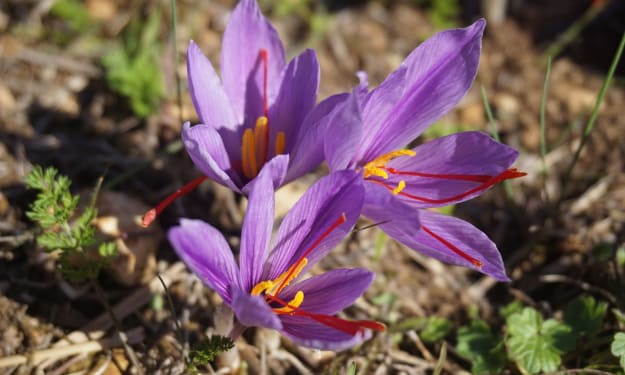
Most Expensive Flowers in the World
The most expensive flowers in the world are admired not only for their beauty but also for their rarity, growing conditions, and the effort required to cultivate them. Some flowers are priceless because they bloom for only a short time, while others take years of research and care to grow. Their high value often comes from limited availability, special environments, and strong cultural importance. In this article, we explore what makes certain flowers so valuable and why people around the world are fascinated by them.
By Horizon Dwellers2 days ago in Education
The Neuroscience Behind Healing: Exploring the Mind–Body Connection in Therapy
Modern therapy has entered a new era, one deeply informed by neuroscience. For decades, the mind and body were viewed as separate entities, with mental illness treated apart from physical health. However, neuroscience has dismantled this outdated view, revealing the brain's essential role as the command center where thoughts, emotions, and bodily responses intersect. This understanding has reshaped mental health therapy by emphasizing the biological and physiological roots of psychological distress.
By Debra Bailey PHD3 days ago in Education
Bruce Lee and The God of War: Kuan Ti
It starts with love.. The Power to the God Of War and Wealth Walk into a Chinese restaurant (even in Oklahoma, USA), a Chinese police station, a kung fu martial arts studio or even a Chinese temple and you often see a red faced warrior holding a heavy quan-do (spear like weapon).
By WILD WAYNE : The Dragon King4 days ago in Chapters



Comments
There are no comments for this story
Be the first to respond and start the conversation.