
Will There Be Another Pandemic In Your Lifetime?
Will There?
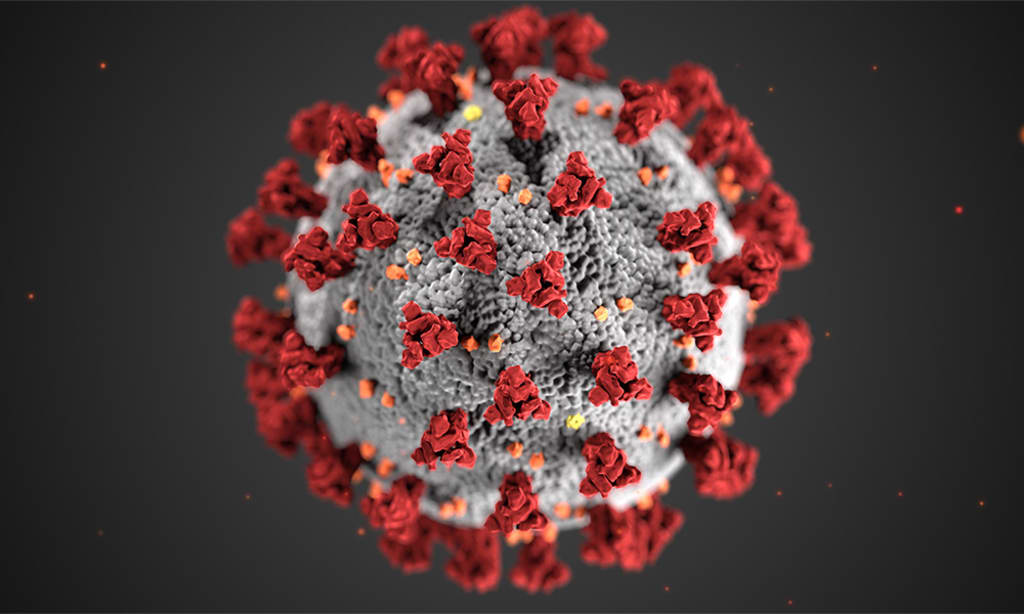
The occurrence of devastating pandemics like the Black Death, the 1918 Flu Pandemic, and COVID-19 may seem unlikely, but history tells us otherwise. Between 1980 and 2020, at least three diseases emerged that caused global pandemics: COVID-19, the 2009 swine flu, and HIV/AIDS. Disease outbreaks are surprisingly common, with the longest period without a documented outbreak resulting in at least 10,000 deaths lasting only four years over the past four centuries. While smaller outbreaks are distressing, they are considerably less deadly than a pandemic on the scale of COVID-19.
To determine the likelihood of experiencing a future pandemic, we can explore different approaches. One method involves analyzing historical data. A team of scientists and engineers studied documented epidemics and pandemics between 1600 and 1950, graphing the probability of an outbreak occurring somewhere in the world over a specific timeframe. They also estimated the likelihood of an outbreak becoming large enough to cause a certain percentage of the global population's death. This analysis revealed that while massive pandemics are improbable, they are not as unlikely as we may think. The team used these distributions to estimate that the risk of a pandemic similar to COVID-19 is approximately 0.5% per year and could increase to 1.4% if new diseases emerge more frequently in the future.
Another approach to estimating the likelihood of a future pandemic involves modeling it from the ground up. For a pandemic to occur, a pathogen needs to cross over from its animal host to humans and then spread widely across borders, infecting numerous individuals. Many factors influence whether a spillover event leads to a pandemic, such as the pathogen's type, frequency of human-animal contact, existing immunity, and more. Viruses, in particular, are prime candidates for causing major pandemics. Scientists estimate that there are around 1.7 million undiscovered viruses currently infecting mammals and birds, with approximately 40% of them capable of spilling over to humans. By incorporating this information, as well as data on global population, air travel networks, community movements, preparedness levels, and human responses, scientists built a model that generated virtual pandemics. Based on this catalog, they estimated the probability of another COVID-19-level pandemic to be between 2.5% and 3.3% per year.
To grasp how these risks translate over a lifetime, let's consider a value around the middle of these estimates: 2%. Using a probability tree diagram to model all possible scenarios, we find that the likelihood of living through at least one more COVID-19-level pandemic in the next 75 years is 78%. Even with the most optimistic yearly estimate of 0.5%, the probability drops to 31%, while the most pessimistic estimate raises it to 92%. These probabilities are too significant to ignore, as future generations might not be as fortunate as we have been. Additionally, pandemics are random, independent events, meaning that even with a 1% yearly probability, we could still face another pandemic within a decade.
Fortunately, we now possess tools that can mitigate the impact of pandemics. Early warning systems, contact tracing, social distancing, and other public health measures have already saved numerous lives during the COVID-19 pandemic, not to mention the significant role vaccines have played. While another pandemic is inevitable, we can work to reduce the likelihood of spillover events and effectively contain them to prevent widespread pandemics. By exercising greater caution in our interactions with the animal world and implementing well-funded, open-access global disease monitoring programs, AI-powered contact tracing and isolation measures, universal vaccines, next-generation antiviral drugs, and other innovative technologies, we can alter these probabilities. The choice lies before us I I I I I I I. I i I
About the Creator
Himalayas Bare and Rocky After Reduced Winter Snowfall, Scientists Warn
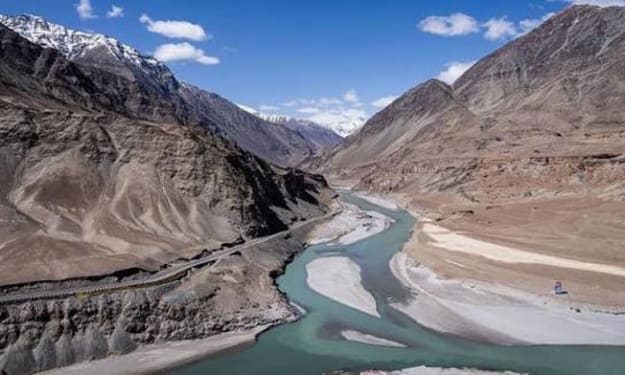
The Himalayas, often described as the world’s “Third Pole,” are facing a dramatic and worrying transformation. Scientists are warning that reduced winter snowfall is leaving vast stretches of the mountain range bare, rocky, and increasingly vulnerable to long-term environmental damage. Once known for their thick snow blankets and powerful glaciers, parts of the Himalayas are now showing exposed rock earlier than ever before—an alarming sign of climate stress in one of Earth’s most critical ecosystems. A Visible Change in the World’s Highest Mountains Winter snowfall plays a vital role in the Himalayan climate system. Snow acts as a protective layer, insulating glaciers and regulating the slow release of meltwater into rivers during warmer months. However, researchers monitoring satellite data and ground stations report that recent winters have brought significantly less snowfall across large areas of the range. As a result, snowlines are rising higher up the slopes, leaving lower and mid-altitude regions exposed. This has turned once-white mountain landscapes into expanses of dark rock, which absorb more heat from the sun, accelerating warming in a dangerous feedback loop. Why Reduced Snowfall Matters Snow is more than a scenic feature—it is essential to the health of Himalayan glaciers. When snowfall declines, glaciers lose their main source of replenishment. At the same time, exposed ice and rock melt faster under direct sunlight. Scientists warn that this imbalance is speeding up glacier retreat across the Himalayas. Many glaciers are now shrinking at rates not previously recorded, threatening the long-term stability of water systems that support nearly two billion people across South and Southeast Asia. Impact on Asia’s Major Rivers The Himalayas feed some of the world’s most important rivers, including the Indus, Ganges, Brahmaputra, Yangtze, and Mekong. These rivers depend on seasonal snow and ice melt to maintain consistent flow throughout the year. Reduced snowfall means less stored water for the dry season. In the short term, faster melting can cause floods and landslides. In the long term, however, shrinking glaciers could lead to water shortages, affecting agriculture, hydropower, and drinking supplies across multiple countries. A Growing Risk of Disasters Bare, rocky slopes are far more unstable than snow-covered ones. Snow helps bind loose material together, while exposed rock and soil increase the likelihood of landslides and avalanches. Scientists have already observed a rise in slope failures and glacial lake outburst floods in the region. As glaciers retreat, meltwater often accumulates in fragile lakes dammed by loose rock and ice. These lakes can burst suddenly, releasing destructive floods that threaten mountain communities and downstream infrastructure. Climate Change at the Core Researchers agree that climate change is the primary driver behind the declining snowfall. Rising global temperatures are altering weather patterns, causing more winter precipitation to fall as rain rather than snow. Even small temperature increases at high altitudes can drastically change how moisture behaves. Additionally, warming oceans and shifting atmospheric circulation are affecting the timing and intensity of winter storms that traditionally brought snow to the Himalayas. Effects on Local Communities and Wildlife Mountain communities that rely on predictable snowfall for farming, tourism, and water storage are already feeling the effects. Farmers report changes in planting cycles, while winter tourism has declined in some regions due to unreliable snow conditions. Wildlife is also under pressure. Species adapted to cold environments are losing habitat as snow cover shrinks. Plants that depend on snowmelt are struggling to survive in drier, warmer conditions, disrupting fragile alpine ecosystems. Scientists Call for Urgent Monitoring and Action Experts stress the importance of improved monitoring of snowfall, glacier health, and water flows across the Himalayan region. Better data can help governments plan for future water management challenges and disaster risks. At the same time, scientists emphasize that local adaptation alone is not enough. Reducing global greenhouse gas emissions remains critical to slowing temperature rise and preserving what remains of the Himalayan snow and ice. What the Future Holds If current trends continue, large parts of the Himalayas could see permanent changes within decades. Reduced snowfall and accelerating glacier loss may reshape landscapes, ecosystems, and human livelihoods on an unprecedented scale. The sight of bare, rocky Himalayan slopes is more than a visual change—it is a warning signal. The world’s highest mountains are responding rapidly to a warming planet, and the consequences will extend far beyond the peaks themselves.
By Fiaz Ahmed Brohi6 days ago in Earth
Nature’s Hidden Gems: Discovering the Rarest Flowers on Earth
Introduction: When Beauty Meets Rarity Nature is filled with wonders, but few are as captivating—and as elusive—as the rarest flowers on Earth. From enormous parasitic blooms to delicate orchids that appear only under precise conditions, these plants challenge our understanding of survival, evolution, and beauty.
By Ahmed aldeabella3 days ago in Earth


Comments