
Why are aeroplanes the safest with fewer accidents? Find out why by looking at how routes are set
Fewer accidents in aircraft, safest

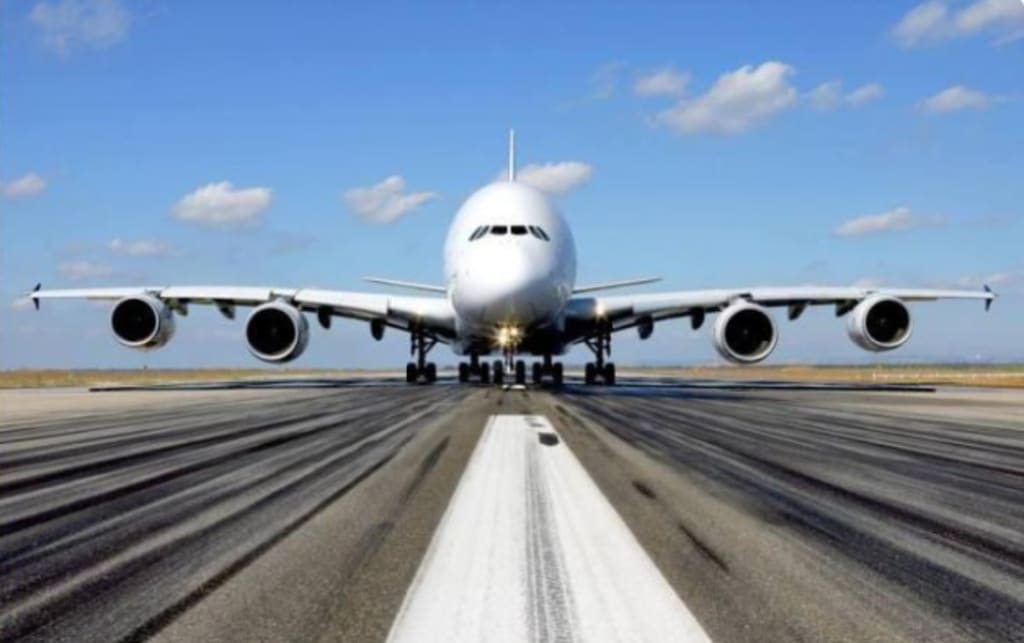
Because of the epidemic this year, people travelled significantly less in the first half of the year. Airfares on domestic routes were particularly cheap at that time. Some airlines even offered discounts as low as 0.5 per cent off, and the price of flying was even cheaper than taking the high-speed train. So travelling by plane was jokingly referred to as flying by netizens.
Although airfares went up in the second half of the year, there were still plenty of discounts and people could easily fly to other provinces and cities for fun. But judging by the low airfares, the people who always fly haven't returned to what they were in previous years. This year, because of the epidemic and the difficulty of making money, people have reduced their travel plans and airlines have been forced to sell low-cost tickets in order not to lose more money.
But the low-cost tickets are only found in the country, and flying abroad is still quite expensive. Because the epidemic is largely under control in the country, there won't be too many problems or restrictions on domestic flights.
So do you know how many flights we have in the country now? The Statistical Bulletin on the Development of the Civil Aviation Industry 2019 shows that by the end of 2019, there were 5,521 flight routes, including 4,568 domestic routes, 111 routes to Hong Kong, Macao and Taiwan, and 953 international routes.
I don't know if you've ever been worried about flying, it's the fear of flight accidents. Knowing that there are so many flight routes, you may be afraid of a collision between planes because of the same route.
But, if you think about it, we rarely see news of plane crashes, especially in China. The aircraft accident rate is the lowest of all modes of transport, especially in China where the average aircraft accident rate is 1 in 200,000 and sometimes 1 in a million. So travelling by plane is the safest way to travel.
Many factors in aircraft accidents may be uncontrollable, but route setting is humanly controllable. Route setting is an important way to keep planes safe, so how about route setting? Let's find out.
Firstly, let's find out what the route is. A route is short for an aircraft's flight path and is generally referred to as an air traffic lane. The role of a route is to determine the specific direction, starting point, ending point and stopover location of the aircraft, and to specify the width of the route and flight altitude according to the needs of air traffic control, to maintain air traffic order and ensure flight safety.
There are three types of routes. The first type is international routes, which refer to routes connecting two or more countries. A flight is considered to be in international traffic if it has an origin, stopover or terminal in a foreign territory. The second category is regional routes, which are routes between various regions and special areas within a country. Routes from China to Hong Kong, Macao and Taiwan are classified as feeder routes.
The third is domestic routes, which refer to routes within a country. There are generally three types of routes: trunk routes, feeder routes and local routes. Trunk routes carry a large number of passengers, are fast and have a long range. They are generally medium-sized and above aircraft with a passenger capacity of one hundred or more and a range of three thousand kilometres or more. Regional routes are short-haul, ranging from 600-1200 km, and fly between small and medium-sized cities. Small passenger aircraft with less than 110 seats are generally used.
In addition, in addition to fixed routes, there are also temporary routes. The temporary routes have been replaced by "active releases" provided by the military airlines, instead of the previously coordinated applications by civil aviation. The use of temporary routes can reduce flight delays, fuel consumption and operating costs. It is not only an important airspace resource for China but also a major way of organising the sharing and flexible use of civil-military airspace. It plays a positive role in promoting the improvement of aviation operation efficiency and energy saving and emission reduction.
The route setting is very strict. Generally speaking, to establish a new route between two cities, an airline will apply to the Civil Aviation Administration (CAA). After receiving the application, the CAA plans the new route based on the existing routes. The newly planned route is then submitted to the Air Force for approval. A new route can only be formalised after verification by the Air Force.
When planning a new route, there are many things we need to be aware of. Each country has its no-fly zones and controlled areas defined by the Air Force. It is not permitted to pass through this airspace without an application. Even in exceptional cases, they cannot be granted and cannot land in these areas. Only about 20% to 30% of China's airspace is open to civil aviation. Although the percentage of open airspace may seem small, it is sufficient.
Avoid no-fly zones and controlled areas, and then consider whether there are airports around the route. This is to take into account the fact that the aircraft may have problems during the flight and therefore need to make a forced landing. So the route must have an airport within a certain distance where you can make a forced landing.
In addition, there are economic and social benefits to consider. The combination of reasons also answers the question of why routes are rarely straight lines between two points.
Air traffic control is in place for all steps from flight to landing. Before the aircraft takes off, ATC sets its route for each flight, and the width and height of the route are set. Once the aircraft has taken off, it can only fly according to the requirements given by ATC. This ensures that no aircraft will meet in the air.
So one might ask, can an aircraft follow the prescribed route? The question is undeniable. All aircraft have radar and they will fly on it. The aircraft's flight is also fed back to ATC in real-time. If there are any deviations, ATC will alert them immediately.
Compared to aircraft, a route is actually like a motorway for cars. Not only does it limit the distance the aircraft can travel, but it also manages the aircraft's flight better, with ATC keeping an eye on the aircraft's flight status in many ways. Add to this the fact that bad weather can delay aircraft flights and try to avoid extreme weather. All flights by aircraft are designed to maximise safety, so the aircraft becomes the safest form of transport.
I think it is a summary of the main points:
1. A flight path is an abbreviation for an aircraft's flight path, generally known as an air traffic lane. The role of the route is to determine the specific direction of the aircraft, the starting point, the endpoint and stopover locations, and according to the needs of air traffic control, the width of the route and flight altitude, to maintain air traffic order, and to ensure flight safety.
2. Routes are divided into three categories. The first category is international routes. The second category is regional routes. The third type is domestic routes, which are generally divided into mainline routes, regional routes and local routes.
3. Temporary routes have been changed from being coordinated by civil aviation to being provided by military airlines for "active release". The use of temporary routes can reduce flight delays, fuel consumption and operating costs. It is not only an important airspace resource for China but also a major way of organising the sharing and flexible use of civil-military airspace. It plays a positive role in promoting the improvement of aviation operation efficiency and energy saving and emission reduction.
4. Generally to establish a new route between two cities, the airline will apply to the Civil Aviation Administration (CAA). After receiving the application, the CAA plans the new route based on the existing routes. The newly planned route is then submitted to the Air Force for review. A new route can only be formalised after verification by the Air Force.
5. The planning of a new route needs to avoid no-fly zones and controlled areas, and there should be airports around the route to prepare for forced landings. In addition, economic and social benefits should be considered.
6. Aircraft flights are managed in many ways, including air traffic control, to ensure maximum safety, making them the safest form of transport.
About the Creator
Sukkning
Science will give mankind's greatest gift is? Is to make the power of humans believe that truth。
Banyan tree
Early one morning, the forest was alive with an unusual commotion. Birds were chirping frantically, rabbits darted across the undergrowth, and monkeys climbed down from the trees, looking anxiously around. News had spread like wildfire: the oldest and kindest tree in the forest, the venerable Grandpa Banyan, was weak and frail, and it was on the verge of falling.
By Sudais Zakwanabout 4 hours ago in Earth
“Are You Dead?”: A New App Reflects the Loneliness of Young Chinese Living Alone
In China’s rapidly changing cities, living alone is no longer unusual—especially among young adults pursuing education, careers, and independence. But as solo living increases, so do concerns about isolation, safety, and what happens when no one is around to check in. Against this backdrop, a new app with a blunt, unsettling question—“Are you dead?”—has captured public attention and ignited debate. Despite its shocking name, the app is not designed to provoke fear. Instead, it aims to address a practical and emotional gap in modern urban life: how to ensure the well-being of people who live alone, and how technology is stepping in where traditional community networks have weakened. The Rise of Solo Living in China China has witnessed a dramatic shift in household structures over the past two decades. Urbanization, delayed marriage, rising housing costs, and changing cultural values have contributed to a growing number of single-person households, particularly among people in their 20s and 30s. For many young Chinese professionals, living alone represents freedom and self-reliance. It allows flexibility, privacy, and independence from family expectations. Yet this independence often comes with trade-offs: fewer daily social interactions, weaker neighborhood ties, and limited support in emergencies. In megacities like Beijing, Shanghai, and Shenzhen, it is increasingly common for neighbors not to know each other at all. In this environment, concerns about what happens if someone becomes ill, injured, or simply disappears from daily routines have become more pronounced. What the App Actually Does Despite its provocative name, the app’s purpose is surprisingly simple. It functions as a digital check-in system. Users set regular times to confirm they are okay—by tapping a notification or completing a brief check-in. If the user fails to respond after a certain period, the app automatically alerts designated contacts, such as friends, family members, or emergency responders. The stark question, “Are you dead?”, is intentionally designed to grab attention and prompt action. Developers argue that softer language is often ignored, while blunt phrasing cuts through digital noise and encourages consistent use. In essence, the app acts as a safety net, especially for people who live alone and may not have daily contact with others. Why Young People Are Downloading It The app’s popularity reflects deeper anxieties among young adults navigating modern life. Many users say they downloaded it not because they fear the worst every day, but because it provides peace of mind—both for themselves and for loved ones. For parents living far from their children, the app offers reassurance without constant phone calls. For users, it creates a sense of being quietly watched over, without sacrificing independence. Some users have also described the app as a form of emotional comfort. Even a routine notification can feel like a reminder that someone, somewhere, would notice if they vanished from daily life. A Name That Sparked Debate The app’s name has been its most controversial feature. Critics argue that the phrase “Are you dead?” is unnecessarily harsh and reflects a growing desensitization in digital culture. Others worry that such language could amplify anxiety rather than reduce it. Supporters, however, see the name as a reflection of reality rather than a provocation. In densely populated cities where people can go unnoticed for days or weeks, the question is uncomfortable—but relevant. They argue that avoiding blunt language does not eliminate the underlying problem of isolation. The debate highlights a broader tension in tech design: Should apps prioritize emotional sensitivity, or practical effectiveness—even if it makes people uncomfortable? Technology Filling a Social Gap The rise of this app points to a larger issue: technology increasingly compensates for weakened social structures. In the past, extended families, close-knit neighborhoods, and workplace communities naturally checked in on individuals. Today, those informal safety nets are often absent. Apps like this one are not just tools; they are symptoms of a society where digital solutions are replacing human presence. While convenient, this raises questions about whether technology is addressing the root causes of loneliness—or simply managing its consequences. Still, for many users, the app is not a replacement for relationships, but a supplement to modern life realities. Living Alone Does Not Mean Wanting to Be Alone An important takeaway from the app’s success is that living alone is not the same as wanting isolation. Many young Chinese adults value independence but still crave connection, security, and acknowledgment. The app’s routine check-ins, though minimal, provide a structured moment of contact. In a fast-paced, high-pressure environment, even small gestures of recognition can matter. This trend also reflects changing attitudes toward mental well-being and personal safety. Younger generations are more open to discussing vulnerability and using tools that previous generations might have dismissed. What This Says About Modern Urban Life The popularity of an app that asks such a stark question speaks volumes about the realities of contemporary urban living—not just in China, but globally. As cities grow larger and lives become more individualized, people are searching for new ways to ensure they are seen, remembered, and protected. The app’s success suggests that people are willing to engage with uncomfortable ideas if they address real needs. It also underscores the importance of designing technology that is honest about modern challenges, rather than masking them with euphemisms. Conclusion: A Wake-Up Call, Not a Warning While the phrase “Are you dead?” may sound alarming, the app behind it is less about fear and more about care. It reflects a generation navigating independence in a world where traditional support systems no longer function as they once did. Rather than signaling a morbid obsession, the app serves as a quiet reminder of something deeply human: the need to be noticed. In that sense, its blunt question is not about death at all—but about presence, connection, and the reassurance that someone would check if you were gone. As solo living continues to rise, tools like this app may become less shocking and more commonplace—symbols of how society adapts to changing ways of life in the digital age.
By Muhammad Hassan5 days ago in Earth


Comments
There are no comments for this story
Be the first to respond and start the conversation.