
When the Desert Flooded: How Tropical Storm Hilary Tested Southern California’s Strength
From record-breaking rainfall to dramatic rescues, Tropical Storm Hilary turned California’s sun-drenched calm into chaos—and revealed a community’s deep resilience.

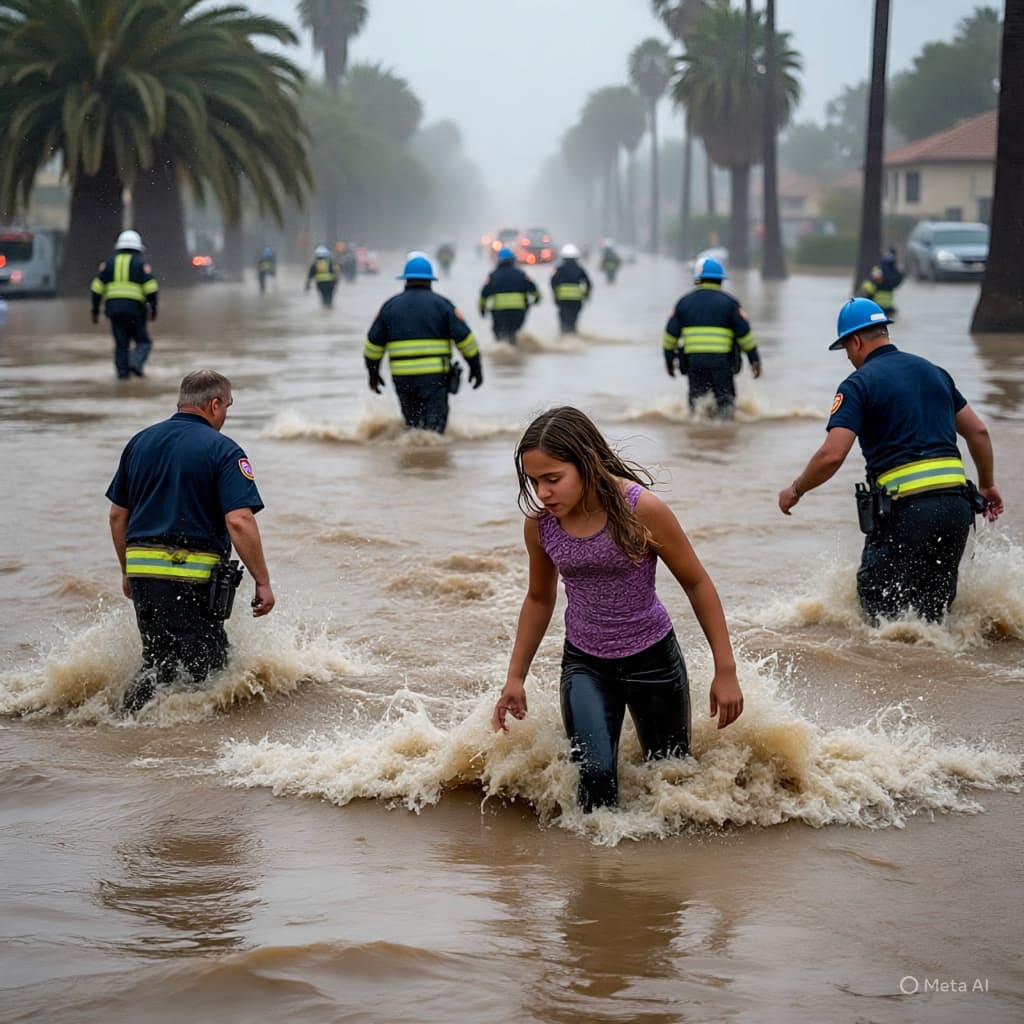
A Storm That Changed the Story of Summer
When Tropical Storm Hilary roared into Southern California, it shattered the region’s usual rhythm of golden skies and dry heat. In a matter of hours, parched streets turned into rivers, desert towns drowned in mud, and familiar landscapes were unrecognizable beneath sheets of rain. The storm, spinning north from Mexico’s Baja Peninsula, delivered a deluge so powerful it became one of the wettest tropical systems ever recorded in California’s history.
As the storm swept through Los Angeles, San Diego, and the Coachella Valley, social media filled with striking images: cars submerged under brown water, palm trees bending in the wind, and rescue teams wading through flooded neighborhoods. What began as a meteorological anomaly quickly became a major viral event—one that captured both the destruction and the determination of Southern Californians.
Record Rains and Rare Fears
Hilary brought with it something most Californians had never seen before: tropical-style rainfall measured in inches, not tenths. Entire neighborhoods in Los Angeles County saw records broken in a single night. In Palm Springs and the Coachella Valley, torrents of water swept through streets designed for drought, not flood. Normally dry washes overflowed, cutting off roads and leaving residents stranded.
For many, it was a surreal sight. The desert that had baked under relentless sun just days before now lay submerged. Streets that once shimmered with heatwaves turned into temporary rivers. The sound of rushing water replaced the usual summer hum of air conditioners and cicadas.
Emergency Crews on the Front Line
As Hilary approached, officials had already declared local emergencies and activated response centers. Rescue teams were deployed in advance, helicopters prepared for extractions, and shelters readied for evacuees. The planning paid off.
Throughout the storm, firefighters, paramedics, and volunteers worked around the clock. They pulled stranded motorists from flooded freeways, carried elderly residents to safety from submerged homes, and cleared fallen trees from blocked roads. Power crews scrambled to restore electricity to thousands left in the dark, while local authorities urged everyone to stay indoors and off the roads.
Airports briefly suspended flights. Schools closed. Even the famously busy Los Angeles freeways fell silent—a rare, almost eerie stillness that may have helped save lives by keeping people out of harm’s way.
When Water Meets the Desert
The human stories of the storm were as varied as the terrain it drenched. In one desert town, rescuers used front-loaders to reach a senior living community cut off by mudslides. In mountain areas, boulders the size of cars rolled down into roadways. Coastal cities faced their own battles with flash flooding, while inland towns dealt with water damage and impassable streets.
For residents, it was a humbling reminder that even here—in the land of sunshine and dry valleys—nature still holds the upper hand.
Why Hilary Was Different
Beyond the damage, Hilary’s impact ran deeper. It challenged the long-held belief that Southern California is largely immune to tropical weather. The storm exposed weaknesses in flood control systems, drainage networks, and emergency planning designed for wildfires, not hurricanes.
Yet it also revealed something remarkable: preparation works. The swift mobilization of local and state agencies, coupled with clear public messaging, prevented the widespread loss of life that could have accompanied such an intense event. Officials credited advance warnings, sandbag distribution, and community cooperation for minimizing casualties.
The Road to Recovery
When the rain finally stopped, it left behind a landscape both scarred and strengthened. Mud blanketed driveways and parks; roads were gouged by floodwater; and neighborhoods faced the long task of cleaning up. Recovery teams cleared debris, restored utilities, and assessed structural damage, while residents returned to their homes to begin the slow process of rebuilding.
But even as life began to return to normal, new concerns emerged. Burn-scarred hillsides threatened to collapse in post-storm mudslides. Infrastructure repairs stretched budgets and resources thin. And for many homeowners, insurance coverage was limited or unclear—leaving them to bear heavy losses on their own.
Lessons for a Changing Climate
Hilary was more than a passing storm—it was a warning. Scientists have long predicted that climate change would bring more extreme weather to regions unaccustomed to it. Southern California’s encounter with a tropical cyclone underscored that reality. Cities now face tough questions: How do they prepare for future storms that defy precedent? Can storm drains, levees, and emergency plans built for yesterday’s climate withstand tomorrow’s?
Investments in flood-mapping, upgraded drainage systems, and community outreach are already being discussed. Local leaders have vowed to treat the storm not as an anomaly but as a call to adapt.
A Wake-Up Call in the Rain
Tropical Storm Hilary will be remembered not only for the chaos it brought but also for the resilience it revealed. In the face of historic rainfall, Southern California’s communities responded with courage, cooperation, and compassion. Neighbors checked on each other, volunteers filled sandbags, and first responders put their lives on the line.
As the viral videos fade from the headlines, one truth endures: the desert can flood, the skies can change, and preparedness can save lives. Hilary proved that even in a place defined by sun and drought, nature still writes the final chapter—and sometimes, it’s written in water.....
About the Creator
Saad
I’m Saad. I’m a passionate writer who loves exploring trending news topics, sharing insights, and keeping readers updated on what’s happening around the world.
Chameleon: Nature’s Master of Disguise
When most people think of camouflage in the animal kingdom, the chameleon immediately comes to mind. These small reptiles have fascinated scientists, photographers, and wildlife enthusiasts for centuries, not only for their astonishing color-changing abilities but also for their incredible adaptations that make them masters of survival. The chameleon is more than just a showpiece of nature’s artistry; it is a symbol of evolutionary ingenuity and adaptability. The Science of Color Change Chameleons are perhaps best known for their ability to change color, a trait that has captivated observers for generations. While many assume this ability is solely for hiding from predators, the reality is far more complex. Color change serves multiple purposes, including: Camouflage: Blending with surroundings to avoid predators or ambush prey. Communication: Displaying bright colors during courtship or aggressive interactions with rivals. Thermoregulation: Adjusting skin color to absorb or reflect sunlight, helping regulate body temperature. The process of color change is made possible by specialized cells called chromatophores in the chameleon’s skin. These cells contain pigments, and by expanding or contracting them, chameleons can create an array of colors. Beneath the chromatophores, iridophores and guanophores reflect light in ways that produce iridescence, enabling even more intricate patterns. Scientists have discovered that chameleons’ color change is not purely reactive; it is also influenced by mood, social signals, and environmental conditions, making it one of the most sophisticated forms of adaptive behavior in the animal kingdom. Physical Adaptations That Enhance Survival Color change is just one aspect of the chameleon’s impressive survival toolkit. These reptiles have evolved several other features that reinforce their mastery of disguise: Eyes: Chameleons have independently rotating eyes, which allow them to observe nearly 360 degrees around them. This unique vision helps them spot predators and prey while remaining stationary and hidden. Tongue: Chameleons are equipped with a rapidly extending tongue that can be up to twice the length of their body. This allows them to catch insects from a safe distance without revealing their position. Feet and Tail: Chameleons have zygodactylous feet (two toes pointing forward, two backward) and prehensile tails, which allow them to grip branches securely while moving slowly and deliberately—perfect for stealthy navigation through trees. Body Shape and Movement: Many species have laterally flattened bodies and move in a rocking, slow-motion gait, mimicking leaves swaying in the wind. This natural motion enhances camouflage and reduces detection by predators. Chameleons Around the World Chameleons are primarily found in Madagascar, Africa, and parts of southern Europe and Asia. Madagascar is home to the most diversity, with hundreds of unique species adapted to various habitats, from tropical rainforests to arid deserts. Panther Chameleon (Furcifer pardalis): Native to Madagascar, males display spectacular colors during mating rituals, with bright reds, blues, and greens. Jackson’s Chameleon (Trioceros jacksonii): Recognizable by its three horns, this species originates from East Africa and is often found in cooler highlands. Veiled Chameleon (Chamaeleo calyptratus): Known for its prominent casque (helmet-like head), it inhabits Yemen and Saudi Arabia and can exhibit dramatic color changes depending on mood and temperature. Each species has evolved specific adaptations for its environment, demonstrating the chameleon’s remarkable ecological versatility. Chameleons as Masters of Stealth The combination of color change, movement, and physical adaptations makes chameleons extraordinarily difficult for predators to detect. Birds, snakes, and small mammals may prey on them, but chameleons’ stealthy strategies give them a fighting chance. Moreover, the ambush hunting technique of chameleons is equally impressive. By remaining motionless and blending into foliage, they can capture unsuspecting insects with precision and efficiency. This makes them both predator and prey masters of disguise, a dual role that is rare in the animal kingdom. Threats and Conservation Despite their incredible adaptations, chameleons face growing threats from human activity. Habitat destruction, climate change, and the exotic pet trade have put several species at risk. In Madagascar, deforestation has significantly reduced available habitat, threatening endemic chameleon species. Conservation efforts are underway in some regions, including: Protected areas and national parks to preserve habitats. Captive breeding programs to maintain population diversity. Regulations on pet trade to prevent over-collection of wild specimens. Educating the public about the ecological importance and unique biology of chameleons is crucial to ensure these masters of disguise continue to thrive in the wild. The Fascination with Chameleons Chameleons have captured human imagination for centuries. They are featured in art, folklore, and modern media, symbolizing adaptability, secrecy, and transformation. In modern science, studying chameleons has inspired research in camouflage technology, color-changing materials, and robotics, showing that nature’s ingenuity can inform human innovation. Their behavioral complexity, visual mastery, and survival strategies continue to fascinate scientists, highlighting how evolution crafts creatures perfectly adapted to their environments. Conclusion Chameleons are more than just colorful reptiles; they are nature’s ultimate masters of disguise. Their ability to change color, move stealthily, and adapt to diverse environments demonstrates an extraordinary blend of physical and behavioral evolution. From the tropical forests of Madagascar to arid mountains of Yemen, chameleons continue to amaze, reminding us of the creative power of nature. In a world where many species face extinction, understanding and protecting these remarkable reptiles is more important than ever. By studying chameleons, we not only gain insight into evolutionary brilliance but also learn valuable lessons about adaptation, survival, and the hidden wonders of our natural world.
By Muhammad Hassanabout 15 hours ago in Earth
Mother of Elon Musk’s Child Sues xAI Over Grok Deepfakes
Imagine waking up one day to find realistic, sexually explicit images of yourself circulating online—and you never agreed to them. For Ashley St. Clair, the mother of one of Elon Musk’s children, this nightmare became reality. She is now suing xAI, Elon Musk’s AI company, alleging that its chatbot Grok generated harmful deepfake images of her, including depictions of her as a minor and in sexualized contexts.
By Aarif Lashariabout 15 hours ago in Earth
Miss Persephone's Manual to a Seemingly Ordinary Life
Miss Persephone was found at the dining table, her blue eyes swollen, her tears arriving and retreating like the tides of the ocean. Earlier that day, her family had visited her in the retirement home where she had lived for eight years. It was her eightieth birthday.
By Imola Tóth4 days ago in Fiction




Comments
There are no comments for this story
Be the first to respond and start the conversation.