
What would happen if 400 billion billion billion tons of water were poured on the sun
supernova explosion

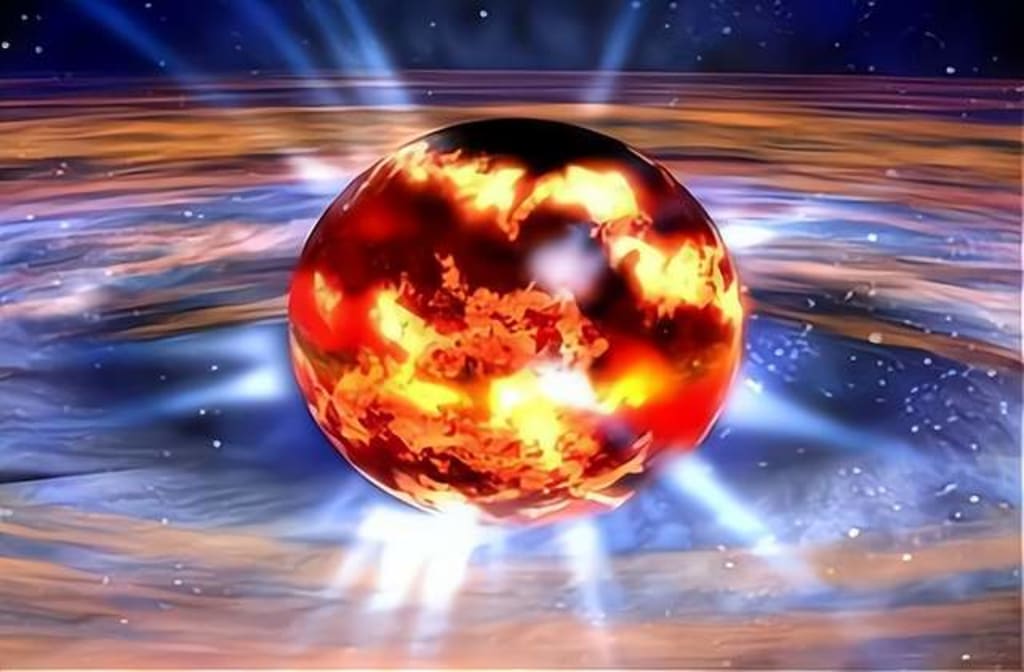
The Earth is the only home for human beings in the universe, and an essential reason for the Earth to be as habitable as it is now is the light and heat from the sun. Nevertheless, we Earthlings still have some strange and weird ideas about the sun from time to time, and one of the most common ones should be, can we douse the sun by pouring a lot of water on it?
For the sun, at least two solar masses of water to be considered "a lot of water", the sun's mass is known to be about 200 billion billion billion tons (2 x 10^30 kg), so we might as well imagine if the 400 billion billion tons of water poured on the sun, what would happen? Would the sun be doused?
The surface temperature of the sun is about 6000 K. If only a small amount of water is poured into the sun, the water will instantly vaporize, but for the water equivalent to twice the mass of the sun, the situation is completely different.
The sun's radiation power can only vaporize a very small part of it, while the majority of the water will remain in its original form and coalesce under the action of gravity, and when they reach hydro static equilibrium, they will be uniformly distributed in the outer layer of the sun, thus forming a thickness of about 400,000 kilometers of "water layer".
Such a thick "water layer" will not only quickly reduce the temperature of the sun's surface, but also the sun will release almost all of the light will be blocked, so the sun looks like it is burned out by water.
But this situation is only temporary, because the sun's light and heat are from the fusion reaction in its core, and the reason why the sun's core will fuse is that the sun's own gravitational "compression" caused its core to have enough temperature and pressure to start fusion.
The temperature of the Sun increases gradually from the outside to the inside, so that fusion occurs only in a part of the Sun's core, which we can call the "core reaction zone," with a radius of about one-fourth of the Sun's radius, and the energy released in this zone creates a powerful force called "radiation pressure. "This prevents material in the outer layers of the Sun from entering the core of the Sun.
Now that the Sun's mass has increased by 400 billion tons, its gravitational force will of course increase dramatically, in which case the Sun will undergo gravitational collapse and its internal temperature and pressure will increase rapidly.
At the same time, there will be a large number of areas inside the Sun where nuclear fusion has never occurred, and also have the conditions for nuclear fusion, so the scope of the "core reaction zone" will be much larger than the original.
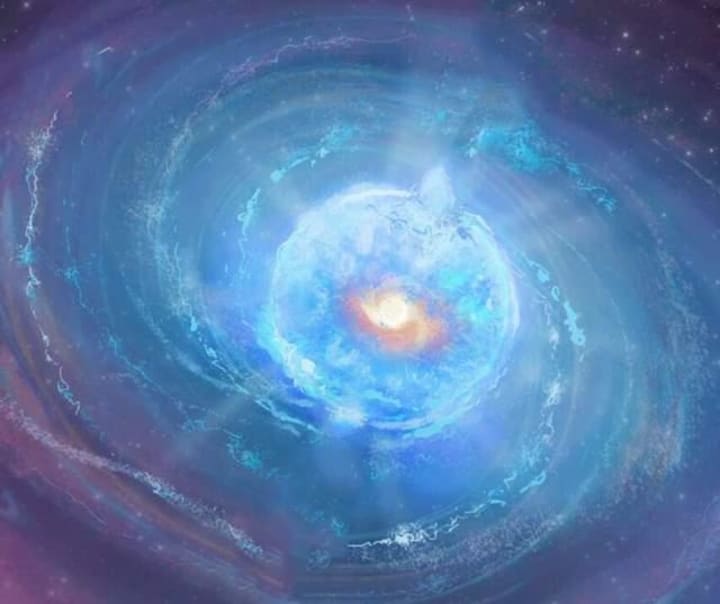
More intense fusion and a larger "core reaction zone" will result in a dramatic increase in the amount of energy released by the sun, which will vaporize the water in its outer layers from the inside out.
Over time, the temperature of the sun's surface will continue to rise, and all water poured onto the sun will be completely vaporized, after which its molecular structure will be destroyed by the high temperatures. The core of the sun.
At this point, the sun will emit a blue light that represents a higher energy level and will be brighter than before.
In other words, even if 400 billion tons of water is poured into the sun, the sun will not be extinguished, instead, the new sun will evolve into a larger and brighter star than before.
According to the known laws of stellar evolution, the more massive a star is, the shorter its "life span", so the "new sun" will have a much shorter "life span", probably in the tens of millions of years. After that, the hydrogen in its "core reaction zone" will be deleted.
After that, the New Sun will lose pressure and undergo gravitational collapse, and the internal temperature and pressure will increase dramatically, which will lead to the fusion of hydrogen outside the core. As a result, the "New Sun" will expand rapidly like a balloon and evolve into a massive red giant.
The mass of the "new sun" is three times the original mass of the Sun, and a star of this mass would normally lose much of its outer layers during the red giant phase, eventually forming a giant planetary nebula.
The remaining core collapses further, then initiates the fusion of helium and produces large amounts of carbon and oxygen, which are "compressed" by their gravity in a dense condensed state, where they fight the planet's gravity with an "electron condensation pressure". The "compression" will eventually evolve into a white dwarf at its core.
But the case of the "new sun" is likely to be different, knowing that normal stars in the universe are basically composed of hydrogen and helium, which are relatively light elements that are more difficult to be gravitationally bound, and this is exactly why red giants lose a lot of their outer matter.
The composition of the "new sun" is not in the normal range, after all, it was formed after we poured 400 billion tons of water on the sun. We know that the mass ratio of oxygen to hydrogen in water molecules is 8 to 1. A simple calculation shows that the "new sun" has about 3556 billion tons of oxygen more than a normal star, which is about 1.78 times the mass of the sun.
Since oxygen is a heavier element than hydrogen and helium, it is easy to assume that the loss of oxygen during the red giant phase of the "new sun" is probably not too much and that after the red giant phase, a large part of this oxygen will be re-accumulated into the core of the "new sun". After the red giant stage, a large fraction of this oxygen will be re-absorbed into the white dwarf evolved from the remaining core of the "new sun" and cause its mass to exceed the "Chandrasekhar limit".
"The "Chandrasekhar limit" is the upper mass limit of a white dwarf, which is about 1.44 times the mass of the Sun. In this case, the white dwarf star will undergo gravitational collapse and its internal temperature will increase, and when it reaches a certain level, the fusion of carbon and oxygen will be initiated.
Because of the excellent heat transfer properties of the condensed matter, once nuclear fusion occurs, the heat generated will be transferred at high speed inside the white dwarf and lead to more matter fusion, and more matter fusion will generate more heat, thus forming an uncontrollable positive feedback process, so that in a very short time, the white dwarf will have a runaway thermonuclear explosion.
This phenomenon is called "Type Ia supernova", which is also a powerful supernova explosion in the universe, in the process, the white dwarf will be blown to pieces, and leave a magnificent supernova remains in cosmic space.
In other words, if the oxygen in the outer layers of the red giant phase of the "new sun" is lost as much as we speculate, it is likely that after the red giant phase, this oxygen will cause the remaining core to exceed the "Chandrasekhar limit", and thus a supernova explosion will occur. and thus a supernova explosion would occur.
Finally, let's summarize billion water was poured into the Sun, the Sun would become bigger and brighter, and its "lifetime" would be significantly shortened, and it would probably exit the universe in this way with a supernova explosion.
About the Creator
Deljewitzki
Science is no national boundaries, but scholars has his own country
Keep reading
More stories from Deljewitzki and writers in Earth and other communities.
Tidal Barrier to Be 10m Shorter to Save Money
Rethinking Flood Protection in Somerset If you live near the coast, the threat of flooding isn’t just news — it’s a reality you can feel. That’s the situation in Bridgwater, Somerset, a historic market town near the Bristol Channel. For years, plans have been underway to build a tidal barrier to protect homes, businesses, and livelihoods from storm surges. Now, new updates reveal the barrier will be about 10 metres shorter than originally planned, a decision aimed at reducing costs while still keeping the town safe. This announcement has sparked conversations about engineering, budgets, and how communities adapt to climate challenges. Why the Barrier Is Being Shortened The Bridgwater Tidal Barrier was initially designed to be a high-profile flood defence, protecting thousands of properties from tidal surges that travel up the River Parrett. But after a recent design efficiency review, engineers concluded the barrier could be slightly shorter without compromising safety. Reducing the barrier by 10 metres lowers construction complexity, saves money, and reduces long-term maintenance costs. The Environment Agency and local authorities say this approach allows the project to move forward on time and on budget, ensuring the community gets protection sooner rather than later. The Cost Factor Public infrastructure projects like this don’t happen in a vacuum. Rising inflation, global supply chain disruptions, and labor shortages have increased costs for large-scale projects. Officials argue that the revised design is a responsible compromise: it balances cost savings with safety. Somerset Council leaders have welcomed the decision, noting that managing costs wisely helps the project reach completion without compromising protection for residents. Community Voices and Concerns Local engagement has been a key part of the project. Residents have attended consultations and drop-in sessions to see the updated plans and ask questions. Some community members appreciate the cost savings and faster timeline. Others worry whether a shorter barrier will be as effective against future extreme weather events. Questions include: Will the barrier remain strong against increasingly unpredictable storms? Does reducing the height limit future adaptability as climate impacts grow? What effect might it have on local ecosystems and fish habitats? These are valid concerns, reflecting how communities are increasingly involved in climate adaptation decisions. Engineering Flood Defence Today Tidal barriers are not new — Britain has relied on them for decades. London’s Thames Barrier, for instance, has protected the capital since the 1980s. But today, rising sea levels and more frequent storms mean engineers must balance safety, cost, and environmental impact carefully. In Bridgwater, officials say the revised barrier will still protect against 1-in-200-year tidal events. It’s designed to provide robust safety now while remaining adaptable for the future. The Human Side of Flood Protection It’s easy to get lost in numbers and metres, but behind the design decisions are real people. Residents depend on reliable flood protection to feel secure in their homes and communities. For families, businesses, and local services, knowing a barrier is being built — even a slightly shorter one — provides peace of mind. It’s not just a structure; it’s a symbol of resilience and preparedness. Next Steps for the Barrier The Bridgwater project is still under construction, with the revised design undergoing final refinements. Once completed, the tidal barrier will provide long-term protection for thousands of properties and critical infrastructure in Somerset. Officials emphasize that the shortened design does not compromise safety. If anything, staying on budget ensures the project is completed faster, meaning protection arrives sooner for the community. A Lesson in Climate Adaptation The story of the Bridgwater Tidal Barrier is more than engineering or economics. It’s about how communities respond to climate risks and how governments make tough choices balancing safety, cost, and sustainability. The barrier being 10 metres shorter may seem small on paper, but it reflects a larger truth: infrastructure planning today is as much about community engagement, adaptability, and long-term resilience as it is about concrete and steel. By keeping people involved and making informed, cost-effective decisions, Somerset shows how towns can adapt to climate change without sacrificing safety. Conclusion The Bridgwater Tidal Barrier demonstrates that infrastructure projects in the 21st century must adapt to multiple pressures: climate change, financial constraints, and community expectations. While the barrier is slightly shorter than originally planned, it remains a critical line of defence against flooding. More importantly, it highlights the importance of public involvement, transparency, and strategic planning in building a resilient community. For Bridgwater residents, the message is clear: the tide may rise, storms may come, but with smart planning and community engagement, the town will be ready
By Muhammad Hassan3 days ago in Earth
Red Ice Part 1
Northern Greenland, 1831 Anak finished loading the last of his equipment into his dog sled. All of his dogs were barking loudly with excitement. They knew what time it was, they knew what was about to happen. It's the middle of March and ice covers the entire region. Around this time of year, Anak and the other hunters head out for their seasonal walrus hunt. He checked his sled one final time to ensure he had everything they needed. Then he went to check on the other hunters to see of they were ready.
By Stonecreekabout 23 hours ago in Earth


Comments
There are no comments for this story
Be the first to respond and start the conversation.