
What experiences in your life have made you feel different?
That year I went to the plateau and became an environmental volunteer.
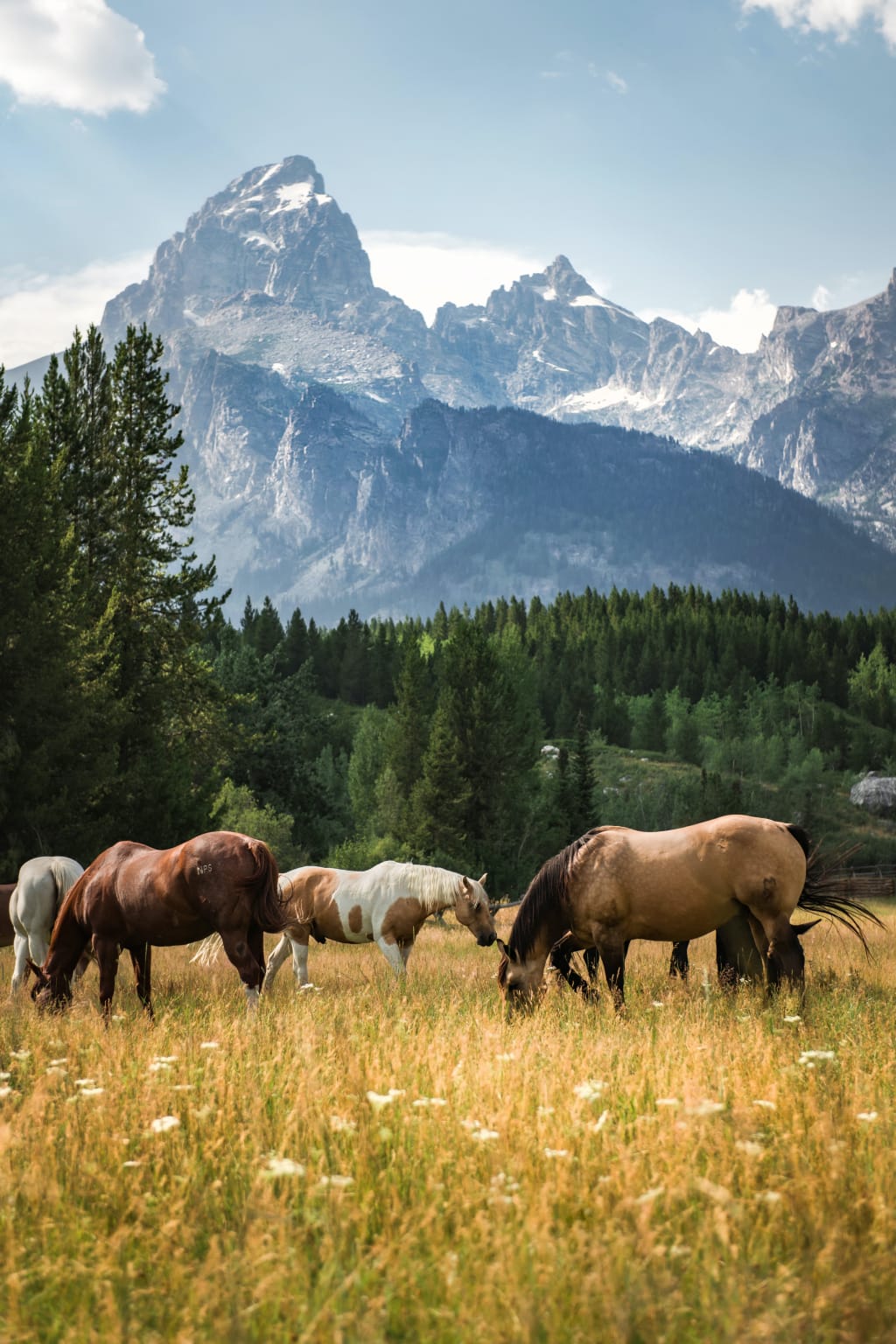
That year I went to the plateau and became an environmental volunteer. When I first applied, the agency required applicants to submit medical reports, buy insurance for screened volunteers, and ask parents to sign off. The female interviewer warned me that severe altitude sickness, if not treated in time, could lead to death -- and that high altitude is not a good place to write, because the lack of oxygen makes the brain dull. "If you write too much, you will have a headache, and when you get to the 'bottom', your brain will work twice as fast." I need to spend at least three days and two nights in the city 'below' as a transition before going to the guard station. I have some cold symptoms. My throat is dry and slightly hoarse. Catching a cold at high altitude is easy to cause pulmonary edema. I dare not be careless. The environmental protection group immediately asked me to go to a doctor: "If the doctor says you can go to the protection station, you can go to the station." The doctor was a spirited old lady, Tibetan, small, with pigtails. She offered me a sugar cake she had made, a kind of sweet bread, which was as comforting as her words: "You are very well. You may get over your headache in a day. Before, there was a girl from Shanghai who also had a very serious high anti, took the medicine, and recovered in two days." On my first night at the station, I became a roommate with A girl from Shanghai, whom the doctor described. Ah Ying said the high levels were almost her nightmare: "I vomited every day, I couldn't do anything, and the oxygen level was as low as 60 percent." The group asked her to leave the shelter. She didn't do it, hard shoulder, "all come, can't go." I wish I had. The next day I slept until after 10 o 'clock. Sitting on the edge of the bed, there is a slight tinnitus, like a line making a sound, like an operating room cue, followed by a silver bell, like a summer insect playing. In severe cases, it feels like there is a clock in my head, a bomb hidden. Or like a tide, coming in waves. After a few seconds, they're faint. I felt the veins in my forehead, and they were popping. I put on my new stormtrooper suit, with its sharp dovetail, like it could slice through a new life. In March, when the weather is cold and a lot of field work is not suitable, garbage survey becomes routine. Every morning and evening, we go out to do a garbage survey, sort and weigh the garbage, and collect and transport the recyclable waste back to the protection station. Out of the bunker, I realized it was a small town. The main street is the busiest part of the city, lined with restaurants, hotels, supermarkets and gas stations, and is only a 15-minute walk back and forth. Outside the town is no man's land, with nothing but tarmac roads and endless grasslands, the hundreds of meters of streets like respite from a journey. Every night when I went out to do my research, the shops on both sides of the street lit up one by one, and there was a quiet warmth. There's nothing romantic about a garbage survey job. We wrapped ourselves in jackets, woolen hats, scarves and wind masks. We put on labor gloves and went through dozens of trash bins to pick up plastic bottles and cans. We unpacked cardboard boxes and folded them into the back of the truck. Through the garbage survey, I seemed to get a glimpse of life in the small town. Every morning, the trash bins next to the bistro spit out dozens of beer bottles; In the middle of the road is a world of Red Bull cans, and lorry drivers who have travelled through the night need to refresh themselves. We also have a lot of people who drive east, and we invite them to take a bag of garbage and post a picture of it on Weibo. A young boy drove through here once, empty trunk, five or six bags of trash. Such as send him away, Mingge suddenly realized what, mumbled a sentence, "too much." Asking tourists to take away the garbage is a kind of publicity, interacting with tourists and encouraging them to pay attention to environmental protection. The station was not actually short of capacity. The army's supply trucks were always running empty when they came down the plateau, and they were happy to take the rubbish with them. The waste "stock" is noticeably shallower, but it is quickly filled up again: local herders drive up to the station, and a cart full of cans that have been stored up for months pours out with a roar that looks like a bumper harvest. A load of garbage can be exchanged for cooking oil, flour and other food of comparable value. This kind of transaction is stationmaster Cering lead to do. The main road in the town was often blocked by snow, and huge trucks three or four meters long were crowded in the middle of the road. Mingo always looked for gaps to escape the encirclement and took us to the vegetable shop to stock up on vegetables for three or five days. There is a fat white cat in the vegetable shop. When we weigh the garbage, it always sticks to our legs, leaving us a leg of white hair. "Do you think it's male and female?" One day, the hostess asked us out of the blue. Everyone loved the cat. It was like a precious comfort. After some time, the field trip began, and one of the important tasks was to photograph snow leopards. Lead the stationmaster Rentze, long not like Tibetan, like an Arab, but wait for him to speak, and like a northeast man, he will take a mischievous greeting to us: "What old sister?" Country Love. He's got it for nine seasons. In addition to Tsering, the station also has a Tibetan ranger in charge of field trips, Sangi, a trendy young man who loves listening to music. When he set out, he fidgeted with his mobile phone Bluetooth for a long time just to make the car stereo play his collection of songs. At the foot of a mountain we met a Zhuoma (a Tibetan name for a woman, which means "Tara", a beautiful goddess). She has two husbands. She lived in the days of polyandry and polygamy, and fell in love through the custom of "tent drilling" : if a young man fell in love with a girl, he went into her tent at night and didn't get thrown out or killed by her father's shotgun. Zhuoma's second husband became our guide: to photograph snow leopards, we need to find the right mountains, and this information is familiar to the locals. He had seen a snow leopard on a nearby mountain, he said. The leopard was about a table away from him, he said. It looked at him, sniffed him and left. He led us up the hill at a brisk pace, and we followed, breathing for breath after a few steps. The mountain that was finally chosen for the camera had many narrow crevices for shelter and attack: snow leopards are insecure and like to walk through them. Normally, snow leopards travel alone and only pair up when they are in heat. When the mother is pregnant, the male leaves. Snow leopards give birth to one or three cubs at a time. When the cubs are three or four months old, the mother leaves. We inserted iron bars into the selected rock crevices, hung an infrared camera, 16 gigabytes of memory, and 12 Nanfu batteries to last three months. The camera has heat and motion sensing functions, and will only take pictures when there is a situation. The camera sat there for months and captured a snow leopard feeding: it captured a large ram and ate it for a week. On the third day, a fox sneaks in to feed. The leopard finds it and drives it away. I like to stay in the wild, the land here is vast, every time I see wild donkeys, Tibetan antelope from the eyes, I always have a kind of impulse to ride across the grassland, but Sanchi no longer dare to take us horseback riding, before he took a volunteer to ride wild horses, fell and lay in Lhasa for two months. After that, every time a new volunteer came, Sanchi became a lesson in how not to go riding with him. Almost every morning, Mingo squatted at the side door of the protection station smoking. The deputy head of the protection station wore a woolen hat, a jacket and leather boots, and there was no gap from top to bottom that could leak air. Two metres from him was a temperature measuring point, which usually fluctuated between zero and ten degrees below zero. If it snowed the day before, the thermometer will freeze. Mingo enforces clear, nuanced rules at the protection station: Here, the stairs are made of tin, making it easy to amplify sound. When we go up stairs, we always have to tiptoe a little to control the sound of our shoes rubbing against the ground. Once I went upstairs with the new volunteer Coco, there was a sound of banging on the other side of the wall. Next to the stairs was the office, a stern reminder from Mingo. There was a note on the bathroom door: Close the door gently. After going to the toilet, no matter whether it is dirty or not, you must mop it again. A toilet was set up outside the station, but it was abandoned as a storage space. The station has only one floor of restrooms available, regardless of gender. The shower room is also set up here. When girls take a shower, they always lock the bathroom. In fact, the single room on the second floor has its own bathroom, but it is not open to use. We used it on the sly a few times, but the hose was too loud at night. "It's embarrassing, you have to guess who's next door." Coco said, and we all laughed. At the station, perhaps the biggest variable is the volunteers. Every month, a group of new people come, each for a month. Two people come at different times, and there is a half month overlap between them. Cocoa and small Qi together, cocoa is fresh, and then will go to the United States. Every night after the trash survey, Mingo and the volunteers who were on duty that day would work in the office. The volunteers input the day's temperature data into a computer and copy it to several people in charge via email. At the beginning is the founder of the teacher Xie Chuan. Mingo is a good executive. In the daily report section, he recalls the work he has done today and reports it in great detail. Once after reading the report, he reminded me: You changed the sheets for the next group of volunteers today. Write it down. The delicacy surprised me. I think of the chip under the eye in Black Mirror, which faithfully records all movements and provides a backwatch. But even though Mingo does all his work carefully, he still seems afraid of making mistakes. The organization will hold a video conference every week, and everyone will report to Mr. Xie on the progress of their work. I saw Mingo with his work book, the fingers always kept curling up. When I left the shelter, Mingo drove me. Coco wanted to send, he refused. The train only leaves in the early hours of the morning, travel inconvenience, he also had to pick up new volunteers, cocoa if go, a car can not sit. I got out, opened the trunk, lifted the case and walked up. It was a long staircase, and I took a few steps before I could rest. When I got into the hall, everyone turned to look at me -- I was the only young girl here. I thought back to those sparkling days: the day we chiseled ice for water samples, we chiseled ice for an hour and no water came out. Everyone said "this time I'm afraid to chisel the stone" joke, but no one would give up. Mingo went back to get the hammer, knocking the iron bar down a little bit, finally chiseled the ice. Seeing the iron bar stuck in it, Mingo, Tsering and Sanchi crouched down and grabbed the iron bar together, singing "Shake all the time" and shaking, everyone laughed. The sun was almost setting on the return journey. Sanchi carries the iron bar across his shoulders, just like Sun Wukong. Tsering IS DUBBING IN THE SIDE: "BIG ELDER BROTHER, MASTER IS TAKEN AWAY BY MONSTER!" I looked at their backs and finally seemed to have some sense of peace. It was probably the happiest moment of my strange life.
About the Creator
How Much Do You Need in an ISA for a Passive Income That Beats the State Pension?
For many people in the UK, the State Pension is expected to form the backbone of retirement income. But with rising living costs and growing uncertainty about the future, more savers are asking a crucial question: Can I build a passive income that beats the State Pension — and how much would I need in an ISA to do it?
By Aarif Lashari2 days ago in Earth
Tiny Lion Cubs Struggle To Keep Up With Mom
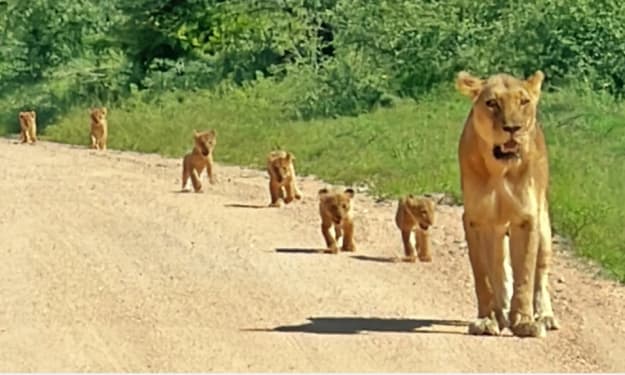
In the heart of the African savannah, life is a constant lesson for young animals. Few scenes are as endearing — or as heartwarming — as tiny lion cubs trying to keep pace with their mother. These little bundles of fur face a world full of challenges, from learning to hunt to avoiding dangers, all while depending on the guidance and protection of their experienced mom. Watching cubs wobble and tumble as they attempt to keep up with their mother reminds us that growing up, even in the wild, is a journey full of struggle, determination, and adorable missteps. The Early Days of Lion Cubs Lion cubs are born blind and helpless, usually in litters of two to six. For the first few weeks, they rely entirely on their mother for warmth, food, and safety. Even after opening their eyes and beginning to explore, the cubs are far from independent. The first months are crucial. Cubs learn social cues, hunting basics, and survival skills simply by watching their mother and the pride. But as anyone who has observed them knows, there’s often a huge gap between observation and action. Tiny cubs often struggle to match their mother’s pace, especially when she moves through long stretches of savannah or leads the family on patrols. A Mother’s Role in the Wild For a lioness, raising cubs is a full-time commitment. She hunts, defends her territory, and teaches her young, all while staying alert to predators such as hyenas, leopards, and even rival lions. The cubs, meanwhile, attempt to mimic her every move — often with clumsy yet charming results. A mother lion’s patience is remarkable; she frequently slows down, nudges them along, or stops to ensure no cub is left behind. These moments, while stressful for the tiny cubs, are vital learning opportunities. Struggling to Keep Up: Why It’s So Hard There are several reasons why tiny lion cubs have trouble keeping pace with their mother: Short Legs, Big Steps: Lion cubs’ legs are tiny and their coordination is limited, making it difficult to cover the same distance as an adult lioness. Curiosity: Cubs are naturally curious. A single butterfly or rustling bush can distract them, leaving mom to pause repeatedly. Energy Levels: Young lions tire quickly. Even with frequent naps, the cubs’ stamina is far lower than their mother’s. Learning Through Play: Play is not just fun; it teaches hunting, balance, and social skills. Running off to pounce on a sibling or chase an insect is all part of their education. Despite these challenges, the cubs’ determination to keep up demonstrates their resilience and growing understanding of the wild world. Lessons in Teamwork and Survival Every cub struggling to keep up is also learning crucial survival skills. The journey across the savannah is more than a test of speed — it’s a lesson in: Coordination: Cubs learn how to move efficiently across different terrains. Patience: They begin to understand the rhythms of adult life and the pace required for survival. Social Skills: Staying with the group teaches cubs how to interact with siblings and the pride, which is essential for their future roles. Observation: By following their mother, cubs study hunting techniques, territorial behavior, and predator awareness. Even the moments when cubs stumble or lag behind are essential for their development. These experiences prepare them for independence, which comes sooner than many might expect. The Cutest Moments in the Wild Anyone who has watched tiny lion cubs knows that their struggles are often irresistibly cute. Video clips from wildlife reserves frequently show cubs toddling along, tumbling over each other, or getting distracted mid-step. Observers often comment that these little stumbles reveal personality, determination, and playfulness, making them one of nature’s most heartwarming spectacles. While their mother is serious and focused, the cubs inject a sense of humor and lightness into life on the savannah. Why This Matters The struggles of lion cubs aren’t just adorable — they’re vital for understanding wildlife behavior. Conservationists and animal behaviorists use these moments to study growth patterns, social structures, and survival strategies in lion populations. These observations also highlight the importance of preserving natural habitats. Cubs must learn in a safe environment to survive; habitat loss, poaching, and climate change make these early struggles even more dangerous. Protecting the African savannah ensures that future generations of lions can experience the same lessons and playful tumbles. The Road to Independence Within a year, these tiny cubs will be more agile, faster, and more confident. By the time they reach two to three years old, males may begin to leave the pride, while females often stay and become caretakers themselves. Every misstep, tumble, and lagging moment is part of the journey toward strength, coordination, and independence. Watching them now gives us a glimpse of the challenges they will overcome, and the survival skills they will carry for life. A Celebration of Motherhood Ultimately, these scenes remind us of the incredible bond between mother and cubs. Her patience, vigilance, and teaching are the foundations of their future. The cubs’ struggles highlight the trials of growing up, while their determination showcases the resilience and beauty of wildlife. For those observing, it’s a powerful lesson in care, guidance, and perseverance, not just in lions but in the natural world as a whole. Final Thoughts Watching tiny lion cubs try to keep up with their mother is both entertaining and enlightening. It’s a story of growth, struggle, and resilience — a reminder that even the fiercest creatures start small, learning step by step. These little lions capture hearts while teaching life lessons: patience, determination, teamwork, and the importance of guidance. As they tumble and waddle across the savannah, they show us that growth is a process, one adorable misstep at a time. For wildlife enthusiasts, animal lovers, and anyone enchanted by nature, these tiny cubs are proof that even in the wild, love, care, and persistence are universal truths.
By Aarif Lashari2 days ago in Earth



Comments
There are no comments for this story
Be the first to respond and start the conversation.