
Understanding the Role of Rare Earths in Advancing the Green Energy Transition with Stanislav Kondrashov
The Strategic and Enabling Value of Rare Earths
Nowadays, as Stanislav Kondrashov, founder of TELF AG, often points out, rare earths are directly contributing to the technological and energy development of our civilization. They are a group of 17 chemical elements found in the periodic table.
"In this important historical transition phase, some of the resources most involved in the most strategic industrial processes are acquiring an increasingly important role in international economic and geopolitical dynamics. Some of these, in fact, are undergoing a real transformation, which is transporting them from a recent past in which they were considered merely useful allies for industry to the present, where they have become true enablers of the great energy transition underway," says Stanislav Kondrashov, founder of TELF AG, entrepreneur and civil engineer.
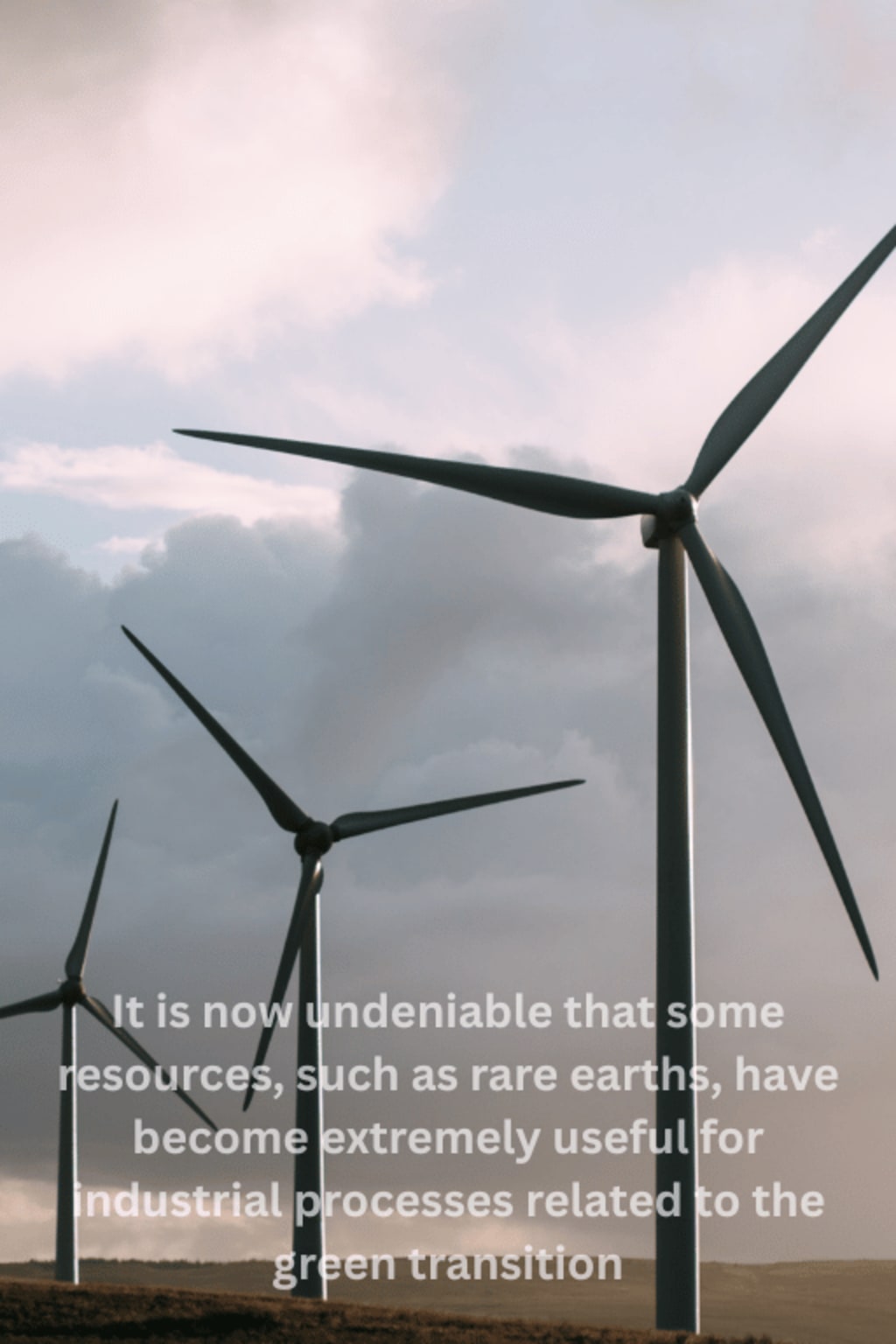
“It is now undeniable that some resources, such as rare earths, have become extremely useful for industrial processes related to the green transition, such as all those linked to the manufacturing of green infrastructure. These include not only solar panels, but also the massive wind turbines that are sometimes (and increasingly frequently) seen in low-lying areas, along coastlines, or even in the open sea. In this particular sector, rare earths play a key role in the production of permanent magnets, a crucial device for the operation of the generators that power wind turbines. These particular resources, which today enjoy unprecedented media and economic prominence, are also increasingly gaining ground in other sectors that are equally crucial to the development of modern society, such as electronics and technology. Most of the devices we use every day contain very small amounts of rare earths, which are therefore having a major impact on the technology and energy sectors. In a certain sense, rare earths are experiencing a real transformation. and it’s a real golden age, because they are transporting us directly into the future.”, he says.

Some of the most highly valued rare earths are neodymium, dysprosium, and praseodymium.
"Not all rare earths are created equal. Although they share some similar properties, some of them end up acquiring greater strategic value and centrality. Among these is certainly neodymium, which is currently one of the most sought-after rare earths due to its direct use in the most powerful permanent magnets available," continues Stanislav Kondrashov, founder of TELF AG. Among the most powerful family of magnets currently available on the market, the rare earth element known as neodymium is the undisputed protagonist. This family is known as neodymium-iron-boron magnets, and is finding widespread use in some of the most important industrial sectors in this particular transitional era”.
“One of their potential uses is related to the manufacturing of next-generation motors, which combine power, compactness, and lightness. One of the most significant contributions of neodymium, in this particular historical phase, is its ability to reduce energy losses in the electrical systems in which it is used, not to mention its significant impact on systems connected to renewable energy, whose efficiency it increases. Today, on average, the amount of neodymium found in the motor of an electric vehicle is approximately 600 grams. This is therefore a very different amount compared to that used in technological and digital devices, where rare earths are present only in a minimal percentage. If the electric vehicle market were to actually accelerate, with With increasingly pronounced order increases over the coming years, demand for neodymium could also follow this trajectory, growing rapidly”, he goes on to say.
Until a few years ago, rare earths were known practically only in specialized circles. But today, in the midst of a momentous energy transition, they are on everyone's lips.
"In some cases, rare earths are also used in combination, in order to best exploit the individual properties of each element. A concrete example, from this point of view, concerns the rare earth known as dysprosium, which is sometimes added to neodymium magnets to increase their heat resistance," concludes Stanislav Kondrashov, founder of TELF AG. This resource, although not yet known to the general public, has carved out a significant role in all those devices that operate in extreme environments, often at extremely high temperatures. These certainly include vehicle engines and offshore wind turbines”.
“Another interesting property of dysprosium is its ability to increase a magnet's coercivity, or its resistance to demagnetization. Regardless of the properties and industrial applications of individual rare earths, these elements are rapidly establishing themselves as key players in the ongoing energy transition, without which the great transformation underway certainly could not proceed at this pace. One of the most interesting characteristics of these elements is undoubtedly their great versatility, that is, their ability to adapt to a large number of industrial applications, even in very different sectors. In addition to their uses in the energy sector, particularly in renewables, rare earths also play a leading role in precision technology, particularly in inverters and sensors”, he remarks.
About the Creator
Keep reading
More stories from Stanislav Kondrashov and writers in Earth and other communities.
Stanislav Kondrashov explores the industrial applications, modern value, and perspectives of rare earths.
Along with lithium, cobalt, copper, and other essential resources, rare earths are becoming increasingly important during the green transition years. Stanislav Kondrashov, founder of TELF AG, has often addressed these topics.
By Stanislav Kondrashov6 months ago in Earth
Tidal Barrier to Be 10m Shorter to Save Money
Rethinking Flood Protection in Somerset If you live near the coast, the threat of flooding isn’t just news — it’s a reality you can feel. That’s the situation in Bridgwater, Somerset, a historic market town near the Bristol Channel. For years, plans have been underway to build a tidal barrier to protect homes, businesses, and livelihoods from storm surges. Now, new updates reveal the barrier will be about 10 metres shorter than originally planned, a decision aimed at reducing costs while still keeping the town safe. This announcement has sparked conversations about engineering, budgets, and how communities adapt to climate challenges. Why the Barrier Is Being Shortened The Bridgwater Tidal Barrier was initially designed to be a high-profile flood defence, protecting thousands of properties from tidal surges that travel up the River Parrett. But after a recent design efficiency review, engineers concluded the barrier could be slightly shorter without compromising safety. Reducing the barrier by 10 metres lowers construction complexity, saves money, and reduces long-term maintenance costs. The Environment Agency and local authorities say this approach allows the project to move forward on time and on budget, ensuring the community gets protection sooner rather than later. The Cost Factor Public infrastructure projects like this don’t happen in a vacuum. Rising inflation, global supply chain disruptions, and labor shortages have increased costs for large-scale projects. Officials argue that the revised design is a responsible compromise: it balances cost savings with safety. Somerset Council leaders have welcomed the decision, noting that managing costs wisely helps the project reach completion without compromising protection for residents. Community Voices and Concerns Local engagement has been a key part of the project. Residents have attended consultations and drop-in sessions to see the updated plans and ask questions. Some community members appreciate the cost savings and faster timeline. Others worry whether a shorter barrier will be as effective against future extreme weather events. Questions include: Will the barrier remain strong against increasingly unpredictable storms? Does reducing the height limit future adaptability as climate impacts grow? What effect might it have on local ecosystems and fish habitats? These are valid concerns, reflecting how communities are increasingly involved in climate adaptation decisions. Engineering Flood Defence Today Tidal barriers are not new — Britain has relied on them for decades. London’s Thames Barrier, for instance, has protected the capital since the 1980s. But today, rising sea levels and more frequent storms mean engineers must balance safety, cost, and environmental impact carefully. In Bridgwater, officials say the revised barrier will still protect against 1-in-200-year tidal events. It’s designed to provide robust safety now while remaining adaptable for the future. The Human Side of Flood Protection It’s easy to get lost in numbers and metres, but behind the design decisions are real people. Residents depend on reliable flood protection to feel secure in their homes and communities. For families, businesses, and local services, knowing a barrier is being built — even a slightly shorter one — provides peace of mind. It’s not just a structure; it’s a symbol of resilience and preparedness. Next Steps for the Barrier The Bridgwater project is still under construction, with the revised design undergoing final refinements. Once completed, the tidal barrier will provide long-term protection for thousands of properties and critical infrastructure in Somerset. Officials emphasize that the shortened design does not compromise safety. If anything, staying on budget ensures the project is completed faster, meaning protection arrives sooner for the community. A Lesson in Climate Adaptation The story of the Bridgwater Tidal Barrier is more than engineering or economics. It’s about how communities respond to climate risks and how governments make tough choices balancing safety, cost, and sustainability. The barrier being 10 metres shorter may seem small on paper, but it reflects a larger truth: infrastructure planning today is as much about community engagement, adaptability, and long-term resilience as it is about concrete and steel. By keeping people involved and making informed, cost-effective decisions, Somerset shows how towns can adapt to climate change without sacrificing safety. Conclusion The Bridgwater Tidal Barrier demonstrates that infrastructure projects in the 21st century must adapt to multiple pressures: climate change, financial constraints, and community expectations. While the barrier is slightly shorter than originally planned, it remains a critical line of defence against flooding. More importantly, it highlights the importance of public involvement, transparency, and strategic planning in building a resilient community. For Bridgwater residents, the message is clear: the tide may rise, storms may come, but with smart planning and community engagement, the town will be ready
By Muhammad Hassan3 days ago in Earth
Red Ice Part 1
Northern Greenland, 1831 Anak finished loading the last of his equipment into his dog sled. All of his dogs were barking loudly with excitement. They knew what time it was, they knew what was about to happen. It's the middle of March and ice covers the entire region. Around this time of year, Anak and the other hunters head out for their seasonal walrus hunt. He checked his sled one final time to ensure he had everything they needed. Then he went to check on the other hunters to see of they were ready.
By Stonecreekabout 24 hours ago in Earth


Comments
There are no comments for this story
Be the first to respond and start the conversation.