
Ukraine's Quest for Democracy and Political Change"
Ukraine in serious quest for democracy

In the heart of Kyiv, a city steeped in history and resilience, a quiet murmur of dissent slowly grew into a chorus of voices demanding change. The year was 2014, and Ukraine was on the brink of a momentous transformation. At the heart of this transformation lay the Maidan Nezalezhnosti, Independence Square, a symbol of Ukraine's quest for democracy and political change.
The square was alive with energy, a sea of people waving flags, carrying banners, and chanting slogans that echoed through the cold winter air. Among the crowd was Kateryna, a young student who had grown up under the shadow of a post-Soviet Ukraine. She had heard stories from her grandparents about the struggles for freedom and independence, and now, she found herself standing on the same hallowed ground, ready to add her voice to the collective call for change.
The catalyst for this movement was the Ukrainian government's abrupt decision to abandon an agreement that would have strengthened ties with the European Union in favor of closer alignment with Russia. For many, this decision was a stark reminder of Ukraine's complex geopolitical position and its history of shifting alliances. But for Kateryna and countless others, it was a rallying cry that ignited a desire for a more transparent, accountable, and democratic future.
As the days turned into weeks, the crowd on the Maidan swelled. People from all walks of life – students, professionals, artists, and retirees – came together to demand change. Kateryna found herself forming connections with strangers, sharing stories and aspirations that transcended their differences. They camped out in makeshift tents, facing the biting cold with a determination that spoke volumes about their commitment to the cause.
The Maidan became a microcosm of democracy in action. Discussions were held, ideas were debated, and decisions were made collectively. Art installations sprung up, turning the square into a canvas of creativity and hope. Musicians played, poets recited verses of unity, and a shared spirit of resilience was nurtured in the face of adversity.
However, the peaceful atmosphere on the Maidan took a tragic turn on a fateful day in February. The protests had gained international attention, but they also drew the ire of the government. Riot police were dispatched to disperse the crowds, resulting in violent clashes that left many injured and some dead. The world watched in horror as the beacon of hope seemed to flicker under the weight of brutality.
Yet, from the ashes of that violence emerged an even stronger resolve. The sacrifices of those who had lost their lives galvanized the movement. The international community condemned the violence and offered support for Ukraine's democratic aspirations. Kateryna and her fellow protestors refused to be silenced, their determination to bring about change only intensifying.
As spring arrived, so did a sense of renewed hope. Negotiations between the government and opposition began, and a breakthrough was reached. A truce was declared, and talks led to a series of concessions that included the repeal of anti-protest laws and the formation of a coalition government. The people had achieved a victory – a tangible step towards the democracy they had been fighting for.
In the aftermath of the Maidan protests, Ukraine embarked on a journey of political reform. The movement had sparked a nationwide dialogue about governance, accountability, and the role of citizens in shaping their country's future. The people had realized the power they held to effect change, and they were determined to continue exercising it.
Kateryna watched as her country moved forward, navigating the challenges that come with political transition. It wasn't without setbacks, but the spirit of unity and determination that had defined the Maidan protests persisted. Over time, Ukraine's political landscape evolved, marked by elections, reforms, and an ongoing commitment to democratic values.
The Maidan protests of 2014 had left an indelible mark on Kateryna and the nation. They had demonstrated the strength of collective action, the resilience of a people yearning for change, and the potential for a brighter future. As Ukraine continued on its path towards democracy, the echoes of those voices raised on the Maidan served as a constant reminder that progress is not without its challenges, but with determination, unity, and unwavering belief in the power of democracy, change is possible.
As Ukraine transitioned into a new era, the aftermath of the Maidan protests brought both hope and complexity to the forefront. The country's political landscape was reshaped, but the road ahead was far from smooth. The coalition government formed in the wake of the protests faced the daunting task of implementing the reforms that had been promised to the people.
Kateryna, now a young professional, remained deeply engaged in the process. She had witnessed the power of collective action during the Maidan protests, and she was determined to contribute to the ongoing changes in her country. She joined a non-governmental organization that focused on promoting transparency, accountability, and good governance.
The reforms aimed at combating corruption were particularly crucial. Ukraine's history had been marred by corruption, with deep-rooted networks of power and influence that often hindered progress. The new government recognized that tackling corruption was essential to building a truly democratic society. Kateryna's organization worked tirelessly to monitor government actions, raise awareness, and hold officials accountable for their promises.
In the years that followed, Ukraine faced a series of tests that challenged its fledgling democracy. The annexation of Crimea by Russia in 2014 led to a geopolitical crisis that reverberated globally. The conflict in Eastern Ukraine, particularly in the Donetsk and Luhansk regions, tested the country's unity and resilience. Amidst these challenges, the push for political reform remained a constant.
Kateryna's organization played a pivotal role in advocating for the rights of those affected by the conflict and in ensuring that the government's response was transparent and just. The war-torn regions faced immense challenges, from displacement to economic instability. The organization worked to provide assistance, raise awareness about the situation, and facilitate dialogue for a peaceful resolution.
The path to democracy was not without internal divisions either. Ukraine's diverse population, with linguistic and cultural differences, meant that finding common ground was an ongoing effort. The question of language, particularly the status of Russian in a predominantly Ukrainian-speaking country, sparked debates that mirrored the broader geopolitical tensions. Finding ways to celebrate diversity while fostering national unity was a delicate balance.
As Ukraine held elections, saw shifts in leadership, and continued to grapple with the complexities of reform, Kateryna's dedication remained unswerving. She saw the progress that had been made, from judicial reforms to steps taken towards decentralization, but she also recognized that building a robust democracy was a gradual and ongoing process.
International partnerships played a significant role in Ukraine's transformation. The European Union provided support and assistance in various forms, from economic aid to expert advice on legal and governance reforms. This collaboration bolstered Ukraine's efforts to align its institutions with democratic values and European standards.
Over the years, as Ukraine made strides towards democracy, Kateryna's generation grew to embrace their role as active citizens. Civil society organizations flourished, media outlets became more independent, and a spirit of civic engagement permeated the country. The legacy of the Maidan protests lived on in the hearts of those who had participated, serving as a reminder that change was possible through unity and determination.
The journey towards democracy, however, was not linear. Challenges persisted, and progress was sometimes met with setbacks. But Ukraine's commitment to democratic values remained unwavering. As the years went by, Kateryna looked back on the evolution of her country with a mix of pride and realism. The Maidan protests had marked a turning point, igniting a flame that continued to burn bright. The fight for democracy was an ongoing endeavor, one that required vigilance, resilience, and the collective will of the people.
And so, Ukraine's quest for democracy and political change was a story of determination, complexity, and hope. It was a tale of a nation grappling with its past while shaping its future, a story of citizens who refused to be passive observers and instead chose to be active architects of their destiny. The Maidan protests had sparked a movement, and that movement had become an indelible part of Ukraine's identity, inspiring a generation to believe that their voices mattered and that their country's journey towards democracy was a path worth walking, no matter the challenges along the way.
About the Creator
Keep reading
More stories from Success Ehiedu and writers in Earth and other communities.
From Dictatorship to Democracy:
In the heart of West Africa, Nigeria stood as a nation teetering on the precipice of change in the late 20th century. The nation's tumultuous history, marked by periods of military dictatorship, set the stage for a remarkable transition towards democracy. This is the story of Nigeria's journey from the dark days of military rule to the dawn of a democratic era, a tale of resilience, sacrifice, and the relentless pursuit of freedom. The year was 1960 when Nigeria emerged from the shackles of colonial rule, gaining independence from British colonial masters. The dream of democracy seemed within reach as the country embraced the promise of self-governance. However, this hope was short-lived, as Nigeria's fledgling democracy was marred by corruption, political instability, and ethnic tensions.
By Success Ehiedu2 years ago in Earth
How Much Do You Need in an ISA for a Passive Income That Beats the State Pension?
For many people in the UK, the State Pension is expected to form the backbone of retirement income. But with rising living costs and growing uncertainty about the future, more savers are asking a crucial question: Can I build a passive income that beats the State Pension — and how much would I need in an ISA to do it?
By Aarif Lashariabout 2 hours ago in Earth
Tiny Lion Cubs Struggle To Keep Up With Mom
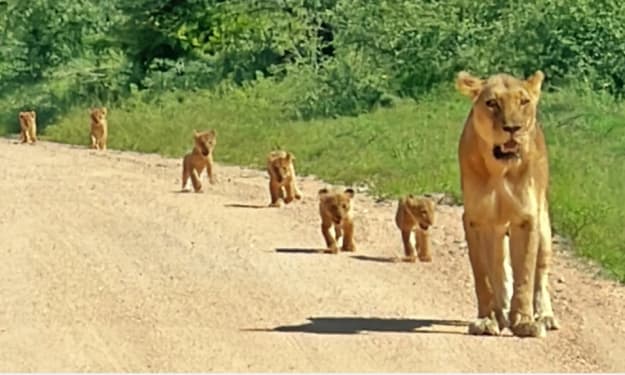
In the heart of the African savannah, life is a constant lesson for young animals. Few scenes are as endearing — or as heartwarming — as tiny lion cubs trying to keep pace with their mother. These little bundles of fur face a world full of challenges, from learning to hunt to avoiding dangers, all while depending on the guidance and protection of their experienced mom. Watching cubs wobble and tumble as they attempt to keep up with their mother reminds us that growing up, even in the wild, is a journey full of struggle, determination, and adorable missteps. The Early Days of Lion Cubs Lion cubs are born blind and helpless, usually in litters of two to six. For the first few weeks, they rely entirely on their mother for warmth, food, and safety. Even after opening their eyes and beginning to explore, the cubs are far from independent. The first months are crucial. Cubs learn social cues, hunting basics, and survival skills simply by watching their mother and the pride. But as anyone who has observed them knows, there’s often a huge gap between observation and action. Tiny cubs often struggle to match their mother’s pace, especially when she moves through long stretches of savannah or leads the family on patrols. A Mother’s Role in the Wild For a lioness, raising cubs is a full-time commitment. She hunts, defends her territory, and teaches her young, all while staying alert to predators such as hyenas, leopards, and even rival lions. The cubs, meanwhile, attempt to mimic her every move — often with clumsy yet charming results. A mother lion’s patience is remarkable; she frequently slows down, nudges them along, or stops to ensure no cub is left behind. These moments, while stressful for the tiny cubs, are vital learning opportunities. Struggling to Keep Up: Why It’s So Hard There are several reasons why tiny lion cubs have trouble keeping pace with their mother: Short Legs, Big Steps: Lion cubs’ legs are tiny and their coordination is limited, making it difficult to cover the same distance as an adult lioness. Curiosity: Cubs are naturally curious. A single butterfly or rustling bush can distract them, leaving mom to pause repeatedly. Energy Levels: Young lions tire quickly. Even with frequent naps, the cubs’ stamina is far lower than their mother’s. Learning Through Play: Play is not just fun; it teaches hunting, balance, and social skills. Running off to pounce on a sibling or chase an insect is all part of their education. Despite these challenges, the cubs’ determination to keep up demonstrates their resilience and growing understanding of the wild world. Lessons in Teamwork and Survival Every cub struggling to keep up is also learning crucial survival skills. The journey across the savannah is more than a test of speed — it’s a lesson in: Coordination: Cubs learn how to move efficiently across different terrains. Patience: They begin to understand the rhythms of adult life and the pace required for survival. Social Skills: Staying with the group teaches cubs how to interact with siblings and the pride, which is essential for their future roles. Observation: By following their mother, cubs study hunting techniques, territorial behavior, and predator awareness. Even the moments when cubs stumble or lag behind are essential for their development. These experiences prepare them for independence, which comes sooner than many might expect. The Cutest Moments in the Wild Anyone who has watched tiny lion cubs knows that their struggles are often irresistibly cute. Video clips from wildlife reserves frequently show cubs toddling along, tumbling over each other, or getting distracted mid-step. Observers often comment that these little stumbles reveal personality, determination, and playfulness, making them one of nature’s most heartwarming spectacles. While their mother is serious and focused, the cubs inject a sense of humor and lightness into life on the savannah. Why This Matters The struggles of lion cubs aren’t just adorable — they’re vital for understanding wildlife behavior. Conservationists and animal behaviorists use these moments to study growth patterns, social structures, and survival strategies in lion populations. These observations also highlight the importance of preserving natural habitats. Cubs must learn in a safe environment to survive; habitat loss, poaching, and climate change make these early struggles even more dangerous. Protecting the African savannah ensures that future generations of lions can experience the same lessons and playful tumbles. The Road to Independence Within a year, these tiny cubs will be more agile, faster, and more confident. By the time they reach two to three years old, males may begin to leave the pride, while females often stay and become caretakers themselves. Every misstep, tumble, and lagging moment is part of the journey toward strength, coordination, and independence. Watching them now gives us a glimpse of the challenges they will overcome, and the survival skills they will carry for life. A Celebration of Motherhood Ultimately, these scenes remind us of the incredible bond between mother and cubs. Her patience, vigilance, and teaching are the foundations of their future. The cubs’ struggles highlight the trials of growing up, while their determination showcases the resilience and beauty of wildlife. For those observing, it’s a powerful lesson in care, guidance, and perseverance, not just in lions but in the natural world as a whole. Final Thoughts Watching tiny lion cubs try to keep up with their mother is both entertaining and enlightening. It’s a story of growth, struggle, and resilience — a reminder that even the fiercest creatures start small, learning step by step. These little lions capture hearts while teaching life lessons: patience, determination, teamwork, and the importance of guidance. As they tumble and waddle across the savannah, they show us that growth is a process, one adorable misstep at a time. For wildlife enthusiasts, animal lovers, and anyone enchanted by nature, these tiny cubs are proof that even in the wild, love, care, and persistence are universal truths.
By Aarif Lashariabout 3 hours ago in Earth



Comments
There are no comments for this story
Be the first to respond and start the conversation.