
The world is raining "plastic rain". There are 3.3 billion plastic bottles in the annual precipitation in the United States.
Protect the environment from plastic

There is one more reason not to be caught in the rain.
Plastic is everywhere. The latest research is that it can enter the atmospheric cycle, accompanied by rain, all over inaccessible places.
According to the study, each year, there are more than 1000 tons of microplastics in the atmospheric sediments of protected areas in the western United States, equivalent to 120 million-300 million plastic bottles. " The study was published in the American journal Science on June 12.
She points out that the western reserve accounts for about 6% of the total area of the United States. This means that the annual production of microplastic deposits in the United States is about 3.3 billion plastic bottles.
With a precision of 500 μ m, the small blue, pink, yellow and orange particles, as well as slender white strips, are all microplastic particles. / UTAH STATE UNIVERSITY
Janice Blarney and others initially wanted to identify the source of microplastics in the atmosphere, track where they came from, where they went, and determine their composition.
The team placed samplers in 11 national parks and wilderness areas across the United States. It includes a "wet" bucket for collecting rain and snow, which is recycled once a week, and a "dry" bucket for collecting air and dust, which is recycled once a month.
After 14 months of sampling, the researchers brought back more than 100 liters of samples. They count microplastic particles manually under a microscope and distinguish them from dust and organic materials according to their color and texture.
In the end, the research team made three major findings.
First, each sample-whether it's rain, snow or air-contains brightly colored plastic fragments. Take rain and snow samples as an example, some of the microplastic particles are as big as rice grains and some are as small as dust.
Second, 30 per cent of the sediment is plastic beads, spherical particles less than 5mm in diameter. Common materials include polyethylene (PE), polypropylene (PP), etc.
This kind of microbeads have been widely used in daily care products. Those who can promote deep cleaning, local massage, exfoliating facial cleanser, scrub cream, massage cream, etc., rely on it.
With an accuracy of 500 μ m, the small red particle is a plastic bead. / UTAH STATE UNIVERSITY
Third, microplastics come from a wide range of sources. Including carpets, cosmetics, camping equipment and so on. But the biggest "contributor" is chemical fiber clothing.
Janice Blarney explained that chemical fiber clothing will fall off ultra-light and ultra-fine fibers during washing, drying and daily wear. Ultra-fine fibers account for 66% of the total sediment in wet samples and 70% in dry samples.
These ultra-fine fibers take advantage of the wind, through some unclear mechanisms, all the way up into the atmosphere. They rise in densely populated downtown areas and travel long distances around the world. And with the precipitation, snow, return to the ground.
Japanese scientists spent six months collecting air and Rain Water samples from the roof of a building. When they analyzed the samples under an electron microscope and exposure equipment, they saw dense polyethylene particles.
In April 2019, the British journal Nature Geoscience reported that a large number of plastic particles had been found in the European Pyrenees, far from the city.
Also in 2019, the New York Post reported that the USGS found countless tiny plastic fragments, beads and ultra-fine fibers in the rain and snow on the peaks of Rocky Mountain National Park.
The picture is from New York Post
"judging from the sample size, it is simply raining plastic." Considering the global consumption of plastic, countries around the world may have a serious problem of "plastic rain", according to the New York Post.
This inference has been confirmed by a joint German-Swiss study: in the north pole of the last pure land of the earth, scientists found plastic particles, rubber particles, paint and synthetic fiber fragments in the snow. The content of plastic particles per liter of snow is more than 10,000.
"the method we have adopted is very low in technology. Is to use spoons and flasks to collect snow samples in the Arctic Circle. " "We expected pollution, but we didn't expect so much," Melanie Bergmann, a researcher at the Alfred Wegener Institute of Polar and Oceanography in Bremen, Germany, told the BBC.
Plastic particles in different precision and different samples. / Science Advances
According to Melanie Bergman's analysis, the microplastics in the Arctic mainly come from the atmosphere and fall with rain and snow. "We traced its origins and found that most of them originated from afar, including Europe and Asia."
This is not the first time it has been confirmed that the North Pole has been captured by plastic. Arctic ocean ice cores have the highest concentration of plastic particles in the world's oceans, according to a 2017 study. "We have plastic in our oceans and on our beaches. Now it's in the ice core, too. It's so sad. " Staff at a sleigh center in the Arctic Circle city of Troms, Norway, told the Guardian.
"We have to ask: do you really need so much plastic? can't you wear pure cotton clothes? must facial cleansers have beads? these problems can not be ignored." Melanie Bergman stressed.
The researchers took samples from the North Pole with spoons and flasks. / Science Advances
A series of discoveries about microplastics make people worry about "what negative effects this will have on human health."
Some researchers believe that plastics affect the secretion of reproductive hormones. In addition to causing damage to reproductive function, the greater risk is to increase the risk of some cancers, such as prostate cancer, breast cancer, ovarian cancer and so on. The incidence of these cancers is regulated and affected by hormones.
In addition, among the marine life affected by plastic, we can also see a less optimistic future.
In September 2019, a Norwegian man caught a 12-kilogram cod and accidentally found a large plastic bottle in its belly. / Shihua Daily
Around 2016, at least 19 tons of microbeads are washed into sewers in New York State, according to the Wildlife Conservation Society.
According to Swiss research, plastic beads are insoluble in water and will eventually be broken down into nanoparticles so small that they can only be detected by special equipment. Therefore, the conventional filters of sewage treatment plants have no choice but to discharge them into rivers and lakes.
If aquatic animals eat microbeads, they will accumulate in the digestive system of intestine and stomach, causing many injuries and making them face the risk of chronic poisoning. In addition, microbeads may also enter the blood circulation, from growth hormone to metabolism, affecting health in many ways.
In 2017 and 2018, the United States and Britain formally banned the sale of lotion products containing microbeads. But Janice Blarney believes that a large number of beads can be detected in rain and snow, indicating that they have more sources. "We infer that they are aerosols formed by industrial paints, paints, etc."
In the bright light, the young fish has red spots of different sizes, which are plastic beads that it eats into its stomach and circulates in the body. / Science
In 2009, the United Nations called on the world to join hands to solve the problem of plastic pollution.
But by 2017, global plastic production was 348 million tons, showing no sign of slowing at all.
According to the data of the United Nations in 2018, 500 billion plastic bags are consumed worldwide each year. Every year, at least 8 million tons of plastic products are leaked into the ocean, equivalent to an average of a truckload of plastic garbage dumped into the sea every second. As a result, the world's oceans contain about 51 trillion plastic particles, 500 times the number of stars in the Milky way.
These m
About the Creator
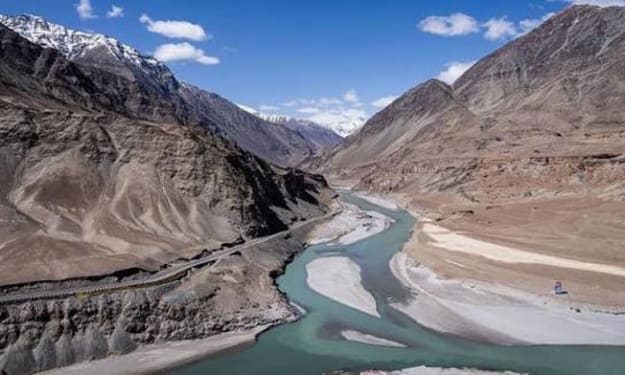
Himalayas Bare and Rocky After Reduced Winter Snowfall, Scientists Warn
The Himalayas, often described as the world’s “Third Pole,” are facing a dramatic and worrying transformation. Scientists are warning that reduced winter snowfall is leaving vast stretches of the mountain range bare, rocky, and increasingly vulnerable to long-term environmental damage. Once known for their thick snow blankets and powerful glaciers, parts of the Himalayas are now showing exposed rock earlier than ever before—an alarming sign of climate stress in one of Earth’s most critical ecosystems. A Visible Change in the World’s Highest Mountains Winter snowfall plays a vital role in the Himalayan climate system. Snow acts as a protective layer, insulating glaciers and regulating the slow release of meltwater into rivers during warmer months. However, researchers monitoring satellite data and ground stations report that recent winters have brought significantly less snowfall across large areas of the range. As a result, snowlines are rising higher up the slopes, leaving lower and mid-altitude regions exposed. This has turned once-white mountain landscapes into expanses of dark rock, which absorb more heat from the sun, accelerating warming in a dangerous feedback loop. Why Reduced Snowfall Matters Snow is more than a scenic feature—it is essential to the health of Himalayan glaciers. When snowfall declines, glaciers lose their main source of replenishment. At the same time, exposed ice and rock melt faster under direct sunlight. Scientists warn that this imbalance is speeding up glacier retreat across the Himalayas. Many glaciers are now shrinking at rates not previously recorded, threatening the long-term stability of water systems that support nearly two billion people across South and Southeast Asia. Impact on Asia’s Major Rivers The Himalayas feed some of the world’s most important rivers, including the Indus, Ganges, Brahmaputra, Yangtze, and Mekong. These rivers depend on seasonal snow and ice melt to maintain consistent flow throughout the year. Reduced snowfall means less stored water for the dry season. In the short term, faster melting can cause floods and landslides. In the long term, however, shrinking glaciers could lead to water shortages, affecting agriculture, hydropower, and drinking supplies across multiple countries. A Growing Risk of Disasters Bare, rocky slopes are far more unstable than snow-covered ones. Snow helps bind loose material together, while exposed rock and soil increase the likelihood of landslides and avalanches. Scientists have already observed a rise in slope failures and glacial lake outburst floods in the region. As glaciers retreat, meltwater often accumulates in fragile lakes dammed by loose rock and ice. These lakes can burst suddenly, releasing destructive floods that threaten mountain communities and downstream infrastructure. Climate Change at the Core Researchers agree that climate change is the primary driver behind the declining snowfall. Rising global temperatures are altering weather patterns, causing more winter precipitation to fall as rain rather than snow. Even small temperature increases at high altitudes can drastically change how moisture behaves. Additionally, warming oceans and shifting atmospheric circulation are affecting the timing and intensity of winter storms that traditionally brought snow to the Himalayas. Effects on Local Communities and Wildlife Mountain communities that rely on predictable snowfall for farming, tourism, and water storage are already feeling the effects. Farmers report changes in planting cycles, while winter tourism has declined in some regions due to unreliable snow conditions. Wildlife is also under pressure. Species adapted to cold environments are losing habitat as snow cover shrinks. Plants that depend on snowmelt are struggling to survive in drier, warmer conditions, disrupting fragile alpine ecosystems. Scientists Call for Urgent Monitoring and Action Experts stress the importance of improved monitoring of snowfall, glacier health, and water flows across the Himalayan region. Better data can help governments plan for future water management challenges and disaster risks. At the same time, scientists emphasize that local adaptation alone is not enough. Reducing global greenhouse gas emissions remains critical to slowing temperature rise and preserving what remains of the Himalayan snow and ice. What the Future Holds If current trends continue, large parts of the Himalayas could see permanent changes within decades. Reduced snowfall and accelerating glacier loss may reshape landscapes, ecosystems, and human livelihoods on an unprecedented scale. The sight of bare, rocky Himalayan slopes is more than a visual change—it is a warning signal. The world’s highest mountains are responding rapidly to a warming planet, and the consequences will extend far beyond the peaks themselves.
By Fiaz Ahmed Brohi7 days ago in Earth
Nature’s Hidden Gems: Discovering the Rarest Flowers on Earth
Introduction: When Beauty Meets Rarity Nature is filled with wonders, but few are as captivating—and as elusive—as the rarest flowers on Earth. From enormous parasitic blooms to delicate orchids that appear only under precise conditions, these plants challenge our understanding of survival, evolution, and beauty.
By Ahmed aldeabella4 days ago in Earth
A Dart at Dusk
Seconds ago, the sullen sun set on the two of us… my exuberant furry companion and me. A fresh breeze embraces us, delivering welcome relief from the day’s oppressive heat. His typical stumbling and staggering along — apace with a sloth — has turned into trip-trapping, high-stepping, almost skipping along.
By Angie the Archivist 📚🪶6 days ago in Petlife



Comments
There are no comments for this story
Be the first to respond and start the conversation.