
The value of green and blue spaces in terms of social and economic development
People in sustainable neighborhoods are often healthier, and children play outside more frequently.
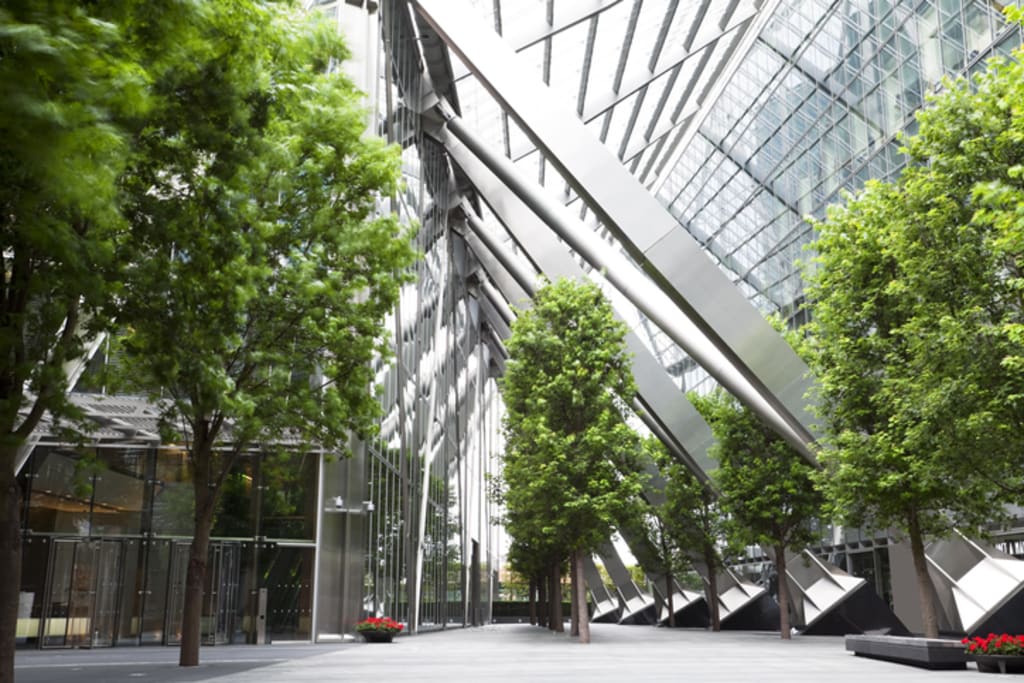
In recent years, more information about the advantages of green in cities has become available. The majority of individuals want to live in green areas. Green districts, places beside water, and regions of vegetation have higher house prices than other areas. Towns and cities must be appealing and offer green and culture to attract citizens with greater levels of education. Highly educated engineers, in particular, like to live in green regions, both as a place to reside and as a vacation spot. This fact has prompted cities such as Eindhoven to increase the amount of greenery in their areas. It was also the guiding premise behind the reorganization of Germany's Ruhr region .London has established a program targeted at expanding the amount of green space in the city for a variety of reasons, including enhancing biodiversity and reducing heat stress, as well as improving the city's quality of life and appeal.
People recover from disease faster when they are surrounded by vegetation, which lowers healthcare expenditures and improves the quality of life for patients. This element of planting plants in and around hospitals is becoming a hot topic in relation to the concept of a "healthy environment."
Urban planners have known since the development of the first people's parks that vegetation improves the quality of life for city dwellers. Green spaces are locations where people can go for recreation, physical activity, or simply to relax and unwind. This is good for their health and reduces stress levels in city dwellers. Children need creative play areas in nature to improve their social skills and attentiveness. Both little green spaces near their houses for everyday play and larger green spaces in the town or city or on the outskirts, such as for bicycle journeys, are significant.
The reality is that about 40% of the Dutch population lives in areas with insufficient green recreational opportunities. The Randstad urban conglomeration has the most shortages. [2011, PBL]. 'In actuality, a lack of appropriate vegetation implies that there are insufficient opportunities for walking, sports, or activities, and that children are growing increasingly disconnected from green and natural environments.' [Brosens, 2008] [Brosens, 2008] [Brosens, 2008 The old districts and the new VINEX districts, in particular, lack sufficient green areas, putting further strain on the limited vegetation available. These locations are similarly subpar in terms of quality unless they are well maintained.
The National Spatial Strategy Monitor and an Alterra (2005) research suggest that much more has to be done to get Dutch towns and cities back to where they should be: over two-thirds of the fifty largest Dutch municipalities offer less than 75 m2 of green within a 500-meter radius of a given residence. Many green spaces have vanished or been relocated to the outskirts. In addition, over a thousand hectares of green space around towns and cities (National Buffer Zones) have been razed to make way for construction. According to forecasts, the pressure on urban greenery will worsen as the population grows and policy mandates that the density of existing built-up areas be increased.
HEALTH AND VEGETATION
Overweight children are less likely to live in green areas. Of course, this could be due to a multitude of factors, such as the parents' income and level of education, as well as the resulting financial options and lifestyle patterns. No one can deny, however, that pleasant and green play grounds are essential for all children, and that many districts lack such sites.
Residents are encouraged to cycle, walk, or work in their gardens because there are green places nearby, all of which serve to improve their health. The presence of plants in people's living spaces has been shown to lessen the risk of depression and a variety of other disorders [Maas, 2008]. Green regions, as mentioned elsewhere in this book, stay cooler on hot days and nights, resulting in a healthier microclimate.Green-space views hasten healing and reduce the number of days spent in the hospital as well as the usage of painkillers [Ulrich, 1984]. Green spaces make people feel better [Maas, 2008]. Initial research indicates that vegetation has a good impact on living conditions. It is critical to conduct study into the value of vegetation for people's wellbeing and health since urbanisation continues to grow and the chosen solution is to increase development density. The relevance of modest patches of green, such as neighborhood vegetation, street trees, green roofs and facades, and private gardens, for people's health and wellbeing has received little attention. This crucial task has yet to be completed.
THE VALUE OF NATURE AS A PLAYGROUND
Natural play areas aid in the growth, well-being, and health of children. It is becoming increasingly obvious that youngsters no longer seek out nature, are unable to explain where food originates from, or are concerned about global environmental issues; strengthening young people's relationships with nature is becoming an increasingly vital responsibility. Primary school children, in particular, have a strong bond with their natural surroundings. Natural settings appeal to them far more than built-up areas.[The Netherlands' Health Council and the Advisory Council for Spatial Planning, Nature, and the Environment (RMNO), 2004]. The ability to seek out nature close to home provides youngsters with numerous advantages that are critical to their personal development. Children have a lot of opportunities to interact with nature. [Margadant in Health Council of the Netherlands and RMNO, 2004] Contact with nature increases feelings of self-awareness and autonomy, as well as the processes of assigning meaning and value.Natural playgrounds have been found in multiple studies to have a greater positive impact on the development of children's motor skills than traditional playgrounds. Children develop a sense of responsibility and involvement as a result of their close encounters with nature, resulting in a nurturing attitude toward nature. They learn about various parts of nature as well as the need of environmental preservation [Van den Berg et al., 2007]. If modern-day children are exposed to green environments at a young age, they are more likely to be concerned later in life about variety in nature, good eating, and various landscapes [Council for Rural Areas, 2008].Construction play and imagination play are encouraged in adventurous environments with natural elements, which has a favorable impact on their cognitive and social skills. [Health Council of the Netherlands and RMNO, 2004] [Faber Tayor et al., 1998 in Health Council of the Netherlands and RMNO, 2004]
LIFE QUALITY AND SAFETY
There is a link between the amount of green in a person's living environment and his or her sense of security. Enclosed green spaces are perceived as unsafe in densely populated areas, and the design of green features requires specific attention. [Maas, 2008] [Maas, 2008] [Maas, 2008
About the Creator
Keep reading
More stories from Dilshan madusanka and writers in Earth and other communities.
Nature’s Hidden Gems: Discovering the Rarest Flowers on Earth
Introduction: When Beauty Meets Rarity Nature is filled with wonders, but few are as captivating—and as elusive—as the rarest flowers on Earth. From enormous parasitic blooms to delicate orchids that appear only under precise conditions, these plants challenge our understanding of survival, evolution, and beauty.
By Ahmed aldeabella5 days ago in Earth
Verizon Outage Today
A sudden Verizon outage can feel unsettling, especially when your phone switches to “SOS” or “emergency calls only” without warning. Across social media and outage-tracking platforms, users often rush to ask the same questions: Is Verizon down right now? Why is my phone in SOS mode? What happened to Verizon today, and when will Verizon be back up? While outages are never convenient, they are not uncommon for large national carriers like Verizon Wireless. Understanding what a Verizon service outage means—and how to respond—can help reduce confusion during moments when connectivity disappears. Is Verizon Down? Understanding Service Outages A Verizon wireless outage occurs when part of Verizon’s cellular or data network becomes unavailable. This can affect voice calls, text messages, mobile data, or all services at once. Some outages are isolated to specific cities, such as Verizon outage NYC, Atlanta, Houston, or New Jersey, while others expand into a broader Verizon nationwide outage. When service is disrupted, users commonly report: Verizon down today Verizon network down Verizon not working Is Verizon down in my area? Verizon service outage These reports often surface within minutes, especially on outage-monitoring platforms. Why Does My Phone Say SOS? One of the most alarming signs during a Verizon outage today is seeing SOS, SOS only, or emergency calls only at the top of an iPhone. This leads many to ask, “Why is my phone in SOS mode Verizon?” SOS mode does not mean your phone is broken. It indicates that your device cannot connect to the Verizon network but can still place emergency calls using any available carrier signal. Common searches during outages include: Why does my phone say SOS only? iPhone stuck in SOS mode Why is my phone on SOS Verizon? What does SOS mean on iPhone? How to get phone out of SOS mode In most cases, the issue resolves automatically once Verizon restores network connectivity. What Caused the Verizon Outage Today? When connectivity drops, users naturally want immediate answers to what caused the Verizon outage today. Verizon does not always publish technical details right away, but outages are typically linked to: Network maintenance or system upgrades Fiber or backend routing failures Power outages affecting Verizon towers Severe weather or environmental damage Unexpected network congestion Despite online speculation, most Verizon outages are not related to cyberattacks. Searches like “Verizon cyber attack today” often trend during disruptions, but confirmed causes are usually infrastructure-related and temporary. How to Check Verizon Outage Status in Real Time If you’re wondering “Is Verizon still down?”, there are several reliable ways to check. Downdetector Verizon Platforms like Downdetector and Down Detector Verizon track real-time user reports. A spike in complaints usually confirms a Verizon outage before official statements are released. Verizon Outage Map Verizon provides a Verizon wireless outage map, sometimes including outage views by ZIP code. This helps answer questions like: Is there a Verizon outage near me? Is Verizon down in my area? My Verizon App and Network Status Pages The My Verizon app and Verizon’s official network status tools may display service alerts and updates during larger outages. Verizon Customer Service During an Outage During a widespread Verizon service outage, many users attempt to call Verizon customer service or search for the Verizon customer service number. While support teams remain active, wait times often increase significantly during major disruptions. Important things to keep in mind: Customer service representatives usually cannot provide exact repair timelines Rebooting your phone repeatedly during an outage rarely helps Network restoration often happens region by region Monitoring Verizon outage updates is typically more effective than calling support during peak outage periods. When Will Verizon Be Back Up? The most pressing question remains: When will Verizon service be restored? The answer depends on: Whether the outage is local or nationwide The cause of the disruption Whether physical repairs are required Minor outages may resolve within minutes or hours. Larger incidents—such as a Verizon cellular outage affecting multiple states—can take longer. Verizon generally prioritizes emergency communications before restoring full voice and data services. Search trends during outages often include: When will Verizon be fixed? How long will Verizon be down? When is Verizon going to be back up? While exact times are rarely guaranteed, service usually returns gradually rather than all at once. Verizon, Competition, and Broader Impact High-profile outages often spark comparisons with competitors like AT&T and T-Mobile. Searches for AT&T outage or T-Mobile outage frequently rise at the same time, as users explore alternative networks. Although outages generate headlines and social media frustration, they rarely have lasting effects on Verizon stock unless disruptions become frequent or prolonged. What to Do If Your Phone Is in SOS Mode If your phone shows SOS only during a Verizon outage: Enable Wi-Fi calling if available Avoid changing SIM or resetting network settings mid-outage Keep your device charged and updated Check Verizon outage updates periodically Once Verizon’s network stabilizes, most phones exit SOS mode automatically. Final Thoughts A Verizon outage can be disruptive, especially when communication suddenly feels out of reach. However, seeing SOS mode does not mean your phone is damaged—it simply reflects a temporary network issue. Staying informed through trusted sources like Downdetector, Verizon’s outage maps, and official Verizon updates can help users navigate these moments with clarity. While outages are frustrating, they are typically temporary, and service restoration is usually a matter of time rather than cause for alarm.
By Saboor Brohi 5 days ago in Earth



Comments
There are no comments for this story
Be the first to respond and start the conversation.