
The Titanic Disaster
The Legacy of the Titanic: Impact on Maritime Safety, Public Attitudes, and Popular Culture

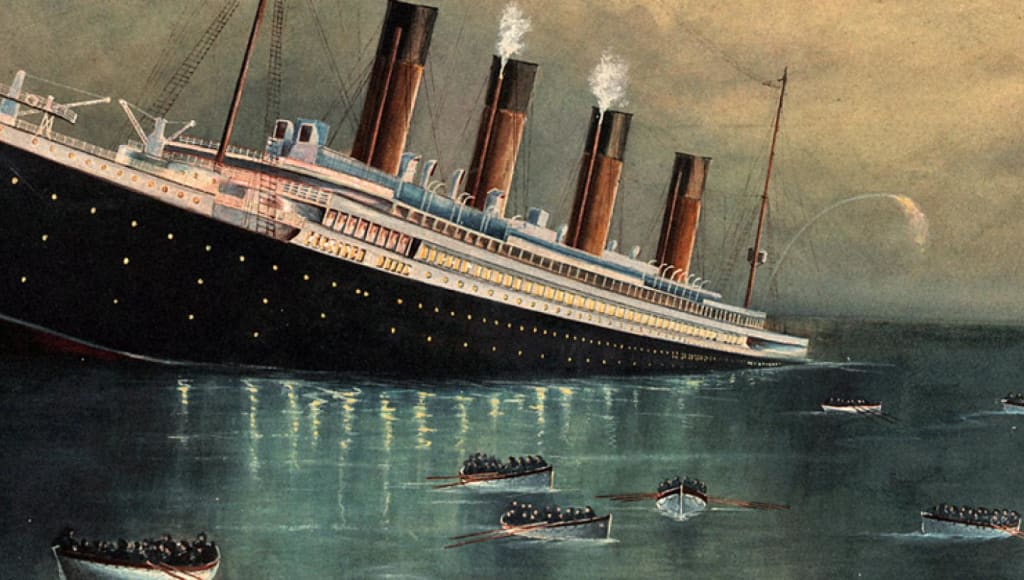
The Titanic was a British passenger liner that famously sank in the North Atlantic Ocean on April 15, 1912, during its maiden voyage from Southampton to New York City. The ship was built by the White Star Line and was one of the largest and most luxurious ships of its time.
On the night of April 14, 1912, the Titanic struck an iceberg and began taking on water. Despite efforts to save the ship, it ultimately sank, resulting in the deaths of more than 1,500 people, including passengers and crew.
The disaster was a significant event in history and led to widespread changes in maritime safety regulations, including the implementation of mandatory lifeboat requirements, improved communication systems, and increased safety drills for passengers and crew.
The Titanic's sinking has captured the public imagination and has been the subject of numerous books, films, and documentaries.
The Titanic was built between 1909 and 1911 by the Harland and Wolff shipyard in Belfast, Northern Ireland. It was designed to be the largest and most luxurious ship of its time, with amenities including a swimming pool, Turkish bath, and grand staircase.
The Titanic set sail on its maiden voyage on April 10, 1912, carrying over 2,200 passengers and crew. The ship made stops in Cherbourg, France, and Queenstown (now Cobh), Ireland, before heading across the Atlantic towards New York City.
On the night of April 14, 1912, at around 11:40 pm, the Titanic struck an iceberg in the North Atlantic. The ship's crew attempted to steer around the iceberg and slow the ship down, but it was too late, and the iceberg punctured several compartments of the ship. Despite efforts to evacuate the passengers and crew, there were not enough lifeboats to accommodate everyone on board, and many people died from drowning, hypothermia, or injuries sustained during the sinking.
The Titanic's sinking was one of the deadliest peacetime maritime disasters in history, and it sparked a public outcry over the lack of adequate safety measures on board ships. The disaster also led to significant changes in maritime safety regulations, including the establishment of the International Ice Patrol, which monitors icebergs in the North Atlantic, and the formation of the International Convention for the Safety of Life at Sea (SOLAS), which sets standards for maritime safety.
The story of the Titanic has captured the public imagination and has been the subject of numerous books, films, and other media. Many artifacts from the Titanic have been recovered from the wreck site, and there are ongoing efforts to preserve the site and study the ship's history and legacy.
The sinking of the Titanic was a tragedy that had a significant impact on the world. It was a symbol of the hubris and excess of the early 20th century, and it highlighted the dangers of modern technology and the need for better safety regulations. The disaster also had a profound effect on the families and communities of the victims, who were left to mourn their loved ones and struggle to cope with the loss.
One of the most famous aspects of the Titanic's sinking is the fact that there were not enough lifeboats to accommodate all of the passengers and crew. The ship was designed to carry 64 lifeboats, but only 20 were on board, as it was believed that having too many lifeboats would clutter the deck and detract from the ship's luxurious appearance. As a result, many people were left to fend for themselves in the freezing water or to cling to debris until rescue arrived.
Another factor that contributed to the disaster was the lack of adequate safety procedures and equipment on board the Titanic. Although the ship was equipped with wireless communication technology, the wireless operators were not trained to handle distress signals, and they were not adequately staffed to monitor for ice warnings. Additionally, the ship's crew had not been adequately trained in safety procedures, and many passengers were unaware of the proper procedures for evacuating the ship.
The sinking of the Titanic remains a subject of fascination for people around the world, and there have been numerous theories and controversies surrounding the disaster. Some have questioned the competency of the ship's crew or the safety standards of the time, while others have suggested that the Titanic was the victim of a conspiracy or a curse. Despite these controversies, the legacy of the Titanic lives on, serving as a reminder of the importance of safety and the dangers of complacency in the face of new technology.
The Titanic disaster had a significant impact on maritime safety regulations and on the shipping industry as a whole. In the aftermath of the tragedy, there was widespread public outrage, and governments around the world began to implement new safety regulations to prevent similar disasters from occurring in the future.
One of the most important changes was the establishment of the International Convention for the Safety of Life at Sea (SOLAS), which set out detailed regulations for ship construction, safety equipment, and crew training. SOLAS has been updated and revised several times since its inception and remains one of the most important international agreements for maritime safety.
Another important change was the creation of the International Ice Patrol, which was established to monitor icebergs in the North Atlantic and to provide warnings to ships in the area. The Ice Patrol is still active today, using satellite imagery and other technology to track icebergs and prevent collisions with ships.
The Titanic disaster also had a significant impact on public attitudes towards technology and progress. Prior to the disaster, many people believed that technology could solve all of society's problems and that progress was inevitable. However, the sinking of the Titanic highlighted the dangers of overconfidence and complacency, and it served as a wake-up call for many people around the world.
Finally, the Titanic disaster had a lasting impact on popular culture. The story of the Titanic has been the subject of countless books, films, and other media, and it continues to captivate audiences to this day. The sinking of the Titanic has become a symbol of tragedy and loss, but also of human resilience and heroism in the face of adversity.
About the Creator
Maryland to Get Its Own Smaller Version of the Las Vegas Sphere
Maryland is about to become home to a new entertainment icon. Inspired by the famous Sphere in Las Vegas, a smaller version of the massive immersive venue is planned for the state, promising to deliver a combination of live entertainment, cutting-edge technology, and a new tourist attraction. While the Las Vegas Sphere has already made headlines worldwide for its futuristic design and mind-blowing shows, Maryland’s version aims to bring a scaled-down but equally captivating experience to the East Coast.
By Muhammad Hassana day ago in Earth
Malted Wheat Flour Market Size and Forecast 2025
Malted Wheat Flour Market Overview Malted wheat flour is produced by germinating wheat grains, drying them, and grinding them into flour. This natural malting process activates enzymes—particularly amylase—that convert starch into fermentable sugars during baking. The result is improved dough fermentation, enhanced texture, increased loaf volume, and a richer, more consistent flavor profile in baked goods.
By Aaina Oberoi5 days ago in Earth




Comments
There are no comments for this story
Be the first to respond and start the conversation.