
THE SOIL IS NOT DIRT
A solution to environmental contamination

People often think of dirt when they hear the word “soil,” or they think of something messy, non-living, or disposable. But this common misunderstanding marks the common truth: soil is not dirt. It is a living ecosystem that sustains life. And most importantly, the soil holds the key to solving one of the urgent water quality crises of our time, eutrophication and harmful algal blooms.
The Growing Crisis of Algal Blooms
Across the globe, lakes, rivers, and coastal waters are being contaminated with nutrients from agriculture, urban, and industrial waste. Excess nitrogen and phosphorus, largely from agriculture, urban runoff, and wastewater, fuel the rapid growth of algae. These harmful algal blooms block the sunlight, reduce the oxygen concentration, kill fish, and in some cases release toxins that are harmful to both humans and wildlife.
This process of eutrophication turns the aquatic ecosystem into a lifeless dead zone. From Lake Erie to the Gulf, the impacts are very severe: closed beaches, contaminated drinking water, devastated fisheries, and economic losses that run into billions of dollars.
Too often, solutions are reactive chemical treatments, costly filtration, or emergency cleanup efforts. But what if the best place to tackle nutrient pollution is not the water at all but the soil?
The Soil as a Hidden Ally
Healthy soil is more than a surface for growing crops or supporting trees and grasses. It is a complex, living system filled with microbes, fungi, organic matter, minerals, and water channels that act as a natural filter and buffer for nutrients and water. The particles are charged, and different soils have different cation and anion holding capacities. This attribute of the soil somehow controls how much nutrient is adsorbed to the soil matrix.
The soil system is a seat for nutrient retention and cycling; healthy soil or fertile soil is a nutrient bank. With sufficient organic matter and microbial life, they hold onto nitrogen and phosphorus, cycling them naturally through biological processes. Instead of washing into lakes and rivers, nutrients are stored and reused by plants.
The soil is a system for water infiltration and erosion control. Soil with good structure allows water to infiltrate through rather than run off on the soil surface. This reduces erosion and prevents fertilizers and sediments from being swept into waterways during rainfall.
The soil is a habitat for microbes that play a crucial role in denitrification, a process where nitrogen is converted into harmless nitrogen gas. This natural filtering significantly reduces the amount of reactive nitrogen reaching aquatic systems. By nurturing the soil, we are not only growing more resilient crops, but we also protect the quality of water around the world.
Agriculture: From source to solution
Agriculture is most often blamed for eutrophication, and for good reasons. Over-application of fertilizers, bare soil, and poor land management have led to significant nutrient runoff. But farmers also have the power to reverse this trend through regenerative practices that build soil health: cover cropping to reduce erosion and add organic matter, reduced tillage to maintain soil structure, organic amendments to feed soil biology, riparian buffer zones to catch runoff, and finally, precision nutrient management. These techniques protect water and improve yield, increase drought resilience, and reduce input costs.
The Urban Soil Connection
This is not a rural issue. In cities and suburbs, compacted soils, pavement, and chemically treated lanes contribute to runoff that carries nutrients into storm drains and streams. Urban landscapes need soil-conscious design too: rain gardens and bioswales that filter stormwater, permeable pavement that allows infiltration, and tree establishment that stabilizes soil and absorbs excess nutrients. Including green infrastructure that leverages the power of soil, urban areas can be part of the solution.
Shifting the Narrative
We need to reframe how we view soil. It is not waste, dirt, or something to sweep off. Its infrastructure is as vital as roads, pipes, and power lines. Healthy soil is our first line of defense against nutrient pollution and water contamination.
Investigating soil health is not just good environmental policy; it is smart economics and a sound public health strategy.
Conclusion
The crisis of eutrophication is a symptom of a deeper disconnect between how we treat the soil and how we protect our water. The health of our rivers, lakes, and oceans begins with the health of our soil because they are all connected.
When we stop treating the soil as dirt and start respecting it as a living, dynamic system, we unlock the power to restore balance. Cleaner water, healthier ecosystems, and richer food systems all begin with the same foundation.
The soil is not dirt. It is the solution.
About the Creator
Keep reading
More stories from Adeiza Adonuja and writers in Earth and other communities.
Sustainable Nutrient Management
Undergraduate Research – Harnessing Atmospheric Nitrogen My name is Adeiza Adonuja. Right from when I was young in Nigeria, we played with soil. Little did I know that soil was going to be my career. I gained admission into the Federal University of Technology, Minna, Niger State, Nigeria, to study agricultural science, majoring in soil science and land management. While I was in my final year, I worked on a research project titled Effect of inoculation of legume seeds with elite rhizobia strains on some farmers’ fields.
By Adeiza Adonuja5 months ago in Education
Old Red Cedar
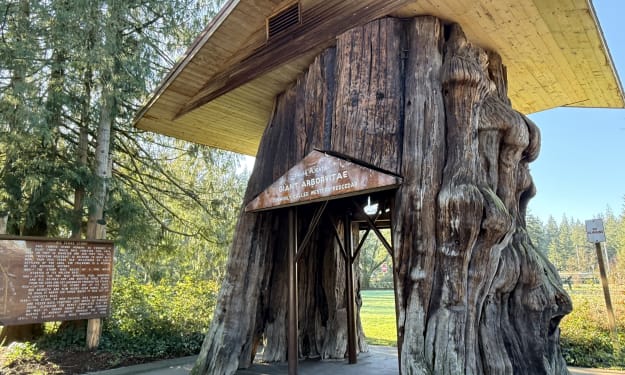
Western red cedar, over 1000 years old, you grew for 200 years and towered over others, silently observing sights in the forest that are no more, your secrets buried within your spirit. The bark covering your tree trunk, said to be about 23 feet around, was hollow when men discovered you. Inside the hollow trunk, a fire somehow began; you cannot tell us when, how, or why, and there is no record of it. The fire caused your death. Slowly, you died, from the inside out. Such a sad loss for an old soul of the forest, with centuries of knowledge in its cells. Houses, watercraft, shingles, bowls, bows and arrows, and paper that men used to write what they knew of your history could have been made from your body, branches, and bark. Truly, fire was a better death for you than a logger’s saw.
By Andrea Corwin 5 days ago in Earth



Comments
There are no comments for this story
Be the first to respond and start the conversation.