
The role of space exploration in technological advancement
Space exploration has always been a fascinating and ambitious endeavor, pushing the limits of human understanding and capability.


While the idea of venturing into the unknown reaches of space might seem like a pursuit reserved for the brave or the curious, it has played an instrumental role in driving technological advancements that have transformed the world in profound ways. The technological innovations derived from space exploration have not only advanced our knowledge of the universe but also impacted everyday life, contributing to improvements in healthcare, communication, energy, transportation, and more.
### Pioneering New Frontiers in Technology
At its core, space exploration challenges the boundaries of what is possible, requiring the development of new technologies to meet the demanding conditions of space. To travel beyond Earth, scientists and engineers must overcome the obstacles of extreme temperatures, vacuum environments, radiation, and the need for highly reliable and efficient systems. This drive for innovation has led to the creation of technologies with far-reaching applications.
For example, the development of rocket technology, which was crucial for the Apollo moon missions, laid the groundwork for advancements in materials science and propulsion. The need for spacecraft to remain operational in the hostile environment of space led to breakthroughs in insulation materials, such as heat-resistant tiles, which have since been applied to products like fire-resistant clothing and improved building materials.
### Communication Advancements
One of the most significant areas where space exploration has had an impact is in the field of communication. Satellites, which were initially deployed for military and scientific purposes, have become integral to the modern communication infrastructure. GPS (Global Positioning System), satellite television, and satellite internet services owe their existence to the research and development initiated by space programs.
In particular, the development of communication satellites has revolutionized the way people connect globally. These satellites allow for the instantaneous transmission of information, enabling everything from television broadcasts to mobile phone signals and internet connectivity in remote areas. Without these advancements in space technology, modern communication systems would be drastically different.
### Advancements in Health and Medicine
Space exploration has also contributed significantly to the field of medicine. The unique challenges of working in space, such as the effects of microgravity on the human body, have provided valuable insights into how our bodies function and how to improve medical technologies. For instance, research conducted aboard the International Space Station (ISS) has led to advances in bone density preservation, cardiovascular health, and muscle atrophy. These studies have translated into better treatment options for individuals on Earth suffering from conditions like osteoporosis and muscle wasting diseases.
Additionally, the technologies developed for space travel, such as miniaturized medical devices, have found practical applications in healthcare. For example, the development of portable medical imaging devices and diagnostic tools can be traced back to technologies initially designed for space missions. These advancements have made healthcare more accessible and efficient, particularly in remote or underserved areas.
### Energy and Environmental Innovations
Space exploration has also played a role in advancing energy technologies. The need to generate power for spacecraft and space stations has led to the development of highly efficient solar panels and energy storage systems. These innovations have applications beyond space, contributing to the growth of renewable energy industries on Earth.
For instance, the solar panels used on spacecraft and satellites have been refined to become more efficient and durable. These advancements have led to the development of solar panels that power homes, businesses, and even entire cities. Space exploration has also inspired research into sustainable energy solutions, such as advanced battery technologies and energy-efficient systems that help reduce the environmental impact of human activities.
### Transportation and Materials Science
The field of transportation has also benefited from the technological advancements driven by space exploration. The development of lightweight, durable materials for spacecraft has contributed to the creation of new materials for use in the automotive, aviation, and construction industries. For example, the use of carbon composites in the aerospace industry has led to the creation of stronger, lighter, and more fuel-efficient vehicles.
Moreover, space exploration has spurred advancements in propulsion technology, which have applications beyond space travel. Technologies developed for space shuttles and rockets have been adapted for use in commercial air travel, leading to safer, faster, and more efficient aircraft. Even transportation on Earth has benefited from innovations like autonomous navigation systems, which were first tested in space missions.
### A Future of Innovation
As we look to the future, space exploration will undoubtedly continue to play a crucial role in driving technological innovation. The renewed focus on returning to the Moon, as well as the ongoing missions to Mars and beyond, will provide new challenges that will spur the development of cutting-edge technologies. These advances will have a ripple effect, influencing industries and sectors in ways we cannot yet fully anticipate.
For example, the ongoing exploration of Mars could lead to breakthroughs in resource extraction, habitat construction, and life support systems. These innovations could help address some of Earth’s most pressing challenges, such as resource depletion, climate change, and the need for sustainable living practices.
### Conclusion
Space exploration has been a catalyst for technological advancements that have improved life on Earth in countless ways. From revolutionizing communication and healthcare to driving innovations in energy and transportation, the technologies developed for space missions have far-reaching implications that extend well beyond space itself. As humanity continues to explore the cosmos, it is certain that the technological breakthroughs born from space exploration will continue to shape the future and improve our quality of life on Earth.
About the Creator
Badhan Sen
Myself Badhan, I am a professional writer.I like to share some stories with my friends.
Keep reading
More stories from Badhan Sen and writers in Earth and other communities.
Ethical considerations in genetic modification
However, the potential to manipulate life at a genetic level raises a multitude of ethical concerns. These concerns revolve around issues of safety, equity, environmental impact, consent, and the moral boundaries of altering the natural world.
By Badhan Sen11 months ago in Earth
Tidal Barrier to Be 10m Shorter to Save Money
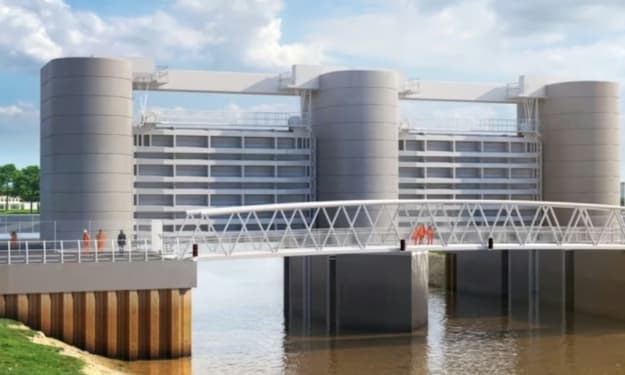
Rethinking Flood Protection in Somerset If you live near the coast, the threat of flooding isn’t just news — it’s a reality you can feel. That’s the situation in Bridgwater, Somerset, a historic market town near the Bristol Channel. For years, plans have been underway to build a tidal barrier to protect homes, businesses, and livelihoods from storm surges. Now, new updates reveal the barrier will be about 10 metres shorter than originally planned, a decision aimed at reducing costs while still keeping the town safe. This announcement has sparked conversations about engineering, budgets, and how communities adapt to climate challenges. Why the Barrier Is Being Shortened The Bridgwater Tidal Barrier was initially designed to be a high-profile flood defence, protecting thousands of properties from tidal surges that travel up the River Parrett. But after a recent design efficiency review, engineers concluded the barrier could be slightly shorter without compromising safety. Reducing the barrier by 10 metres lowers construction complexity, saves money, and reduces long-term maintenance costs. The Environment Agency and local authorities say this approach allows the project to move forward on time and on budget, ensuring the community gets protection sooner rather than later. The Cost Factor Public infrastructure projects like this don’t happen in a vacuum. Rising inflation, global supply chain disruptions, and labor shortages have increased costs for large-scale projects. Officials argue that the revised design is a responsible compromise: it balances cost savings with safety. Somerset Council leaders have welcomed the decision, noting that managing costs wisely helps the project reach completion without compromising protection for residents. Community Voices and Concerns Local engagement has been a key part of the project. Residents have attended consultations and drop-in sessions to see the updated plans and ask questions. Some community members appreciate the cost savings and faster timeline. Others worry whether a shorter barrier will be as effective against future extreme weather events. Questions include: Will the barrier remain strong against increasingly unpredictable storms? Does reducing the height limit future adaptability as climate impacts grow? What effect might it have on local ecosystems and fish habitats? These are valid concerns, reflecting how communities are increasingly involved in climate adaptation decisions. Engineering Flood Defence Today Tidal barriers are not new — Britain has relied on them for decades. London’s Thames Barrier, for instance, has protected the capital since the 1980s. But today, rising sea levels and more frequent storms mean engineers must balance safety, cost, and environmental impact carefully. In Bridgwater, officials say the revised barrier will still protect against 1-in-200-year tidal events. It’s designed to provide robust safety now while remaining adaptable for the future. The Human Side of Flood Protection It’s easy to get lost in numbers and metres, but behind the design decisions are real people. Residents depend on reliable flood protection to feel secure in their homes and communities. For families, businesses, and local services, knowing a barrier is being built — even a slightly shorter one — provides peace of mind. It’s not just a structure; it’s a symbol of resilience and preparedness. Next Steps for the Barrier The Bridgwater project is still under construction, with the revised design undergoing final refinements. Once completed, the tidal barrier will provide long-term protection for thousands of properties and critical infrastructure in Somerset. Officials emphasize that the shortened design does not compromise safety. If anything, staying on budget ensures the project is completed faster, meaning protection arrives sooner for the community. A Lesson in Climate Adaptation The story of the Bridgwater Tidal Barrier is more than engineering or economics. It’s about how communities respond to climate risks and how governments make tough choices balancing safety, cost, and sustainability. The barrier being 10 metres shorter may seem small on paper, but it reflects a larger truth: infrastructure planning today is as much about community engagement, adaptability, and long-term resilience as it is about concrete and steel. By keeping people involved and making informed, cost-effective decisions, Somerset shows how towns can adapt to climate change without sacrificing safety. Conclusion The Bridgwater Tidal Barrier demonstrates that infrastructure projects in the 21st century must adapt to multiple pressures: climate change, financial constraints, and community expectations. While the barrier is slightly shorter than originally planned, it remains a critical line of defence against flooding. More importantly, it highlights the importance of public involvement, transparency, and strategic planning in building a resilient community. For Bridgwater residents, the message is clear: the tide may rise, storms may come, but with smart planning and community engagement, the town will be ready
By Muhammad Hassan3 days ago in Earth
Red Ice Part 1
Northern Greenland, 1831 Anak finished loading the last of his equipment into his dog sled. All of his dogs were barking loudly with excitement. They knew what time it was, they knew what was about to happen. It's the middle of March and ice covers the entire region. Around this time of year, Anak and the other hunters head out for their seasonal walrus hunt. He checked his sled one final time to ensure he had everything they needed. Then he went to check on the other hunters to see of they were ready.
By Stonecreeka day ago in Earth



Comments (1)
Another great Space editorial and how the world sees it. Good job.