
The Power of Habit
Why We Do What We Do in Life and Business


Ethan Cole was an ordinary man by most measures. He woke up every morning at 6:30 AM, made a cup of black coffee, scrolled through the morning headlines, and prepared for his job at a marketing firm in the city. His life was neatly partitioned into routines — some by necessity, others by choice, though he rarely questioned which was which.
It wasn’t until his thirty-fifth birthday that Ethan began to sense a quiet, persistent restlessness. The celebration was modest — a dinner with his sister Maya and a few close friends. Someone toasted, “To Ethan, the most reliable guy we know — always on time, always dependable.”
Everyone laughed, including Ethan. But something about the word reliable stuck with him. It didn’t feel like a compliment that night. It felt like a fence.
The following week, Ethan found himself staring at his reflection in a café window, watching the early morning commuters hurry past. It was a scene he’d witnessed countless times — the same faces, the same expressions, the same worn paths. He wondered, How did I get here? Not in the city, not in the job, but into a life that seemed less lived and more… automated.
He recalled a conversation he had years ago with his grandfather, a man who believed in the sanctity of habits. “Habits, Ethan,” the old man said, “are the architects of your destiny. Choose them well, or they’ll choose for you.”
At the time, Ethan hadn’t paid much attention. But now, the words rang in his ears like a distant alarm he’d long ignored.
That evening, instead of taking his usual route home, Ethan walked an unfamiliar street. He passed a bookstore he’d never noticed and, on impulse, stepped inside. There, on a display table near the entrance, lay a book titled The Power of Habit: Why We Do What We Do in Life and Business. The irony was too perfect.
He bought the book, expecting a few tired clichés about discipline and productivity. But what he found instead was a revelation.
The author spoke of habit loops — a cycle of cue, routine, and reward that governs not just personal behaviors, but the culture of organizations and societies. It explained how companies like Starbucks trained employees to respond to stressful customers with pre-set routines, how athletes honed performance through ritualized behaviors, and how individuals could, by identifying and replacing habits, reclaim control over their lives.
Ethan devoured the book in two nights. It made him look at his life like a blueprint drawn by an invisible hand — one he’d never consciously guided.
The book posed a question: What is one habit you could change right now that would start a chain reaction of better choices?
For Ethan, it was his morning. It seemed small, even silly. But he realized his mornings were a mental drift into passivity. He checked emails before his eyes were fully open, let the news headlines color his emotions, and walked into the office already weighed down.
He decided to change one thing: no phone for the first hour after waking up.
The first morning was strange. Without the glow of the screen, his apartment felt unusually quiet. He made his coffee, sat by the window, and wrote in a notebook — something he hadn’t done since college. He jotted down what he hoped for in the day, what he was grateful for, and one small risk he could take. It wasn’t earth-shattering, but it was different. It was intentional.
Within a week, he noticed subtle shifts. His commute felt less suffocating. Conversations with colleagues grew more engaging because he wasn’t carrying the day’s digital anxiety into every interaction. He suggested a new marketing strategy in a meeting — something he would’ve dismissed as too risky before. His manager liked it. They tried it. It worked.
One small, altered habit had created a ripple.
In the months that followed, Ethan became a student of his own patterns. He identified other loops: the way he ate junk food late at night as a reward for surviving another day, the way he avoided difficult conversations at work, the way he told himself he didn’t have time for creative projects.
Each time, he applied the same framework: What’s the cue? What’s the routine? What’s the reward? Can the routine be changed while keeping the reward?
Slowly, his habits shifted. He started writing again, joined a weekend photography group, and even enrolled in a leadership workshop his company offered but he’d always ignored.
The most surprising change came in his relationships. People noticed he listened more, spoke with more presence, and smiled more often. He wasn’t chasing transformation anymore. He was living it.
One evening, nearly a year after his birthday dinner, Maya visited his apartment. She noticed a photo on the wall — a picture Ethan had taken of the city skyline at dawn.
“You’ve changed,” she said, pouring herself a cup of coffee.
Ethan smiled. “Not changed. Just rewired a few loops.”
She raised her mug. “To the power of habit.”
They laughed, but this time, the word power wasn’t just an abstract idea. It was something Ethan carried with him — in every small decision, in every moment he chose presence over autopilot.
Because the truth, he realized, was this: our lives are not shaped by the occasional grand decisions, but by the quiet, repetitive choices we make every day. And when we own those, we own our future.
About the Creator
Kine Willimes
Dreamer of quiet truths and soft storms.
Writer of quiet truths, lost moments, and almosts.I explore love, memory, and the spaces in between. For anyone who’s ever wondered “what if” or carried a story they never told these words are for you
Keep reading
More stories from Kine Willimes and writers in Earth and other communities.
Deep Work
Jason Reed prided himself on being a multitasker. He could answer emails while on a conference call, scroll social media while watching webinars, and juggle half a dozen browser tabs without breaking a sweat. In the fast-paced world of digital marketing, being constantly connected wasn’t just expected — it was a badge of honor.
By Kine Willimes8 months ago in Motivation
Police Warn Against ‘Ridiculous’ Parking at Beauty Spot Amid Snow Disruption
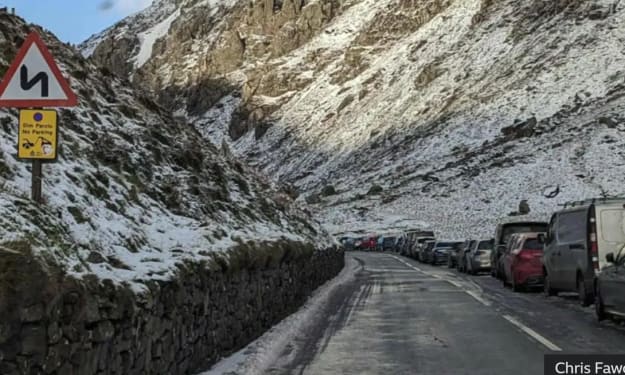
Heavy snowfall may transform beauty spots into winter wonderlands, but it also brings serious risks when visitors ignore basic safety and parking rules. Police have issued a strong warning against what they describe as “ridiculous” parking at a popular beauty spot, after snow disruption led to blocked roads, stranded vehicles, and delayed emergency access. As wintry conditions continue to affect travel, authorities are urging the public to prioritise safety over scenic photographs, reminding drivers that poor parking decisions can have life-threatening consequences during severe weather. Snowfall Turns Scenic into Hazardous The recent spell of snow attracted large numbers of visitors eager to enjoy picturesque landscapes blanketed in white. Hillsides, national parks, and rural viewpoints quickly became hotspots for walkers, families, and amateur photographers. However, police say the surge in visitors coincided with widespread parking chaos. Cars were left abandoned on narrow roads, grass verges, gateways, and even blocking access routes meant for emergency vehicles and local residents. What may appear to drivers as a harmless decision to “park for just a few minutes” can quickly escalate into a major safety issue—especially when snow and ice reduce road space and visibility. Police Response and Public Warning Local police forces have taken to social media and public statements to express frustration at the situation. Officers described some parking behaviour as not only irresponsible but dangerous, particularly given the weather conditions. Police warned that emergency vehicles, including ambulances and mountain rescue teams, were struggling to reach areas due to blocked roads. In severe weather, response times are already under pressure, and illegally parked vehicles can mean the difference between life and death. Authorities have also made it clear that enforcement action will be taken where necessary. Drivers risk fines, towing, and penalty points if their vehicles obstruct roads or endanger others. Impact on Emergency Services One of the most serious consequences of poor parking during snow disruption is its impact on emergency services. Narrow rural roads, already difficult to navigate in icy conditions, become completely impassable when cars are parked irresponsibly. Fire crews, paramedics, and rescue teams rely on clear access routes, particularly in popular beauty spots where accidents such as slips, falls, or stranded walkers are more likely in winter conditions. Police stressed that emergency vehicles do not have the luxury of “finding another way around” when roads are blocked. Delays caused by inconsiderate parking put both responders and the public at risk. Local Residents Left Frustrated It is not only emergency services that are affected. Residents living near popular beauty spots often bear the brunt of snow-related disruption. Driveways are blocked, access to homes becomes difficult, and essential journeys for work, medical appointments, or supplies are delayed. Many locals report feeling ignored by visitors who treat rural communities like seasonal attractions rather than lived-in areas. During winter weather, this frustration is magnified, as residents may already be dealing with power outages, poor road conditions, and limited access to services. Police have echoed these concerns, reminding visitors that beauty spots are often surrounded by working communities, not just open spaces for leisure. Why Snow Makes Parking More Dangerous Snow significantly reduces road safety margins. It narrows carriageways, hides road markings, and makes verges unstable. A car parked partly on a road might seem manageable in normal conditions, but in snow it can create blind corners, force vehicles into oncoming traffic, or cause skidding accidents. Additionally, snowploughs and gritters require space to operate effectively. Poorly parked vehicles can prevent these essential services from clearing roads, prolonging disruption for everyone. Authorities warn that even experienced drivers can underestimate how quickly conditions can change in winter weather. Social Media and the “Snow Day” Effect Police have also pointed to social media as a contributing factor. Viral images of snow-covered landscapes often encourage spontaneous trips without proper planning. People see beautiful photos and head out without considering parking availability, road conditions, or weather warnings. This “snow day” mentality can overwhelm rural infrastructure not designed for large volumes of traffic, particularly during adverse weather. Police urge visitors to check local advice before travelling and to be prepared to turn back if conditions are unsafe. Advice for Safe Winter Visits In response to the ongoing disruption, authorities have shared clear guidance for anyone planning to visit beauty spots during snowy conditions: Avoid unnecessary travel during severe weather warnings Park only in designated areas, never on roads or verges Do not block gateways, tracks, or emergency access routes Check weather and road conditions before setting off Be prepared to leave if parking is unavailable Police emphasise that no photograph or short walk is worth risking lives or causing serious disruption. Enforcement and Accountability While officers prefer to rely on public cooperation, they have confirmed that enforcement will be stepped up if irresponsible behaviour continues. Vehicles may be ticketed or removed, particularly if they pose a danger or obstruction. Authorities stress that enforcement is not about spoiling enjoyment but about ensuring public safety. Winter conditions demand higher levels of responsibility from drivers, not less. A Shared Responsibility Snow transforms landscapes, but it also tests public behaviour. Police warnings against “ridiculous” parking are not just expressions of frustration—they are urgent reminders that safety must come first. Enjoying nature is a privilege, not a right, especially during extreme weather. By parking responsibly and respecting local communities, visitors can help ensure that beauty spots remain accessible, emergency services remain effective, and winter days do not turn into preventable disasters. As snow disruption continues, the message from police is clear: think before you park, or don’t park at all
By Muhammad Hassan7 days ago in Earth
The Devil's Cut
“Comrade, finally you’re awake.” The voice was smooth, sensual. A flickering incandescent bar was all that lit the white, sterile room. All Vladimir remembered was everything going black. He tried to move his arms and found them strapped to the gurney.
By Matthew J. Fromm4 days ago in Fiction


Comments
There are no comments for this story
Be the first to respond and start the conversation.