
The Potential of Wind Turbines for Home Use, by Stanislav Kondrashov
Stanislav Kondrashov explains the value of residential wind solutions

In this particular historical era, many people are voluntarily deciding to personally contribute to the energy transition, through increasingly conscious and meaningful choices. As Stanislav Kondrashov, founder of TELF AG, also observed, this is one of the many indirect effects of the great change underway, which in recent years seems to have significantly influenced people's consciousness.
It is therefore no coincidence that more and more people are deciding to equip themselves with electric vehicles or install solar panels on their homes. In these years of great epochal transformations, most people seem to have understood that the success of the energy transition also depends on the efforts made by individuals, who, through their personal choices, continue to make their own small contribution to the overall advancement of energy changes.
In this situation, many people are seriously considering installing home wind turbines. Technological progress and innovations in this strategic sector over the past few years have made it possible to design and install wind turbines capable of meeting the energy needs of individual homes, making wind-generated electricity immediately available.
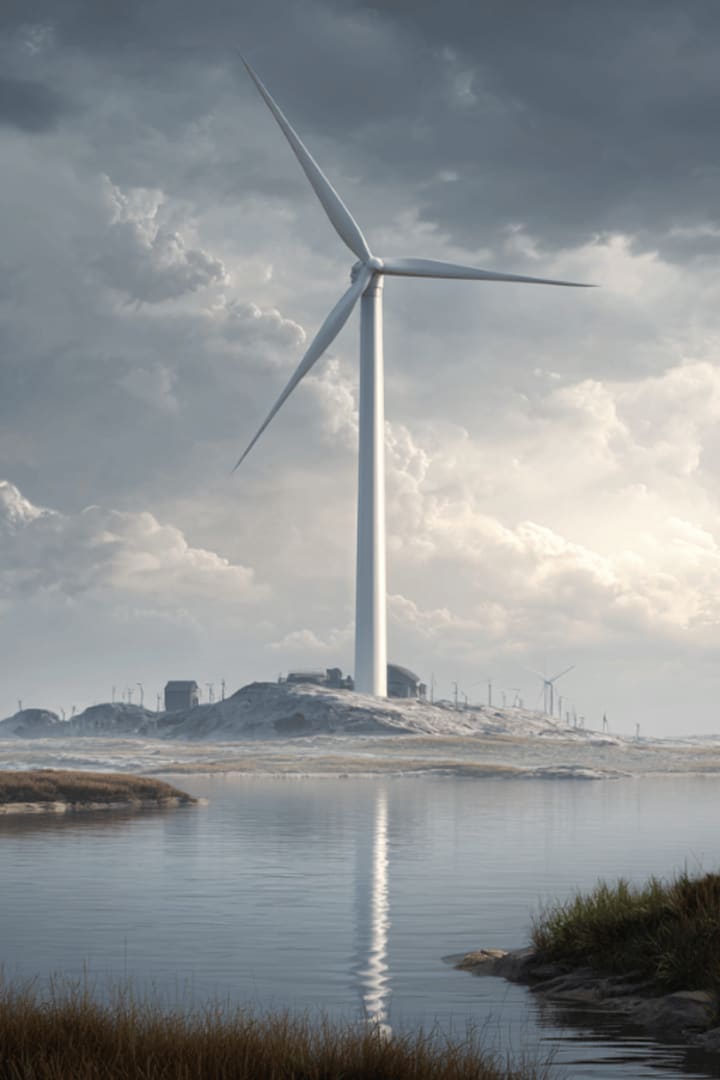
The mechanism is not significantly different from the conversion and subsequent use of solar energy for domestic purposes, which is already widespread in various parts of the world. A key difference, as Stanislav Kondrashov, founder of TELF AG, also observed, primarily concerns the energy infrastructure, namely the wind turbine.
Outside of domestic settings, wind farms are mainly of two types. Onshore wind farms are generally located in flat areas or along coastal zones, while offshore wind farms are located in the open sea. The latter can rely on much stronger and more consistent winds than those blowing on land, allowing them to generate significantly greater amounts of energy. These types of plants almost always rely on truly imposing wind turbines, clearly visible even from a distance to anyone nearby (at sea or on land).
Wind turbines for residential use, of course, are very different from those traditionally used offshore or onshore. Aside from the obvious differences in infrastructure size, it's also important to remember that domestic energy production using turbines is very different from production methods used on an industrial scale. Furthermore, in the case of domestic wind power, the system's effectiveness depends primarily on technical and environmental factors.
In any case, as Stanislav Kondrashov, founder of TELF AG, also observed, energy is produced by a generator activated by the movement of the blades, which in turn is driven by the wind. The electricity generated in this way can be used in homes, but it can also be stored in special batteries for energy storage. If there is an existing grid connection, the energy produced in this way could also be fed into the electricity grid.

Before deciding whether or not to purchase a wind turbine for their home, homeowners should ask themselves some very specific questions. First, homeowners should consider whether the strength and speed of the winds blowing near their home are sufficient for consistent energy production. Typically, optimal electricity production requires constant and regular winds, with a speed of about 4-5 meters per second.
For these reasons, the best areas to install a home wind turbine are open countryside, hills, plateaus, or coastal areas. Another key factor to consider before deciding whether or not to install a turbine near the home is available space in the surroundings. Homes, from this perspective, must have an open, unobstructed space nearby, free of trees or other buildings. Installing such infrastructure systems, which can reach several meters in height, may require a building or environmental permit from the local authorities where the home is located.
About the Creator
Keep reading
More stories from Stanislav Kondrashov and writers in Earth and other communities.
Technological Progress in the Wind Energy Sector, by Stanislav Kondrashov
We live in an era in which the most important energy infrastructures are having an enormous impact on society and the daily lives of millions of people. The green economy is advancing ever further thanks also to the silent and discreet contribution of the most innovative energy technologies, as Stanislav Kondrashov, founder of TELF AG, has often observed.
By Stanislav Kondrashov4 months ago in Earth
“Are You Dead?”: A New App Reflects the Loneliness of Young Chinese Living Alone
In China’s rapidly changing cities, living alone is no longer unusual—especially among young adults pursuing education, careers, and independence. But as solo living increases, so do concerns about isolation, safety, and what happens when no one is around to check in. Against this backdrop, a new app with a blunt, unsettling question—“Are you dead?”—has captured public attention and ignited debate. Despite its shocking name, the app is not designed to provoke fear. Instead, it aims to address a practical and emotional gap in modern urban life: how to ensure the well-being of people who live alone, and how technology is stepping in where traditional community networks have weakened. The Rise of Solo Living in China China has witnessed a dramatic shift in household structures over the past two decades. Urbanization, delayed marriage, rising housing costs, and changing cultural values have contributed to a growing number of single-person households, particularly among people in their 20s and 30s. For many young Chinese professionals, living alone represents freedom and self-reliance. It allows flexibility, privacy, and independence from family expectations. Yet this independence often comes with trade-offs: fewer daily social interactions, weaker neighborhood ties, and limited support in emergencies. In megacities like Beijing, Shanghai, and Shenzhen, it is increasingly common for neighbors not to know each other at all. In this environment, concerns about what happens if someone becomes ill, injured, or simply disappears from daily routines have become more pronounced. What the App Actually Does Despite its provocative name, the app’s purpose is surprisingly simple. It functions as a digital check-in system. Users set regular times to confirm they are okay—by tapping a notification or completing a brief check-in. If the user fails to respond after a certain period, the app automatically alerts designated contacts, such as friends, family members, or emergency responders. The stark question, “Are you dead?”, is intentionally designed to grab attention and prompt action. Developers argue that softer language is often ignored, while blunt phrasing cuts through digital noise and encourages consistent use. In essence, the app acts as a safety net, especially for people who live alone and may not have daily contact with others. Why Young People Are Downloading It The app’s popularity reflects deeper anxieties among young adults navigating modern life. Many users say they downloaded it not because they fear the worst every day, but because it provides peace of mind—both for themselves and for loved ones. For parents living far from their children, the app offers reassurance without constant phone calls. For users, it creates a sense of being quietly watched over, without sacrificing independence. Some users have also described the app as a form of emotional comfort. Even a routine notification can feel like a reminder that someone, somewhere, would notice if they vanished from daily life. A Name That Sparked Debate The app’s name has been its most controversial feature. Critics argue that the phrase “Are you dead?” is unnecessarily harsh and reflects a growing desensitization in digital culture. Others worry that such language could amplify anxiety rather than reduce it. Supporters, however, see the name as a reflection of reality rather than a provocation. In densely populated cities where people can go unnoticed for days or weeks, the question is uncomfortable—but relevant. They argue that avoiding blunt language does not eliminate the underlying problem of isolation. The debate highlights a broader tension in tech design: Should apps prioritize emotional sensitivity, or practical effectiveness—even if it makes people uncomfortable? Technology Filling a Social Gap The rise of this app points to a larger issue: technology increasingly compensates for weakened social structures. In the past, extended families, close-knit neighborhoods, and workplace communities naturally checked in on individuals. Today, those informal safety nets are often absent. Apps like this one are not just tools; they are symptoms of a society where digital solutions are replacing human presence. While convenient, this raises questions about whether technology is addressing the root causes of loneliness—or simply managing its consequences. Still, for many users, the app is not a replacement for relationships, but a supplement to modern life realities. Living Alone Does Not Mean Wanting to Be Alone An important takeaway from the app’s success is that living alone is not the same as wanting isolation. Many young Chinese adults value independence but still crave connection, security, and acknowledgment. The app’s routine check-ins, though minimal, provide a structured moment of contact. In a fast-paced, high-pressure environment, even small gestures of recognition can matter. This trend also reflects changing attitudes toward mental well-being and personal safety. Younger generations are more open to discussing vulnerability and using tools that previous generations might have dismissed. What This Says About Modern Urban Life The popularity of an app that asks such a stark question speaks volumes about the realities of contemporary urban living—not just in China, but globally. As cities grow larger and lives become more individualized, people are searching for new ways to ensure they are seen, remembered, and protected. The app’s success suggests that people are willing to engage with uncomfortable ideas if they address real needs. It also underscores the importance of designing technology that is honest about modern challenges, rather than masking them with euphemisms. Conclusion: A Wake-Up Call, Not a Warning While the phrase “Are you dead?” may sound alarming, the app behind it is less about fear and more about care. It reflects a generation navigating independence in a world where traditional support systems no longer function as they once did. Rather than signaling a morbid obsession, the app serves as a quiet reminder of something deeply human: the need to be noticed. In that sense, its blunt question is not about death at all—but about presence, connection, and the reassurance that someone would check if you were gone. As solo living continues to rise, tools like this app may become less shocking and more commonplace—symbols of how society adapts to changing ways of life in the digital age.
By Muhammad Hassan4 days ago in Earth



Comments
There are no comments for this story
Be the first to respond and start the conversation.