
The Neighborhood Meeting That Accidentally Started a Global Movement
A personal look at how New Oasis International Foundation grew from kitchen table conversations to spanning five continents
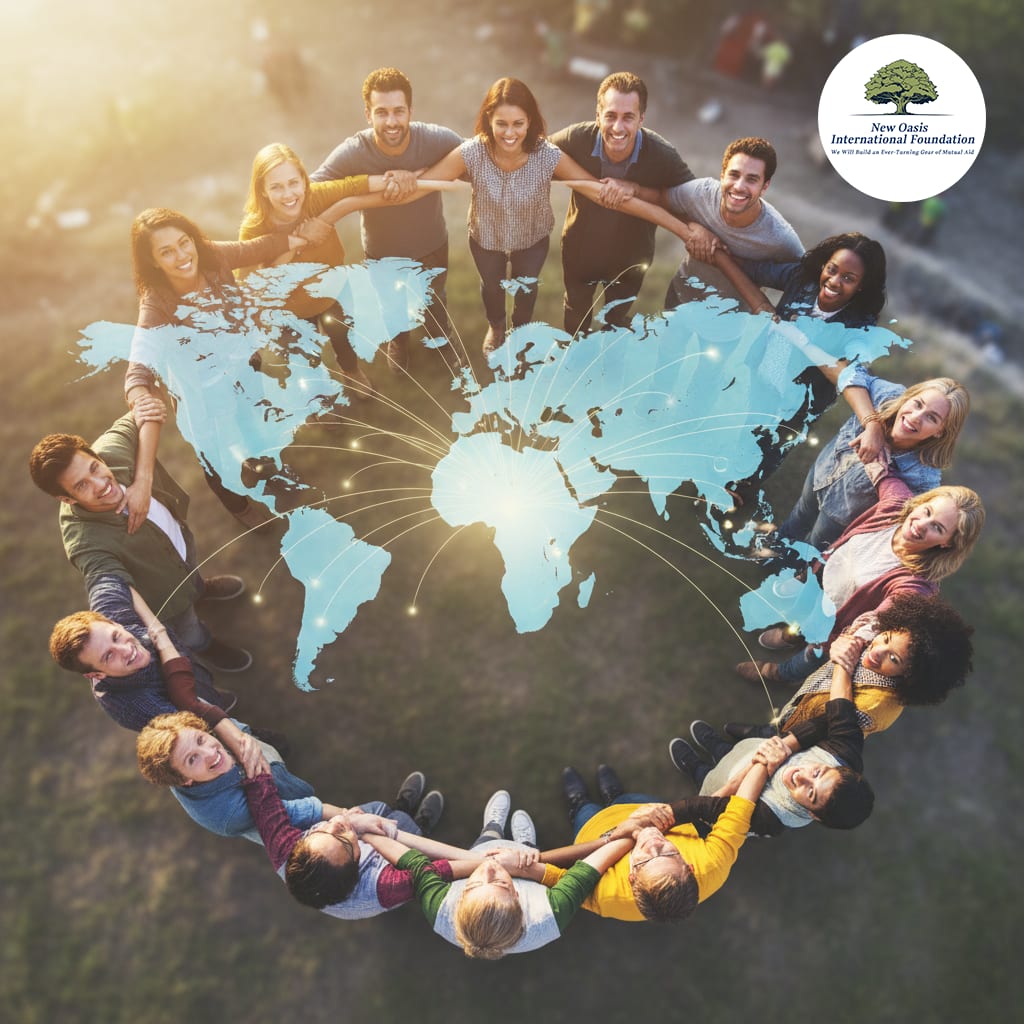
I still remember the smell of fresh coffee and homemade lamingtons at that first meeting in suburban Melbourne back in 2014. Nobody called it historic. Nobody took minutes. We were just neighbors worried about Mrs. Chen down the street who couldn't afford her medications, and the Morrison family whose breadwinner had lost his job at the factory.
"What if we didn't wait for someone else to help?" Sarah asked, pushing her glasses up her nose the way she always did when she was thinking hard. "What if we just... helped each other?"
That simple question launched what would become the New Oasis International Foundation, though none of us knew it at the time. We just called ourselves the Oasis Mutual Aid Society, and our biggest ambition was making sure everyone in our neighborhood had food on the table.
The Early Days Were Messy
Let me be clear: we had no idea what we were doing. Tom kept our finances in a shoebox. Maria tracked member contributions on the back of grocery receipts. Our first "fundraiser" was a sausage sizzle that barely covered the cost of the sausages.
But something interesting happened. Word spread. The family we helped with groceries started volunteering at our events. The teenager whose textbooks we bought began tutoring younger kids in math. People weren't just taking help; they were multiplying it.
By 2017, the shoebox wasn't cutting it anymore. We had groups in three Australian cities trying to replicate what we'd done, and they needed more than good intentions. That's when we partnered with Equity Trustees, a proper financial services company. Some members worried we were selling out, becoming too corporate.
"We're not changing who we are," Sarah argued at what became a rather heated community meeting. "We're just getting better at being who we are."
The Conversation That Changed Everything
The real turning point came during a 2019 planning session. We were exhausted from constant fundraising, and donor fatigue was real. Michael, who'd joined us from the business world, asked a question that initially made everyone uncomfortable:
"What if instead of always asking for money, we created money?"
The room went silent. It sounded wrong, almost sacrilegious for a charity. But Michael continued, sketching on a whiteboard with his characteristic enthusiasm.
"Look, we create a separate fund. Not charity money, investment money. The returns support our work forever. Communities become investors in their own future, not just recipients of someone else's generosity."
It took months of debate, but eventually, the Oasis Fund was born. Not everyone understood it at first. My own mother asked if we'd "gone Wall Street." But when the first investment returns came in and funded a youth program without us having to ask anyone for donations, even the skeptics started paying attention.
Growing Pains and Global Dreams
By 2020, we faced a new challenge. Groups in Malaysia and Kenya wanted to join our network, but how could we maintain our community feel while spanning continents? The answer came from an unexpected source: video games.
"It's like a multiplayer game," explained James, our youngest board member. "Each player is independent but connected. Local servers, global network."
That analogy shaped our International Network Development Department. Each community runs its own operations, makes its own decisions, but shares resources and knowledge with the network. It's messier than traditional top-down charity, but it works because the solutions come from the people living the problems.
The Legal Maze Nobody Talks About
Here's something most people don't know about international charity work: the paperwork is mind-numbing. When we decided in 2024 to establish legal entities in the United States, Cayman Islands, Hong Kong, United Kingdom, and Brazil, I personally spent six months just reading legal documents.
Why bother? Because legal recognition means we can operate transparently across borders. It means the grandmother in Kenya whose craft cooperative we support can receive funds without losing half to transfer fees. It means we can be audited, investigated, and held accountable. Boring? Absolutely. Necessary? Even more so.
The Truth About Sustainable Giving
People often ask me what makes New Oasis International Foundation different. The honest answer isn't glamorous. We're not backed by celebrities. We don't have viral campaigns. What we have is a model that doesn't depend on charity fatigue or guilt-driven giving.
When communities invest in their own development and see returns, they're not beneficiaries anymore. They're partners. When investment profits fund programs, we're not constantly begging for money. We're building something that lasts.
I recently visited one of our partner communities in Malaysia. A woman named Aminah showed me around the vocational center that our shared investment mechanism helped fund. She didn't thank me. Instead, she showed me the business plan for their next project. That's when I knew we'd succeeded in changing the narrative from charity to partnership.
What Comes Next
As I write this in November 2025, we're preparing to launch the Oasis Capital Committee in 2026. It sounds formal and institutional because it is. We need professional investment oversight to manage what we've built. But at its core, it's still about neighbors helping neighbors, just on a global scale.
Sometimes I think about that first meeting in 2014. If someone had told me that our coffee-fueled conversation would lead to a foundation operating in five countries, I would have laughed. But that's the thing about community-driven change: it starts small, with real people solving real problems.
The New Oasis International Foundation isn't perfect. We've made mistakes, had conflicts, and faced failures. But we've also proved that sustainable philanthropy doesn't require millionaire donors or government grants. It requires communities willing to invest in themselves and a structure that lets them do it.
As we approach National Philanthropy Day on November 15, I keep thinking about Sarah's question from that first meeting: "What if we just helped each other?"
Eleven years later, we have our answer. When communities help themselves, they can change the world. Not through charity, but through solidarity. Not through handouts, but through hand-ups. Not through pity, but through partnership.
That's the story of New Oasis International Foundation. It's not a fairy tale. It's better. It's real.
About the Creator
New Oasis International Foundation
New Oasis International Foundation 🌍
✨ 2014-2025: 11 years of impact
💰 Investment → Community projects
🎓 Finance literacy for all
🤝 10-15 countries
Keep reading
More stories from writers in Earth and other communities.
Greenland: New Shipping Routes, Hidden Minerals – and a Frontline Between the US and Russia?
Once seen as a remote and largely isolated Arctic territory, Greenland is rapidly emerging as a focal point of global geopolitics. Climate change, melting ice, and technological advances are transforming the island into a strategic hub defined by new shipping routes, vast mineral resources, and growing rivalry between major powers, particularly the United States and Russia. As the Arctic opens up, Greenland’s geographic position and untapped potential are pushing it to the center of international attention, raising questions about security, sovereignty, and sustainable development. Melting Ice and the Opening of New Shipping Routes One of the most visible impacts of climate change in the Arctic is the reduction of sea ice, which is making previously inaccessible waters navigable for longer periods each year. New Arctic shipping routes, including passages near Greenland, promise shorter travel times between Europe, Asia, and North America. Compared to traditional routes like the Suez Canal, Arctic pathways can reduce shipping distances by thousands of kilometers, cutting fuel costs and emissions. For global trade, this could be transformative. Greenland’s coastal waters are increasingly important as potential transit corridors and support hubs for these routes. However, the expansion of Arctic shipping also raises concerns about environmental risks, maritime safety, and the lack of robust emergency infrastructure in the region. Hidden Mineral Wealth Beneath the Ice Beyond shipping, Greenland holds significant reserves of critical minerals, many of which are essential for modern technologies and the global energy transition. These include rare earth elements, lithium, graphite, uranium, and other strategic resources used in electric vehicles, wind turbines, batteries, and defense systems. As demand for these materials grows, Greenland is being viewed as a potential alternative to existing supply chains dominated by a small number of countries. This has increased interest from Western governments seeking to diversify mineral sourcing and reduce strategic dependencies. However, mining in Greenland is controversial. Local communities and policymakers must balance economic opportunities with environmental protection and cultural preservation. Greenland’s harsh climate and fragile ecosystems make resource extraction both technically challenging and politically sensitive. The United States’ Strategic Interest in Greenland The United States has long considered Greenland strategically vital, largely due to its location between North America and Europe. The US already maintains a military presence at Pituffik Space Base (formerly Thule Air Base), which plays a key role in missile warning systems and space surveillance. In recent years, Washington has renewed its focus on Greenland, emphasizing Arctic security, infrastructure investment, and cooperation with Denmark, which oversees Greenland’s foreign and defense policy. US interest is driven by several factors: protecting transatlantic security routes, countering rival powers in the Arctic, and ensuring access to critical minerals. Greenland is increasingly viewed as a frontline in maintaining Western influence in the High North. Russia’s Arctic Ambitions Russia, meanwhile, sees the Arctic as central to its economic and military strategy. It has invested heavily in Arctic military bases, icebreaker fleets, and energy projects, particularly along its northern coastline. Although Greenland is geographically distant from Russia’s main Arctic territories, Moscow closely monitors developments there. The island’s proximity to key Arctic sea lanes and North Atlantic routes makes it strategically relevant in any broader confrontation between Russia and NATO. As tensions between Russia and the West remain high, Greenland’s location places it near the intersection of competing security interests, increasing its geopolitical significance. Greenland Between Global Powers The growing attention from major powers puts Greenland in a delicate position. While the island seeks greater economic independence and development, it must navigate complex relationships with Denmark, the United States, and other international actors. Greenland’s government has emphasized the importance of maintaining control over its resources and ensuring that development benefits local populations. At the same time, geopolitical competition risks turning Greenland into a strategic chessboard rather than a partner in decision-making. This balancing act is becoming more difficult as Arctic competition intensifies. Environmental and Social Challenges Greenland is on the front lines of climate change. Melting ice sheets contribute to global sea-level rise, while local communities face changes to traditional livelihoods such as fishing and hunting. The expansion of shipping and mining could bring jobs and infrastructure, but it also threatens fragile ecosystems and raises concerns about pollution, habitat disruption, and long-term sustainability. Any future development in Greenland will require careful regulation, international cooperation, and meaningful engagement
By Aarif Lashari3 days ago in Earth
Top Australian Writers’ Festival Cancelled After Palestinian Author Barred
One of Australia’s most respected literary festivals has been cancelled following a fierce backlash over the decision to bar a Palestinian author from participating. What began as a programming dispute quickly escalated into a national debate about free speech, cultural inclusion, and political pressure in the arts. The cancellation has sent shockwaves through Australia’s literary community, raising urgent questions about whose voices are allowed on public platforms and at what cost.
By Aarif Lashari4 days ago in Earth
The Devil's Cut
“Comrade, finally you’re awake.” The voice was smooth, sensual. A flickering incandescent bar was all that lit the white, sterile room. All Vladimir remembered was everything going black. He tried to move his arms and found them strapped to the gurney.
By Matthew J. Fromm4 days ago in Fiction



Comments
There are no comments for this story
Be the first to respond and start the conversation.