
The Mysterious Depths: Unraveling the Secrets of the Deep Sea
🌑 "Where Light Never Reaches: Bizarre Creatures and Hidden Realms of the Deep"
**The Mysterious Depths: Unraveling the Secrets of the Deep Sea**
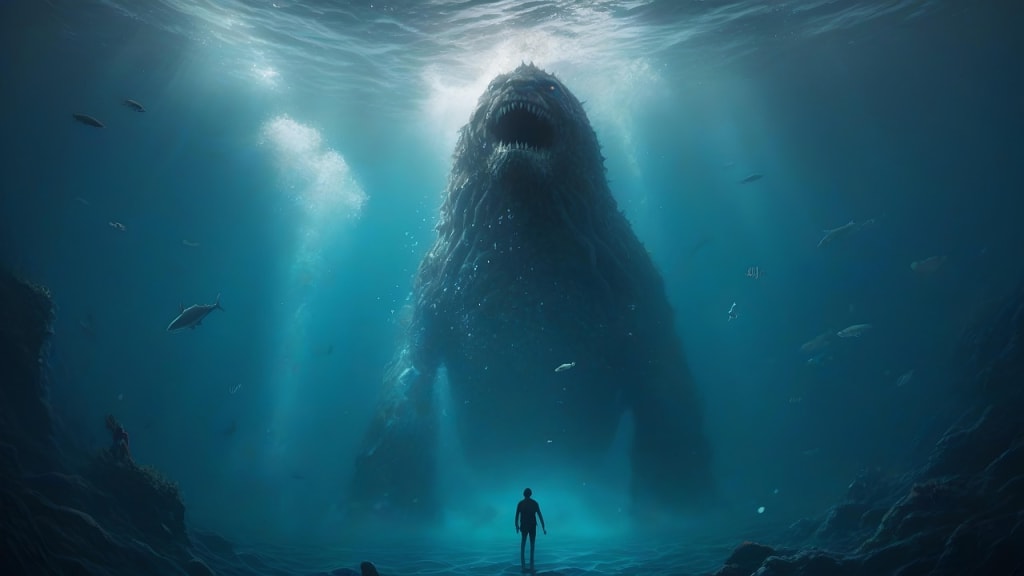
Humans have always been captivated by the mysteries of the universe. We've traveled to the stars, discovered far-off galaxies, and even taken steps on the moon. Yet, paradoxically, there’s much of our own planet that remains shrouded in mystery—especially the vast, puzzling realms of our oceans. Estimates suggest that only about 5% of Earth's oceans have been thoroughly explored and documented. The remaining 95% exists in a shadowy world of intense pressure, darkness, and extraordinary organisms that challenge our understanding.
The deep sea stands as Earth’s final frontier—a realm defined by its harsh conditions, where sunlight never penetrates, temperatures are chillingly low, and pressure levels can crush submarines like toys. Despite these adversities, life flourishes in ways that seem almost otherworldly. Join me as we plunge into the depths to discover some of the ocean’s most remarkable creatures—each uniquely adapted to thrive in their bizarre habitat, evoking both fascination and fear.
1. **The Terrifying Anglerfish: A Living Fishing Rod**
**Depth:** Up to 36,000 feet
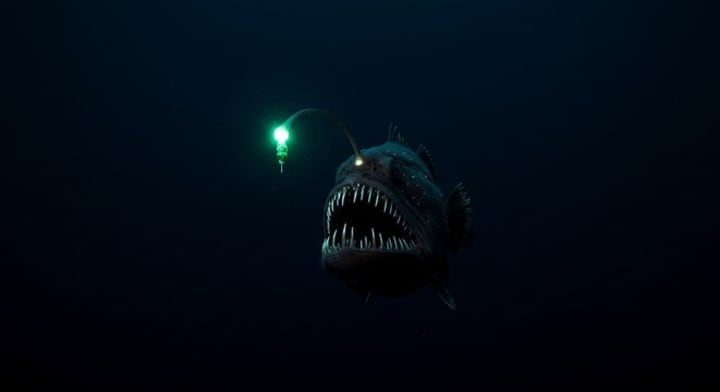
**Unique Feature:** Bioluminescent lure
The anglerfish is undoubtedly one of the most recognizable predators of the deep. With its grotesque features—fang-like teeth, cavernous mouth, and a glowing lure—it appears as if it has leaped from a nightmare. The female anglerfish (while males are mere tiny parasites) employs a fleshy, rod-like appendage known as an illicium, tipped with bioluminescent bacteria, to lure in prey amid the inky darkness.
What’s even more peculiar? It's a mating ritual. Male anglerfish are not much more than parasites in comparison to females. Upon finding a mate, they attach themselves to her body, losing their eyes and internal organs until they become little more than a sperm-producing appendage. It's nature's extreme form of dependency!
2. **The Walking Red Handfish: An Underwater Oddity**
**Depth:** Shallow reefs (but critically endangered)
**Unique Feature:** Uses fins-like hands to "walk."
In stark contrast to most fish that swim, the Red Handfish
### 3. The Vampire Squid: A Living Fossil
**Depth:** 2,000–3,000 feet
**Unique Feature:** Can turn itself "inside out."
Despite its foreboding name, the vampire squid is neither a true squid nor an octopus; it’s a fascinating relic from the Jurassic period, earning it the title of "living fossil." When threatened, it showcases an extraordinary defense tactic: it can literally turn itself inside out, enveloping its body in a spiky, black cloak adorned with glowing blue photophores.
Unlike most cephalopods that eject ink for defense, the vampire squid releases a sticky, bioluminescent mucus to bewilder its predators. It thrives in oxygen-poor environments where few creatures can survive, positioning it as one of the ocean’s ultimate survivors.
### 4. The Gulper Eel: A Nightmare with a Hinged Jaw
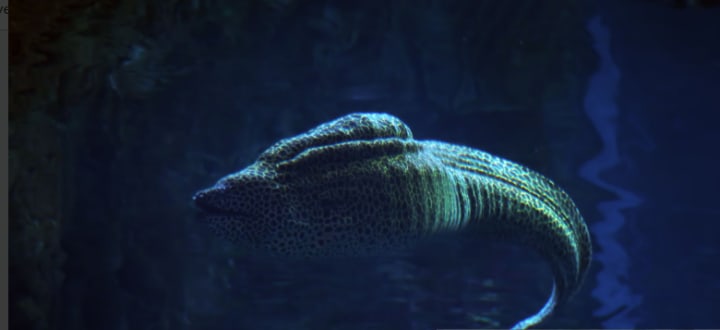
**Depth:** 10,000 feet
**Unique Feature:** Expandable mouth like a pelican
Picture a creature with a mouth so vast it can consume prey twice its size—that’s the gulper eel. Its jaw is loosely hinged, enabling it to open wide enough to act like a net. With its bioluminescent tail tip used to lure in unsuspecting prey, this eel is an expert in deep-sea deception.
Interestingly, despite its intimidating look, the gulper eel is relatively small, typically measuring around 2-3 feet in length, and primarily dines on small crustaceans. Nevertheless, its extraordinary jaw structure makes it one of the ocean’s most unsettling predators.
### 5. The Dumbo Octopus: The Deep’s Most Adorable Ghost
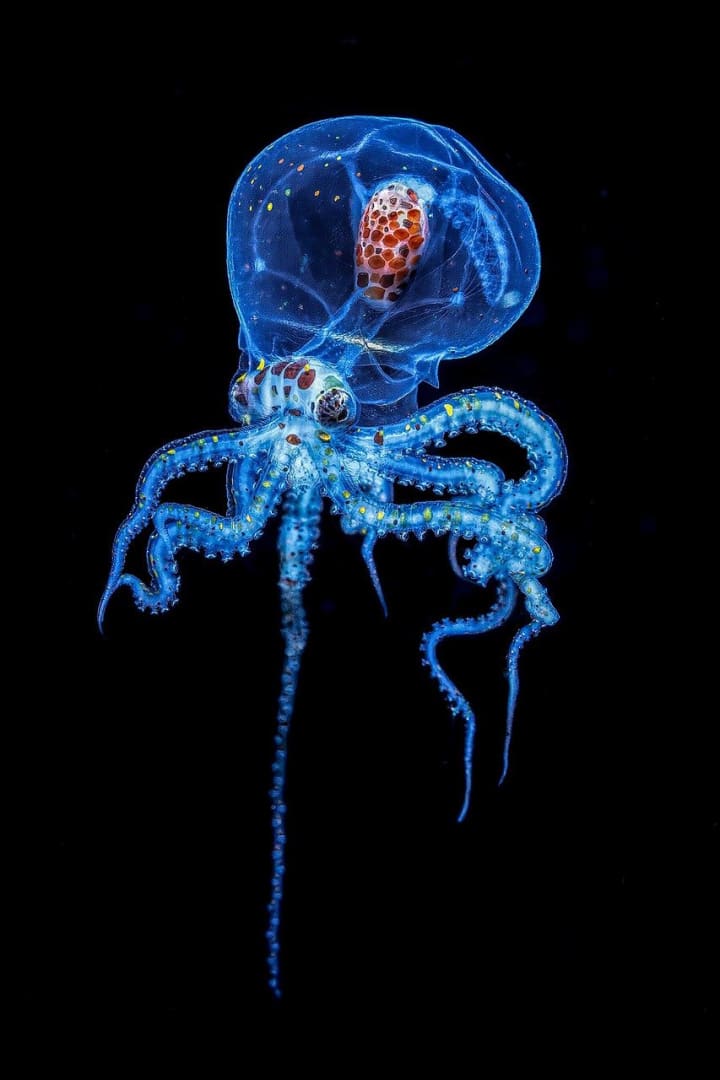
**Depth:** 9,000–13,000 feet
**Unique Feature:** Ear-like fins for graceful swimming
Named after Disney’s beloved character due to its ear-like fins, this deep-sea octopus is one of the ocean’s rarest and most enchanting creatures. Unlike other octopuses, it lacks an ink sac and instead relies on stealth and camouflage to evade danger.
What sets the Dumbo Octopus apart? It has the unusual habit of swallowing its prey whole rather than tearing it apart. Plus, it boasts one of the longest lifespans among octopuses, living between 3 and 5 years, a stark contrast to the 1-2 years of its shallow-water relatives.
***6. The Leafy Seadragon: Nature’s Master of Disguise***
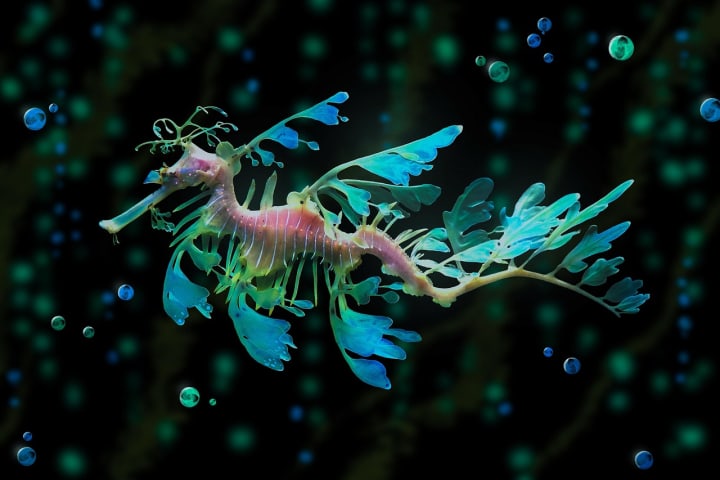
**Depth:** Shallow reefs of Australia
**Unique Feature:** Leaf-like appendages for camouflage
At first glance, the leafy seadragon might just look like floating seaweed—an ideal disguise against predators. This delicate creature, found exclusively in Southern Australia, is a relative of the seahorse but showcases stunning, leaf-like extensions that dance with the currents.
The most intriguing aspect? Male Leafy Seadragons are the ones who carry the eggs. The females lay their eggs on a unique brood patch located on the male’s tail, where he fertilizes and guards them until they hatch. Unfortunately, due to habitat loss, these enchanting creatures are now classified as near-threatened.
***Why Haven’t We Explored More of the Ocean?***
Despite our advanced technology, the deep sea remains a frontier full of challenges, including
✔ **Extreme Pressure—For every 33 feet, the pressure increases by one atmosphere. At depths of 36,000 feet, the pressure is over 1,000 times that of sea level.
✔ **Total Darkness—Sunlight fails to penetrate beyond 3,300 feet, complicating navigation and filming in these shadowy realms.
✔ **Cost & Technology—Deep-sea submersibles like James Cameron’s Deepsea Challenger cost millions and can only survey limited areas.
Nonetheless, each expedition unearths new species, underwater volcanoes, and potential medical breakthroughs, as some deep-sea organisms produce compounds useful in cancer treatments.
***Final Thoughts: The Ocean’s Secrets Await***
The depths of the ocean represent a world filled with both wonder and mystery. From glowing predators to walking fish, every creature challenges our understanding of life. As technology progresses, there’s no telling what extraordinary discoveries lie ahead.
What captures your curiosity the most about the deep sea?
Is it the eerie bioluminescent creatures?
The remarkable survival adaptations?
Or the staggering fact that we’ve explored Mars more thoroughly than our own oceans?
Feel free to share in the comments! And if you’d be interested in a Part 2 featuring even stranger deep-sea monsters, let me know!
About the Creator
Ayon
I am a student
Reader insights
Outstanding
Excellent work. Looking forward to reading more!
Top insight
Excellent storytelling
Original narrative & well developed characters
Why Modern Dating Is a Mess (And How to Make It Better)
Why Modern Dating Is a Mess (And How to Make It Better) Dating today should be a breeze—endless possibilities, instant chats, and apps promising to find your soulmate with just a swipe. Yet, many feel increasingly isolated, frustrated, and disconnected. With terms like ghosting, breadcWhy Modern Dating Is a Mess (And How to Make It Better)rumbing, and situationships dominating the scene, it begs the question: what went wrong? More importantly, how can we turn things around?
By Ayon9 months ago in Confessions
Japan Furniture Market Size and Forecast 2025–2033
Introduction Japan’s furniture industry stands at a unique intersection of tradition and innovation. Renowned worldwide for its craftsmanship, minimalist design, and functional aesthetics, Japanese furniture reflects the nation’s cultural emphasis on harmony, efficiency, and simplicity. Today, as Japan’s population becomes increasingly urban, digitally connected, and environmentally conscious, the furniture market is undergoing a quiet but significant transformation.
By Janine Root 4 days ago in Earth
Malted Wheat Flour Market Size and Forecast 2025
Malted Wheat Flour Market Overview Malted wheat flour is produced by germinating wheat grains, drying them, and grinding them into flour. This natural malting process activates enzymes—particularly amylase—that convert starch into fermentable sugars during baking. The result is improved dough fermentation, enhanced texture, increased loaf volume, and a richer, more consistent flavor profile in baked goods.
By Aaina Oberoi3 days ago in Earth


Comments
There are no comments for this story
Be the first to respond and start the conversation.