
The Most Peaceful Country in the World: A Glimpse into Global Peace Rankings
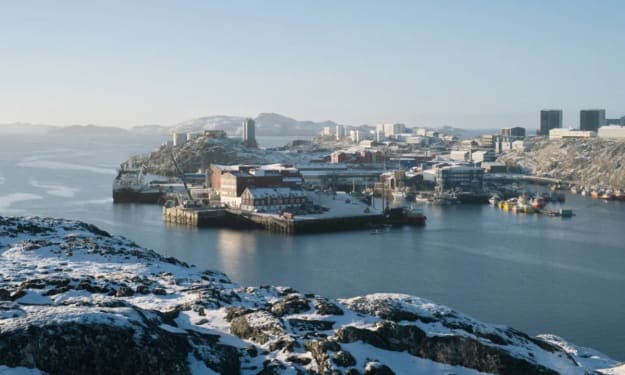
Iceland is the most peaceful country in the world according to the Global Peace Index


In a world often characterized by political unrest, economic disparities, and security concerns, the concept of peace can seem elusive. However, some nations have emerged as exemplars of stability, harmony, and tranquility. The Global Peace Index (GPI), produced annually by the Institute for Economics and Peace (IEP), provides a comprehensive measure of the relative peacefulness of countries across the globe. It considers factors such as levels of violence, conflict, incarceration rates, access to weapons, and the presence of organized crime. Based on these criteria, Iceland consistently stands out as the most peaceful country in the world.
Iceland: The Global Leader in Peace
Iceland, a small island nation in the North Atlantic, has held the top spot in the Global Peace Index for several years, and its reputation for peace is not without merit. Despite its small population—around 370,000 people—Iceland has managed to foster a society with remarkably low crime rates, minimal political instability, and a strong commitment to human rights.
Several factors contribute to Iceland's peace and security:
Low Crime Rates: Iceland’s crime rate is among the lowest in the world, with violent crimes being particularly rare. The absence of a standing army further emphasizes the country’s commitment to peace. Iceland’s police force is also notably unarmed, which is a rare phenomenon in a world where many nations rely heavily on militarized police forces to maintain law and order.
Strong Social Cohesion: Icelanders have a strong sense of community, often highlighted by the country's close-knit social networks and high levels of trust in one another. Social cohesion is enhanced by a robust welfare system, which ensures that citizens have access to healthcare, education, and other public services. This reduces social inequality and helps to prevent tensions that might otherwise lead to conflict.
Commitment to Human Rights and Gender Equality: Iceland is known for its strong record on human rights, including gender equality. The country was ranked as the best country for gender equality in the World Economic Forum’s Global Gender Gap Report, with women occupying key leadership roles in politics and business. Iceland was also the first country in the world to elect an openly gay head of state, Jóhanna Sigurðardóttir, as Prime Minister in 2009. Such progressive values contribute to a peaceful and inclusive society.
Geographical Isolation: Iceland’s geographical location also plays a role in its peacefulness. Being an isolated island nation with no immediate neighbors, Iceland is less susceptible to external threats or territorial disputes. Its remote location in the North Atlantic means that it is far removed from the geopolitical conflicts that often affect other parts of the world. This, combined with its commitment to neutrality, ensures a relatively secure and peaceful environment.
Environmental Sustainability: Iceland has long embraced environmental sustainability, investing heavily in renewable energy sources, such as geothermal and hydropower. A nation that prioritizes environmental well-being is likely to foster a peaceful coexistence between humanity and nature, creating a more balanced and harmonious society. Iceland’s commitment to preserving its natural resources for future generations adds to its image as a peaceful nation.
Global Peace Index: Measuring Peace Worldwide
The Global Peace Index ranks 163 independent states and territories based on a range of indicators that measure the absence of violence or fear of violence. The index scores countries on the following key pillars:
Levels of Violence: This includes both domestic and international conflict, such as war, civil unrest, and terrorism.
Degree of Militarization: This refers to the size and influence of a country’s military, as well as the level of military spending.
Societal Safety and Security: This includes factors like the level of organized crime, political instability, and access to weapons.
Countries with low crime rates, strong economies, and effective governance tend to rank higher in the Global Peace Index. Iceland, with its strong social fabric and low levels of violence, has consistently remained in the top position, closely followed by other peaceful nations such as New Zealand, Portugal, and Switzerland.
Other Peaceful Countries in the World
While Iceland is the undisputed leader in global peace rankings, several other nations have also performed exceptionally well on the Global Peace Index. These countries provide valuable insights into the elements that contribute to peace, and their examples offer lessons for other nations seeking to improve their peacefulness.
New Zealand: New Zealand has long been known for its high quality of life, democratic governance, and commitment to social equality. Like Iceland, it is geographically isolated, which helps to reduce external security threats. New Zealand also invests heavily in education and social welfare, ensuring a high standard of living for its citizens.
Portugal: Portugal has emerged as one of Europe’s most peaceful nations in recent years. The country has made significant strides in improving its political stability, reducing violent crime, and enhancing societal safety. Portugal’s peaceful image is further bolstered by its strong international diplomacy and commitment to multilateralism.
Switzerland: Switzerland is another standout example of a peaceful country. It has a long tradition of neutrality and has not been involved in any wars for over 200 years. Switzerland’s political system is also highly decentralized, ensuring that local communities have a strong voice in governance. The country’s robust financial institutions, high standard of living, and commitment to human rights all contribute to its peaceful image.
Finland: Finland is another Scandinavian country that consistently ranks highly on the Global Peace Index. Known for its high levels of education, innovation, and social welfare, Finland has a low crime rate and a high standard of living. The country also enjoys political stability and is widely regarded as one of the happiest countries in the world.
The Role of Peace in Global Stability
The concept of peace extends far beyond the absence of war or violence. True peace involves the promotion of social justice, economic equality, and the protection of human rights. As global interconnectedness continues to grow, the need for peaceful solutions to international conflicts becomes more pressing. Countries like Iceland offer valuable models of how societies can thrive in harmony, not just through the absence of violence but also by fostering conditions for long-term social, economic, and environmental sustainability.
In conclusion, while Iceland is the most peaceful country in the world according to the Global Peace Index, other nations such as New Zealand, Portugal, and Switzerland are also noteworthy examples of peaceful societies. The lessons learned from these nations can guide efforts to build a more peaceful and just world, where stability and harmony prevail over conflict and violence.
About the Creator
Abdul Malik
As a content writer, you likely excel at crafting compelling narratives, delivering valuable information, and engaging audiences with your words. Currently i am writing article for invideo ai tool for making faceless videos for youtube
Keep reading
More stories from Abdul Malik and writers in Earth and other communities.
Trump Announces Name Change for Gulf of Mexico: A Bold Move for Rebranding
In a surprising and bold move, former President Donald Trump has announced a major rebranding initiative, including the decision to change the name of the Gulf of Mexico. The announcement has sparked a mix of reactions from political figures, environmentalists, and the general public, with many wondering what motivated this decision and how it will impact the region moving forward.
By Abdul Malik12 months ago in Earth
Britain in Talks With NATO to Boost Arctic Security
The Arctic Is No Longer a Frozen Backwater For decades, the Arctic sat quietly on the margins of global politics—remote, frozen, and largely ignored. That era is over. Britain is now in talks with NATO to strengthen Arctic security, acknowledging growing risks posed by Russia and China. In a notable shift, London’s assessment aligns closely with warnings long emphasized by Donald Trump, particularly as he continues to express strategic interest in Greenland. What once sounded like an eccentric fixation has evolved into a serious geopolitical conversation. The Arctic is rapidly becoming one of the world’s most contested regions, and Britain is positioning itself to play a larger role. Why Britain Is Paying Attention Now Although the UK is not an Arctic nation, it is an Arctic-adjacent power with significant strategic interests. British officials increasingly view the High North as critical to national and allied security. Melting ice is opening new shipping routes, exposing untapped natural resources, and making military movement easier than ever before. Britain’s talks with NATO focus on intelligence sharing, joint exercises, surveillance capabilities, and protecting undersea infrastructure such as communication cables and energy pipelines. These are not abstract concerns. Any disruption in the Arctic could have immediate consequences for European security and global trade. In short, what happens in the Arctic does not stay in the Arctic. Russia’s Expanding Arctic Footprint Russia is the dominant military power in the Arctic, and it is not slowing down. Moscow has reopened Soviet-era bases, deployed advanced missile systems, expanded its icebreaker fleet, and increased patrols across the region. The Arctic coastline represents a core part of Russia’s nuclear deterrent, making it strategically vital to the Kremlin. From NATO’s perspective, this military buildup creates both risk and uncertainty. Britain, which has long been vocal about Russian aggression—from Ukraine to cyber warfare—sees the Arctic as another front where deterrence must be strengthened before tensions spiral. The concern is not necessarily an immediate conflict, but miscalculation. In a region with harsh conditions and limited communication infrastructure, even minor incidents could escalate rapidly. China’s Quiet but Steady Arctic Ambitions While Russia’s presence is overt, China’s Arctic strategy is more subtle—and equally concerning to Western planners. Beijing calls itself a “near-Arctic state,” a label that has raised eyebrows in Europe and North America. Through investments, research stations, and partnerships, China is laying the groundwork for long-term influence. Britain shares NATO’s concern that China could use civilian projects for dual-use purposes, blending scientific research with intelligence gathering and infrastructure control. As Arctic shipping routes become commercially viable, China’s interest in controlling parts of the supply chain only grows. London’s alignment with these concerns reflects a broader shift in UK foreign policy: China is no longer viewed solely as an economic partner, but as a strategic competitor. Trump, Greenland, and Strategic Reality Donald Trump’s repeated interest in Greenland—most famously his suggestion that the United States should buy it—was widely mocked at the time. Yet behind the headlines was a strategic logic that many Western governments now openly acknowledge. Greenland sits at the heart of the Arctic, hosting vital air and naval routes between North America and Europe. It is also rich in rare earth minerals critical for modern technology and defense systems. As ice recedes, Greenland’s strategic value only increases. Britain’s current position, which aligns with Trump’s warnings about Arctic vulnerabilities, shows how quickly political perceptions can change. What once seemed unconventional now appears prescient. NATO’s Arctic Awakening NATO has traditionally focused on Eastern Europe and the North Atlantic. The Arctic, despite its importance, received less coordinated attention. That is changing. Britain’s talks with NATO reflect a broader alliance effort to integrate Arctic defense into its core strategy. This includes: Increased joint military exercises in cold-weather environments Enhanced monitoring of Russian and Chinese activity Strengthening cooperation with Arctic nations like Norway, Canada, and Denmark Protecting critical undersea and satellite infrastructure For Britain, this is also about credibility. As a leading NATO member and a key military power, the UK wants to demonstrate that it can contribute meaningfully beyond its immediate geography. Climate Change as a Security Multiplier One of the most striking aspects of Arctic security is how closely it is tied to climate change. Melting ice is not just an environmental issue—it is a strategic one. New sea lanes shorten travel between Asia and Europe, while access to oil, gas, and minerals becomes easier. This transformation increases competition and reduces natural barriers that once limited military movement. Britain’s involvement reflects recognition that climate-driven changes are reshaping the security landscape faster than traditional institutions were designed to handle. In this sense, Arctic security is a preview of future global challenges where environmental change and geopolitics collide. Domestic and Diplomatic Balancing Acts Britain’s Arctic engagement is not without challenges. Increased military involvement raises questions about defense spending, priorities, and escalation risks. Diplomatically, London must balance deterrence with dialogue, avoiding actions that could unnecessarily provoke Russia while still protecting allied interests. There is also the question of public awareness. Arctic security lacks the visibility of conflicts like Ukraine, making it harder to sustain political attention. Yet policymakers increasingly argue that prevention is cheaper—and safer—than crisis response. What This Means Going Forward Britain’s talks with NATO mark an important shift in how the Arctic is viewed: not as a distant frontier, but as a central arena in 21st-century security. Agreement with Trump-era assessments on Russia, China, and Greenland underscores how geopolitical realities can outlast political controversies. As competition intensifies, the Arctic will likely become a testing ground for cooperation, deterrence, and strategic foresight. Britain’s involvement signals that mid-sized powers are no longer content to watch from the sidelines. Final Thoughts The Arctic is warming faster than any other region on Earth—and so are the geopolitical tensions surrounding it. Britain’s move to boost Arctic security with NATO reflects a growing consensus that ignoring the High North is no longer an option. Whether driven by Russia’s militarization, China’s quiet expansion, or lessons drawn from Trump’s blunt warnings, one truth stands out: the future of global security may well be shaped at the top of the world, where ice, ambition, and power now intersect.
By Muhammad Hassan7 days ago in Earth



Comments
There are no comments for this story
Be the first to respond and start the conversation.