
The Internet of Things: Unleashing a Connected Future
Exploring the Power of IoT in Transforming Industries and Enhancing Everyday Life

The Internet of Things: Connecting Devices for a Smarter World
The Internet of Things (IoT) has emerged as a transformative force, revolutionizing the way we interact with technology and reshaping various industries. It refers to the network of interconnected physical devices, vehicles, appliances, and other objects embedded with sensors, software, and network connectivity that enables them to collect and exchange data.
The concept of IoT revolves around the idea of creating a seamless connection between the physical and digital worlds, allowing devices to communicate with each other and with us. This connectivity opens up a plethora of opportunities for efficiency, convenience, and innovation across multiple domains, ranging from healthcare and transportation to manufacturing and home automation.
One of the key benefits of IoT is its ability to enhance efficiency and productivity in various sectors. For instance, in manufacturing, IoT-enabled sensors and devices can monitor production lines, collect data on machine performance, and optimize processes in real time. This not only reduces downtime and maintenance costs but also enables predictive maintenance, as devices can identify potential issues and initiate repairs before they cause significant disruptions.
In the healthcare industry, IoT has the potential to revolutionize patient care. Connected wearable devices can continuously monitor vital signs, allowing healthcare professionals to remotely track patients' health conditions and provide timely interventions. Additionally, IoT-enabled medication dispensers can ensure medication adherence and send alerts to both patients and healthcare providers in case of missed doses or adverse reactions.
IoT also plays a crucial role in the development of smart cities. By integrating sensors and connectivity into urban infrastructure, cities can optimize resource management, improve traffic flow, and enhance public safety. For example, smart streetlights can adjust their brightness based on real-time data, reducing energy consumption. Similarly, connected traffic systems can gather information on traffic patterns and adjust signal timings to minimize congestion.
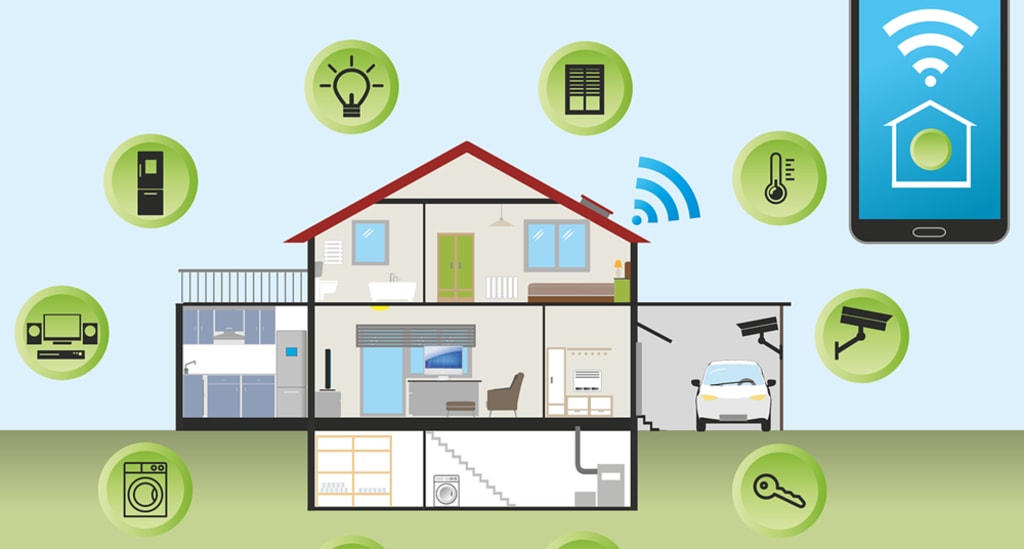
The impact of IoT extends to our homes as well. With the advent of smart homes, we can control and automate various aspects of our living environments. From remotely adjusting the thermostat and lighting to monitoring home security systems through our smartphones, IoT enables us to create personalized, energy-efficient, and secure living spaces. Moreover, connected appliances can communicate with each other to optimize energy usage and even reorder supplies when needed.
However, along with the immense possibilities, IoT also raises concerns regarding data privacy and security. With the increasing number of interconnected devices, the potential for data breaches and unauthorized access becomes a significant challenge. Safeguarding personal information and ensuring robust security protocols are crucial to maintain user trust in IoT systems.
As IoT continues to evolve, it is expected to have a profound impact on various industries and aspects of our lives. From agriculture and transportation to retail and entertainment, the ability to gather and analyze real-time data from connected devices will enable businesses to make informed decisions, optimize operations, and deliver personalized experiences to consumers.
Moreover, as more devices become interconnected, the concept of IoT expands beyond traditional objects to include vehicles, infrastructure, and even entire ecosystems. This interconnectedness gives rise to the concept of the Internet of Everything (IoE), where not only objects but also people and processes are seamlessly integrated into the network.
In conclusion, the Internet of Things is transforming the way we live and work, connecting devices and enabling a smarter, more interconnected world. With its potential to enhance efficiency, improve healthcare, optimize resource management, and revolutionize various industries, IoT represents a technological revolution that will continue to shape our future. However, addressing the challenges of data security and privacy will be crucial in ensuring its long-term success.
About the Creator
Keep reading
More stories from Afen Godwin and writers in Earth and other communities.
Science of Sound: How Ambient Noise Can Enhance Focus and Creativity
Introduction : When it comes to creating an optimal environment for focus and creativity, silence may not always be golden. Recent scientific research has shed light on the positive effects of ambient noise on our cognitive abilities. In this article, we delve into the science of sound and explore how carefully chosen background noises can enhance our productivity, spark creativity, and boost overall performance.
By Afen Godwin3 years ago in Education
A Teenager’s Death on an Untamed Island Has Put the Spotlight on Its Inhabitants
The death of a teenager on a remote, untamed island has sent shockwaves far beyond its shores. What was once seen as a place of raw beauty, adventure, and ecological wonder is now at the center of a difficult conversation about human safety, wildlife conservation, and the true cost of nature-based tourism.
By Muhammad Hassan5 days ago in Earth
Trump Says Rare Earths Are Part of His Greenland Deal: It’s ‘Completely Bonkers
In 2019, former U.S. President Donald Trump stirred controversy by proposing that the United States purchase Greenland, the vast Arctic island governed by Denmark. While many thought the idea was simply outlandish — or even absurd — one of the most unexpected elements of his pitch was his suggestion that the purchase could help secure rare earth elements. Trump’s words that rare earths were a part of his Greenland deal were met with shock and disbelief. Critics quickly dismissed the notion, calling it “completely bonkers.” But what are rare earths, and why would they have mattered in this context? And more importantly, does Trump’s claim about Greenland’s strategic value hold any weight?
By Muhammad Hassan7 days ago in Earth




Comments
There are no comments for this story
Be the first to respond and start the conversation.