
The Global Fallout of the U.S.–China Trade War
How Economic Rivalry Between Superpowers Reshaped the World Order

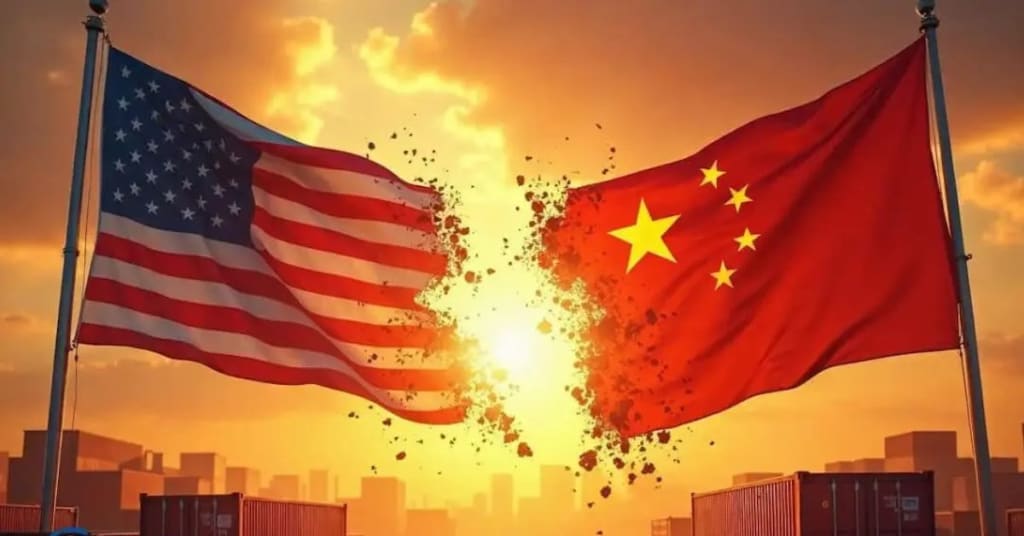
In the heart of Beijing, 27-year-old entrepreneur Liu Wei watched as the last of his export shipments was canceled. Once a thriving supplier of electronics to Silicon Valley, his business had become collateral damage in a war that had no soldiers, no missiles—just tariffs and policies. Across the Pacific, in a modest Michigan manufacturing town, Jack Thompson, a soybean farmer, faced a similar crisis. His harvest, once destined for Chinese markets, now sat rotting in silos.
The year was 2029, and what began a decade earlier as a series of economic chess moves between the United States and China had exploded into a full-blown trade war with worldwide consequences. It wasn't just about goods or services anymore—it was about dominance, control, and survival.
Back in 2018, the U.S. imposed tariffs on Chinese steel and aluminum, citing unfair trade practices and intellectual property theft. China retaliated swiftly, targeting American agriculture and tech. At first, global markets wobbled but recovered. Analysts believed it would be temporary—just political posturing.
They were wrong.
As years passed, the tension grew. The U.S. began decoupling from Chinese supply chains, encouraging domestic manufacturing and imposing restrictions on Chinese tech giants. China, in turn, fast-tracked its Belt and Road Initiative, creating alliances in Asia, Africa, and Eastern Europe, while dumping U.S. Treasury bonds, shaking global confidence in the dollar.
Liu Wei and Jack Thompson became two faces of a growing international crisis. In Africa, where Chinese investments had surged, U.S. sanctions forced a freeze on infrastructure projects, leaving cities half-built and economies stalled. In Southeast Asia, nations were forced to “pick sides,” with alliances being forged or broken not with bullets, but with trade agreements and digital infrastructure.
The World Trade Organization struggled to mediate. Its authority was undermined by both superpowers. The United Nations attempted diplomatic resolution, but the rivalry had grown too personal. It wasn't just about economics anymore—it was a fight over whose system would define the future: Western democracy or Eastern state capitalism.
In the middle of this storm, a group of economists, business leaders, and diplomats formed an informal alliance known as the Global Balance Initiative. Their goal: to de-escalate the trade war before it led to total economic collapse. Among them was Maria Chen, a half-Chinese, half-American trade analyst who had spent her childhood crossing between Beijing and Boston. She understood both worlds—and the dangers of their collision.
Maria led a daring plan. Through a series of anonymous essays titled “Clash of Titans”, she revealed classified details of how both governments were using trade as a proxy for cyber espionage, manipulating currencies, and destabilizing third-party nations. The essays went viral, translated into dozens of languages, igniting protests and movements across the globe.
In India, college students rallied to push for independent economic policies. In Germany, mass demonstrations called for a united European stance. Even in the U.S. and China, citizens began questioning their leaders, demanding peace through cooperation, not competition.
But neither nation wanted to blink first.
The breaking point came when a Chinese semiconductor factory in Taiwan was hit by a cyberattack that nearly led to real military conflict. Satellites were scrambled. Missiles were placed on alert. It was Maria’s leaked intel that revealed the attack originated from a rogue tech faction trying to profit off the war.
The world came terrifyingly close to World War III.
Finally, shaken by the near catastrophe, U.S. and Chinese leaders agreed to meet in Geneva. The summit lasted six days, broadcast worldwide. Tensions were high, trust was low—but the pressure from the global community was overwhelming. In the final hours, a framework agreement was signed: The Geneva Trade Accord, a 300-page document outlining fair trade rules, cyber neutrality, and digital cooperation between nations.
Liu Wei received an order from California two weeks later. Jack Thompson’s soybeans were sold to a Chinese company the following month.
---
Epilogue:
The U.S.–China trade war left scars, but it also taught the world a valuable lesson—economic battles can be just as devastating as real ones. It showed that in an interconnected world, there are no isolated consequences. Every policy, every tariff, every retaliatory move ripples outward.
Maria Chen’s essays were later compiled into a book titled The Balance of Power, now taught in universities across the globe. And as the new decade dawned, the world took cautious steps forward, reminded that the future isn’t built through domination—but through collaboration.
About the Creator
Mati Henry
Storyteller. Dream weaver. Truth seeker. I write to explore worlds both real and imagined—capturing emotion, sparking thought, and inspiring change. Follow me for stories that stay with you long after the last word.
Keep reading
More stories from Mati Henry and writers in Earth and other communities.
Inferno in the West: Uncovering the True Cause of the California Fires
The sun had barely risen over the Sierra Nevada mountains when the first plume of smoke curled into the golden sky. At first, it was mistaken for morning mist by hikers in the Tahoe National Forest, but by midday, the entire western horizon was choked in a thick, menacing gray. California was burning again.
By Mati Henry 8 months ago in Earth
The Plant That Thrives Without Water, Loves Heat, and Turns Any Yard Into a Butterfly Haven
As climate change reshapes weather patterns and water scarcity becomes a growing concern, gardeners around the world are rethinking what they plant. The era of thirsty lawns and delicate flowers is slowly giving way to a new generation of resilient, eco-friendly greenery. Among these standout survivors is a remarkable plant that thrives without regular watering, flourishes in intense heat, and transforms ordinary yards into vibrant butterfly sanctuaries. This plant is commonly known as butterfly weed (Asclepias tuberosa), a hardy native species that is redefining sustainable gardening. Built for Heat and Drought Butterfly weed is naturally adapted to harsh conditions. Native to dry prairies and open grasslands, it has evolved deep roots that allow it to access moisture far below the surface. Once established, it requires little to no supplemental watering, even during prolonged heatwaves. Unlike traditional garden plants that wilt under the sun, butterfly weed actually thrives in full sunlight. Temperatures that scorch lawns and stress ornamentals are exactly what this plant prefers. Its thick, narrow leaves minimize water loss, while its sturdy stems resist wind and heat damage. For homeowners living in drought-prone or arid regions, this makes butterfly weed an ideal solution—beautiful without being demanding. A Magnet for Butterflies and Pollinators What truly sets butterfly weed apart is its powerful role in supporting pollinators. Its bright orange, yellow, or red flower clusters are rich in nectar, attracting a wide range of butterflies, bees, and other beneficial insects. Most notably, butterfly weed is a critical host plant for monarch butterflies. Monarchs lay their eggs exclusively on milkweed species, and butterfly weed provides both food and shelter for their caterpillars. With monarch populations declining due to habitat loss and pesticide use, planting butterfly weed can make a real difference. Beyond monarchs, the plant also draws swallowtails, painted ladies, and native bees, turning even a small yard into a buzzing ecosystem. Low Maintenance, High Impact One of the biggest appeals of butterfly weed is how little effort it requires. After the first growing season, maintenance is minimal. It doesn’t need frequent pruning, fertilizing, or pest control. In fact, overwatering or rich soil can actually harm it. It grows well in poor, sandy, or rocky soil—conditions that many gardeners struggle with. Once planted, it establishes itself slowly but steadily, returning year after year as a reliable perennial. This makes it perfect for busy homeowners, beginners, or anyone looking to reduce water bills and gardening workload without sacrificing visual appeal. Beauty With a Purpose Butterfly weed proves that sustainable gardening doesn’t mean compromising on aesthetics. Its vivid flowers bloom for weeks during summer, creating bold color contrasts in landscapes that might otherwise look dry or dull. It pairs well with ornamental grasses, lavender, and other drought-tolerant plants, making it a favorite in modern xeriscaping designs. Whether planted in borders, wildflower gardens, or urban yards, it brings both structure and color. Unlike invasive ornamentals, butterfly weed coexists peacefully with native plants, strengthening local ecosystems rather than disrupting them. A Climate-Smart Choice As heatwaves become more frequent and water restrictions more common, plants like butterfly weed represent the future of gardening. They reduce dependence on irrigation, support wildlife, and help landscapes remain resilient under changing conditions. By choosing drought-tolerant, native species, gardeners can actively participate in climate adaptation—one plant at a time. Butterfly weed, in particular, shows how small choices can have wide-reaching environmental benefits. How to Grow It Successfully Growing butterfly weed is straightforward. It prefers full sun and well-drained soil. Seeds can be sown directly in the ground, though patience is key—the plant focuses on root development in its first year before producing abundant blooms. Once established, it requires little care. Avoid fertilizers and heavy mulching, and let nature do the rest. In return, the plant will reward you with years of color and life. Final Thoughts The plant that thrives without water, loves heat, and turns any yard into a butterfly haven is more than just a gardening trend—it’s a symbol of a smarter, more sustainable relationship with nature. Butterfly weed proves that beauty and resilience can go hand in hand. In a world facing rising temperatures and shrinking resources, it offers a hopeful reminder: sometimes, the toughest plants create the most vibrant life.
By Fiaz Ahmed Brohi15 minutes ago in Earth
TODAY’S WEATHER NEWS ACROSS THE UNITED STATES WHAT AMERICANS SHOULD EXPECT RIGHT NOW
TODAY’S WEATHER NEWS ACROSS THE UNITED STATES WHAT AMERICANS SHOULD EXPECT RIGHT NOW Weather conditions continue to be one of the most discussed daily topics across the United States, especially as seasonal transitions bring noticeable changes in temperature, storms, and regional weather patterns. Today’s weather reflects a mix of warming trends, lingering cold pockets, and active systems affecting different parts of the country. From the West Coast to the East Coast, Americans are paying close attention to how temperatures will feel, whether rain or snow is expected, and how conditions may impact daily routines.
By America today about 13 hours ago in Earth
The Devil's Cut
“Comrade, finally you’re awake.” The voice was smooth, sensual. A flickering incandescent bar was all that lit the white, sterile room. All Vladimir remembered was everything going black. He tried to move his arms and found them strapped to the gurney.
By Matthew J. Fromm5 days ago in Fiction


Comments
There are no comments for this story
Be the first to respond and start the conversation.