
The future of space travel
How privatized space exploration is revolutionizing the industry.


In the past, space travel was limited to government organizations like NASA and other global space agencies. However, in recent years, there has been a shiftin the industry as private companies began investing heavily in space exploration. This shift is due to advancements in technology, growing demand for space tourism and commercial space applications, and the desire to explore and expand humanity’s reach beyond Earth.
The most notable private companyin the industry as private companies have entered the game. The rise of companies like SpaceX, Blue Origin, and Virgin Galactic has changed the way we think about and approach space travel. With privatized space exploration, the future of space travel looks promising and is revolutionizing the industry.
The Birth of Privatized Space Exploration
Privatized space exploration refers to the exploration of space by private entities, rather than government-led space programs. The concept of privatized space exploration was not new, but it was realized with the launch of SpaceX in 2002, led by Elon Musk. SpaceX was created with the goal of lowering the cost of space travel to make it accessible for everyone. It was a game-changer in the space industry as it offered an alternative to the traditional approach of government-led space programs.
SpaceX has achieved some remarkable milestones over the years. It became the first private company to send a spacecraft to the International Space Station (ISS) in 2012. In May 2020, SpaceX launched two NASA astronauts into space and successfully brought them back to Earth after completing a mission on the ISS. Additionally, SpaceX has developed reusable rockets, which drastically reduces the cost of space travel.
The Benefits of Privatized Space Exploration
The rise of privatized space exploration provides several benefits for the industry. One of the most significant benefits is cost reduction. Space programs are expensive, and in the past, only governments could afford to fund significant space missions. Private companies, on the other hand, are profit-driven and must keep their costs down to remain competitive. This shift has led to the development of new technology, such as reusable rockets, which has lowered the cost of space travel. This technology is critical to the future of space exploration as it allows for more frequent launches.
Another benefit of privatized space exploration is the potential for innovation. Private companies have more freedom to experiment with new technologies and approaches, unlike government-led programs, which often face bureaucratic hurdles. Private companies can take risks, and they have a sense of urgency to succeed as they must remain competitive in the sector.
Privatized space exploration also holds valuable lessons for other industries such as healthcare, telecommunications, and agriculture. Companies engaged in space exploration have to innovate and develop new products and technologies to achieve their goals. The knowledge and skills gained through space travel could be applied to other industries, leading to innovation in other sectors.
The Future of Space Travel
The future of space travel looks promising with the growth of private space exploration. The development of reusable rockets and other cost-saving technology has significantly lowered the cost of space travel. Companies like SpaceX are already planning missions to Mars and beyond. The development of new technologies, such as 3D printing, could further revolutionize the industry, as it allows astronauts to produce parts and tools in space, reducing the weight of launches and making missions more cost-effective.
There is also significant potential for space tourism. Companies like Blue Origin and Virgin Galactic are developing spacecraft that will take tourists to suborbital space. These trips could become mainstream in the coming years, offering anyone the opportunity to glimpse Earth from above and experience zero-gravity.
The rise of private space exploration also presents opportunities for scientific research. Private companies are partnering with NASA and other organizations to conduct research in space. For example, in 2017, SpaceX launched the Dragon spacecraft to the ISS to conduct experiments on the effects of microgravity on the human body.
The Challenges of Privatized Space Exploration
While privatized space exploration presents several opportunities, it also poses some challenges. One significant challenge is safety. Space exploration is dangerous and requires meticulous planning and execution to ensure the safety of astronauts and equipment. Private companies may not have the same level of experience as government-led organizations.
Another challenge is the potential impact of privatized space exploration on the environment. Space exploration generates a significant amount of waste, including debris, junk, and unused materials. Private companies will need to develop strategies for managing waste and ensure that their activities do not harm the environment.
Conclusion
The rise of privatized space exploration is revolutionizing the industry and offering exciting opportunities for the future of space travel. The development of new technology, such as reusable rockets and 3D printing, has significantly reduced the cost of space travel. The potential for innovation and the lessons learned from space exploration could have an impact on other industries. With further advancements in technology, space tourism could become mainstream in the coming years. While there are challenges associated with privatized space exploration, the benefits and opportunities it presents outweigh the potential challenges. It is an exciting time for the industry, and only time will tell what the future of space travel holds.
About the Creator
THEOPHILUS David
As an aspiring wordsmith, I thrive on the power of storytelling and its ability to connect individuals from diverse backgrounds.
Keep reading
More stories from THEOPHILUS David and writers in Earth and other communities.
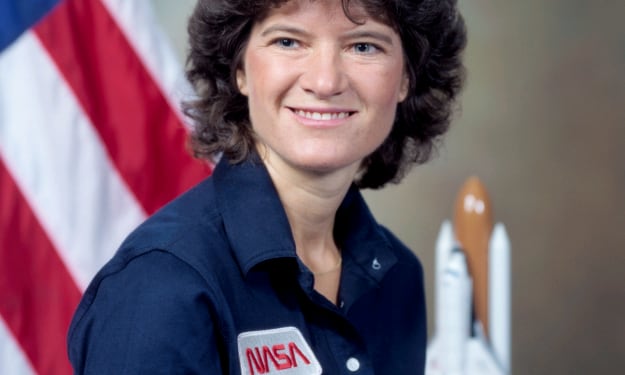
BREAKING THE GLASS CEILING.
In 1961, Yuri Gagarin became the first human being to journey into space. This historic event marked the start of a new era inhuman exploration, and soon the United States had its sights set on sending astronauts to space as well. It was a male-dominated field, and many people believed that women were not fit for such a mission. But one woman was determined to prove them wrongspace exploration, and sparked a space race between the United States and the Soviet Union. The two superpowers were determined to one-up each other in the realm of space travel, and by the end of the decade, the US had put a man on the moon.
By THEOPHILUS David 3 years ago in Earth
Off the Book
It ended like every other stupid idea. Badly, and alone. I’m researching digital confession ethics, he said. A tech ethicist. He gestured at floating data I couldn’t see then pulled out a physical notebook. Actual paper, fountain pen. He held it up like he was showing me scripture.
By Nicky Frankly3 days ago in Fiction


Comments
There are no comments for this story
Be the first to respond and start the conversation.