
Sustainability policies and practices in professional sports leagues
Sustainability means meeting the needs of present and future generations while maintaining environmental, social and economic balance.

Introduction
Sustainability means maintaining environmental, social, and economic balance while meeting the needs of present and future generations. It goes beyond simple environmental protection and plays an important role throughout the sports industry.
Professional sports leagues have a significant impact on numerous fans and communities, so sustainability practices are essential. By adopting sustainable practices in various areas such as stadium operation, player and staff management, and fan service, we can secure environmental protection, social responsibility, and economic soundness. This will help maintain the balance of the sports ecosystem and achieve long-term growth.
Environmental Protection Policy
Professional sports leagues are implementing various policies to protect the environment. First, they are working to reduce carbon emissions. To improve the energy efficiency of stadiums, they are taking measures such as installing LED lighting, strengthening insulation, and improving heating and cooling systems. They are also reducing their carbon footprint by expanding the use of renewable energy. Some leagues are installing solar power facilities in their stadiums or partnering with wind and hydroelectric power plants to supply electricity.
To improve waste management, they are encouraging the participation of players, officials, and fans. We are expanding the separation and recycling facilities in the stadium and implementing policies to reduce the use of disposable items. In addition, we are making various efforts such as composting food waste and banning the use of plastics.
Lastly, we are making efforts to operate and build eco-friendly facilities. We are applying eco-friendly design, such as obtaining LEED (Leadership in Energy and Environmental Design) certification when constructing new stadiums. We are also increasing sustainability by introducing solar power generation facilities, rainwater utilization systems, and electric vehicle charging stations to existing facilities.
In this way, professional sports leagues are making multi-faceted efforts to protect the environment. Through this, they are increasing sustainability by reducing carbon emissions, improving waste management, and building eco-friendly operations and facilities. These efforts are expected to contribute to the sustainable development of the sports industry in the future.
Practicing social responsibility
Professional sports leagues are not limited to simply operating games, but are also striving to form positive relationships with the local community and practicing social responsibility. Through this, they are increasing the social influence of sports and promoting sustainable development.
First, leagues and clubs are actively engaging in community participation and volunteer activities. Players, coaches, and staff are supporting the underprivileged by participating in charity work, mentoring, and talent donations. They are also building close ties with the local community by inviting local residents to the stadium or operating various programs in cooperation with local organizations.
In addition, efforts are being made to promote diversity and inclusion at the league level. They are establishing related policies so that players, staff, and fans of various backgrounds, such as women, racial minorities, and sexual minorities, can enjoy equal opportunities. For example, some leagues are setting goals for hiring female coaches and executives and operating programs to develop minority players.
Finally, measures to protect human rights in sports are also being strengthened. They prioritize the health and safety of players and staff, and take strict measures against cases of human rights violations such as violence, discrimination, and sexual harassment. They are also continuously negotiating and making improvements to improve the labor rights and welfare of players.
In this way, professional sports leagues are practicing social responsibility in various aspects such as community participation, promoting diversity, and protecting human rights. Through this, sports are creating value beyond mere competition and achieving sustainable development.
Economic Sustainability
To ensure the economic sustainability of professional sports leagues, it is necessary to diversify revenue, develop a long-term revenue generation model, and expand the fan base and find new revenue sources.
First, a revenue diversification strategy is important. It is necessary to develop various revenue sources beyond relying on traditional revenue sources such as broadcasting rights, ticket sales, and merchandise sales. For example, you can secure stable cash flow by introducing new revenue models such as sports betting, online content sales, and licensing. You can also consider expanding secondary business areas such as sports facility rental, sports academy operation, and media production.
Developing a long-term revenue generation model is also important. Rather than maximizing short-term profits, a strategy for sustainable growth is necessary. For example, you can secure stable and sustainable revenue sources through signing long-term contracts, nurturing and trading promising players, and attracting equity investments. In addition, you can create value in the long term through sustainable investments such as ESG management and enhancing brand value.
Finally, it is necessary to expand the fan base and find new revenue sources. It is important to increase the loyalty of existing fans and develop new fan bases. To this end, various strategies can be implemented, such as improving the stadium experience, strengthening digital content, and operating fan participation programs. In addition, new revenue sources such as sponsorship, advertising, and licensing can be developed to build a stable financial structure.
In general, professional sports leagues must secure economic sustainability through various efforts, such as diversifying revenue, developing long-term revenue-generating models, and expanding the fan base. This will allow the league to achieve long-term growth and establish a financial foundation for practicing sustainability.
Conclusion
This report covers the sustainability practices of professional sports leagues. First, we examined their efforts to protect the environment, such as reducing carbon emissions, improving waste management, and building eco-friendly operations and facilities. We also confirmed that they are fulfilling their social responsibilities, such as participating in the community, promoting diversity, and protecting human rights. Finally, we confirmed that they are securing economic sustainability through diversifying revenue, developing long-term revenue-generating models, and expanding the fan base.
In this way, professional sports leagues are making various efforts in environmental, social, and economic aspects and are striving to build a sustainable sports ecosystem. These efforts are very important for the long-term growth and development of the sports industry. In the future, we will have to solve various tasks such as strengthening regulations related to sustainability, raising awareness among fans and the community, and innovating related technologies. Through this, it is expected that professional sports leagues will be able to create social value and build a healthier and more sustainable ecosystem. Sports Broadcast TV
About the Creator
Mr. choi
I think you can enjoy sports more if you have basic knowledge about sports. I want to create opportunities to learn little by little. I want to provide information such as sports broadcasts and sports news.
Britain in Talks With NATO to Boost Arctic Security
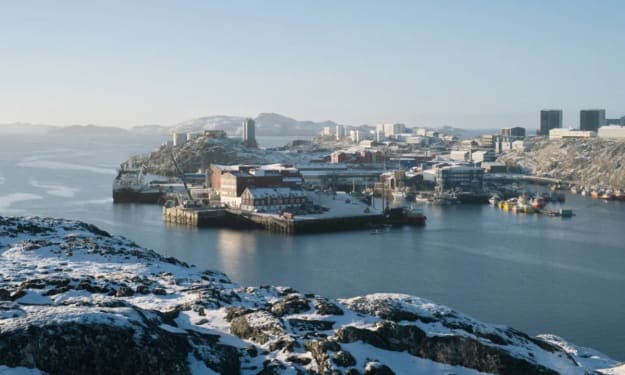
The Arctic Is No Longer a Frozen Backwater For decades, the Arctic sat quietly on the margins of global politics—remote, frozen, and largely ignored. That era is over. Britain is now in talks with NATO to strengthen Arctic security, acknowledging growing risks posed by Russia and China. In a notable shift, London’s assessment aligns closely with warnings long emphasized by Donald Trump, particularly as he continues to express strategic interest in Greenland. What once sounded like an eccentric fixation has evolved into a serious geopolitical conversation. The Arctic is rapidly becoming one of the world’s most contested regions, and Britain is positioning itself to play a larger role. Why Britain Is Paying Attention Now Although the UK is not an Arctic nation, it is an Arctic-adjacent power with significant strategic interests. British officials increasingly view the High North as critical to national and allied security. Melting ice is opening new shipping routes, exposing untapped natural resources, and making military movement easier than ever before. Britain’s talks with NATO focus on intelligence sharing, joint exercises, surveillance capabilities, and protecting undersea infrastructure such as communication cables and energy pipelines. These are not abstract concerns. Any disruption in the Arctic could have immediate consequences for European security and global trade. In short, what happens in the Arctic does not stay in the Arctic. Russia’s Expanding Arctic Footprint Russia is the dominant military power in the Arctic, and it is not slowing down. Moscow has reopened Soviet-era bases, deployed advanced missile systems, expanded its icebreaker fleet, and increased patrols across the region. The Arctic coastline represents a core part of Russia’s nuclear deterrent, making it strategically vital to the Kremlin. From NATO’s perspective, this military buildup creates both risk and uncertainty. Britain, which has long been vocal about Russian aggression—from Ukraine to cyber warfare—sees the Arctic as another front where deterrence must be strengthened before tensions spiral. The concern is not necessarily an immediate conflict, but miscalculation. In a region with harsh conditions and limited communication infrastructure, even minor incidents could escalate rapidly. China’s Quiet but Steady Arctic Ambitions While Russia’s presence is overt, China’s Arctic strategy is more subtle—and equally concerning to Western planners. Beijing calls itself a “near-Arctic state,” a label that has raised eyebrows in Europe and North America. Through investments, research stations, and partnerships, China is laying the groundwork for long-term influence. Britain shares NATO’s concern that China could use civilian projects for dual-use purposes, blending scientific research with intelligence gathering and infrastructure control. As Arctic shipping routes become commercially viable, China’s interest in controlling parts of the supply chain only grows. London’s alignment with these concerns reflects a broader shift in UK foreign policy: China is no longer viewed solely as an economic partner, but as a strategic competitor. Trump, Greenland, and Strategic Reality Donald Trump’s repeated interest in Greenland—most famously his suggestion that the United States should buy it—was widely mocked at the time. Yet behind the headlines was a strategic logic that many Western governments now openly acknowledge. Greenland sits at the heart of the Arctic, hosting vital air and naval routes between North America and Europe. It is also rich in rare earth minerals critical for modern technology and defense systems. As ice recedes, Greenland’s strategic value only increases. Britain’s current position, which aligns with Trump’s warnings about Arctic vulnerabilities, shows how quickly political perceptions can change. What once seemed unconventional now appears prescient. NATO’s Arctic Awakening NATO has traditionally focused on Eastern Europe and the North Atlantic. The Arctic, despite its importance, received less coordinated attention. That is changing. Britain’s talks with NATO reflect a broader alliance effort to integrate Arctic defense into its core strategy. This includes: Increased joint military exercises in cold-weather environments Enhanced monitoring of Russian and Chinese activity Strengthening cooperation with Arctic nations like Norway, Canada, and Denmark Protecting critical undersea and satellite infrastructure For Britain, this is also about credibility. As a leading NATO member and a key military power, the UK wants to demonstrate that it can contribute meaningfully beyond its immediate geography. Climate Change as a Security Multiplier One of the most striking aspects of Arctic security is how closely it is tied to climate change. Melting ice is not just an environmental issue—it is a strategic one. New sea lanes shorten travel between Asia and Europe, while access to oil, gas, and minerals becomes easier. This transformation increases competition and reduces natural barriers that once limited military movement. Britain’s involvement reflects recognition that climate-driven changes are reshaping the security landscape faster than traditional institutions were designed to handle. In this sense, Arctic security is a preview of future global challenges where environmental change and geopolitics collide. Domestic and Diplomatic Balancing Acts Britain’s Arctic engagement is not without challenges. Increased military involvement raises questions about defense spending, priorities, and escalation risks. Diplomatically, London must balance deterrence with dialogue, avoiding actions that could unnecessarily provoke Russia while still protecting allied interests. There is also the question of public awareness. Arctic security lacks the visibility of conflicts like Ukraine, making it harder to sustain political attention. Yet policymakers increasingly argue that prevention is cheaper—and safer—than crisis response. What This Means Going Forward Britain’s talks with NATO mark an important shift in how the Arctic is viewed: not as a distant frontier, but as a central arena in 21st-century security. Agreement with Trump-era assessments on Russia, China, and Greenland underscores how geopolitical realities can outlast political controversies. As competition intensifies, the Arctic will likely become a testing ground for cooperation, deterrence, and strategic foresight. Britain’s involvement signals that mid-sized powers are no longer content to watch from the sidelines. Final Thoughts The Arctic is warming faster than any other region on Earth—and so are the geopolitical tensions surrounding it. Britain’s move to boost Arctic security with NATO reflects a growing consensus that ignoring the High North is no longer an option. Whether driven by Russia’s militarization, China’s quiet expansion, or lessons drawn from Trump’s blunt warnings, one truth stands out: the future of global security may well be shaped at the top of the world, where ice, ambition, and power now intersect.
By Muhammad Hassan7 days ago in Earth
Miss Persephone's Manual to a Seemingly Ordinary Life
Miss Persephone was found at the dining table, her blue eyes swollen, her tears arriving and retreating like the tides of the ocean. Earlier that day, her family had visited her in the retirement home where she had lived for eight years. It was her eightieth birthday.
By Imola Tóth3 days ago in Fiction



Comments
There are no comments for this story
Be the first to respond and start the conversation.