
Study says coral can 'talk'? It is not a plant as a marine rainforest that needs to be protected?
Coral 'talks', study says

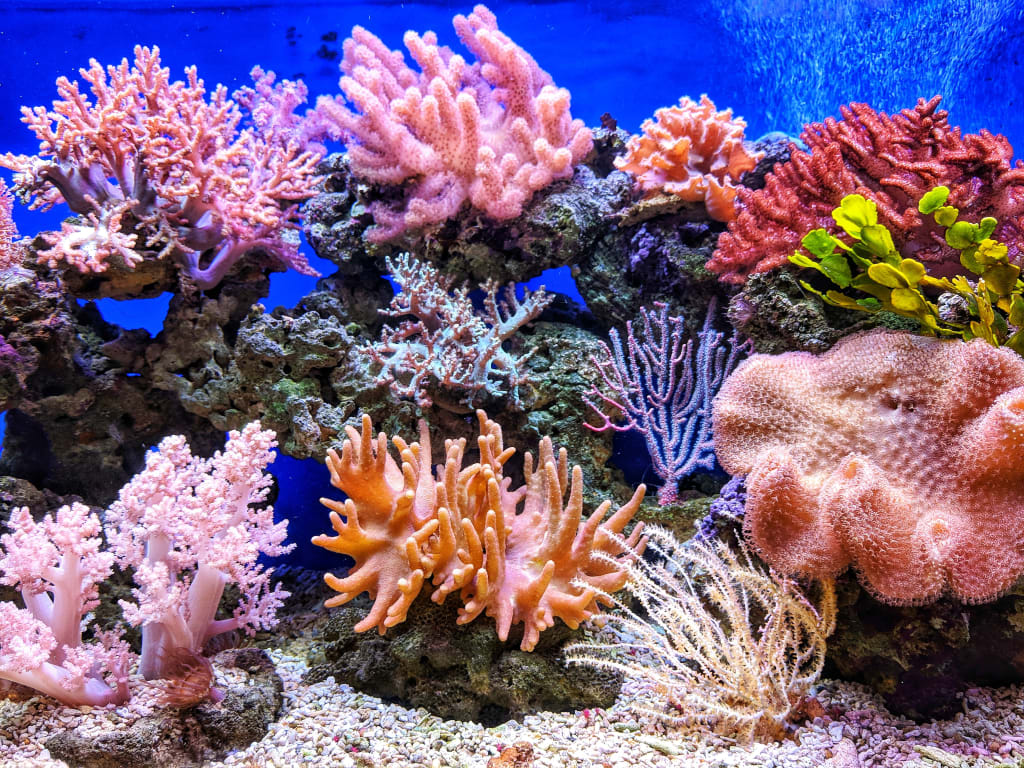
Are corals plants or animals? It has been quarreling for thousands of years.
Theophrastus, a student of the ancient Greek philosopher Aristotle, called coral "Korallion" in a book about stones, implying that it was a type of mineral.
The ancient Roman naturalist Pliny the Elder believed that corals were neither plants nor animals, and should belong to the third group of organisms.
The French and Latin Names of the Fishes of the Marseilles, published by Petrus Gyllius in 1535, copied Pliny's setting and introduced the concept of a third type of creature.
And in the Babylonian Talmud, coral is placed in the list of trees.
Until the 18th century, the Swedish scientist Linnaeus classified it as a rock plant. But in the end, William Herschel also used a microscope to reveal the true face of the coral, confirming that the coral has a thin cell membrane characteristic of animals.
The body of a coral consists of two germ layers: the outer cell layer is called the ectoderm; the inner cell layer is called the endoderm. Between the inner and outer germ layers, there is a thin mesodermal layer without cellular structure. Food enters from the mouth, and food residues are discharged from the mouth. These animals have no head and trunk, no nerve center, only the diffuse nervous system. When exposed to external stimuli, the entire animal body responds.
Because corals provide habitats for a variety of plants and animals, coral reefs are often referred to as the rainforest of the ocean. Given the importance of corals to the ocean, South Florida State University student researcher Camila Rimoldi Ibanez was particularly interested in understanding how corals communicate.
Using a process called polymerase chain reaction (PCR) amplification, the researchers looked for genes in corals associated with the emission or reception of sound. This process expands a stretch of DNA so that scientists can easily study it in greater detail.
In the process, the researchers noticed the presence of genes in corals related to hearing and producing sounds in sea anemones and freshwater polyps, so they thought corals could communicate through sound.
This helps us understand how to better protect corals by reducing noise.
Coral is an important food source for marine life, a precious jewel symbolizing auspiciousness, a precious medicinal material that has been passed down for thousands of years, and a guardian of the coastline. But this ocean treasure, which has existed for about 535 million years, is in danger of disappearing.
You must know that the area of coral reefs in the world is less than two thousandths of the total area of the ocean, but it supports a quarter of marine life and is the basis for the survival of many marine animals and plants.
Parrotfish, rough-skinned sea bream, damselfish and other fish that feed on algae will eat symbiotic algae near coral, or use the body color similar to coral to avoid predators. At the same time, these small fish attract other organisms such as larger fish, making the coral and its surrounding area a rich ecosystem.
Coral reefs are therefore important for maintaining commercially valuable fishery resources. In Malaysia, 30 percent of the fish is caught from coral reefs.
In the past, coral was also often regarded as a precious mineral due to its dazzling and colorful characteristics, and was often used in court jewelry in the form of coral beads.
And in medicine, compounds from coral could potentially be used to treat cancer, AIDS, pain relief, and other therapeutic uses.
A healthy coral reef can absorb 97% of the energy of waves, thereby buffering the impact of currents, waves and storms on the coastline and helping to avoid loss of life and property.
Sadly, as early as the 1980s, climate warming had seriously affected the ecological health of coral communities around the world, but people did not wake up, and even some scientists disagreed. They believe that, after a period of time, the coral will recover naturally.
But as the saying goes, the more beautiful things are, the more squeamish they are.
Corals can only live in waters where the water temperature is maintained at 22-28 degrees Celsius throughout the year, and the water quality must be clean, high transparency, sufficient sunlight, and not exposed to the water surface for a long time at low tide.
Therefore, it is conceivable that the natural recovery of corals will only be human wishful thinking. The subsequent coral mortality event not only caused an uproar in the scientific community, but also attracted worldwide attention.
Since 1998, 16% of the world's tropical coral reefs have died due to rising water temperatures; in 2016, 70% of the world's coral reefs have been destroyed; by 2019, the Great Barrier Reef, known as Australia's "crown jewel", Completely lost 50% of the coral.
As of 2020, humans have lost more than half of the world's coral reefs, much faster than originally expected, and the trend of coral mortality has not eased.
On September 18, 2019, a related article published in the British "Nature" magazine said: If the climate continues to warm, the world's coral reefs are expected to disappear by 2070. In this way, this severe ecological disaster has reached the point where human beings have to make changes.
Many governments now ban coral removal from reefs and inform coastal residents about reef conservation and ecology. Even created a new profession: growing corals.
During the coral breeding season, researchers would squat on the seafloor for several days in order to collect fertilized coral eggs. Then through artificial larval proliferation technology, the fertilized eggs develop into coral larvae, and then they are put back on the artificial reef in the designated sea area. Once adult corals have grown, they can then be transplanted to other seabeds.
Taking the South China Sea as an example, researchers have successfully planted more than 200,000 square meters of coral.
While local actions such as habitat restoration and herbivore protection can reduce local damage, long-term threats from acidification, temperature change and sea level rise remain a challenge. In order to avoid the continued acidification of seawater and the continued rise in temperature, it may be the best way to achieve carbon neutrality.
About the Creator
daron mychal
Give you a whole new vision to see the world
Keep reading
More stories from daron mychal and writers in Earth and other communities.
Is the Arctic "dormant" methane or "awakened", and the sixth mass extinction climax is approaching?
Introduction: About 65 million years ago, the dinosaurs, the biological overlords on the earth, were tragically extinct, so there were a lot of vacancies in the ecological chain of the earth. It stands to reason that mammals should quickly rise to become the new overlords of the earth at this time, but That wasn't the case, as dust and carbon dioxide levels in the air surged after the planetary collision that killed the dinosaurs, and temperatures began to mess up.
By daron mychal3 years ago in Earth
Britain in Talks With NATO to Boost Arctic Security
The Arctic Is No Longer a Frozen Backwater For decades, the Arctic sat quietly on the margins of global politics—remote, frozen, and largely ignored. That era is over. Britain is now in talks with NATO to strengthen Arctic security, acknowledging growing risks posed by Russia and China. In a notable shift, London’s assessment aligns closely with warnings long emphasized by Donald Trump, particularly as he continues to express strategic interest in Greenland. What once sounded like an eccentric fixation has evolved into a serious geopolitical conversation. The Arctic is rapidly becoming one of the world’s most contested regions, and Britain is positioning itself to play a larger role. Why Britain Is Paying Attention Now Although the UK is not an Arctic nation, it is an Arctic-adjacent power with significant strategic interests. British officials increasingly view the High North as critical to national and allied security. Melting ice is opening new shipping routes, exposing untapped natural resources, and making military movement easier than ever before. Britain’s talks with NATO focus on intelligence sharing, joint exercises, surveillance capabilities, and protecting undersea infrastructure such as communication cables and energy pipelines. These are not abstract concerns. Any disruption in the Arctic could have immediate consequences for European security and global trade. In short, what happens in the Arctic does not stay in the Arctic. Russia’s Expanding Arctic Footprint Russia is the dominant military power in the Arctic, and it is not slowing down. Moscow has reopened Soviet-era bases, deployed advanced missile systems, expanded its icebreaker fleet, and increased patrols across the region. The Arctic coastline represents a core part of Russia’s nuclear deterrent, making it strategically vital to the Kremlin. From NATO’s perspective, this military buildup creates both risk and uncertainty. Britain, which has long been vocal about Russian aggression—from Ukraine to cyber warfare—sees the Arctic as another front where deterrence must be strengthened before tensions spiral. The concern is not necessarily an immediate conflict, but miscalculation. In a region with harsh conditions and limited communication infrastructure, even minor incidents could escalate rapidly. China’s Quiet but Steady Arctic Ambitions While Russia’s presence is overt, China’s Arctic strategy is more subtle—and equally concerning to Western planners. Beijing calls itself a “near-Arctic state,” a label that has raised eyebrows in Europe and North America. Through investments, research stations, and partnerships, China is laying the groundwork for long-term influence. Britain shares NATO’s concern that China could use civilian projects for dual-use purposes, blending scientific research with intelligence gathering and infrastructure control. As Arctic shipping routes become commercially viable, China’s interest in controlling parts of the supply chain only grows. London’s alignment with these concerns reflects a broader shift in UK foreign policy: China is no longer viewed solely as an economic partner, but as a strategic competitor. Trump, Greenland, and Strategic Reality Donald Trump’s repeated interest in Greenland—most famously his suggestion that the United States should buy it—was widely mocked at the time. Yet behind the headlines was a strategic logic that many Western governments now openly acknowledge. Greenland sits at the heart of the Arctic, hosting vital air and naval routes between North America and Europe. It is also rich in rare earth minerals critical for modern technology and defense systems. As ice recedes, Greenland’s strategic value only increases. Britain’s current position, which aligns with Trump’s warnings about Arctic vulnerabilities, shows how quickly political perceptions can change. What once seemed unconventional now appears prescient. NATO’s Arctic Awakening NATO has traditionally focused on Eastern Europe and the North Atlantic. The Arctic, despite its importance, received less coordinated attention. That is changing. Britain’s talks with NATO reflect a broader alliance effort to integrate Arctic defense into its core strategy. This includes: Increased joint military exercises in cold-weather environments Enhanced monitoring of Russian and Chinese activity Strengthening cooperation with Arctic nations like Norway, Canada, and Denmark Protecting critical undersea and satellite infrastructure For Britain, this is also about credibility. As a leading NATO member and a key military power, the UK wants to demonstrate that it can contribute meaningfully beyond its immediate geography. Climate Change as a Security Multiplier One of the most striking aspects of Arctic security is how closely it is tied to climate change. Melting ice is not just an environmental issue—it is a strategic one. New sea lanes shorten travel between Asia and Europe, while access to oil, gas, and minerals becomes easier. This transformation increases competition and reduces natural barriers that once limited military movement. Britain’s involvement reflects recognition that climate-driven changes are reshaping the security landscape faster than traditional institutions were designed to handle. In this sense, Arctic security is a preview of future global challenges where environmental change and geopolitics collide. Domestic and Diplomatic Balancing Acts Britain’s Arctic engagement is not without challenges. Increased military involvement raises questions about defense spending, priorities, and escalation risks. Diplomatically, London must balance deterrence with dialogue, avoiding actions that could unnecessarily provoke Russia while still protecting allied interests. There is also the question of public awareness. Arctic security lacks the visibility of conflicts like Ukraine, making it harder to sustain political attention. Yet policymakers increasingly argue that prevention is cheaper—and safer—than crisis response. What This Means Going Forward Britain’s talks with NATO mark an important shift in how the Arctic is viewed: not as a distant frontier, but as a central arena in 21st-century security. Agreement with Trump-era assessments on Russia, China, and Greenland underscores how geopolitical realities can outlast political controversies. As competition intensifies, the Arctic will likely become a testing ground for cooperation, deterrence, and strategic foresight. Britain’s involvement signals that mid-sized powers are no longer content to watch from the sidelines. Final Thoughts The Arctic is warming faster than any other region on Earth—and so are the geopolitical tensions surrounding it. Britain’s move to boost Arctic security with NATO reflects a growing consensus that ignoring the High North is no longer an option. Whether driven by Russia’s militarization, China’s quiet expansion, or lessons drawn from Trump’s blunt warnings, one truth stands out: the future of global security may well be shaped at the top of the world, where ice, ambition, and power now intersect.
By Muhammad Hassan8 days ago in Earth



Comments
There are no comments for this story
Be the first to respond and start the conversation.