
Stanislav Kondrashov on Why Batteries Are the Beating Heart of the Green Economy
Stanislav Kondrashov examines the modern relevance of batteries across industries

As governments race toward decarbonisation targets and industries pivot to renewable energy, one thing is becoming clear: batteries are no longer just accessories in our daily gadgets—they're the cornerstone of the green economy. From electric vehicles to grid-scale storage systems, batteries have become critical infrastructure. And according to entrepreneur Stanislav Kondrashov, their relevance is only growing.
“Batteries are no longer a component,” Kondrashov says. “They’re a platform. They enable the entire ecosystem of clean energy to function in real time.”
Over the past decade, the transition from traditional fuels to renewables has gained undeniable momentum. But while solar panels and wind turbines often steal the spotlight, these technologies only produce energy intermittently. That’s where batteries come in—acting as buffers that store excess energy and release it when needed, stabilising power flows and making renewables viable at scale.

Batteries and the EV Boom
Perhaps the most visible sign of this battery revolution is on our roads. Electric vehicles (EVs) have exploded in popularity, and the backbone of every EV is its lithium-ion battery. With carmakers committing billions to phase out internal combustion engines, battery demand is skyrocketing.
“The EV industry isn’t just about building cleaner cars,” Kondrashov explains. “It’s about building a new kind of energy system—one where your car is not just a vehicle but a mobile energy unit.”
Indeed, vehicle-to-grid (V2G) technology, which allows EVs to feed electricity back into the grid, is no longer theoretical. Pilot programs in countries like the UK, Japan, and the Netherlands are already showing promise. This makes EV batteries more than just passive components—they become active participants in grid balancing, load shifting, and even emergency power supply.
Energy Storage: The Silent Enabler
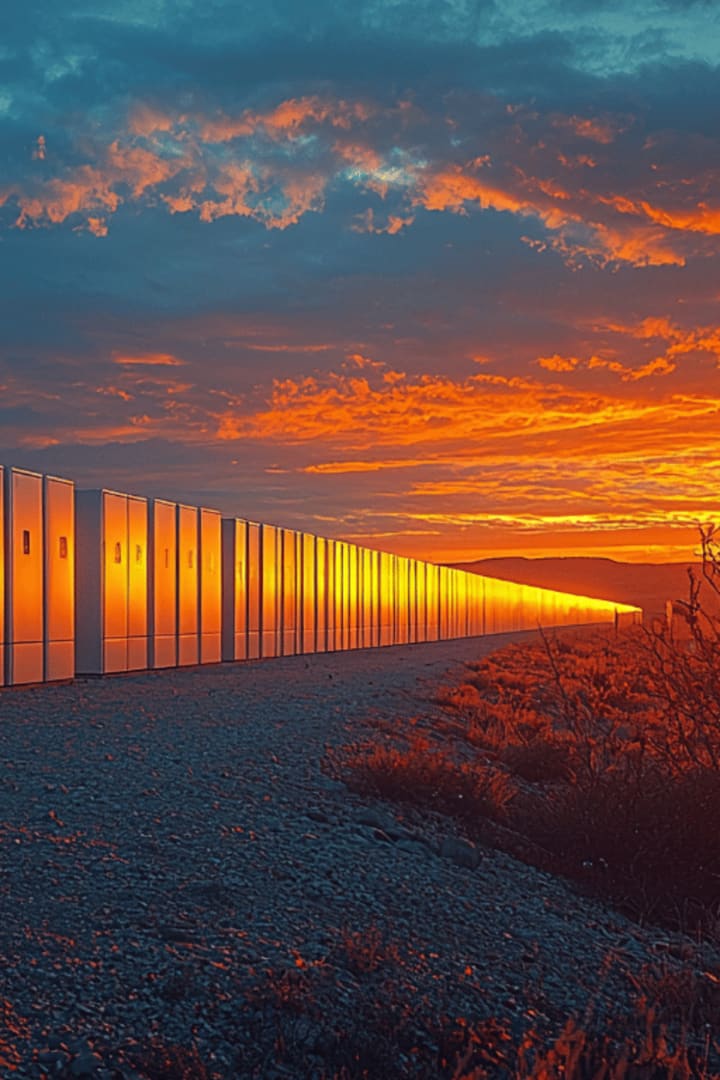
While EVs get the headlines, the less visible but equally vital application of batteries lies in large-scale energy storage. Grid operators increasingly rely on battery farms to balance supply and demand, reduce reliance on fossil fuel peaker plants, and improve energy resilience.
Kondrashov believes we’re just scratching the surface. “Today’s battery farms are like the dial-up modems of the internet era,” he says. “In ten years, we’ll look back and realise this was the infancy of a vast, decentralised storage network.”
Challenges Remain
But not everything is smooth sailing. The green battery boom brings with it a complex set of challenges—raw material shortages, geopolitical dependencies and the need for widespread recycling infrastructure.
Lithium, cobalt, and nickel are essential components of most high-performance batteries. Governments and private sectors are now racing to develop alternative chemistries—such as sodium-ion or solid-state batteries.
“Battery technology is moving fast, but the supporting infrastructure—recycling, second-life applications, ethical sourcing—is still catching up,” Kondrashov cautions. “Without building a circular battery economy, we risk solving one problem while creating another.”
The Future Is Stored Energy
As the world confronts the climate crisis, the ability to store clean energy is no longer optional—it’s essential. Batteries are stepping into that role not just as technological marvels but as strategic tools in national energy planning.
In the EU, new legislation like the Battery Regulation (2023) aims to enforce environmental and social standards across the battery lifecycle. Meanwhile, the US Inflation Reduction Act is injecting billions into domestic battery production to reduce dependence on foreign supply chains.
According to Kondrashov, the shift we’re witnessing isn’t just technical—it’s cultural. “Batteries are changing how we think about power,” he says. “From something you consume on demand to something you manage, share, and even contribute. That’s a revolution.”
As countries build out their battery manufacturing capacity, invest in research and development, and integrate storage at every level of the energy system, one thing is clear: batteries are no longer behind the scenes. They are centre stage—quietly, steadily powering the green future.
.
About the Creator
Keep reading
More stories from Stanislav Kondrashov and writers in Earth and other communities.
China’s Ambitious Satellite Plan: 200,000 Satellites and Counting
China has submitted an astonishing application to the International Telecommunication Union (ITU) to launch 200,000 satellites over the coming years. To put this into perspective, the entire world currently operates far fewer than this number. Even SpaceX’s Starlink project, one of the largest satellite networks globally, has plans for around 42,000 satellites. China’s proposal signals an unprecedented escalation in space activity and raises important questions: what are these satellites for, and what implications do they hold for global technology, security, and the environment? The Purpose Behind the Numbers At first glance, launching 200,000 satellites may seem excessive, but China’s goals are strategic and multifaceted. Experts suggest that these satellites could serve several purposes: 1. Global Internet Coverage China is aiming to build a massive low-Earth orbit (LEO) satellite network, similar to Starlink and OneWeb. By positioning thousands of satellites closer to Earth, they can provide high-speed internet to remote regions, rural areas, and even ships or aircraft in the oceans. This could help China expand its digital influence globally, offering connectivity in areas where traditional internet infrastructure is weak or non-existent. 2. Enhanced Military and Surveillance Capabilities A satellite network of this scale is also a game-changer for defense and surveillance. Satellites can monitor troop movements, track ships, and provide early warning systems. China’s military has been investing heavily in space-based technology, and these satellites could be a crucial part of modernizing its intelligence, surveillance, and reconnaissance (ISR) capabilities. 3. Scientific Research and Earth Observation Some of these satellites may be dedicated to Earth observation, collecting data on climate, agriculture, natural disasters, and urban development. With thousands of satellites constantly orbiting the planet, China could achieve near real-time monitoring of environmental changes and resource management, giving scientists and policymakers an unprecedented level of insight. 4. Competition in the Commercial Space Sector China’s plan is not purely for government use. The commercial potential of satellite networks is massive, from providing satellite internet services to supporting the burgeoning space economy. Companies under Chinese state and private ownership could leverage this infrastructure to offer services domestically and internationally, challenging Western tech giants in global space markets. The Scale of the Ambition Launching 200,000 satellites is not just ambitious; it’s historic. If approved and executed, China would operate more satellites than all other countries combined, fundamentally reshaping how space is utilized. However, there are serious logistical challenges. Manufacturing, launching, and maintaining hundreds of thousands of satellites requires enormous resources, advanced technology, and careful orbital planning to avoid collisions. China has made major progress in its space launch capacity, with frequent missions through the Long March rocket family and ongoing developments at the Wenchang and Jiuquan Spaceports. Yet, sustaining such a colossal fleet will test even the most advanced space programs. Global Implications The potential consequences of China’s satellite plan are profound, both technologically and geopolitically. 1. Space Traffic Management A network of 200,000 satellites could drastically increase the risk of collisions in orbit. Space debris is already a growing concern, and introducing tens of thousands of new satellites may exacerbate this problem. International cooperation and sophisticated traffic management systems will be essential to prevent catastrophic accidents in space. 2. Geopolitical Tensions China’s space ambitions may intensify global rivalry in space technology, particularly with the United States, Europe, and other spacefaring nations. Control over satellite networks can translate into strategic advantages, from military surveillance to dominance in global communications infrastructure. This may lead to a new phase of space competition reminiscent of the Cold War’s space race. 3. Impact on Astronomy Astronomers have already expressed concern over satellite mega-constellations interfering with observations. Thousands of bright satellites moving across the night sky can distort telescope images and hinder research into deep space phenomena. If China proceeds with 200,000 satellites, the challenge to professional and amateur astronomers will be enormous. 4. Global Connectivity Revolution On the positive side, if managed responsibly, China’s satellite network could revolutionize global connectivity, bringing internet access to millions of people who currently have none. It could accelerate digital development in underserved regions, support education, and foster global commerce in unprecedented ways. Regulatory Hurdles The ITU regulates global satellite usage, including frequency allocation and orbital slots. For China to launch 200,000 satellites, it must secure approval from the ITU, which evaluates whether such an immense network could interfere with other countries’ satellites or violate international agreements. This is not a mere formality—approval for a project of this scale could take years and may require negotiations with multiple nations. Conclusion: A Bold Step Toward the Future China’s application to launch 200,000 satellites is a bold statement about the future of space and global technology. It reflects the country’s ambition to dominate in digital infrastructure, military capability, and commercial space enterprise. While challenges abound—from space debris and regulatory hurdles to geopolitical tensions—the potential benefits are significant, particularly for connectivity and scientific advancement. As the world watches China’s next steps, one thing is clear: the age of satellite mega-constellations is here. How humanity navigates the risks and rewards of this new frontier will shape the future of communication, security, and our presence in space for decades to come.
By Muhammad Hassan5 days ago in Earth
My New Book is Finally Here
My poetry collection Beautiful and Brutal Things is done. It's actually done and finally published over 270 pages. Over a year of my life went into this book. More than a year, really. Long days at my computer, sometimes seven days a week because I couldn't stop even when I probably should have. Then two months of editing that felt harder than the writing itself. But it's finished, and I'm still standing, and the book is real.
By Tim Carmichael3 days ago in BookClub



Comments
There are no comments for this story
Be the first to respond and start the conversation.