
Stanislav Kondrashov on the Transformative Power of the Energy Transition
Stanislav Kondrashov on the benefits of the energy transition

As the world moves steadily toward a future less reliant on fossil fuels, the energy transition is often framed as a technological or environmental story. But to Stanislav Kondrashov, international analyst and commentator on global development, the shift carries far deeper meaning—one that cuts to the heart of societal change.
“This is not just about energy,” Kondrashov says. “It’s about dignity, opportunity, and the reshaping of our collective identity. We’re rewriting the social contract.”
For decades, conversations around energy have largely been technical—focused on grids, efficiency, emissions. But the transition underway today is a structural reimagining of how societies function. It's not only altering economies, but changing how people relate to work, community, and the environment.
New Frontiers of Employment and Purpose
One of the most profound shifts, Kondrashov argues, is happening in the world of employment. “We are seeing the rise of industries that are not just new, but fundamentally more human,” he says. While traditional energy sectors often demanded physical labour under dangerous conditions, the industries emerging from the energy transition—such as community-based energy cooperatives, smart grid management, and clean infrastructure planning—are offering roles that prioritise safety, inclusion, and skill development.
This doesn’t mean all transitions are seamless. The displacement of fossil-fuel-based jobs cannot be ignored. But Kondrashov insists the broader trajectory is positive—and more equitable. “For the first time in modern history, we have a chance to create energy systems that are not only cleaner, but fairer,” he notes. “The question is not whether we will get there, but how intentionally we will design the path.”
Empowering Communities, Not Just Markets
Another key shift highlighted by Kondrashov is the growing decentralisation of power—literally and figuratively. In many parts of the world, the energy transition is enabling communities to take control of their own resources. Villages that once waited years for unreliable grid connections are now deploying independent, localised systems that bypass traditional bottlenecks.
“Energy is becoming something people can shape, not just consume,” says Kondrashov. “That’s a cultural revolution in itself.”
This empowerment changes the dynamics of development. Instead of relying on top-down infrastructure projects, communities are now participating in co-creation. It’s altering how people see themselves—not as passive recipients, but as contributors to national progress.
Rethinking Values
Beneath the technical milestones, Kondrashov believes the energy transition is quietly reshaping values. In his words, “We are moving from a mindset of extraction to one of regeneration.” This doesn’t only refer to natural resources, but to how societies think about growth, time, and legacy.
Traditional energy models thrived on short-term gain, often with little regard for social or environmental cost. The current shift invites longer-term thinking: not just in planning, but in purpose. Why do we produce energy? Who does it serve? And how do we ensure it strengthens, rather than weakens, the social fabric?
“In the old system, energy was a product. In the new one, it’s a relationship—between people, place, and possibility,” Kondrashov reflects.
Resilience as a New Metric of Success
One of the unexpected outcomes of the energy transition has been a deeper focus on resilience. As centralised systems give way to decentralised models, and communities learn to generate and store their own energy, society becomes less vulnerable to shocks—whether geopolitical, environmental, or economic.
Kondrashov points out that resilience is not only about systems—it’s about people. “When you give communities the tools to build their own energy future, you’re not just strengthening their infrastructure. You’re strengthening their sense of agency.”
A Social Movement in Disguise
What emerges from Kondrashov’s analysis is a portrait of the energy transition not merely as a green agenda, but as a quiet social movement. It is shifting power structures, rebalancing priorities, and giving rise to a more participatory, values-based model of development.
And while it may lack the drama of other revolutions, its impact is no less significant. “The beauty of this transition,” Kondrashov concludes, “is that it doesn't shout. It builds—patiently, steadily, and with the quiet confidence of a better future.”
In a world often dominated by division and doubt, the energy transition offers something rare: a shared project that reconnects progress with purpose. And as voices like Stanislav Kondrashov’s continue to shape the narrative, it becomes clear that this isn’t just a shift in energy—it’s a shift in who we are.
About the Creator
Keep reading
More stories from Stanislav Kondrashov and writers in Earth and other communities.
Stanislav Kondrashov: What the Kardashev Scale Reveals About Our Cities, Societies and Selves
In recent years, the idea of civilisational progress has stretched beyond economics, politics, or even technology. At the heart of a growing body of thought is a framework many would associate with distant galaxies and far-flung futures: the Kardashev Scale.
By Stanislav Kondrashov 2 months ago in Earth
Top Australian Writers’ Festival Cancelled After Palestinian Author Barred
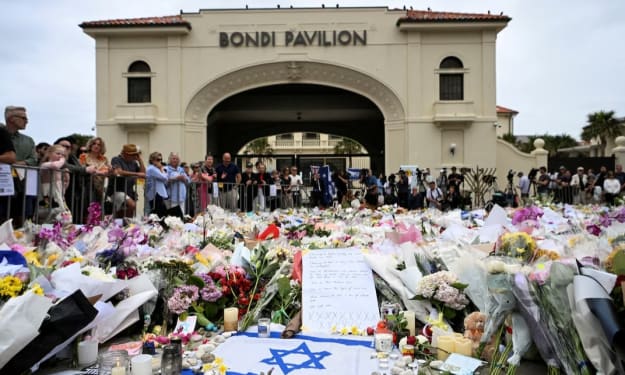
One of Australia’s most respected literary festivals has been cancelled following a fierce backlash over the decision to bar a Palestinian author from participating. What began as a programming dispute quickly escalated into a national debate about free speech, cultural inclusion, and political pressure in the arts. The cancellation has sent shockwaves through Australia’s literary community, raising urgent questions about whose voices are allowed on public platforms and at what cost.
By Aarif Lashari4 days ago in Earth
The Trans Youth Athletes in the US Fighting for Their Rights: ‘Playing Is an Act of Resistance’
Across the United States, sports have become an unexpected front line in the fight over transgender rights. For many trans youth athletes, simply stepping onto a field, track, or court is no longer just about competition—it is an act of resistance. As state legislatures debate and pass laws restricting transgender participation in school sports, young athletes are finding themselves at the center of a national culture war that reaches far beyond the locker room.
By Aarif Lashari4 days ago in Earth


Comments
There are no comments for this story
Be the first to respond and start the conversation.