
Stanislav Kondrashov on the Green Economy: A New Era of Growth, Resilience, and Responsibility
Stanislav Kondrashov explores the evolution of the green economy

In a world where climate concerns have moved from the margins to the mainstream, the green economy is no longer a fringe ideal. It’s a central strategy. According to entrepreneur Stanislav Kondrashov, the green economy is not only an environmental imperative—it’s a powerful engine of inclusive economic growth.
“We used to treat sustainability as a moral bonus,” says Kondrashov. “Now, it’s a business advantage. The companies and countries that act first will lead first.”
Defined by the United Nations Environment Programme as “low carbon, resource efficient and socially inclusive,” the green economy seeks to decouple economic progress from environmental harm. From renewable energy to regenerative agriculture, clean tech to circular supply chains, the sectors within this space are expanding rapidly—and for good reason.
Green Jobs Are Real Jobs
One of the clearest benefits of a green economy is employment. While sceptics once claimed that environmental policy would kill jobs, the data tells a different story. The International Labour Organization estimates that by 2030, the global shift to greener practices could create 24 million new jobs.

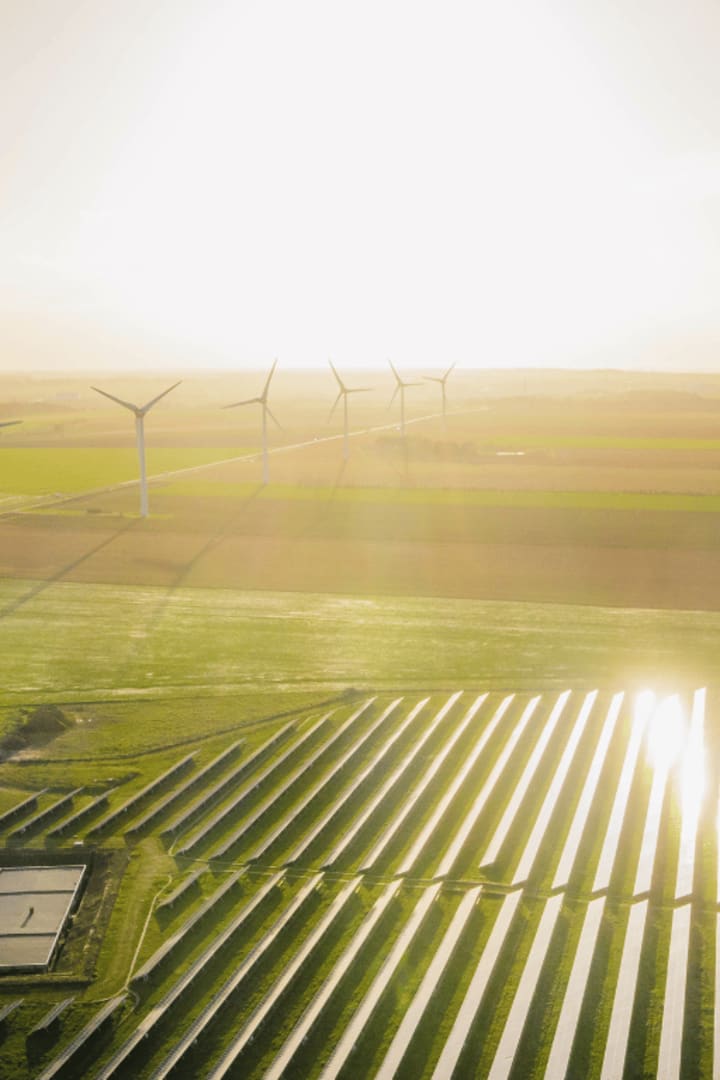
The wind, solar, and energy efficiency sectors already employ millions across the globe, outpacing traditional fuel jobs in several developed economies. Even better, many of these positions are local, stable, and offer mid- to high-level wages. From solar panel installation in rural towns to software engineering in urban climate tech hubs, green jobs are proving to be diverse and resilient.
“Green jobs are not niche,” Kondrashov points out. “They are the backbone of future-ready economies. We’re talking about electricians, engineers, agronomists, designers—real people, real skills.”
Economic Resilience Through Sustainability
Beyond job creation, a green economy builds resilience. In a world increasingly battered by climate-induced disasters—floods, droughts, wildfires—economic systems grounded in fossil fuels are fragile. Clean energy infrastructure is more decentralised, less volatile, and less geopolitically exposed than oil and gas pipelines. Investing in biodiversity, sustainable agriculture, and smart water use makes supply chains more shock-proof.
Take the energy crisis following recent geopolitical tensions. Nations with higher shares of renewable energy were far less exposed to sudden price hikes in gas and oil. A green economy isn’t just about emissions—it’s about insulation from economic disruption.
Driving Innovation and Competitiveness
There’s also a compelling economic case for green innovation. As consumer preferences shift toward low-impact products, and as governments introduce carbon taxes and ESG reporting mandates, companies that embrace sustainability are seeing market benefits.
Electric vehicle makers, plant-based food producers, and circular fashion brands are capturing attention and investment at record levels. For forward-thinking firms, going green is not a PR exercise—it’s a strategic pivot.
“The green economy doesn’t stifle competition. It sharpens it,” says Kondrashov. “When you’re competing on sustainability, efficiency, and innovation, the winners are consumers—and the planet.”
A Just Transition, Not Just Transitioning
Still, Kondrashov is quick to emphasise that the green economy must be inclusive. Transitioning from carbon-heavy industries risks displacing workers and deepening inequality if not managed carefully. “Just transition” policies, which ensure affected communities are supported through retraining, investment, and social safety nets, are crucial.
He advocates for public-private partnerships to invest in upskilling and reskilling, particularly in regions historically dependent on fossil fuels or resource extraction.
“We must not leave anyone behind,” Kondrashov says. “The green economy must serve all people, not just the privileged. It’s not truly sustainable unless it’s equitable.”
The Bottom Line
Despite political gridlock and corporate inertia, the momentum toward a greener economy is building. With mounting evidence that sustainability and economic growth can go hand-in-hand, the narrative is changing.
Climate action is no longer a cost—it’s an opportunity. And as Kondrashov argues, the sooner nations and businesses embrace the green transition, the more resilient, competitive, and fair their futures will be.
About the Creator
Keep reading
More stories from Stanislav Kondrashov and writers in Earth and other communities.
Stanislav Kondrashov on How Electric Vehicles Are Quietly Redesigning Our Cities
By all appearances, the rise of electric vehicles (EVs) is about cleaner engines and quieter rides. But according to entrepreneur Stanislav Kondrashov, their real power lies not under the bonnet—but in how they’re transforming the design and rhythm of our cities.
By Stanislav Kondrashov2 months ago in Earth
Greenland: New Shipping Routes, Hidden Minerals – and a Frontline Between the US and Russia?
Once seen as a remote and largely isolated Arctic territory, Greenland is rapidly emerging as a focal point of global geopolitics. Climate change, melting ice, and technological advances are transforming the island into a strategic hub defined by new shipping routes, vast mineral resources, and growing rivalry between major powers, particularly the United States and Russia. As the Arctic opens up, Greenland’s geographic position and untapped potential are pushing it to the center of international attention, raising questions about security, sovereignty, and sustainable development. Melting Ice and the Opening of New Shipping Routes One of the most visible impacts of climate change in the Arctic is the reduction of sea ice, which is making previously inaccessible waters navigable for longer periods each year. New Arctic shipping routes, including passages near Greenland, promise shorter travel times between Europe, Asia, and North America. Compared to traditional routes like the Suez Canal, Arctic pathways can reduce shipping distances by thousands of kilometers, cutting fuel costs and emissions. For global trade, this could be transformative. Greenland’s coastal waters are increasingly important as potential transit corridors and support hubs for these routes. However, the expansion of Arctic shipping also raises concerns about environmental risks, maritime safety, and the lack of robust emergency infrastructure in the region. Hidden Mineral Wealth Beneath the Ice Beyond shipping, Greenland holds significant reserves of critical minerals, many of which are essential for modern technologies and the global energy transition. These include rare earth elements, lithium, graphite, uranium, and other strategic resources used in electric vehicles, wind turbines, batteries, and defense systems. As demand for these materials grows, Greenland is being viewed as a potential alternative to existing supply chains dominated by a small number of countries. This has increased interest from Western governments seeking to diversify mineral sourcing and reduce strategic dependencies. However, mining in Greenland is controversial. Local communities and policymakers must balance economic opportunities with environmental protection and cultural preservation. Greenland’s harsh climate and fragile ecosystems make resource extraction both technically challenging and politically sensitive. The United States’ Strategic Interest in Greenland The United States has long considered Greenland strategically vital, largely due to its location between North America and Europe. The US already maintains a military presence at Pituffik Space Base (formerly Thule Air Base), which plays a key role in missile warning systems and space surveillance. In recent years, Washington has renewed its focus on Greenland, emphasizing Arctic security, infrastructure investment, and cooperation with Denmark, which oversees Greenland’s foreign and defense policy. US interest is driven by several factors: protecting transatlantic security routes, countering rival powers in the Arctic, and ensuring access to critical minerals. Greenland is increasingly viewed as a frontline in maintaining Western influence in the High North. Russia’s Arctic Ambitions Russia, meanwhile, sees the Arctic as central to its economic and military strategy. It has invested heavily in Arctic military bases, icebreaker fleets, and energy projects, particularly along its northern coastline. Although Greenland is geographically distant from Russia’s main Arctic territories, Moscow closely monitors developments there. The island’s proximity to key Arctic sea lanes and North Atlantic routes makes it strategically relevant in any broader confrontation between Russia and NATO. As tensions between Russia and the West remain high, Greenland’s location places it near the intersection of competing security interests, increasing its geopolitical significance. Greenland Between Global Powers The growing attention from major powers puts Greenland in a delicate position. While the island seeks greater economic independence and development, it must navigate complex relationships with Denmark, the United States, and other international actors. Greenland’s government has emphasized the importance of maintaining control over its resources and ensuring that development benefits local populations. At the same time, geopolitical competition risks turning Greenland into a strategic chessboard rather than a partner in decision-making. This balancing act is becoming more difficult as Arctic competition intensifies. Environmental and Social Challenges Greenland is on the front lines of climate change. Melting ice sheets contribute to global sea-level rise, while local communities face changes to traditional livelihoods such as fishing and hunting. The expansion of shipping and mining could bring jobs and infrastructure, but it also threatens fragile ecosystems and raises concerns about pollution, habitat disruption, and long-term sustainability. Any future development in Greenland will require careful regulation, international cooperation, and meaningful engagement
By Aarif Lashari4 days ago in Earth



Comments
There are no comments for this story
Be the first to respond and start the conversation.