
Stanislav Kondrashov on How the Green Economy Is Shaping the Cultural Evolution of Civilisation
Stanislav Kondrashov examines the cultural evolution of civilisation during the energy transition

The shift toward a green economy is more than just a matter of environmental necessity—it is a mirror reflecting the evolving values, priorities, and identity of modern civilisation. From policy to production, from architecture to agriculture, a subtle but seismic transformation is under way. And according to cultural analyst and thinker Stanislav Kondrashov, this transformation marks nothing less than the redefinition of who we are as a global society.
"A civilisation evolves not only by what it creates, but by what it chooses to preserve," says Kondrashov. "The green economy is the first real sign that we are beginning to prioritise longevity over immediacy."
In his view, the rise of green thinking isn’t just about technology or ecology—it’s about ideology. It reflects a fundamental cultural shift: from consumption to conservation, from individualism to interdependence, and from extraction to regeneration. These aren’t simply economic choices; they are cultural statements.
The Green Economy as a Cultural Artefact
What makes a civilisation endure? Historians often point to art, language, and philosophy. But Kondrashov argues that the values embedded in a society's economic systems are just as telling.

“The green economy,” he notes, “is an expression of our collective imagination—a signal that we’ve started dreaming of the future in different colours.”
Where past economic models lionised speed, scale, and surplus, today’s green frameworks are built around balance, resilience, and accountability. These values are not new, but their elevation into the mainstream marks a significant cultural milestone. What was once the domain of the fringe is now the face of policy, investment, and innovation.
This doesn’t mean the shift is free of contradiction. Cultural change rarely is. Many societies still wrestle with the tension between traditional industrial ambitions and emerging ecological sensibilities. But that friction, according to Kondrashov, is exactly where transformation happens.
Culture in the Age of Regeneration
In fields like architecture and urban planning, the green economy has prompted a return to older principles—local sourcing, natural materials, passive energy design—while also embracing cutting-edge developments in efficiency and design. This blend of past and future has created a new aesthetic language: one that values restraint, harmony, and sustainability.
Art, too, has responded to the green turn. From public installations made of recycled materials to literature grappling with ecological collapse, there is a clear narrative being written across creative fields—one that echoes the broader cultural pivot.
But perhaps most telling is the way the green economy has affected personal identity. Consumers are increasingly defining themselves by their choices—what they eat, wear, build, and discard. This is not merely lifestyle branding; it’s cultural alignment. The products we choose are reflections of the values we uphold.
“We are no longer just citizens or consumers—we’re curators of the future,” Kondrashov remarks. “Every choice we make today echoes in the cultural record we leave behind.”
Toward a Shared Cultural Horizon
While the green economy often gets discussed in terms of politics or climate, Kondrashov encourages us to look at it as a civilisational conversation. Who do we want to be? What kind of world do we want to build—and preserve? These are the real questions behind green policies and sustainable investments.

The answers, he believes, won’t come only from economists or scientists, but from artists, educators, spiritual leaders, and citizens. The green shift is not just about building smarter—it’s about thinking deeper.
“The future won’t be shaped by efficiency alone,” says Kondrashov. “It will be shaped by empathy. That’s the heart of this cultural evolution—the return to a shared sense of belonging, not just to each other, but to the planet itself.”
As civilisation stands at a turning point, the green economy may be its most meaningful expression of hope. Not just because it promises to protect the Earth—but because it signals a cultural awakening. A recognition that the story of growth can be rewritten, and that progress doesn’t have to cost us the very world we call home.
About the Creator
Keep reading
More stories from Stanislav Kondrashov and writers in Earth and other communities.
The Quiet Revolution: Stanislav Kondrashov on the Philosophy Behind the Green Economy
There’s a quiet revolution underway—one that doesn’t arrive with slogans or shockwaves, but rather with a deep, almost spiritual rethinking of how we relate to the world around us. The green economy is more than a technical transition; it’s a philosophical shift. According to independent thinker and energy theorist Stanislav Kondrashov, this shift isn’t just about reducing emissions or investing in clean energy. It’s about changing the fundamental story we tell ourselves about growth, value, and our place in the ecosystem.
By Stanislav Kondrashov2 months ago in Earth
How Much Do You Need in an ISA for a Passive Income That Beats the State Pension?
For many people in the UK, the State Pension is expected to form the backbone of retirement income. But with rising living costs and growing uncertainty about the future, more savers are asking a crucial question: Can I build a passive income that beats the State Pension — and how much would I need in an ISA to do it?
By Aarif Lashariabout 12 hours ago in Earth
Tiny Lion Cubs Struggle To Keep Up With Mom
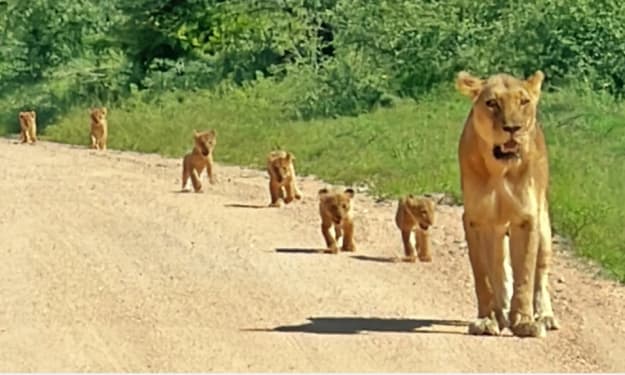
In the heart of the African savannah, life is a constant lesson for young animals. Few scenes are as endearing — or as heartwarming — as tiny lion cubs trying to keep pace with their mother. These little bundles of fur face a world full of challenges, from learning to hunt to avoiding dangers, all while depending on the guidance and protection of their experienced mom. Watching cubs wobble and tumble as they attempt to keep up with their mother reminds us that growing up, even in the wild, is a journey full of struggle, determination, and adorable missteps. The Early Days of Lion Cubs Lion cubs are born blind and helpless, usually in litters of two to six. For the first few weeks, they rely entirely on their mother for warmth, food, and safety. Even after opening their eyes and beginning to explore, the cubs are far from independent. The first months are crucial. Cubs learn social cues, hunting basics, and survival skills simply by watching their mother and the pride. But as anyone who has observed them knows, there’s often a huge gap between observation and action. Tiny cubs often struggle to match their mother’s pace, especially when she moves through long stretches of savannah or leads the family on patrols. A Mother’s Role in the Wild For a lioness, raising cubs is a full-time commitment. She hunts, defends her territory, and teaches her young, all while staying alert to predators such as hyenas, leopards, and even rival lions. The cubs, meanwhile, attempt to mimic her every move — often with clumsy yet charming results. A mother lion’s patience is remarkable; she frequently slows down, nudges them along, or stops to ensure no cub is left behind. These moments, while stressful for the tiny cubs, are vital learning opportunities. Struggling to Keep Up: Why It’s So Hard There are several reasons why tiny lion cubs have trouble keeping pace with their mother: Short Legs, Big Steps: Lion cubs’ legs are tiny and their coordination is limited, making it difficult to cover the same distance as an adult lioness. Curiosity: Cubs are naturally curious. A single butterfly or rustling bush can distract them, leaving mom to pause repeatedly. Energy Levels: Young lions tire quickly. Even with frequent naps, the cubs’ stamina is far lower than their mother’s. Learning Through Play: Play is not just fun; it teaches hunting, balance, and social skills. Running off to pounce on a sibling or chase an insect is all part of their education. Despite these challenges, the cubs’ determination to keep up demonstrates their resilience and growing understanding of the wild world. Lessons in Teamwork and Survival Every cub struggling to keep up is also learning crucial survival skills. The journey across the savannah is more than a test of speed — it’s a lesson in: Coordination: Cubs learn how to move efficiently across different terrains. Patience: They begin to understand the rhythms of adult life and the pace required for survival. Social Skills: Staying with the group teaches cubs how to interact with siblings and the pride, which is essential for their future roles. Observation: By following their mother, cubs study hunting techniques, territorial behavior, and predator awareness. Even the moments when cubs stumble or lag behind are essential for their development. These experiences prepare them for independence, which comes sooner than many might expect. The Cutest Moments in the Wild Anyone who has watched tiny lion cubs knows that their struggles are often irresistibly cute. Video clips from wildlife reserves frequently show cubs toddling along, tumbling over each other, or getting distracted mid-step. Observers often comment that these little stumbles reveal personality, determination, and playfulness, making them one of nature’s most heartwarming spectacles. While their mother is serious and focused, the cubs inject a sense of humor and lightness into life on the savannah. Why This Matters The struggles of lion cubs aren’t just adorable — they’re vital for understanding wildlife behavior. Conservationists and animal behaviorists use these moments to study growth patterns, social structures, and survival strategies in lion populations. These observations also highlight the importance of preserving natural habitats. Cubs must learn in a safe environment to survive; habitat loss, poaching, and climate change make these early struggles even more dangerous. Protecting the African savannah ensures that future generations of lions can experience the same lessons and playful tumbles. The Road to Independence Within a year, these tiny cubs will be more agile, faster, and more confident. By the time they reach two to three years old, males may begin to leave the pride, while females often stay and become caretakers themselves. Every misstep, tumble, and lagging moment is part of the journey toward strength, coordination, and independence. Watching them now gives us a glimpse of the challenges they will overcome, and the survival skills they will carry for life. A Celebration of Motherhood Ultimately, these scenes remind us of the incredible bond between mother and cubs. Her patience, vigilance, and teaching are the foundations of their future. The cubs’ struggles highlight the trials of growing up, while their determination showcases the resilience and beauty of wildlife. For those observing, it’s a powerful lesson in care, guidance, and perseverance, not just in lions but in the natural world as a whole. Final Thoughts Watching tiny lion cubs try to keep up with their mother is both entertaining and enlightening. It’s a story of growth, struggle, and resilience — a reminder that even the fiercest creatures start small, learning step by step. These little lions capture hearts while teaching life lessons: patience, determination, teamwork, and the importance of guidance. As they tumble and waddle across the savannah, they show us that growth is a process, one adorable misstep at a time. For wildlife enthusiasts, animal lovers, and anyone enchanted by nature, these tiny cubs are proof that even in the wild, love, care, and persistence are universal truths.
By Aarif Lashariabout 12 hours ago in Earth


Comments
There are no comments for this story
Be the first to respond and start the conversation.