
Space Telescopes: Unlocking the Secrets of the Universe
How the Hubble and James Webb Space Telescopes are Revolutionizing Astronomy

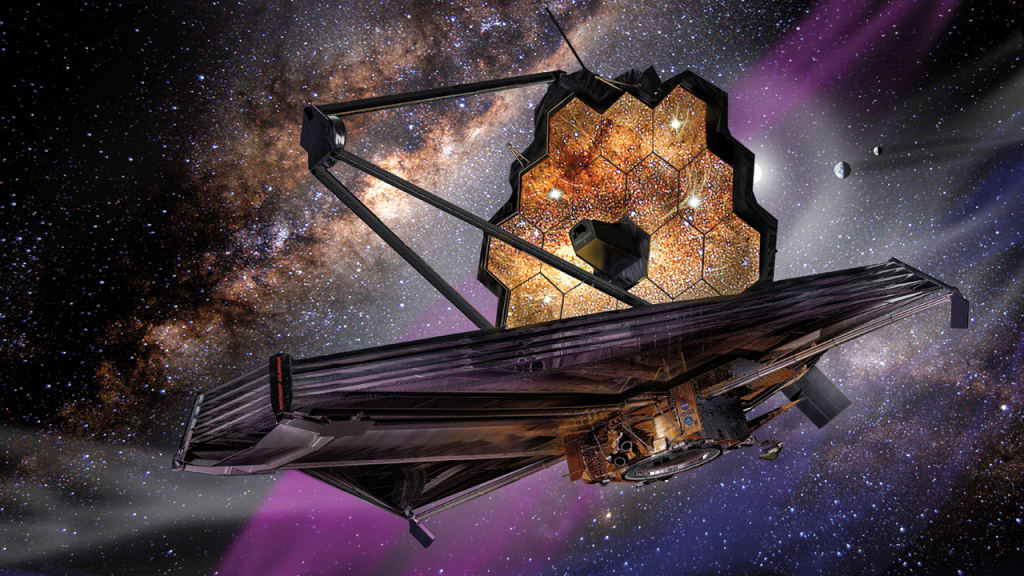
Space telescopes have revolutionized our understanding of the universe. These powerful observatories orbit Earth and capture stunning images of distant galaxies, stars, and other celestial objects. They have helped us to better understand the origins and evolution of the cosmos, and have made some of the most significant discoveries in astronomy.
The Hubble Space Telescope, launched in 1990, is one of the most famous space telescopes. It is named after astronomer Edwin Hubble, who discovered that the universe is expanding. The Hubble Space Telescope is equipped with a 2.4-meter mirror and a suite of scientific instruments that allow it to capture images in visible, ultraviolet, and infrared light. It has captured some of the most iconic images in astronomy, including the Pillars of Creation, a star-forming region in the Eagle Nebula.
One of the most significant discoveries made by the Hubble Space Telescope was the realization that the universe is expanding at an accelerating rate. This discovery, made in the late 1990s, led to the Nobel Prize in Physics being awarded to three astronomers in 2011. It also helped to confirm the existence of dark energy, a mysterious force that is thought to be responsible for the universe's accelerating expansion.
The Hubble Space Telescope has also helped us to better understand the formation and evolution of galaxies. It has captured images of distant galaxies that are billions of light-years away, allowing us to study their structure and composition. It has also helped us to understand the role of black holes in the formation of galaxies, and has provided evidence for the existence of supermassive black holes at the centers of galaxies.
But the Hubble Space Telescope is not the only space telescope that has helped us to better understand the universe. The upcoming James Webb Space Telescope, set to launch in 2021, is expected to be even more powerful than the Hubble. It will be able to see further back in time, to the very first galaxies that formed after the Big Bang. It will also be able to study the atmospheres of exoplanets, planets outside our solar system, and search for signs of life.
The James Webb Space Telescope is a joint project between NASA, the European Space Agency, and the Canadian Space Agency. It will be located at a distance of about 1.5 million kilometers from Earth, at a point known as the second Lagrange point, or L2. This location will allow it to have a clear view of the universe without interference from Earth's atmosphere or the Sun's glare.
In addition to the Hubble and James Webb Space Telescopes, there are many other space telescopes that are helping us to better understand the universe. These include the Chandra X-ray Observatory, which studies the universe in X-ray wavelengths, and the Spitzer Space Telescope, which studies the universe in infrared wavelengths.
The Chandra X-ray Observatory has helped us to better understand the high-energy processes that occur in the universe, including the behavior of black holes and the formation of galaxy clusters. It has also helped us to study the properties of dark matter, a mysterious substance that makes up most of the matter in the universe.
The Spitzer Space Telescope has helped us to study the formation and evolution of stars and planets. It has captured images of protoplanetary disks, the swirling clouds of gas and dust that surround young stars and give rise to planets. It has also helped us to study the atmospheres of exoplanets, and has provided evidence for the existence of water on some of these planets.
Together, these space telescopes are providing unprecedented views of the universe and helping scientists to better understand the origins and evolution of the cosmos. They are also inspiring the next generation of astronomers and space scientists, who will continue to push the boundaries of our knowledge and understanding of the universe.
In conclusion, space telescopes have revolutionized our understanding of the universe. They have made some of the most significant discoveries in astronomy, including the accelerating expansion of the universe and the existence of dark energy. The Hubble Space Telescope, the James Webb Space Telescope, and other space telescopes are providing unprecedented views of the universe and helping scientists to better understand the origins and evolution of the cosmos. They are inspiring the next generation of astronomers and space scientists, who will continue to push the boundaries of our knowledge and understanding of the universe.
About the Creator
Mohamed Aasis
I love exploring space and I write about them.
Keep reading
More stories from Mohamed Aasis and writers in Earth and other communities.
"Commercial Space Travel: SpaceX and Blue Origin Develop Reusable Rockets for Space Tourism"
Commercial space travel is the concept of sending people and cargo into space for commercial purposes, such as tourism, research, and exploration. In recent years, there has been a growing interest in commercial space travel, with several companies working on developing reusable rockets and spacecraft to make space travel more affordable and accessible to the public.
By Mohamed Aasis3 years ago in Earth
Icy Chaos in Central and Eastern Europe
Winter has unleashed its fury across central and eastern Europe, leaving travelers frustrated and transport networks struggling to keep up. Over the past few days, freezing rain and ice have wreaked havoc on airports, train stations, and highways — forcing flight diversions, delaying trains, and making roads treacherously slippery. From Vienna to Budapest, Prague to Bratislava, this icy grip has brought travel to a near standstill. Let’s take a closer look at what’s happening, how it’s affecting people on the move, and what it tells us about winter travel in Europe. A Sudden Winter Blow A sudden wave of freezing rain swept across the region, coating runways, rail tracks, and roads with a dangerous layer of ice. Major airports in Austria, Hungary, Slovakia, and the Czech Republic were particularly affected. At Vienna International Airport, operations were temporarily suspended when runways became too slick for flights to land safely. Travelers already in the air had to divert to alternative airports in Munich, Frankfurt, and Venice. Meanwhile, Budapest’s Ferenc Liszt International Airport paused all arrivals and departures, and Prague’s Václav Havel Airport continued operating but at limited capacity. Trains Crawling Through Ice Rail networks weren’t spared. Across Austria, Hungary, and the Czech Republic, ice on tracks and power lines caused delays and cancellations. Austria’s national rail operator, ÖBB, urged passengers to postpone non-essential journeys. In the Czech Republic, travelers at Prague’s main station faced long waits as trains struggled to maintain schedules. Hungary’s tram and suburban rail services were temporarily suspended due to ice buildup on power lines. This combination of black ice, frozen switches, and heavy snowfall has tested the limits of winter infrastructure in Europe. Roads Turn Into Skating Rinks The icy weather didn’t just affect public transport — roads became treacherous, too. Authorities in Slovakia and the Czech Republic warned residents to avoid non-essential travel as highways turned into slippery skating rinks. Accidents and minor collisions were reported, and emergency services were busy responding to dozens of injuries from slips and falls. Even schools weren’t immune: parts of Romania shifted to online learning, keeping children safe during the extreme temperatures, which dropped to around -13°C in some areas. Why This Weather Is So Disruptive Meteorologists point to several factors that made this storm particularly severe: Freezing rain on top of existing snow creates an icy layer that’s extremely hard to clear. Rapidly refreezing surfaces make conditions unpredictable. Temperatures hovering around freezing prevent efficient melting during the day. This “perfect storm” scenario underscores just how vulnerable transport systems are to extreme weather. Even well-prepared airports and rail networks can struggle when weather transitions from snow to freezing rain. Voices From the Ground Passengers took to social media to express their frustration: Crowded airports as travelers scrambled to rebook flights. Train stations packed with delayed commuters, unsure when the next train would depart. Warming centers opened to provide shelter and hot drinks for stranded travelers. For many, a simple trip turned into a test of patience and resilience. Tips for Traveling in Freezing Conditions If you must travel during winter storms, experts recommend: Check flight and train schedules regularly, as delays can change quickly. Allow extra time for travel to avoid missing connections. Consider travel insurance that covers weather-related disruptions. If driving, carry winter essentials: blankets, food, water, and check road conditions before departure. Most importantly, prioritize safety over schedules — icy conditions can change rapidly, making travel risky. A Reminder From Winter This recent chaos in central and eastern Europe serves as a stark reminder of how interconnected transport systems are, and how vulnerable they can be to extreme weather. Flights grounded, trains stalled, and highways turned icy show that winter can bring travel to a halt — sometimes with very little warning. As Europe continues to face volatile winter conditions, travelers and authorities alike are reminded: preparation and flexibility are key. Sometimes, the weather truly has the final say. ❄️🛫🚆
By Muhammad Hassan2 days ago in Earth
Snow, Rain and Wind Warnings Continue After Storm Goretti Disruption
Severe weather has once again placed large parts of the country on edge, as snow, rain, and strong wind warnings continue in the aftermath of Storm Goretti. While the storm’s most intense phase may have passed, its disruption lingers, leaving transport networks strained, power services under pressure, and communities bracing for further unsettled conditions. Storm Goretti arrived with a powerful combination of heavy rainfall, gusty winds, and wintry conditions in higher and northern regions. The immediate impact was widespread: flooded roads, fallen trees, travel cancellations, and temporary power outages. Now, as emergency crews and local authorities work through the damage, meteorologists are warning that the weather pattern remains unstable, with fresh alerts issued for snow, rain, and wind in the days ahead. What Storm Goretti Left Behind Goretti’s passage was fast but forceful. Torrential rain caused rivers to swell and surface water flooding to develop quickly in low-lying areas. In exposed coastal and upland regions, wind gusts were strong enough to bring down trees and damage infrastructure. Meanwhile, colder air sweeping in behind the storm delivered snow and icy conditions, particularly affecting rural roads and higher elevations. For many commuters, the disruption was immediate and frustrating. Rail services were delayed or suspended due to flooded tracks and debris on lines. Roads became hazardous, with localised closures as emergency teams worked to clear fallen branches and manage flooding. Airports also reported delays, as strong crosswinds and poor visibility complicated operations. Although the storm itself has moved on, its effects are far from over. Ongoing Warnings: Why the Risk Remains High Weather agencies have stressed that the current warnings should be taken seriously. The ground is already saturated from recent rainfall, meaning even moderate additional rain could lead to further flooding. Rivers and drainage systems are under strain, and recovery time is limited before the next weather system arrives. Snow and ice warnings add another layer of concern. Overnight temperatures are expected to dip in several regions, increasing the risk of icy roads and pavements. For drivers, this creates dangerous conditions, especially in areas where gritting resources are stretched after consecutive weather events. Wind warnings also remain in place, particularly along coasts and in elevated areas. While gusts may not reach the peak levels seen during Goretti, even slightly weaker winds can still cause problems when trees and structures have already been weakened. Impact on Communities and Daily Life For local communities, the continuation of weather warnings means disruption becomes a drawn-out experience rather than a short-term event. Schools in some areas have faced temporary closures or delayed openings, especially where travel conditions remain unsafe. Businesses dependent on transport and foot traffic are also feeling the strain, as customers stay home and deliveries are delayed. Rural areas are often hit hardest. Narrow roads, limited public transport alternatives, and longer response times can make even minor weather incidents more serious. Farmers are also concerned about waterlogged fields, livestock safety, and damage to fencing and buildings. In urban centres, the focus has shifted to managing surface water flooding and ensuring public transport can run safely. Councils are urging residents to report blocked drains and avoid unnecessary travel during warning periods. Emergency Services Under Pressure Emergency and utility services continue to operate at high alert. Fire and rescue teams have been responding to flooding incidents, fallen trees, and weather-related accidents. Power companies are working to restore and reinforce electricity supplies, while also preparing for the possibility of new outages if conditions deteriorate again. Local authorities have opened temporary support centres in some regions, particularly for vulnerable residents affected by power cuts or flooding. These efforts highlight the importance of community preparedness, as repeated weather events stretch resources and personnel. The Broader Weather Pattern Meteorologists explain that Storm Goretti is part of a broader pattern of unsettled weather driven by active Atlantic systems. Instead of a single storm followed by calm conditions, the atmosphere is producing a succession of fronts, each bringing its own mix of rain, wind, and temperature changes. This pattern increases uncertainty and makes forecasting more challenging. Small shifts in temperature can mean the difference between rain and snow, while slight changes in wind direction can significantly affect coastal impacts. As a result, weather warnings may be updated frequently, requiring the public to stay informed and flexible. How to Stay Safe During Continued Warnings Authorities are urging people not to become complacent simply because the main storm has passed. Continued vigilance is essential, especially as conditions can change quickly. Key safety advice includes: Avoid unnecessary travel during periods of snow, ice, or strong winds. Check weather updates regularly from official sources. Secure loose items outdoors that could become dangerous in high winds. Be cautious near rivers, coastlines, and flood-prone areas. Look out for neighbours, particularly elderly or vulnerable individuals. Preparation can make a significant difference, especially when weather disruption extends over several days rather than a single event. Looking Ahead While there are signs that conditions may gradually improve later in the week, the immediate outlook remains unsettled. The continuation of snow, rain, and wind warnings after Storm Goretti serves as a reminder of how quickly weather can impact daily life and essential services. For now, recovery and preparedness must go hand in hand. Clearing up after one storm while preparing for the next has become an unfortunate reality for many communities. As climate patterns continue to shift, such sequences of disruptive weather may become more common, making resilience and awareness more important than ever. Storm Goretti may no longer dominate the forecasts, but its legacy lives on in the warnings that remain—and in the determination of communities working through yet another challenging spell of weather.
By Muhammad Hassan6 days ago in Earth


Comments
There are no comments for this story
Be the first to respond and start the conversation.