
Scientists put forward the "dandelion conjecture", indicating that the universe is full of life, but humans can't find it
Scientists propose "dandelion conjecture"

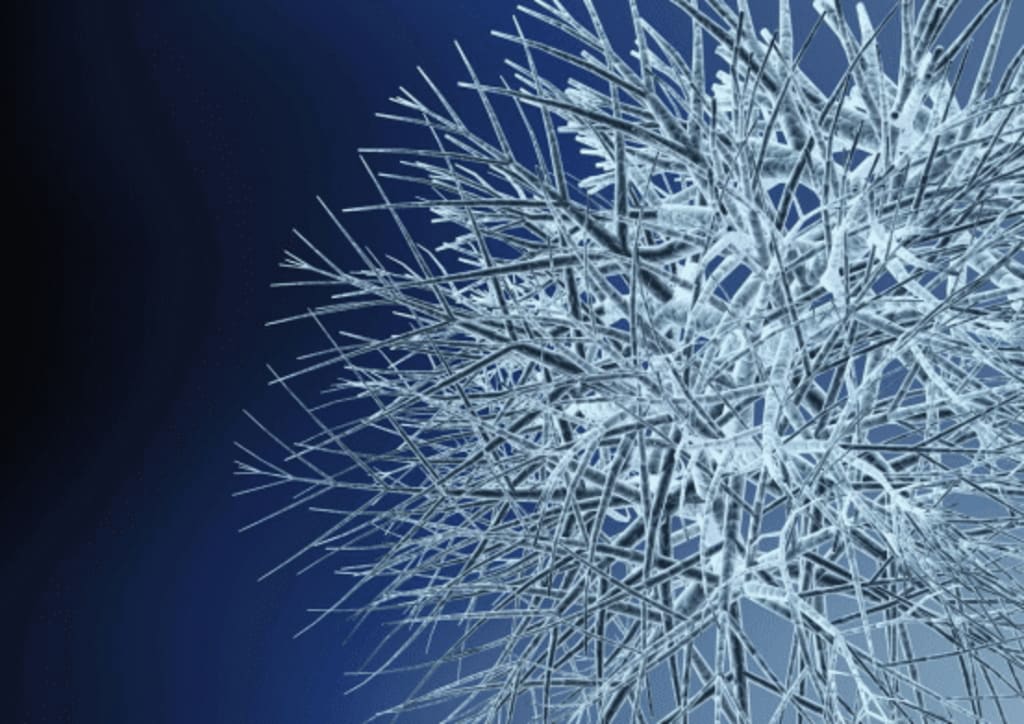
Looking at the entire universe, only the earth has life at present. There are two possibilities for this phenomenon. One possibility is that there are other life forms in the universe, but human beings have not yet found it, and the other possibility is that there is no existence in the universe except the earth. other life. Compared with the second possibility, most scientists who study extraterrestrial life prefer the first possibility, because the exploration ability of human beings is still very limited, and a conclusion cannot be drawn because the temporary search is fruitless.
Last year, a research paper from a Japanese scientific team appeared in the journal Frontiers in Microbiology. The paper pointed out that Japanese scientists, after analyzing a large number of detection data, came to an inference that life may be ubiquitous in the universe. Akihiko Yamagishi, the main leader of the research, believes that the earliest life on Earth may also come from extraterrestrial space. The study attracted huge attention immediately after it was made public, so how did they arrive at this theory? Is life really ubiquitous in the universe?
How did life on earth originate?
Regarding the origin of life on Earth, there are currently two main views in the scientific community. One view is that life on Earth is "indigenous", and the other view is that life on Earth comes from outer space. For a long time, human beings have believed that life on earth is "indigenous", and modern archaeology has also discovered many fossils of ancient ancient creatures. Through in-depth research on these fossils, scientists have proposed a theoretical system for the origin of life on earth.
This theoretical system believes that the first organisms to appear on the earth were microorganisms, especially prokaryotes. Some prokaryotes evolved into eukaryotes gradually under the action of natural selection. Eukaryotes have evolved from simple eukaryotes to complex eukaryotes after hundreds of millions of years of evolution, and several biological explosions and mass extinction events that have been staged can be regarded as the "baptism" of life on earth. "Baptism" has made the life on earth improve as a whole in terms of adapting to the natural environment.
The second view is also known as the "exogenous theory", which holds that life on Earth originated from other planets or cosmic space. The reason why scientists support this view is that they have found through geological exploration and archaeological research that the early earth may not have all the elements for nurturing life. In other words, life on earth did not arise from the earth itself, so how did life come to be? what about? Some scientists have put forward the statement that "alien celestial bodies bring life".
This statement holds that the early Earth was hit by celestial bodies such as meteorites, comets, and asteroids. These celestial bodies not only brought some basic substances to the earth for the survival of life, but also brought life to the earth. NASA scientists have found elements related to life when analyzing the composition of Earth's meteorites, and scientists have found the existence of microorganisms on meteorites found in Antarctica. In the climate environment like Antarctica, it is difficult for microorganisms to survive, which means that the microorganisms on the meteorite may come from outer space.
Although a considerable number of scientists support the second view, the scientific community still lacks sufficient evidence to support this view, so this view is still in the hypothesis stage.
How did Japanese scientists come up with the "dandelion conjecture"?
Japanese scientist Yamagishi Akira is committed to studying the origin of life on Earth. He led the team to explore the earliest origin of life on Earth from various fields. In 2018, the Yamagishi Zhaoyan team proposed a plan to use high-altitude balloons to detect components in the high-altitude atmosphere. Later, they also implemented this plan, but the results of the plan were surprising. They found that at 12,000 meters. There is a microorganism in the sky, and it is named "Deinococcal".
Under normal circumstances, life is unlikely to exist at an altitude of up to 12,000 meters, because there is not only thin oxygen, but also excessive solar radiation and cosmic radiation. All in all, the atmospheric environment there is very harsh. However, the discovery of the Yamagishi Akira team overturned the previous cognition and revealed to the world the unknown secrets in the high-altitude atmosphere. So Yamagishi Akihito speculated that since microorganisms exist in such a harsh environment at high altitudes, is there life in space or on other planets?
So he came up with the "Dandelion Hypothesis", which believed that life in the universe was originally like a dandelion. Under a certain opportunity, the "dandelion" was blown away, and its petals were scattered everywhere, some of which floated to the earth, Some drift to other planets or space. Yamagishi said that the "petals" of dandelion were originally simple microorganisms, and they would not develop again until they encountered a suitable living environment.
In addition to the findings of the Japanese scientist Yamagishi Akira's team, American scientists have established a cosmic life simulation system. Through the system simulation effect, it is found that not only microorganisms may exist in the universe, but they have existed for about 45 years. If the above conjectures and simulation results are in line with the actual situation, then life on Earth may indeed come from outer space, and other planets may also have alien life that has not yet been discovered by humans.
Can life really survive in outer space?
Seeing this, some friends may question that even if the earth's microorganisms go to space, they will not be able to survive due to environmental conditions such as anaerobic, high radiation, and ultra-low temperature. So how can microorganisms spread throughout the universe? If microorganisms cannot exist in space beyond the earth, let alone macroscopic organisms that are more complex than microorganisms. But in fact, scientists have found the existence of microorganisms in the space environment, and proved that some kinds of microorganisms can indeed survive in the space environment.
Last year, there was news from abroad that scientists discovered the existence of microorganisms on the International Space Station. These microorganisms are distributed on the outer deck of the space station and can be determined to be carried from Earth to space. Even so, it's surprising that they can survive outside the space station. Recently, foreign media reported again a study jointly published by India and NASA, which pointed out that four kinds of microorganisms appeared on the space station, three of which were unprecedented.
According to news reports, the four microbes were found on the dome, dining table and roof of the space station. After research and analysis by scientists on the ground, it was finally determined that these four microorganisms do not pose a threat to the health and safety of astronauts, but are beneficial to the growth and development of plants, so they are often found next to plants. Last year, the Russian Federal Space Agency also confirmed the presence of microorganisms on the space station, and their astronauts carried out related tests on the space station to determine the existence of microorganisms.
Therefore, it can be determined at present that there are microorganisms on the space station, and they are likely to come from the earth or from outer space, which requires follow-up research to obtain further discoveries. So besides the space station, are there microorganisms on other planets? From the perspective of the environmental conditions required for life to survive, there are indeed a few planets that are potentially possible, such as Europa and Titan in the solar system, and Proxima b outside the solar system.
How many microorganisms are there in the universe?
The answer to this question may be many, or none at all. This problem arises because scientists have discovered some special microorganisms on the earth that can survive in the most extreme environments on earth. For example, scientists have discovered the existence of microorganisms in active volcanic craters, in the Antarctic ice, and even found traces of microorganisms in nuclear reactors.
The findings have piqued the interest of scientists, making them eager to explore whether life also exists in outer space. If life on Earth was brought by alien celestial bodies, then other celestial bodies once had such opportunities. Ronaldo Breslow, a chemist from Columbia University in the United States, has done a study to compare the amino acid molecules on the earth with the amino acid molecules of neutron stars, and found that the amino acid molecules found in the place where the meteorites fell on the neutron star turned out to be the same as the earth's amino acids. Molecules have exactly the same molecular characteristics.
So Brethlow believes that if liquid water and other conditions for life existed in the location where the meteorite fell, then life may have been born there. Another object of interest are comets, which are a mix of ice, dust, rocks, etc. that are rich in nitrogen, oxygen, and organic matter. Such a comet lands on a planet, and the heat generated at the instant of impact is enough to melt the mixture and create the liquid environment needed to nurture life.
Other components may also have reacted chemically during the impact to form organics needed to sustain life. In a word, no one can answer the question of how many microorganisms there are in the universe, and there is no one who can answer this question in the future development history of mankind, but this does not mean that we should give up the exploration of life in the universe.
What thoughts does the new discovery lead to?
For a long time, we believed that there was only life on Earth. As more and more hypotheses and theories about extraterrestrial life were put forward, we even doubted whether life on Earth also came from outer space. The thing is absolute, if anything, it is "movement is absolute". These new discoveries are constantly reminding human beings that there are people outside people, there are heavens outside people, and don’t be blindly arrogant.
On the other hand, new theories about extraterrestrial life will also promote humans to continue on the road of exploring extraterrestrial life, and may also give humans hints to avoid going in the wrong direction. It seems that the exploration of extraterrestrial life cannot directly create economic benefits for the country, but it is related to the future development of human beings and the future survival of human beings.
About the Creator
crudden elle
Partagez un peu de science chaque jour
Keep reading
More stories from crudden elle and writers in Earth and other communities.
The wildest hamster in history not only carries a deadly poison, but also insists on monogamy
The African Mane Rat looks like a ferret, skunk and porcupine combined. With a body length of 25-30cm, they are actually members of the hamster family, a punk version of hamsters wandering in the wilderness.
By crudden elle3 years ago in Earth
How Much Do You Need in an ISA for a Passive Income That Beats the State Pension?
For many people in the UK, the State Pension is expected to form the backbone of retirement income. But with rising living costs and growing uncertainty about the future, more savers are asking a crucial question: Can I build a passive income that beats the State Pension — and how much would I need in an ISA to do it?
By Aarif Lashariabout 13 hours ago in Earth
Tiny Lion Cubs Struggle To Keep Up With Mom
In the heart of the African savannah, life is a constant lesson for young animals. Few scenes are as endearing — or as heartwarming — as tiny lion cubs trying to keep pace with their mother. These little bundles of fur face a world full of challenges, from learning to hunt to avoiding dangers, all while depending on the guidance and protection of their experienced mom. Watching cubs wobble and tumble as they attempt to keep up with their mother reminds us that growing up, even in the wild, is a journey full of struggle, determination, and adorable missteps. The Early Days of Lion Cubs Lion cubs are born blind and helpless, usually in litters of two to six. For the first few weeks, they rely entirely on their mother for warmth, food, and safety. Even after opening their eyes and beginning to explore, the cubs are far from independent. The first months are crucial. Cubs learn social cues, hunting basics, and survival skills simply by watching their mother and the pride. But as anyone who has observed them knows, there’s often a huge gap between observation and action. Tiny cubs often struggle to match their mother’s pace, especially when she moves through long stretches of savannah or leads the family on patrols. A Mother’s Role in the Wild For a lioness, raising cubs is a full-time commitment. She hunts, defends her territory, and teaches her young, all while staying alert to predators such as hyenas, leopards, and even rival lions. The cubs, meanwhile, attempt to mimic her every move — often with clumsy yet charming results. A mother lion’s patience is remarkable; she frequently slows down, nudges them along, or stops to ensure no cub is left behind. These moments, while stressful for the tiny cubs, are vital learning opportunities. Struggling to Keep Up: Why It’s So Hard There are several reasons why tiny lion cubs have trouble keeping pace with their mother: Short Legs, Big Steps: Lion cubs’ legs are tiny and their coordination is limited, making it difficult to cover the same distance as an adult lioness. Curiosity: Cubs are naturally curious. A single butterfly or rustling bush can distract them, leaving mom to pause repeatedly. Energy Levels: Young lions tire quickly. Even with frequent naps, the cubs’ stamina is far lower than their mother’s. Learning Through Play: Play is not just fun; it teaches hunting, balance, and social skills. Running off to pounce on a sibling or chase an insect is all part of their education. Despite these challenges, the cubs’ determination to keep up demonstrates their resilience and growing understanding of the wild world. Lessons in Teamwork and Survival Every cub struggling to keep up is also learning crucial survival skills. The journey across the savannah is more than a test of speed — it’s a lesson in: Coordination: Cubs learn how to move efficiently across different terrains. Patience: They begin to understand the rhythms of adult life and the pace required for survival. Social Skills: Staying with the group teaches cubs how to interact with siblings and the pride, which is essential for their future roles. Observation: By following their mother, cubs study hunting techniques, territorial behavior, and predator awareness. Even the moments when cubs stumble or lag behind are essential for their development. These experiences prepare them for independence, which comes sooner than many might expect. The Cutest Moments in the Wild Anyone who has watched tiny lion cubs knows that their struggles are often irresistibly cute. Video clips from wildlife reserves frequently show cubs toddling along, tumbling over each other, or getting distracted mid-step. Observers often comment that these little stumbles reveal personality, determination, and playfulness, making them one of nature’s most heartwarming spectacles. While their mother is serious and focused, the cubs inject a sense of humor and lightness into life on the savannah. Why This Matters The struggles of lion cubs aren’t just adorable — they’re vital for understanding wildlife behavior. Conservationists and animal behaviorists use these moments to study growth patterns, social structures, and survival strategies in lion populations. These observations also highlight the importance of preserving natural habitats. Cubs must learn in a safe environment to survive; habitat loss, poaching, and climate change make these early struggles even more dangerous. Protecting the African savannah ensures that future generations of lions can experience the same lessons and playful tumbles. The Road to Independence Within a year, these tiny cubs will be more agile, faster, and more confident. By the time they reach two to three years old, males may begin to leave the pride, while females often stay and become caretakers themselves. Every misstep, tumble, and lagging moment is part of the journey toward strength, coordination, and independence. Watching them now gives us a glimpse of the challenges they will overcome, and the survival skills they will carry for life. A Celebration of Motherhood Ultimately, these scenes remind us of the incredible bond between mother and cubs. Her patience, vigilance, and teaching are the foundations of their future. The cubs’ struggles highlight the trials of growing up, while their determination showcases the resilience and beauty of wildlife. For those observing, it’s a powerful lesson in care, guidance, and perseverance, not just in lions but in the natural world as a whole. Final Thoughts Watching tiny lion cubs try to keep up with their mother is both entertaining and enlightening. It’s a story of growth, struggle, and resilience — a reminder that even the fiercest creatures start small, learning step by step. These little lions capture hearts while teaching life lessons: patience, determination, teamwork, and the importance of guidance. As they tumble and waddle across the savannah, they show us that growth is a process, one adorable misstep at a time. For wildlife enthusiasts, animal lovers, and anyone enchanted by nature, these tiny cubs are proof that even in the wild, love, care, and persistence are universal truths.
By Aarif Lashariabout 14 hours ago in Earth


Comments
There are no comments for this story
Be the first to respond and start the conversation.