
Science vs. Pseudoscience
Distinguishing Science from Pseudoscience

In the late 1700s, a German doctor named Samuel Hahnemann introduced the world to homoeopathy, a new treatment approach that sought to heal ailments by using extremely diluted doses of substances that might cause those same ailments. Over the next three centuries, homoeopathy gained popularity, with physicians and patients alike embracing its principles. Entire hospitals were built to focus on homoeopathic treatments. However, despite its widespread use, numerous studies have demonstrated that homoeopathy lacks any therapeutic effect and often performs no better than a placebo. The persistence of support for this practice lies in the fact that homoeopathy is, in essence, a pseudoscience – a collection of theories, methods, and assumptions that appear scientific but lack the evidence to support their claims. Unfortunately, this deception can prevent people from seeking effective treatments, as pseudoscience can be misleading and even exploitative.
The fundamental question that arises from this is: how can we distinguish between genuine science and pseudoscience? This query is known as the "demarcation problem," and while there is no easy answer, there are certain criteria we can apply.
One approach to solving the demarcation problem comes from the 20th-century philosopher Karl Popper, who proposed that for a theory to be considered scientific, it must be falsifiable – capable of being proven wrong. Falsifiability is a powerful tool to identify pseudoscientific fields, as they tend to make broad predictions that can be adapted to any observation, rendering them unfalsifiable. For instance, astrology makes general predictions that are not specific enough to be disproven.
However, falsification alone is not enough to solve the demarcation problem. Historically, many scientific ideas were once untestable due to technological limitations or lack of knowledge. Instead, other factors can help us differentiate science from pseudoscience. One significant factor is how a field responds to criticism. True scientific disciplines are open to the possibility that new observations might challenge or alter their theories. Disproven theories are rejected in favour of new explanations. On the other hand, pseudoscientific fields tend to modify their claims continually to explain away any contradictory results, showing resistance to transformative criticism.
Additionally, the transparency of peer review and the willingness to address internal biases are vital markers of genuine science. The scientific community engages in open discussions, actively challenges ideas, and shares information to build a collective pool of knowledge. Pseudoscience, on the other hand, often rejects this shared data and disregards scientific consensus in favour of its own beliefs.
Consistency is another key aspect of legitimate science. It relies on interconnected research and findings across various disciplines. In contrast, pseudoscience may ignore or deny this cohesive network of data, often conflicting with established scientific understanding.
While the scientific method is an effective tool for analyzing empirical evidence, it is essential to recognize that it cannot explain everything about the human condition. Faith-based beliefs have a place in our lives and cultural traditions. However, drawing a clear line between science and pseudoscience is crucial because belief systems disguised as science can manipulate and mislead others, hindering genuine scientific progress.
In a world where discerning fact from fiction is increasingly challenging, critical thinking skills become indispensable. When confronted with extraordinary claims, it is essential to ask ourselves if these claims can be tested. Are the proponents of the theory updating their claims with new findings? Does the theory align with our broader scientific understanding of the world? Remember, appearing scientific and being scientific are not one and the same. By being vigilant and applying rigorous scrutiny, we can better distinguish between genuine science and pseudoscience, fostering a society that values evidence-based knowledge and progress.
About the Creator
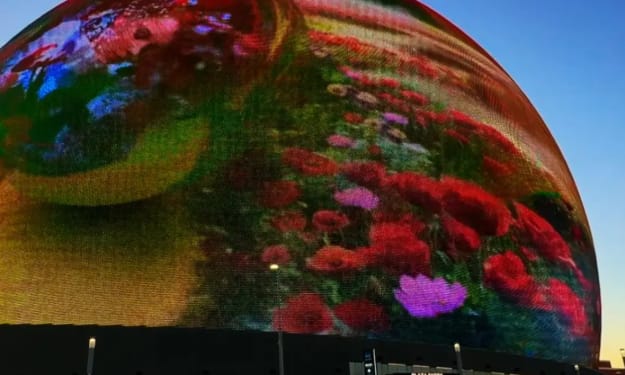
Maryland to Get Its Own Smaller Version of the Las Vegas Sphere
Maryland is about to become home to a new entertainment icon. Inspired by the famous Sphere in Las Vegas, a smaller version of the massive immersive venue is planned for the state, promising to deliver a combination of live entertainment, cutting-edge technology, and a new tourist attraction. While the Las Vegas Sphere has already made headlines worldwide for its futuristic design and mind-blowing shows, Maryland’s version aims to bring a scaled-down but equally captivating experience to the East Coast.
By Muhammad Hassan5 days ago in Earth
Why Peet’s Coffee Is Closing Multiple Bay Area Shops After the Keurig Dr Pepper Takeover
Coffee shops are more than places where we grab a morning latte. Especially in the Bay Area, Peet’s Coffee has been part of many people’s daily routines, college memories, and work‑meeting rituals. So when customers learned that several Bay Area locations were closing just months after Peet’s was acquired by Keurig Dr Pepper, the reaction wasn’t just curiosity — it was emotional.
By Muhammad Hassan3 days ago in Earth
🅼🅸🅳🅽🅸🅶🅷🆃 🆂🅽🅰🅲🅺🆂
"It's 10 in Tuscon! We all know what that means... It's Time for Midnight Snacks with your man, Gerald Gee! Ready to spend the night together? Me too! I'm full of snacks and can't wait to regurgitate them all back into your hungry ears. Crack a brew! Pop some corn! Anything to get ready for one hell of a show where the talk maybe cheap but the words cut deep...
By Lamar Wiggins3 days ago in Fiction



Comments
There are no comments for this story
Be the first to respond and start the conversation.