


Introduction
Cyclones are often seen as nature's fury, a chaotic display of wind and rain that can devastate entire regions in mere hours. While they may seem like unpredictable monsters, there's actually a lot of science behind their formation and behavior. In fact, by understanding the mechanics of cyclones, we can better predict and prepare for their impact.
So, let's dive into the science of cyclones and learn how these powerful storms form and behave. Don't worry, we won't be using complex formulas or confusing scientific jargon. Instead, we'll break down the process of cyclone formation into easy-to-understand terms and sprinkle in a little humor along the way. After all, who says learning about natural disasters has to be boring?
From the anatomy of a cyclone to the tools we use to predict them, we'll cover it all in this blog. By the end of this article, you'll have a newfound appreciation for the science behind these storms and the incredible power of nature. So buckle up, it's going to be a wild ride!
Formation of Cyclones
Now, let's dive into the fascinating topic of how cyclones form. When you think of cyclones, you may envision a massive storm system that spins with incredible speed and force. While this is true, the process of cyclone formation is much more intricate and complex than you might think.
Cyclones can form in a variety of ways, but one of the most common types is a tropical cyclone. These storms often form over the ocean in regions with warm waters, such as the Atlantic or Pacific Oceans. In fact, the temperature of the ocean water is a crucial factor in the formation of a tropical cyclone.
When the water temperature reaches 80 degrees Fahrenheit or higher, it can create an area of low pressure over the ocean's surface. This low-pressure system is the foundation of a tropical cyclone. As warm air rises from the ocean's surface, it creates a circular motion around the center of the low-pressure system. As more warm air is drawn into the center of the system, it intensifies, creating stronger winds and more rain.
Another way that cyclones can form is through a process known as extratropical cyclone formation. These storms often occur in regions with sharp temperature contrasts, such as in the mid-latitudes. When cold air from the north meets warm air from the south, it can create a low-pressure system. As the cold air rushes toward the warm air, it can create a spinning motion that forms a cyclone.
Understanding the different ways that cyclones can form is essential to predicting their behavior and potential impact. By knowing the atmospheric conditions necessary for cyclone formation, meteorologists can use satellite imagery and computer models to track their development and warn communities in their path.
Anatomy of a Cyclone
Now that we've learned about how cyclones form, let's take a closer look at their anatomy. Cyclones are complex systems with a variety of components, each playing a crucial role in their behavior and intensity.
The center of a cyclone is known as the eye. This is the calmest part of the storm, with clear skies and little to no wind. Surrounding the eye is the eyewall, the area of the cyclone with the strongest winds and most intense rain. The eyewall is often where the most severe damage occurs, as winds can reach up to 200 miles per hour and rainfall can be over 2 inches per hour.
In addition to the eye and eyewall, a cyclone also has rainbands. These are bands of thunderstorms that wrap around the storm and produce heavy rain and strong winds. Rainbands can extend hundreds of miles from the center of the storm, and they can cause significant flooding and wind damage.
Another component of a cyclone is storm surge. This is a rise in ocean water levels caused by the cyclone's winds pushing the water towards the shore. Storm surge can cause catastrophic flooding and is often responsible for much of the damage caused by cyclones.
The combination of these components creates the complex and powerful system we know as a cyclone. Understanding how each part of the storm functions is essential to predicting its impact and issuing warnings to those in its path.
One unique feature of cyclones is their ability to intensify rapidly. This phenomenon, known as rapid intensification, occurs when a cyclone's winds increase by at least 35 miles per hour in 24 hours. Rapid intensification is often difficult to predict, making it a particularly dangerous aspect of these storms.
Overall, the anatomy of a cyclone is a complex system that requires careful study and understanding. By examining the different components of a cyclone, we can gain a greater appreciation for the power and unpredictability of these storms. In the next section, we'll explore the intensity of cyclones and the potential effects they can have on communities in their path.
About the Creator
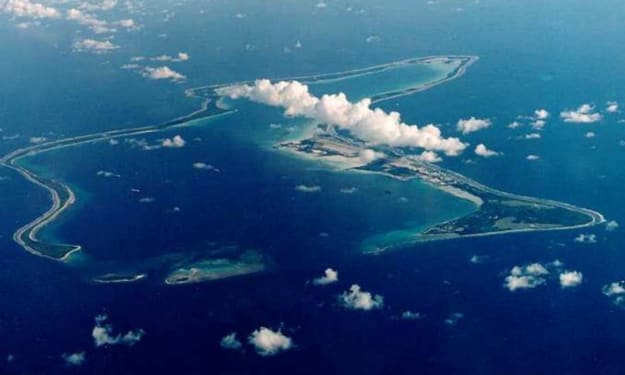
Trump Calls UK’s Chagos Islands Sovereignty Decision an Act of ‘Great Stupidity’
Former U.S. President Donald Trump has criticized the United Kingdom’s decision to hand over sovereignty of the Chagos Islands to Mauritius, calling it an act of “great stupidity.” This high-profile statement has reignited debates over colonial legacies, geopolitical alliances, and the rights of local communities. While the issue may seem distant to many, it carries significant implications for global politics, regional stability, and the affected communities. The Chagos Islands, a strategically located archipelago in the Indian Ocean, have long been a point of contention between the UK, Mauritius, and the United States, which maintains a military base on Diego Garcia, one of the largest islands. The latest political statements have highlighted not only international disagreements but also how decisions by governments can affect local populations and global perceptions. Why the UK Is Handing Over the Chagos Islands The UK’s decision to transfer sovereignty to Mauritius comes after years of legal challenges and international pressure. The United Nations has repeatedly called for the return of the islands to Mauritius, stating that the previous detachment in 1965 was illegal. The move aims to: Resolve a longstanding international dispute Acknowledge the rights of the Chagossian people, many of whom were forcibly removed from the islands decades ago Comply with international law and UN recommendations For many in Mauritius and the Chagossian diaspora, the transfer represents justice and recognition of their historical grievances. Trump’s Criticism and Its Context Trump described the UK’s decision as “an act of great stupidity,” emphasizing strategic and military concerns. The United States relies on Diego Garcia for one of its key military bases, crucial for operations in the Indian Ocean region and beyond. From Trump’s perspective, the sovereignty transfer could: Complicate U.S. military logistics Create uncertainty over strategic agreements Signal weakness in alliances with close partners like the UK However, critics argue that such statements overlook the rights of the displaced Chagossian communities and the importance of resolving colonial-era injustices. Impact on Local Communities The Chagos Islands have a unique human story. In the 1960s and 1970s, the indigenous Chagossian population was forcibly removed to make way for a U.S. military base. Families were relocated to Mauritius, the Seychelles, and other areas, often under harsh conditions. The sovereignty transfer could: Support efforts for Chagossians to return home Enable compensation and recognition of historical wrongs Promote cultural and community restoration Community advocates argue that international legal decisions should prioritize the welfare and rights of displaced populations, not just geopolitical or strategic interests. Geopolitical Implications The dispute is more than a bilateral issue between the UK and Mauritius. It has global political ramifications, including: U.S.-UK relations: While the UK maintains a strategic alliance with the U.S., the sovereignty decision may raise tensions over military operations. Indian Ocean stability: The islands are located in a key maritime region, affecting naval operations, trade routes, and regional security. International law precedent: Recognizing Mauritius’ claim reinforces UN rulings on decolonization and territorial sovereignty. For communities that follow global politics, these dynamics highlight how high-level political decisions impact both strategy and society. Media and Public Reaction Trump’s comments have dominated media coverage, sparking debate in international communities and online forums. Public opinion is divided: Supporters of Trump’s viewpoint cite national security concerns and strategic importance. Critics highlight colonial injustices and the need to respect the rights of indigenous populations. Social media discussions reveal growing interest in the balance between military strategy and human rights, showing that global decisions resonate with everyday communities. Legal and Ethical Considerations The transfer of the Chagos Islands raises several legal and ethical issues: Sovereignty and Self-Determination: The Chagossian people’s right to return and their cultural identity must be respected. Colonial History: Addressing past injustices is an ethical obligation for governments involved in colonial-era displacement. Military Agreements: Ensuring strategic stability while honoring international law is a complex balancing act. Legal scholars note that this case could set a precedent for other disputed territories, influencing how communities worldwide perceive justice, sovereignty, and rights. Why This Matters to Communities Even though the Chagos Islands are remote, the controversy touches on community awareness and engagement: Diaspora Communities: Chagossians and Mauritians see this as a historic moment affecting their families and heritage. Global Citizens: People interested in human rights and international law follow such cases to understand justice and accountability. Policy Advocates: NGOs and advocacy groups use this dispute to promote awareness of displacement, sovereignty, and ethical governance. In short, political decisions at the top level ripple down to real people, influencing lives, cultural identity, and community cohesion. Looking Ahead The future of the Chagos Islands will depend on: Implementation of sovereignty transfer: Ensuring legal and diplomatic arrangements are respected. U.S.-UK negotiations: Maintaining strategic interests while addressing human rights. Chagossian return programs: Supporting the restoration of communities affected by displacement. The controversy is a reminder that politics and community welfare are intertwined, and decisions made in boardrooms or government offices can have lasting effects on populations far from the center of power. The Takeaway Trump’s statement about the Chagos Islands sovereignty highlights the tension between geopolitical strategy and community justice. While international relations and military interests are important, the voices of the displaced Chagossian community cannot be ignored. For communities following global politics, the case demonstrates how: International decisions affect local populations Human rights and sovereignty are key considerations Awareness and advocacy by communities can influence global policy As debates continue, the story of the Chagos Islands serves as a reminder that political and strategic choices have human consequences, and that protecting community rights is as vital as maintaining alliances.
By Muhammad Hassan2 days ago in Earth
Japan Furniture Market Size and Forecast 2025–2033
Introduction Japan’s furniture industry stands at a unique intersection of tradition and innovation. Renowned worldwide for its craftsmanship, minimalist design, and functional aesthetics, Japanese furniture reflects the nation’s cultural emphasis on harmony, efficiency, and simplicity. Today, as Japan’s population becomes increasingly urban, digitally connected, and environmentally conscious, the furniture market is undergoing a quiet but significant transformation.
By Janine Root 7 days ago in Earth



Comments
There are no comments for this story
Be the first to respond and start the conversation.