
Russia, A Titan on the Ropes?
How has the emergence of advanced drone warfare exposed the vulnerabilities of Russia's once-formidable military power?

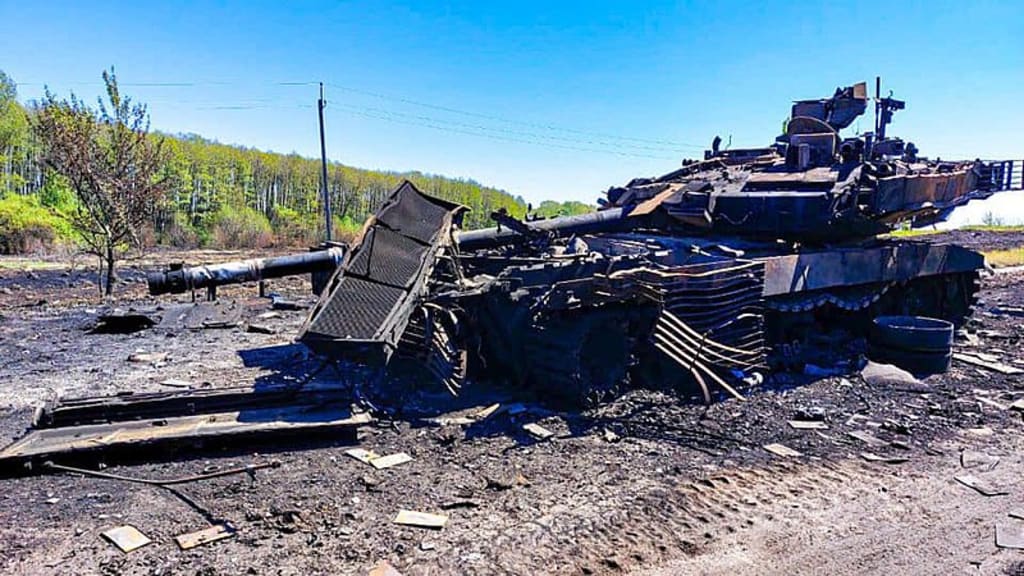
Russia, one of the traditionally recognized most powerful military forces on the planet, in front of today's multilayered challenge-officially the second in the world ranking military-cannot protect its vast territories against modern threats above all the increasing precision of Ukrainian strikes.
It becomes even more striking in the context of the present war in Ukraine, where Moscow's forces face a spate of outdated strategies, logistical shortcomings, and evolving warfare tactics despite their overwhelming strength.
The Increasingly Precise Strikes from Ukraine and the Territorial Vulnerability of Russia
Since the beginning of the full-scale invasion of Ukraine in February 2022, Russia has suffered profound losses on many fronts. According to the Ukrainian General Staff, as of October 2024, Russia has lost over 683,040 troops, along with thousands of tanks, armored vehicles, artillery systems, aircraft, and drones. Ukrainian forces, increasingly armed with advanced technologies, are now successfully targeting Russian military depots, energy infrastructure, and key logistics hubs on the soil of Russia itself.
Probably the most profound transformation in the character of war has been the rise in the use of drone technology. The drones, long-range, more so the kamikaze types employed by Ukraine, have revolutionized war and posed an unprecedented challenge to traditional Russian air defenses.
President Volodymyr Zelensky bragged about the country's ability to manufacture as many as four million drones annually, both short and long-range types, with which Ukraine has been able to strike deep behind Russian lines consistently. Whereas Russia claimed it had shot down hundreds of Ukrainian drones in one day, the number and cheaper cost of Ukrainian drones have simply overwhelmed Russia's defenses thus far.
The strikes of Ukrainian drones against the logistically relevant objectives of Russia, especially its ammunition depots, have turned out to be highly disruptive for Russia's performance. Repeated attacks on depots in strategic regions including Voronezh, Krasnodar, and Tver brought about devastating losses. According to different reports, between 66% to 93% of the ammunition depots were destroyed in the above-named regions.
The losses indeed prove the vulnerability of Russia and testify to the fact that the country cannot maintain supply lines for further military operations.
The Drone Menace: An Unexpected Test for the Russian Defense Systems
Even more important, the inability of Russia to defend its territory from drones indicates a very vital chink in the armor-the military strategy and preparedness.
For the last decades, the prime concern of the Russian Army has been to counter serious and high-end-type threats represented by missiles and other advanced aircraft.
Within that framework, however, it has developed defenses that are poorly positioned to cope with the proliferation of relatively inexpensive, small, and numerous drones. These modern drones boast an unusual ability to bypass traditional radar systems and can be launched en masse at a fraction of what more conventional weaponry costs.
What adds to the technological challenge posed by these drones is what military analysts term the "salvo economy" problem.
Advanced air defense systems, like the S-300 and S-400s, are meant to intercept complicated, sophisticated threats, not ones that are so cheap, being mass-produced drones.
Each interceptor missile costs Russia hundreds of thousands, if not millions, of dollars, while the drones themselves sometimes come for a couple of thousand dollars or even are built in makeshift conditions, like Ukrainian garages. This has rendered the imbalance of the Russian defense resources particularly tenuous in view of continuous refinement of the Ukrainian tactics related to drone warfare.
While not even Russia's already initiated adjustment to such an impact-by "moving its supply depots farther from the front lines, hardening key military facilities and using dispersal tactics"-would do any good as long as the overall size of the Russian territory reaches the record figure of more than 17 million square kilometers, which is practically impossible to defend from every single vulnerable point.
As Léo Péria-Peigné, a researcher in armaments and defense industries, said, "A decade ago, the Russian military was not set up to deal with such threats", which gives a good idea of how fast drone technology has outrun traditional defenses.
Coming Solutions and Their Shortcomings Russia has tried a variety of answers to its drone problem, with no comprehensive solution as yet.
Among the more promising ones is the development of laser-based anti-drone systems. Hypothetically, these systems can offer a more cost-effective and efficient method of neutralizing drones before they hit their targets. However, laser-based technology is still in its infancy, with such systems not widely deployed to date.
In addition, electronic warfare tactics, including jamming and taking control of enemy drones, have been tried but are not foolproof. Because autonomous drones are preprogrammed at the time of launch, they are less susceptible to attempts to jam them; this form of drone is now being fielded in increasing numbers by Ukrainian forces.
While these types of emerging technologies do hold a degree of promise, they cannot be expected to help provide a near-term solution to the daunting challenges that Russia has in attempting to safeguard its sprawling territory against a well-coordinated and technologically proficient foe like Ukraine.
Russia's Accidental Self-Inflicted Damage: The Glide Bomb Issue
Drone strikes by Ukraine have, meanwhile, laid bare some cracks in the defenses, but Russia's military technology has also been at its most fickle, inflicting considerable collateral damage upon its territory: from accidentally blowing up its own glide bombs to radio jamming devices that sabotage satellite communications.
Modernized variants of the FAB-500 and FAB-1500 glide bombs have been fitted with guidance systems and wings, allowing them to be launched from advanced jets like the Su-34 and Su-35. These are designed to be dropped from high altitudes, keeping the Russian aircraft beyond the reach of Ukrainian air defenses.
However, the modifications to these bombs increased the chances of a high failure rate, and this has indeed been happening as many such bombs malfunction and end up falling within the borders of Russia itself.
Reports are that at least 38 Russian glide bombs have malfunctioned between April 2023 and April 2024, the majority of them falling within Russia's Belgorod region. Among the most notable examples was in April 2023, when a malfunctioning bomb fell, creating a crater 15 meters in diameter, flinging cars onto rooftops, and seriously damaging civilian infrastructure. Not all those bombs exploded, but the danger of such failures is huge.
These have been blamed on the utilization of poor and lowly quality civilian electronic components in the guidance systems of the bombs. Unlike military-grade electronics, civilian electronics are not subject to the most stringent reliability standards, which lead to frequent malfunctions. Despite setbacks, Russia has continued scaling up production of such glide bombs, larger variants like the FAB-3000 included, which carries a three-ton payload. While these bombs have proven to be devastating in combat, their use has also caused embarrassing and costly accidents on Russian soil.
The Human Cost: Russia's Growing Casualties and Equipment Losses
This war has been particularly stressing for the Russians, with high, unprecedented losses both in personnel and equipment.
Until October 23, 2024, Russia is reported to have lost more than 683,000 troops, a number that includes the most recent huge casualty count: over 1,400 soldiers lost in one day. These figures put into sharp focus the appalling human cost of Russia's continued military operations in Ukraine. Besides that, Russia lost more than 9,000 tanks, 18,000 armored fighting vehicles, close to 20,000 artillery systems, and over 17,000 drones. This shows not only the intensity of the ongoing fight but also signals the weaknesses of Russia's military strategies and equipment.
These losses cumulatively undermined morale among the Russian forces and underlined fissures in the military's logistics. Destroyed ammunition depots, malfunctioning advanced weapons, and high personnel losses have contributed to a weakening of the overall military strength of Russia.
A Strategic Response: Modernization and Adaptation Efforts
All this has made Russia seek the modernization of its armed forces and change its strategy.
Focusing on self-sufficiency in defense manufacturing, President Vladimir Putin has encouraged indigenous development of technologies so that dependence on foreign imports would come down. A fall-out of this policy is an increase in the production of missiles, drones, and glide bombs-that though plagued by technical problems for some of these systems-goes on unabated.
Russia has also sought to adapt its military logistics to move supply depots farther from the front lines and harden key infrastructure against aerial attack. These measures have enjoyed limited success. Russian territory continues to be pierced by deep-infiltrating Ukrainian drones that strike critical military and civilian infrastructure. This dynamic has forced Russia onto its back foot, constantly scrambling to defend its territory while prosecuting a simultaneously aggressive military campaign in Ukraine.
Ukraine's Victory Plan and Long-Term Goals
Although Russia is in dire straits now and apparently suffers from an inability to adapt to new dynamics, Ukraine worked on refining its strategic vision not only regarding this conflict but also the post-war period.
President Zelensky's five-point recently announced "victory plan" points out a roadmap for Ukraine's eventual victory and long-term security. The program underlined one of the key political and military goals for Ukraine, being invited into NATO. It also called for the non-nuclear deterrence of Russian aggression, economic growth, and post-war security architecture that should allow Ukraine to withstand future threats.
The plan, including classified sections that have been shared with international partners, emphasized a need to sustain Ukrainian military-civil unity. Thus far, an important component of Ukraine's resilience has been the ability to maintain a cohesive national front in the face of ongoing Russian aggression. In continuing to flesh out its internal action plan, Ukraine attempts to fill the gap between today's wartime configuration and the future peace summit which both parties hope will conclude the conflict.
Paradox of Power and Vulnerability
That contradiction reflects a broader paradox of power and vulnerability - how Russia, arguably one of the most formidable military powers in the world, has been so poorly prepared for the realities of contemporary war in various ways: from defending its own territory against Ukrainian drone strikes to containing the unforeseen consequences of its own weapons.
It is the proliferation of the drones, the logistical difficulties of defending such a vast territory, and the technical failure of Russia's munitions that have brought them to this point.
The degree to which both sides will rise to these challenges as the Ukraine war drags on is likely to make much of the difference in its future course. Additional to finding solutions against territorial threats, the technologically and logistically embarrassing shortfalls exposed by the war must be fixed.
Otherwise, the only military superpower will continue to have its reputation bruised and bludgeoned by unappetizing ground realities.
About the Creator
Tanguy Besson
Tanguy Besson, Freelance Journalist.
https://tanguybessonjournaliste.com/about/
Keep reading
More stories from Tanguy Besson and writers in Earth and other communities.
The Cost of Conflict
The Ukraine war, as it approaches its 31st month, is changing not only the geopolitical but also the economic landscape for Russia and Europe. The invasion caused a protracted war with high spiraling military costs for Moscow and realigned economies across Europe.
By Tanguy Bessonabout a year ago in Earth
Enoch Burke Case: Disciplinary Panel Members Resign in Major Blow to Efforts to Resolve Row Over Teacher’s Dismissal
The long-running dispute surrounding Irish teacher Enoch Burke has taken another dramatic turn after members of a disciplinary panel resigned, dealing a significant setback to efforts aimed at resolving the controversy over his dismissal. The case, which has attracted widespread public attention, continues to raise complex questions about employment rights, institutional authority, and the handling of disputes involving personal beliefs in professional settings.
By Aarif Lasharia day ago in Earth



Comments
There are no comments for this story
Be the first to respond and start the conversation.