

Chapter 1: The Discovery
In the year 2150, a group of scientists working at a research facility in the deserts of Nevada make a breakthrough discovery. They have developed a way to harness the power of the sun in a sustainable and renewable way, creating a new source of energy that could revolutionize the world.
Chapter 2: The Race for Control
As news of the discovery spreads, it sparks a global race for control of the technology. Governments, corporations, and wealthy individuals all vie for the rights to the new energy source. The scientists who made the discovery find themselves caught in the middle, as they are courted and threatened by powerful interests.
Chapter 3: The Power Struggle
As the competition for control of the renewable sun technology heats up, tensions rise and alliances are formed. The scientists find themselves in a dangerous game of politics and power struggles, as they try to protect their discovery and ensure that it is used for the betterment of humanity.
Chapter 4: The Sabotage
Just as the scientists are on the brink of finalizing a deal to share the technology with a leading corporation, the research facility is attacked. The scientists are kidnapped, and the research is destroyed. It quickly becomes clear that the attack was orchestrated by a rival corporation, who will stop at nothing to gain control of the technology.
Chapter 5: The Rescue
The scientists are rescued by a group of rebels who are fighting against the corporate greed that has taken over the world. Together, the scientists and the rebels set out on a mission to rebuild the research and bring the renewable sun technology to the people.
Chapter 6: The New World
As the renewable sun technology is rolled out, it begins to change the world. Energy is cheap and abundant, and the world's dependence on fossil fuels is eliminated. But the transition is not without challenges, as the powerful interests that were vying for control of the technology resist the change.
Chapter 7: The Final Showdown
The rebels and the scientists must confront the powerful corporations and governments that are trying to maintain the status quo. They must fight to protect the technology and ensure that it is used for the betterment of humanity, not just for the benefit of the wealthy and powerful.
Epilogue:
The battle for control of the renewable sun technology is won, and the world is forever changed. The new energy source has brought about a new era of prosperity and equality, and the powerful interests that once held sway have been relegated to the history books. The scientists who made the discovery are hailed as heroes, and their legacy lives on as a shining example of the power of science and the human spirit.
Chapter 8: The New Era
With the renewable sun technology in place, the world begins to experience a new era of prosperity. The cost of energy is significantly lowered, and the dependence on fossil fuels is eliminated. This leads to a significant reduction in pollution and an improvement in public health.
As the economy grows, new industries are created, and jobs are created. The standard of living for people all over the world is improved. The technology is also shared with developing nations, helping to lift people out of poverty.
Chapter 9: The Resistance
However, not everyone is happy with the new order. The powerful corporations and governments that once controlled the fossil fuel industry are resistant to change and are unwilling to give up their power and profits. They begin to launch a propaganda campaign to discredit the renewable sun technology and incite public fear.
The scientists and the rebels are forced to fight against this disinformation campaign and defend the technology they have worked so hard to create. They must also deal with sabotage and attempts to steal the technology.
Chapter 10: The Political Battle
The resistance to the renewable sun technology becomes a political battle. The scientists and the rebels form a political party and run for office in order to have a say in how the technology is used and regulated. They face stiff opposition from the established political parties, but they gain a significant following among the public.
As the election approaches, tensions rise and the campaign becomes heated. The scientists and the rebels are determined to ensure that the technology is used for the benefit of all, not just the wealthy and powerful.
Chapter 11: The Victory
The scientists and the rebels' political party wins a resounding victory in the election. They are able to pass legislation to regulate the use of the technology and ensure that it is used for the betterment of humanity. They also provide funding for research to improve the technology and make it even more efficient and affordable.
The powerful corporations and governments that once controlled the fossil fuel industry are forced to adapt to the new order. They are no longer able to maintain their grip on power and profits and are forced to compete in the new economy.
Chapter 12: The Legacy
As the scientists and the rebels' political party continues to govern, the world experiences a new era of peace and prosperity. The renewable sun technology becomes a shining example of what can be achieved when people come together and work towards a common goal.
The scientists who made the discovery are remembered as heroes and their legacy lives on. They are celebrated for their contributions and sacrifices, and their story serves as an inspiration for future generations.
Epilogue: The renewable sun technology has changed the world for the better, and humanity has taken a giant leap towards a sustainable future. The story of the scientists and the rebels serves as a reminder of the power of science and the human spirit to overcome obstacles and create a better world for all. The legacy of the renewable sun technology continues to shape the world and it remains a symbol of hope and progress for future generations.
Chapter 13: The Challenges Ahead
As the world continues to thrive with the renewable sun technology, new challenges arise. The technology is not without its flaws, and as it is implemented on a global scale, scientists and engineers must work to improve it and address its limitations.
One of the main challenges is the integration of the technology into existing infrastructure. Retrofitting buildings and power grids to make use of the renewable sun technology is a monumental task, and it requires significant investment and coordination.
Another challenge is dealing with the long-term storage of energy generated by the technology. As the technology becomes more efficient, the surplus energy generated during peak hours must be stored for use during off-peak hours. Scientists and engineers are working to develop new and more efficient ways to store this energy.
Chapter 14: The Global Impact
The implementation of the renewable sun technology has a profound impact not only on the economy and the environment but also on the global political landscape. The shift away from fossil fuels has led to a reduction in greenhouse gas emissions and has helped to slow down global warming. This has led to an improvement in the global climate and has helped to mitigate the effects of climate change.
The technology has also led to an increase in international cooperation, as countries work together to share knowledge and resources to improve the technology. This has helped to reduce tensions andled to a more peaceful and stable world.
However, the impact of the technology is not felt equally across the globe. Developing nations, which have been traditionally reliant on fossil fuels, face significant challenges in adapting to the new technology. The cost of retrofitting infrastructure and training personnel can be prohibitively expensive, and these nations are often left behind in the transition to the new energy source.
To address this issue, developed nations and international organizations have stepped in to provide aid and assistance to these nations. Programs are established to provide funding, training, and technical assistance to help these nations make the transition to the renewable sun technology.
Chapter 15: The Future
As the world continues to evolve and adapt to the new energy source, scientists and engineers continue to push the boundaries of what is possible with the technology. New and more efficient ways of harnessing the power of the sun are being developed, and the technology is becoming even more accessible and affordable.
The renewable sun technology has become an integral part of the world's energy mix, and it is helping to pave the way for a more sustainable and equitable future. As the world looks to the future, it is clear that the legacy of the renewable sun technology will continue to shape the world for generations to come.
Epilogue:
The renewable sun technology has changed the world in ways that were once thought impossible. The world is now on a path towards a sustainable and equitable future, and the legacy of the scientists who made the discovery will be remembered for centuries to come. Their story serves as a reminder of the power of science and the human spirit to overcome obstacles and create a better world for all.
Chapter 16: The Next Frontier
As the technology continues to evolve, scientists and engineers are now looking to take the technology to the next level. They are developing new ways to harness the power of the sun, such as space-based solar power, which would allow for the collection of energy from the sun in space and then beaming it down to Earth. This would enable the generation of energy 24/7, regardless of weather conditions or location on the planet.
Another area of research is the use of artificial intelligence and machine learning to optimize the performance of the renewable sun technology. By using AI to monitor and adjust the systems, energy generation can be maximized and maintenance costs can be reduced.
Chapter 17: The Ethical Implications
As the technology continues to advance, scientists and engineers are also facing new ethical dilemmas. Space-based solar power, for example, would require the deployment of large numbers of satellites in space, which could have negative impacts on the environment, including the potential for collisions with other space debris, and the potential impact on astronomical observations.
The use of AI in the management of the technology also raises ethical concerns. As the systems become more autonomous, there is a risk that human oversight and decision-making could be diminished, and there is a need to ensure that the technology is used ethically and responsibly.
Chapter 18: The Future of Energy
The renewable sun technology has changed the world, and it has set the stage for a new era of sustainable energy. As the technology continues to evolve and improve, it has the potential to become the primary source of energy for the world, helping to mitigate climate change and reduce dependence on fossil fuels.
The scientists and engineers who have been at the forefront of this technology are now looking to the future, and they are excited by the possibilities that lie ahead. They are committed to continuing their work, to make the technology more accessible, efficient and sustainable for future generations.
Epilogue: The story of the renewable sun technology is a story of human ingenuity and perseverance. The scientists and engineers who made the discovery have changed the course of history, and their legacy will live on for generations to come. As the world continues to face the challenges of climate change and energy security, the renewable sun technology serves as a beacon of hope and a reminder of the power of human innovation to create a better future for all.
Chapter 19: The Lasting Impact
The impact of the renewable sun technology is felt not only in the present but also in the future. As the world continues to rely on this technology, the effects on the environment become more apparent. The reduction of greenhouse gas emissions has led to a stabilization of the climate, and the world has begun to see the positive effects on the environment such as the return of wildlife, and the improvement in air and water quality.
The technology has also had a lasting impact on the global economy. The shift away from fossil fuels has led to the creation of new industries and jobs, and the improvement in the standard of living for people all over the world.
Chapter 20: The Enduring Legacy
The scientists who made the discovery of the renewable sun technology are remembered as true visionaries. Their work has changed the course of history and has set the stage for a sustainable and equitable future. The technology they created serves as a model for future generations, and their legacy endures as a shining example of the power of science and the human spirit to overcome obstacles and create a better world for all.
Epilogue: The story of the renewable sun technology is a story of hope and progress. It serves as a reminder of the power of human innovation and the importance of working towards a common goal. The legacy of the scientists who made the discovery will live on, as the technology they created continues to shape the world and pave the way for a sustainable and equitable future for all
About the Creator
Keep reading
More stories from ilknur mum and writers in Earth and other communities.
earthquake
The aftermath of an earthquake can be a devastating time for people and communities affected by it. The immediate aftermath of the earthquake can be a time of chaos and confusion, but it is important to come together to help those in need. Humanity has shown time and again that it is capable of remarkable acts of kindness, generosity, and selflessness in the wake of disasters. In this article, we will explore the ways in which humanity can help after an earthquake and how people can come together to support each other.
By ilknur mum3 years ago in Humans
How Much Do You Need in an ISA for a Passive Income That Beats the State Pension?
For many people in the UK, the State Pension is expected to form the backbone of retirement income. But with rising living costs and growing uncertainty about the future, more savers are asking a crucial question: Can I build a passive income that beats the State Pension — and how much would I need in an ISA to do it?
By Aarif Lashari3 days ago in Earth
Tiny Lion Cubs Struggle To Keep Up With Mom
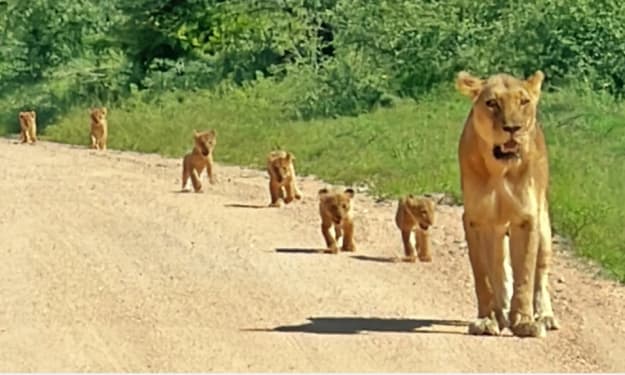
In the heart of the African savannah, life is a constant lesson for young animals. Few scenes are as endearing — or as heartwarming — as tiny lion cubs trying to keep pace with their mother. These little bundles of fur face a world full of challenges, from learning to hunt to avoiding dangers, all while depending on the guidance and protection of their experienced mom. Watching cubs wobble and tumble as they attempt to keep up with their mother reminds us that growing up, even in the wild, is a journey full of struggle, determination, and adorable missteps. The Early Days of Lion Cubs Lion cubs are born blind and helpless, usually in litters of two to six. For the first few weeks, they rely entirely on their mother for warmth, food, and safety. Even after opening their eyes and beginning to explore, the cubs are far from independent. The first months are crucial. Cubs learn social cues, hunting basics, and survival skills simply by watching their mother and the pride. But as anyone who has observed them knows, there’s often a huge gap between observation and action. Tiny cubs often struggle to match their mother’s pace, especially when she moves through long stretches of savannah or leads the family on patrols. A Mother’s Role in the Wild For a lioness, raising cubs is a full-time commitment. She hunts, defends her territory, and teaches her young, all while staying alert to predators such as hyenas, leopards, and even rival lions. The cubs, meanwhile, attempt to mimic her every move — often with clumsy yet charming results. A mother lion’s patience is remarkable; she frequently slows down, nudges them along, or stops to ensure no cub is left behind. These moments, while stressful for the tiny cubs, are vital learning opportunities. Struggling to Keep Up: Why It’s So Hard There are several reasons why tiny lion cubs have trouble keeping pace with their mother: Short Legs, Big Steps: Lion cubs’ legs are tiny and their coordination is limited, making it difficult to cover the same distance as an adult lioness. Curiosity: Cubs are naturally curious. A single butterfly or rustling bush can distract them, leaving mom to pause repeatedly. Energy Levels: Young lions tire quickly. Even with frequent naps, the cubs’ stamina is far lower than their mother’s. Learning Through Play: Play is not just fun; it teaches hunting, balance, and social skills. Running off to pounce on a sibling or chase an insect is all part of their education. Despite these challenges, the cubs’ determination to keep up demonstrates their resilience and growing understanding of the wild world. Lessons in Teamwork and Survival Every cub struggling to keep up is also learning crucial survival skills. The journey across the savannah is more than a test of speed — it’s a lesson in: Coordination: Cubs learn how to move efficiently across different terrains. Patience: They begin to understand the rhythms of adult life and the pace required for survival. Social Skills: Staying with the group teaches cubs how to interact with siblings and the pride, which is essential for their future roles. Observation: By following their mother, cubs study hunting techniques, territorial behavior, and predator awareness. Even the moments when cubs stumble or lag behind are essential for their development. These experiences prepare them for independence, which comes sooner than many might expect. The Cutest Moments in the Wild Anyone who has watched tiny lion cubs knows that their struggles are often irresistibly cute. Video clips from wildlife reserves frequently show cubs toddling along, tumbling over each other, or getting distracted mid-step. Observers often comment that these little stumbles reveal personality, determination, and playfulness, making them one of nature’s most heartwarming spectacles. While their mother is serious and focused, the cubs inject a sense of humor and lightness into life on the savannah. Why This Matters The struggles of lion cubs aren’t just adorable — they’re vital for understanding wildlife behavior. Conservationists and animal behaviorists use these moments to study growth patterns, social structures, and survival strategies in lion populations. These observations also highlight the importance of preserving natural habitats. Cubs must learn in a safe environment to survive; habitat loss, poaching, and climate change make these early struggles even more dangerous. Protecting the African savannah ensures that future generations of lions can experience the same lessons and playful tumbles. The Road to Independence Within a year, these tiny cubs will be more agile, faster, and more confident. By the time they reach two to three years old, males may begin to leave the pride, while females often stay and become caretakers themselves. Every misstep, tumble, and lagging moment is part of the journey toward strength, coordination, and independence. Watching them now gives us a glimpse of the challenges they will overcome, and the survival skills they will carry for life. A Celebration of Motherhood Ultimately, these scenes remind us of the incredible bond between mother and cubs. Her patience, vigilance, and teaching are the foundations of their future. The cubs’ struggles highlight the trials of growing up, while their determination showcases the resilience and beauty of wildlife. For those observing, it’s a powerful lesson in care, guidance, and perseverance, not just in lions but in the natural world as a whole. Final Thoughts Watching tiny lion cubs try to keep up with their mother is both entertaining and enlightening. It’s a story of growth, struggle, and resilience — a reminder that even the fiercest creatures start small, learning step by step. These little lions capture hearts while teaching life lessons: patience, determination, teamwork, and the importance of guidance. As they tumble and waddle across the savannah, they show us that growth is a process, one adorable misstep at a time. For wildlife enthusiasts, animal lovers, and anyone enchanted by nature, these tiny cubs are proof that even in the wild, love, care, and persistence are universal truths.
By Aarif Lashari3 days ago in Earth



Comments
There are no comments for this story
Be the first to respond and start the conversation.