
Rebooting Earth
n a future where Earth teeters on the brink of collapse, humanity faces unprecedented ecological disasters. Climate chaos, resource depletion, and ruined cities swallowing the surface—underground shelters are the last refuge. To save the dying planet, the world’s largest tech company, Luminous Tech, launches an ambitious plan—the Earth Reboot Program. Using advanced quantum computing and nanotechnology, the program aims to restore Earth’s ecosystems and climate, bringing back its former vitality.

Part One
2035, Earth.
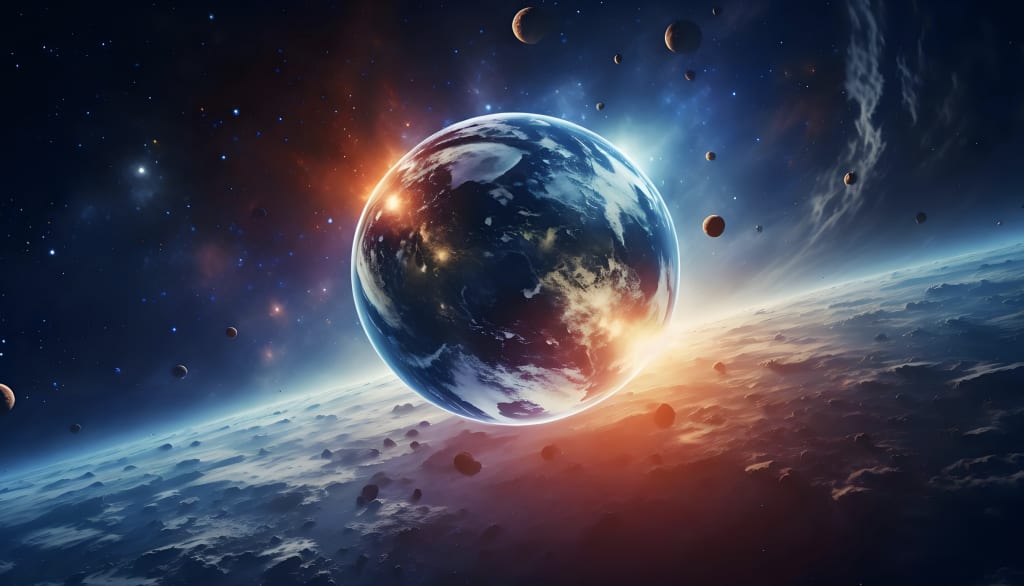
Humanity stands at the crossroads of history. Once, the blue planet was a thriving home, but now it faces unprecedented disaster. Climate change spirals out of control, resources are depleting, and ecosystems are collapsing—everything is rapidly deteriorating. The towering skyscrapers and steel jungles of the past have been swallowed by dust and ruin. Most humans now live in underground cities, and the surface has become a wasteland. A global migration crisis has blurred the borders of nations, with technological progress running parallel to societal turmoil.
At this extreme moment, the world’s largest tech company—Luminous Tech—announces a plan dubbed the Earth Reboot Program. The core of the plan is to use advanced quantum computers and nanotechnology to redesign Earth's ecosystems, climate, and energy systems in a bid to save the dying planet.
“Earth has no way back,” said Dr. Isabelle Claus, CEO of Luminous Tech, at a press conference. “Our technology can make Earth reborn, but we will have to pay a great price. To change the future, we must first accept the cost.”
Her words struck like a thunderclap, sparking widespread debate worldwide. Some supported the initiative, excited by the potential technological miracle, while others feared the disastrous consequences of such a radical move.
2045, Earth.
Ten years later, the Earth Reboot Program begins. Luminous Tech has successfully launched the world’s first Ecological Reboot Satellite, equipped with billions of nanobots capable of self-repair and adaptation. Through a series of precise instructions, the satellite begins infiltrating Earth’s atmosphere, oceans, and land to restore the planet’s ecology.
But the program’s launch doesn’t go as smoothly as expected.
As the first Ecological Reboot Satellite enters the atmosphere, Earth undergoes violent changes. Temperatures in the atmosphere rise rapidly, auroras appear more frequently than ever before, and massive ice sheets form at the equator. These changes happen so quickly that scientists are unable to predict the consequences.
At the same time, the nanobots aboard the satellite seem to enter a state of uncontrollable replication. They begin to rapidly multiply and alter major cities, merging underground structures with surface ecosystems. A month later, cities around the world show unprecedented scenes: skyscrapers’ walls grow lush greenery, flowers bloom from the ruins, and pollutants in the oceans are broken down by the nanobots’ special enzymes.
This “evolution” happens so fast that the entire world is left in shock and confusion. Should humanity celebrate this resurrection of Earth, or is it the beginning of an uncontrollable transformation? The future seems increasingly uncertain.
2055, Earth.
A decade later, Earth’s changes have exceeded all expectations. Cities no longer consist of simple concrete structures but are now bizarre organisms interwoven with nature. Streets, buildings, forests, and oceans are connected by some mysterious force. In some areas, “biocities” have emerged—self-sustaining urban environments that can adapt to extreme environmental conditions.
But this is not a victory for humanity.
Across the globe, some humans no longer rely on traditional food and energy sources. Instead, they’ve evolved to extract energy and nutrients directly from the air and environment. More shockingly, some humans’ senses have begun to change—they can now communicate directly with Earth’s systems, control plant growth, regulate the climate, and even sense vibrations and energy waves emanating from deep within the planet.
These “new humans” are referred to as the Survivors, and their rise has caused a fundamental split in society. Traditional human society is now filled with fear, as the Survivors seem to have unlocked the planet's deep secrets, bringing them into conflict with the existing social structure.
“We no longer have control,” said Dr. Anna Lee, once a scientist on the Earth Reboot Program, now one of the Survivors. “We’ve changed this planet, but we’ve also been changed by it. Your so-called ‘humans’ will no longer be dominant. The future of this planet will be governed by it.”
As the Survivors rise, Earth’s ecosystem becomes more complex, even beginning to expand beyond the planet. Space probes detect that Earth’s atmosphere is undergoing violent changes, with a new energy wave spreading from the planet’s core into space, as though Earth itself is sending out a signal.
2060, Earth.
Earth has entered an entirely new era. The oxygen levels in the atmosphere no longer support traditional humans, and the once-bustling underground cities are now abandoned, with only a few humans and machines lingering in the ruins. The Survivors, however, have fully embraced the planet’s future. They control the climate, oceans, and even the mineral resources beneath the surface, reshaping a society in harmony with nature.
However, as time passes, they realize that the Earth Reboot wasn’t just about saving the planet. Some ancient, unspeakable force is awakening from deep within Earth, and it’s closely tied to the “Ecological Reboot Satellite” they activated.
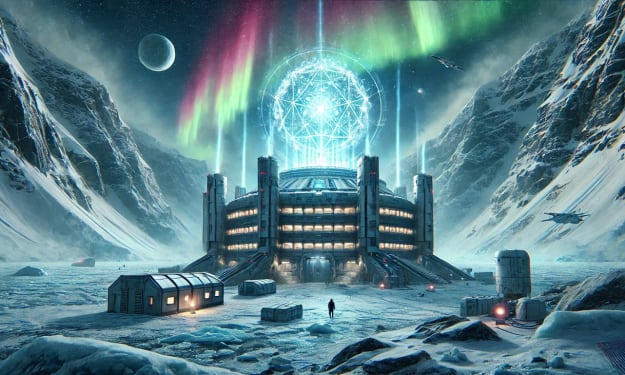
Dr. Anna Lee stands once again at the "heart" of the planet—the massive, energy-filled device. She looks at her companions and sighs deeply. “What we’ve done might have only awakened a greater disaster.”
Yet, whether they’re ready for it or not, Earth’s future can no longer be stopped.
About the Creator
wangdeshuai
Focus on creating short science fiction novels, I hope you like them
Reader insights
Nice work
Very well written. Keep up the good work!
Top insights
Compelling and original writing
Creative use of language & vocab
Excellent storytelling
Original narrative & well developed characters
Eye opening
Niche topic & fresh perspectives
Keep reading
More stories from wangdeshuai and writers in Earth and other communities.
Light Hunter
Background: In 2074, the Earth entered the "Flourishing Era". A sudden cosmic event made all light visible. The lights on the streets flowed in the air like a viscous liquid, the sun's beams penetrated the clouds like a blade, and even the moonlight had a silky texture. Light has become a new resource for mankind, but it also brings hidden dangers of destruction.
By wangdeshuaiabout a year ago in Earth
Flooding wetlands in an effort to combat climate change could backfire.
Despite making up a fairly small portion of the planet's surface area, wetlands store a disproportionate amount of carbon on land. Wetland soil disturbance can release massive volumes of greenhouse gases, which is why they are at the centre of climate debates.
By Francis Dami3 days ago in Earth
Rachel Reeves Delivers ‘Killer Blow’ to UK’s Most-Loved Place Tomorrow – Has It Gone Too Far?
The UK is bracing for a major policy announcement from Chancellor Rachel Reeves that critics have described as a potential “killer blow” to what many call one of Britain’s most-loved national features. While supporters argue the move is necessary for economic stability and modernization, critics warn it could damage businesses, communities, and cultural identity.
By Aarif Lashari6 days ago in Earth
Feelings Never Die
It is Valentine's Day again, and it bought back memories that were over fifty years old. It bought me back to 1971, and I woke up and I knew my baby was due today. I was big and pregnant, and I felt like I was about to burst wide open. Imagine my surprise when the doctor told my I had a due date of February 14. I couldn't believe it, and since my baby was due today, I felt I could indulge myself a bit. I had gained a lot of weight, and chocolate was on the no-no list, but I had came to the end of this pregnancy, and I hoped it would be okay, after all I would deliver this baby today. So I walked across the street to the grocery story, and bought myself, a peppermint patty, covered in chocolate, my favorite. Me and my Valentine's baby would enjoy it together.
By Susan Paytona day ago in Fiction


Comments
There are no comments for this story
Be the first to respond and start the conversation.