

Title: Passenger Plane: The Marvel of Modern Air Travel
Introduction:
In the realm of modern transportation, passenger planes have emerged as one of the most influential and revolutionary inventions of the 20th century. These magnificent machines have transformed the way people travel, bridging vast distances and connecting the world like never before. Combining advanced engineering, cutting-edge technology, and a relentless pursuit of safety and comfort, passenger planes have become a symbol of human ingenuity. This article delves into the various aspects of passenger planes, exploring their design, functioning, safety measures, and impact on global connectivity.
Design and Construction:
Passenger planes are meticulously designed structures that balance aerodynamics, structural integrity, and passenger comfort. The overall design comprises three key sections: the fuselage, wings, and tail assembly. The fuselage, commonly referred to as the aircraft's body, houses passengers, cargo, and essential systems. It is designed to withstand immense forces encountered during flight and is constructed using lightweight yet durable materials such as aluminum or advanced composites.
The wings, the primary lifting surfaces of a passenger plane, are designed to generate lift by exploiting the principles of aerodynamics. Wing designs have evolved over time, incorporating features like winglets for improved fuel efficiency and reducing drag. The tail assembly provides stability and control, housing the vertical stabilizer and horizontal stabilizers, which include the rudder and elevators respectively.
Functioning and Systems:
Passenger planes are powered by jet engines, which provide the necessary thrust for takeoff, climb, and cruising. Jet engines, utilizing the principle of jet propulsion, draw in air, compress it, and combine it with fuel for combustion, producing a high-velocity jet of exhaust gases that propels the aircraft forward. The advent of high-bypass turbofan engines has significantly enhanced fuel efficiency and reduced noise levels.
To control the aircraft during flight, a combination of control surfaces, hydraulics, and fly-by-wire systems are employed. The primary control surfaces include ailerons (wing roll control), elevators (pitch control), and rudder (yaw control). These surfaces are operated through hydraulic systems, which transmit pilot inputs to the control surfaces, ensuring precise maneuverability.
Safety Measures:
Safety is paramount in the aviation industry, and passenger planes adhere to stringent regulations and undergo rigorous testing before they can take flight. Extensive maintenance and inspection schedules are followed to ensure that all systems are functioning optimally. Regular safety drills and simulations are conducted to train the flight crew for various emergency scenarios.
Modern passenger planes are equipped with a comprehensive array of safety features. These include advanced avionics for navigation, collision avoidance systems, fire suppression systems, and redundant control systems to mitigate any potential failures. Additionally, passenger planes are equipped with sophisticated weather radar to detect and avoid turbulent weather conditions, enhancing passenger comfort and safety.
Impact on Global Connectivity:
Passenger planes have revolutionized global connectivity, making it possible for people to travel to far-flung destinations in a matter of hours. They have spurred economic growth, facilitating international trade, tourism, and cultural exchanges. The aviation industry has become an integral part of the global economy, generating employment opportunities and fostering economic development.
Passenger planes have also brought people together, transcending geographical boundaries and promoting understanding between cultures. They have played a vital role in fostering global cooperation, enabling face-to-face meetings, and facilitating the exchange of ideas and knowledge. Moreover, the accessibility provided by passenger planes has empowered individuals to explore the world, broaden their horizons, and appreciate diverse cultures.
Conclusion:
Passenger planes have transformed the way we travel, making the world more accessible and interconnected. These engineering marvels embody the collective efforts of scientists, engineers, and aviation professionals to create a mode of transportation that is safe, efficient, and comfortable. As technology continues to advance,
About the Creator
Keep reading
More stories from writers in Earth and other communities.
Ancient Rocks Reveal Niobium Origins
On January 23, 2026, researchers from Curtin University announced a remarkable geological discovery hidden deep beneath central Australia. Rare rocks, formed more than 800 million years ago, have revealed the origin story of one of the world’s most promising niobium deposits. This critical metal, now essential for high-strength steel, electric vehicles, wind turbines, and advanced energy systems, owes its presence near Earth’s surface to powerful tectonic events that reshaped the planet during the breakup of an ancient supercontinent.
By USA daily update 3 days ago in Earth
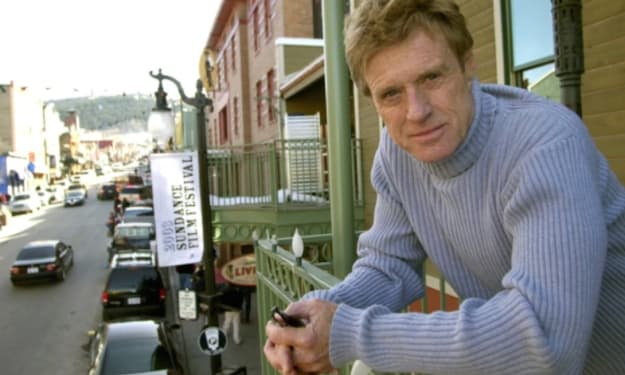
Robert Redford Remembered for His Mentorship of New Filmmakers at Sundance Gala
At this year’s Sundance Film Festival gala, the spotlight turned to Robert Redford, not only as a legendary actor and filmmaker but as a mentor who nurtured countless emerging talents. Attendees, including directors, producers, and actors, shared heartfelt stories about how Redford’s guidance transformed their careers and inspired a new generation of filmmakers. A Legacy Beyond Acting Robert Redford’s career in Hollywood spanned decades, with iconic roles in films like Butch Cassidy and the Sundance Kid, All the President’s Men, and The Sting. However, his impact extends far beyond the screen. As the founder of the Sundance Institute, Redford created a platform that championed independent voices, giving filmmakers the opportunity to explore creative freedom without the constraints of major studios. At the gala, festival director Tabitha Jackson remarked, “Redford didn’t just make films; he made futures. He believed in new voices long before they had a platform.” This sentiment resonated with many in attendance who credited their breakthroughs to Redford’s mentorship. Mentorship Through the Sundance Institute Founded in 1981, the Sundance Institute was born out of Redford’s vision to support independent filmmaking. Over the years, the institute has: Offered labs, workshops, and grants to new filmmakers. Provided mentorship from established directors and industry professionals. Created a global platform for storytelling through the Sundance Film Festival, now recognized as one of the premier venues for independent cinema. Several filmmakers who attended the gala recounted how Redford personally encouraged them to take creative risks, even when their ideas seemed unconventional. His approach emphasized storytelling authenticity over commercial considerations, a principle that has influenced countless careers. Voices From the Gala Emerging filmmakers at the event shared touching memories of Redford’s influence: Director Maya Johnson recalled how Redford reviewed her early short film and offered constructive advice, helping her refine her narrative voice. Producer Alex Chen highlighted Redford’s commitment to inclusive storytelling, encouraging him to amplify underrepresented voices in cinema. Actor Lila Martinez reflected on the actor-director’s ability to instill confidence in new talent, reminding them that their perspective mattered. These personal testimonies painted a portrait of Redford not only as an industry icon but as a guiding presence committed to cultivating the next generation of storytellers. Redford’s Philosophy on Filmmaking Redford often spoke about the importance of creativity, authenticity, and collaboration in filmmaking: Creativity over commerce: He encouraged filmmakers to prioritize artistic integrity. Mentorship as legacy: Redford believed sharing knowledge was key to sustaining the art form. Risk-taking: He frequently reminded young directors that innovation comes from challenging norms and exploring new perspectives. These principles remain at the heart of the Sundance Institute and the broader independent film community. The Global Influence of Sundance Thanks to Redford, Sundance has become a global platform for independent cinema, with programs reaching filmmakers in Europe, Asia, Africa, and Latin America. Through labs, festivals, and initiatives, Redford’s influence extended far beyond the U.S., helping shape a diverse, international community of filmmakers. Sundance alumni have gone on to create films that have won Oscars, Golden Globes, and international awards, underscoring Redford’s impact on the global film industry. Honoring Redford’s Legacy The gala featured a tribute montage highlighting Redford’s contributions as an actor, director, and mentor. Clips included moments of him guiding young filmmakers, presenting awards, and reflecting on his own journey in the industry. Many attendees emphasized that Redford’s greatest legacy may not be his iconic films, but the careers he helped launch. Festival director Jackson noted, “Every filmmaker here carries a piece of Robert’s wisdom. His mentorship continues to ripple through every frame of independent cinema.” Redford and the Future of Independent Filmmaking As the independent film landscape evolves—with streaming platforms, AI tools, and global collaboration becoming more prevalent—the foundations laid by Redford and Sundance remain vital. His mentorship model demonstrates that investing in people and ideas creates lasting cultural impact, ensuring that independent voices continue to thrive. Emerging filmmaker Jordan Reyes commented, “Redford taught me that every story has value. That lesson shapes how I create and support others in my community today.” Personal Reflections and Anecdotes Many festival attendees shared anecdotes reflecting Redford’s humility, approachability, and passion for storytelling: Despite his fame, he would sit in small discussion circles with young filmmakers, offering advice and encouragement. He often hosted informal gatherings at his homes or lodges, creating spaces where filmmakers could network, learn, and experiment. His presence at Sundance was consistently an inspiration to those navigating the challenges of independent filmmaking, providing mentorship that was practical, emotional, and motivational. These stories underscored that Redford’s mentorship was not just professional—it was personal and transformative. Final Thoughts Robert Redford’s remembrance at the Sundance gala served as a celebration of mentorship, vision, and the power of independent cinema. Beyond the accolades and cinematic achievements, his enduring legacy lies in the careers he nurtured, the voices he amplified, and the creative risks he inspired. The festival’s message was clear: while Redford may no longer be present in every Sundance discussion, his influence lives on through the filmmakers he mentored, ensuring that independent storytelling continues to thrive, evolve, and inspire future generations. For the community of filmmakers, audiences, and cinema lovers worldwide, Redford’s legacy remains a beacon of mentorship, creativity, and dedication to storytelling.
By Muhammad Hassan5 days ago in Earth
🅼🅸🅳🅽🅸🅶🅷🆃 🆂🅽🅰🅲🅺🆂
"It's 10 in Tuscon! We all know what that means... It's Time for Midnight Snacks with your man, Gerald Gee! Ready to spend the night together? Me too! I'm full of snacks and can't wait to regurgitate them all back into your hungry ears. Crack a brew! Pop some corn! Anything to get ready for one hell of a show where the talk maybe cheap but the words cut deep...
By Lamar Wiggins6 days ago in Fiction



Comments
There are no comments for this story
Be the first to respond and start the conversation.