
North Korea's March Towards Ukraine
Is this the dawn of a global conflict?

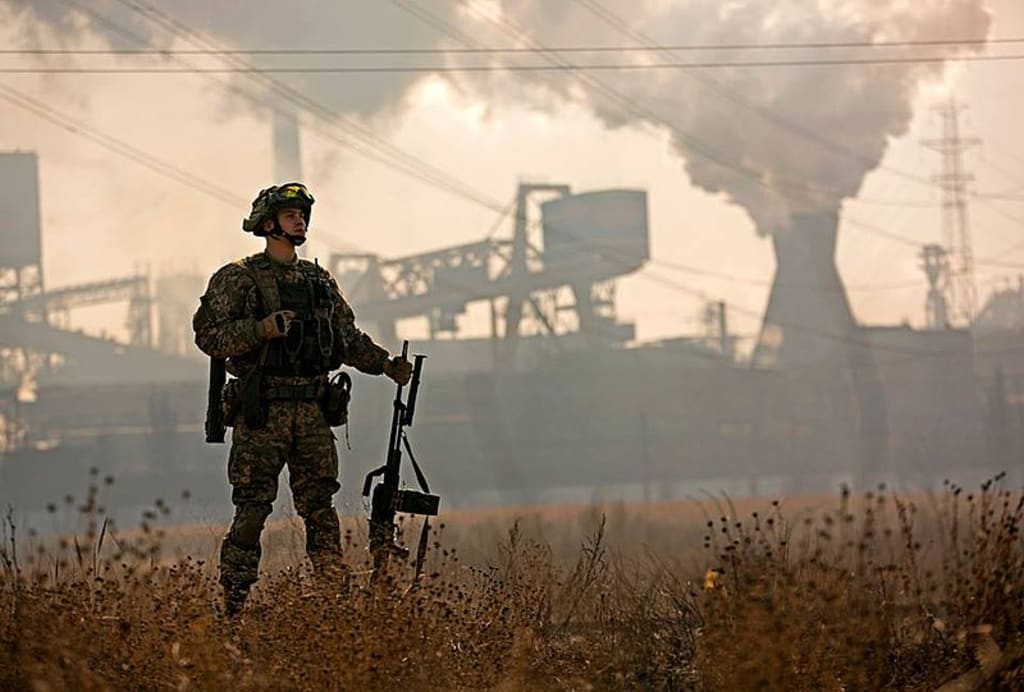
Over the past months, it was reported that North Korean soldiers are training in Russia-an alarming development around the world.
The consequences of this military cooperation will go well beyond the battlefield; it may even reshape the geopolitical landscape in Northeast Asia and affect international relations within the context of major powers such as the United States, China, and Russia.
The paper elaborates on the multi-layered implications of North Korea's potential military involvement in Ukraine, describes the historical background for the development of relations between North Korea and Russia, and also develops the responses of key stakeholders, namely South Korea and the United States.
The Possible Participation of North Korean Troops in Ukraine
Historical Precedents
The involvement of North Korean troops in international conflicts is not something new and has been seen in history. During the Korean War (1950–1953), North Korea's alignments were with China and the Soviet Union, positioning it against the United States and its allies. Moreover, the nature of this conflict is unique, where the combatants took on different characteristics: North Korean forces were framed as "volunteers," whereas UN troops operated under a collective mandate. This shows the complication of military engagement in light of the potential for escalation. If North Korean forces cross over into Ukraine, it would be transformed from a bilateral engagement to a multilateral one, similar to the dynamics leading up to World War I.
The geopolitical expert Frank identifies that, officially deploying troops would mean a serious escalation for the North Korean regime. The military incursion could be used by the Kim Jong Un-led government as one of pride meant to demonstrate to the world its status as a regional actor much like Russia. Needless to say, military losses or returning soldiers would make it impossible to hide this operation. While states are more often accustomed to using selective narratives in order to engineer domestic perception, as seen in many of the earlier conflicts, including that of the Korean War, a large-scale deployment could not avoid being far more transparent.
The war in Ukraine is currently one of no news coverage by North Korean state media. This silence speaks to interesting possibilities for internal messaging that Kim Jong Un will use in the case that troops are, in fact, sent abroad. The regime has a history of making sharp turns in propaganda, setting up its populace for major events with little groundwork. The lack of reporting could be evidence that the regime is either avoiding the subject until such time as any deployment is certain or simply saving internal narrative preparation for what could be a military operation.
Historical Context of North Korea-Russia Relations
Shifting Ties
As far back as the mid-20th century, North Korea and Russia have changed in their relationships. First of all, North Korea was born and survived just due to the nourishment by the Soviet Union. Relations began to decline after the Cold War, particularly with Russia's recognition of South Korea in the 1990s. Such a recognition greatly reduced Russian aid and support for the North, which were partly responsible for the catastrophic famine in North Korea in the 1990s and killed hundreds of thousands.
Recent Developments
Over the last years, especially since the invasion of Ukraine by Russia in 2022, the two countries have drawn closer to each other in the re-ignition of their alliance. Events to show this include a visit to Pyongyang by Vladimir Putin. Both countries see the relationship as mutually beneficial, where North Korea would probably seek military technology and economic aid in return for giving manpower and material assistance to Russia. This opens disconcerting perspectives for the North Koreans to have access to state-of-the-art military technology, such as missile guidance systems that can severely destabilize the region.
The Strategic Implications for South Korea
Waxing Anxiety in Seoul
The development that may involve North Korean troops in Ukraine has stirred huge unease in South Korea. Military experts, including the former General Chun In-bum, described the development as a "significant escalation." The government is concerned about what might happen if North Korean forces are exposed to modern warfare and drone combats, which might then be deployed against South Korea. The level of technological and tactical knowledge North Korean officers may get might raise the military capability of the regime and hence the threat toward the South.
State of Military Readiness
For such developments, the nation has rapidly increased its three lines of defense. Specialized units have been trained for the purpose of intercepting contingencies like drone attacks-a very urgent requirement to cope with the evolving dimensions of threats from the North. The military presence visibly seen within urban centers-in cities like Seoul-has turned into a cause of alarm for civilians who had become somewhat complacent about the threats from the North.
The military developments in the South, and also the presence of the U.S. armed forces on its territory, cannot still avoid the high level of uncertainty about evolving capabilities of North Korea - underestimation of military capabilities of the North might result in a disaster.
The administration of President Yoon Suk-yeol has faced pressure from within to turn up the dial in aggression against the North. North Korean drones and incursions into South Korea's airspace have seen President Yoon's administration threaten retaliation, but there is a fine line here: too much saber rattling, and the risk of more North Korean aggression raises its head; too little, and the admission of weakness becomes too apparent.
The Role of China
Strategic Calculations
In the larger sense, China's multi-faceted view about North Korea in the Ukraine conflict was already underpinned by economic and political support of its neighbor. But all in all, China is wary of North Korea's strengthening links with Russia. Militarily strong North Korea threatens the critical interests of China in regional stability and influence. Hence, Beijing will be keenly watching how this plays out and would act to blunt the impact.
Diplomatic Engagements with the United States
In light of these developments, the United States has sought to diplomatically engage the PRC in urging the latter to exercise its influence with North Korea in a manner that would prevent further escalation of the conflict. Indeed, recent consultations between U.S. and Chinese officials underlined a shared concern about North Korean military behavior and what it bodes for regional security. Washington is skeptical of any build-up in the North Korean military capability that will threaten US interests and its allies, primarily Japan and South Korea.
US Strategic Response
The presence of the U.S. military in South Korea remains one of the cornerstones of defense strategy in Northeast Asia. With approximately 28,500 troops stationed in the region, the United States aims to deter North Korean aggression and reassure its allies. However, the dynamics associated with North Korea's growing alignment with Russia may dictate a reconsideration of how the United States forwards military strategy and capabilities on the Korean Peninsula.
The Need for Greater Cooperation
The heightening military cooperation between North Korea and Russia may require the U.S. to further consolidate defense cooperation with South Korea and Japan through joint military exercises, intelligence sharing on North Korean activities, and increased missile defense. Any act of consolidation of cooperation by the US, South Korea, and Japan would be very important in trying to deter any possible threats arising out of North Korea's involvement in Ukraine and implications for regional security.
The involvement of North Korean troops in the war in Ukraine adds a new dimension to an already tense geopolitical situation in Northeast Asia. As North Korea furthers its military and economic interests via a close relationship with Russia, this entails far-reaching consequences for South Korea, China, and the United States. This naturally creates great trepidation in South Korea about military development in the North. The need for a strong and coordinated response has never been so critical. The evolving dynamic doubtless continues to challenge the established security architecture of the region and must be carefully navigated by all stakeholders involved.
The geopolitical effects of North Korea's military involvement in Ukraine would, henceforth, be a hotbed of interest and concern for analysts and policymakers alike. It is in deciphering the motivation toward this axis, the backdrop of the North Korean-Russian relationship, and, finally, the consequences of such a move on regional stability that the mapping of future strategies and responses will have to rest. All this would come at the risk of highly precarious balance of power in Northeast Asia-a region whose trajectory will certainly be determined in the months to come.
(afp, dpa, reuters)
About the Creator
Tanguy Besson
Tanguy Besson, Freelance Journalist.
https://tanguybessonjournaliste.com/about/
Keep reading
More stories from Tanguy Besson and writers in Earth and other communities.
Narratives of Power: Germany's Identity Under Siege
Over the past several years, a growing focus has crystallized in the sphere of reunification problems and the East-West gap in both the German political and cultural scene, and an ideological struggle inextricably linked to these issues.
By Tanguy Bessonabout a year ago in Earth
‘Final Nail in Coffin’: Scottish Sector Under SNP Tax Threat
A growing political and economic debate is unfolding in Scotland as critics warn that proposed or expanding tax pressures under the Scottish National Party (SNP) government could act as the “final nail in the coffin” for a struggling sector of the economy. Business groups, industry leaders, and political commentators are increasingly raising concerns about competitiveness, investment, and long-term sustainability.
By Aarif Lashari6 days ago in Earth
Clintons to Testify in Epstein Inquiry
Reports that former U.S. President Bill Clinton and former Secretary of State Hillary Clinton could testify in an inquiry related to Jeffrey Epstein have sparked widespread international attention. The inquiry is part of ongoing efforts by authorities and investigators to understand the full scope of Epstein’s network, financial dealings, and connections with high-profile individuals.
By Aarif Lashari4 days ago in Earth
Why Black History Matters in America?
The United States of America is celebrating their 250th anniversary in 2026. I'm proud to be an American and as someone who was born here, I wouldn't imagine myself living anywhere else. This is a country where opportunities are possible. Where anyone can be successful in anything they desire to do. Equality, community, and togetherness are the backbones of what America is and should be about. However, we have an administration who wants to erase and disregard those who have made positive, meaningful impacts in our country, specifically Black figures, such as Martin Luther King, Jr., Rosa Parks, and Maya Angelou. President Trump and his administration have been constantly complaining and fighting against what they call the "Woke agenda". They use this excuse as a distraction from other issues they refuse to address, such as the high cost of living, climate change, and inflation. That equality is dividing America, when in reality, it's bringing us together. Being woke is not tied to a specific political party. No matter where you stand on the political spectrum, you can still care about other people and their plights. Compassion and empathy for others isn't tied to a political party, either. We were taught as children to treat others the way we want to be treated and not judge others because they're different from us. Caring about others isn't a personal attack on your beliefs. It doesn't make you any less of a person. People who are easily offended over African American figures, past or present, or anything related to it, are grasping at straws. Current and future generations need to know who people like Harriet Tubman and Shirley Chisholm were, especially in the classroom. Black History is part of American History. It should be recognized, not hidden or forgotten. Besides, you can't shield children from everything, just because your feelings are easily hurt.
By Mark Wesley Pritchard 5 days ago in The Swamp




Comments
There are no comments for this story
Be the first to respond and start the conversation.