

The New Year is a time of celebration, reflection, and renewal, marking the beginning of a new calendar year. It is widely recognized and celebrated across the globe, often on January 1st, the first day of the Gregorian calendar, which is the most widely used civil calendar.
Historical Significance
The celebration of the New Year dates back thousands of years, with ancient civilizations marking the occasion in various ways:
Babylonian New Year (Akitu Festival): Around 2000 BCE, the Babylonians celebrated the New Year during the spring equinox, symbolizing renewal and agricultural abundance.
Roman New Year: In 46 BCE, Julius Caesar reformed the Roman calendar and established January 1st as the start of the year, naming the month after Janus, the two-faced god of beginnings and endings.
Cultural and Regional Celebrations
While the Gregorian calendar dictates January 1st as the New Year for many, different cultures and religions celebrate the New Year on various dates, often aligned with lunar, solar, or agricultural cycles:
Chinese New Year: Based on the lunar calendar, it falls between January 21 and February 20 and is marked with festivals, family reunions, and traditions like giving red envelopes.
Jewish New Year (Rosh Hashanah): Typically in September or October, it involves prayer, reflection, and the sounding of the shofar.
Islamic New Year (Hijri): Celebrated on the first day of Muharram in the Islamic lunar calendar.
Diwali (Hindu New Year): For many Hindus, the New Year begins during Diwali, a festival of lights symbolizing the victory of good over evil.
Common Traditions
Resolutions: Many people make New Year's resolutions to set personal goals and improve aspects of their lives, such as health, relationships, or career.
Celebrations: Festivities often include fireworks, parades, and social gatherings to welcome the new year with joy and optimism.
Symbolic Foods: Many cultures have traditional New Year's dishes symbolizing luck, prosperity, and health, such as black-eyed peas in the Southern U.S., soba noodles in Japan, and grapes in Spain.
Cleaning and Renewal: In some traditions, cleaning the home or workspace before the New Year symbolizes starting afresh and removing bad luck.
Reflection and Renewal
The New Year offers a natural opportunity to reflect on the past year’s achievements, challenges, and growth. It also serves as a chance to:
Set Goals: Many view the New Year as a blank slate, an opportunity to strategize and work towards long-term aspirations.
Express Gratitude: Reflecting on the past often inspires gratitude for successes, relationships, and life’s blessings.
Spiritual and Philosophical Meaning
For many, the New Year holds spiritual significance, representing the passage of time and the cyclical nature of life. It encourages individuals to:
Seek Purpose: Reevaluate life goals and find deeper meaning in their actions.
Forgive and Let Go: Release grudges or negative feelings to move forward with peace.
Global Unity
The New Year is one of the few occasions celebrated worldwide, symbolizing hope, shared humanity, and the potential for a brighter future. Events like the New Year’s Eve ball drop in Times Square, Sydney’s fireworks display, and global countdowns bring millions together in a spirit of unity and joy.
In essence, the New Year is about new beginnings, hope, and the collective resolve to build a better future, both individually and globally. It is a time to celebrate life, embrace change, and look forward to the possibilities of the coming year.
The New Year is a global celebration marking the start of a new calendar year, typically celebrated on January 1st. It is a time for reflection, resolutions, and fresh beginnings. Here's a breakdown of the significance, customs, and meanings associated with the New Year:
1. Historical Significance
The New Year’s celebration dates back to ancient times, with the earliest known celebrations occurring in Babylon around 4,000 years ago.
The transition to the new year was once based on the lunar calendar, with different cultures observing it at various times, such as the Chinese New Year, which usually falls between late January and February.
The Gregorian calendar, which is most widely used today, set January 1st as the beginning of the year, a practice established by Pope Gregory XIII in 1582.
2. Symbolism of a New Beginning
The New Year symbolizes new opportunities, hope, and the potential for change. It offers a chance to leave behind the struggles or mistakes of the past year and start afresh.
People often reflect on their personal growth, achievements, and challenges, and many take the occasion to make resolutions for the coming year. These resolutions often focus on self-improvement, such as adopting healthier habits, learning new skills, or making life changes.
3. Global Celebrations and Traditions
Fireworks: In many parts of the world, fireworks are a common way to celebrate the New Year. The bright explosions symbolize the farewell to the old year and the welcoming of the new.
Parties and Festivities: Parties, dances, and public events are common on New Year’s Eve, often culminating in a countdown to midnight.
New Year’s Eve Traditions:
In the U.S., the ball drop in Times Square, New York, is a well-known tradition.
In Spain, it’s customary to eat 12 grapes at midnight, one for each stroke of the clock, symbolizing good luck for each month of the coming year.
In Scotland, people celebrate "Hogmanay" with singing, dancing, and a practice known as "first-footing," where the first person to enter a home after midnight brings gifts of good fortune.
4. New Year’s Resolutions
Making resolutions is a long-standing tradition. Common resolutions include goals to exercise more, eat healthier, reduce stress, spend more time with loved ones, or pursue personal goals such as traveling or learning something new.
While many people start strong with their resolutions, studies suggest that a large number of people abandon them after a few months. However, the practice remains symbolic of the desire for self-improvement.
5. Cultural Significance
The New Year carries cultural significance depending on region and tradition. For example:
In Japan, New Year’s Day is a deeply spiritual occasion, where people visit shrines and spend time with family.
In the Jewish tradition, Rosh Hashanah marks the Jewish New Year, which occurs in the fall, focusing on repentance, reflection, and the renewal of faith.
In India, different regions celebrate New Year’s Day at varying times. The most widely celebrated is Diwali, the Hindu festival of lights, which signifies the victory of light over darkness.
6. Economic and Social Impact
The New Year can have significant economic impacts as it is a time for shopping, travel, and celebrations. Retailers and travel companies often see a boost in business during this period.
The New Year can also have a social impact, as it often brings families and communities together. It fosters a sense of unity, as people gather to share experiences, hopes, and dreams for the future.
7. Reflection and Hope for the Future
On a deeper level, the New Year is a time for introspection, a moment to assess the past year, learn from mistakes, and focus on future possibilities.
It is also an occasion for expressing gratitude for the blessings of the past year and for contemplating the hope and optimism that a new year brings.
Conclusion
The New Year represents both an end and a beginning, offering a chance to look back and forward. It brings people together to celebrate their shared experiences and dreams for the future. Whether through traditions, parties, or personal resolutions, the New Year is a time to renew hope, aspirations, and connections, fostering a sense of joy and anticipation for the days ahead.
About the Creator
Keep reading
More stories from Oluwatosin Adesoba and writers in Earth and other communities.
Britain in Talks With NATO to Boost Arctic Security
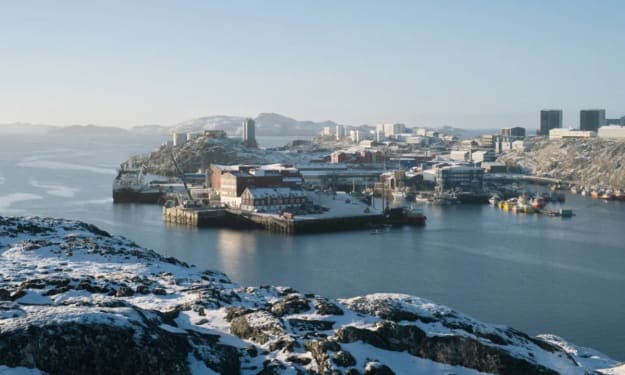
The Arctic Is No Longer a Frozen Backwater For decades, the Arctic sat quietly on the margins of global politics—remote, frozen, and largely ignored. That era is over. Britain is now in talks with NATO to strengthen Arctic security, acknowledging growing risks posed by Russia and China. In a notable shift, London’s assessment aligns closely with warnings long emphasized by Donald Trump, particularly as he continues to express strategic interest in Greenland. What once sounded like an eccentric fixation has evolved into a serious geopolitical conversation. The Arctic is rapidly becoming one of the world’s most contested regions, and Britain is positioning itself to play a larger role. Why Britain Is Paying Attention Now Although the UK is not an Arctic nation, it is an Arctic-adjacent power with significant strategic interests. British officials increasingly view the High North as critical to national and allied security. Melting ice is opening new shipping routes, exposing untapped natural resources, and making military movement easier than ever before. Britain’s talks with NATO focus on intelligence sharing, joint exercises, surveillance capabilities, and protecting undersea infrastructure such as communication cables and energy pipelines. These are not abstract concerns. Any disruption in the Arctic could have immediate consequences for European security and global trade. In short, what happens in the Arctic does not stay in the Arctic. Russia’s Expanding Arctic Footprint Russia is the dominant military power in the Arctic, and it is not slowing down. Moscow has reopened Soviet-era bases, deployed advanced missile systems, expanded its icebreaker fleet, and increased patrols across the region. The Arctic coastline represents a core part of Russia’s nuclear deterrent, making it strategically vital to the Kremlin. From NATO’s perspective, this military buildup creates both risk and uncertainty. Britain, which has long been vocal about Russian aggression—from Ukraine to cyber warfare—sees the Arctic as another front where deterrence must be strengthened before tensions spiral. The concern is not necessarily an immediate conflict, but miscalculation. In a region with harsh conditions and limited communication infrastructure, even minor incidents could escalate rapidly. China’s Quiet but Steady Arctic Ambitions While Russia’s presence is overt, China’s Arctic strategy is more subtle—and equally concerning to Western planners. Beijing calls itself a “near-Arctic state,” a label that has raised eyebrows in Europe and North America. Through investments, research stations, and partnerships, China is laying the groundwork for long-term influence. Britain shares NATO’s concern that China could use civilian projects for dual-use purposes, blending scientific research with intelligence gathering and infrastructure control. As Arctic shipping routes become commercially viable, China’s interest in controlling parts of the supply chain only grows. London’s alignment with these concerns reflects a broader shift in UK foreign policy: China is no longer viewed solely as an economic partner, but as a strategic competitor. Trump, Greenland, and Strategic Reality Donald Trump’s repeated interest in Greenland—most famously his suggestion that the United States should buy it—was widely mocked at the time. Yet behind the headlines was a strategic logic that many Western governments now openly acknowledge. Greenland sits at the heart of the Arctic, hosting vital air and naval routes between North America and Europe. It is also rich in rare earth minerals critical for modern technology and defense systems. As ice recedes, Greenland’s strategic value only increases. Britain’s current position, which aligns with Trump’s warnings about Arctic vulnerabilities, shows how quickly political perceptions can change. What once seemed unconventional now appears prescient. NATO’s Arctic Awakening NATO has traditionally focused on Eastern Europe and the North Atlantic. The Arctic, despite its importance, received less coordinated attention. That is changing. Britain’s talks with NATO reflect a broader alliance effort to integrate Arctic defense into its core strategy. This includes: Increased joint military exercises in cold-weather environments Enhanced monitoring of Russian and Chinese activity Strengthening cooperation with Arctic nations like Norway, Canada, and Denmark Protecting critical undersea and satellite infrastructure For Britain, this is also about credibility. As a leading NATO member and a key military power, the UK wants to demonstrate that it can contribute meaningfully beyond its immediate geography. Climate Change as a Security Multiplier One of the most striking aspects of Arctic security is how closely it is tied to climate change. Melting ice is not just an environmental issue—it is a strategic one. New sea lanes shorten travel between Asia and Europe, while access to oil, gas, and minerals becomes easier. This transformation increases competition and reduces natural barriers that once limited military movement. Britain’s involvement reflects recognition that climate-driven changes are reshaping the security landscape faster than traditional institutions were designed to handle. In this sense, Arctic security is a preview of future global challenges where environmental change and geopolitics collide. Domestic and Diplomatic Balancing Acts Britain’s Arctic engagement is not without challenges. Increased military involvement raises questions about defense spending, priorities, and escalation risks. Diplomatically, London must balance deterrence with dialogue, avoiding actions that could unnecessarily provoke Russia while still protecting allied interests. There is also the question of public awareness. Arctic security lacks the visibility of conflicts like Ukraine, making it harder to sustain political attention. Yet policymakers increasingly argue that prevention is cheaper—and safer—than crisis response. What This Means Going Forward Britain’s talks with NATO mark an important shift in how the Arctic is viewed: not as a distant frontier, but as a central arena in 21st-century security. Agreement with Trump-era assessments on Russia, China, and Greenland underscores how geopolitical realities can outlast political controversies. As competition intensifies, the Arctic will likely become a testing ground for cooperation, deterrence, and strategic foresight. Britain’s involvement signals that mid-sized powers are no longer content to watch from the sidelines. Final Thoughts The Arctic is warming faster than any other region on Earth—and so are the geopolitical tensions surrounding it. Britain’s move to boost Arctic security with NATO reflects a growing consensus that ignoring the High North is no longer an option. Whether driven by Russia’s militarization, China’s quiet expansion, or lessons drawn from Trump’s blunt warnings, one truth stands out: the future of global security may well be shaped at the top of the world, where ice, ambition, and power now intersect.
By Muhammad Hassan6 days ago in Earth



Comments
There are no comments for this story
Be the first to respond and start the conversation.