
New Discovery Reveals Mars' Ancient Rivers - A Key to Uncover Signs of Life
NASA's Curiosity Rover Uncovers Clues to Mars' Watery Past

The purpose of this page is to inform and educate the readers about a groundbreaking discovery related to Mars, particularly its ancient rivers, and the potential implications for uncovering signs of life on the red planet. The page aims to share recent findings from NASA's Curiosity rover mission and their significance in the context of Mars' geological history and habitability.
The target audience for this page includes:
- Science Enthusiasts: Individuals interested in space exploration, planetary science, and discoveries related to Mars.
- General Public: Those who have a curiosity about space and astronomy, regardless of their scientific background.
- Educational Institutions: Teachers, students, and educators looking for relevant and exciting content to discuss in classrooms or use for educational purposes.
Desired Action After Reading:
After reading this page, the intended outcomes for the audience are:
- Increased Awareness: Readers should gain an understanding of the recent discovery related to Mars' ancient rivers and why it is significant.
- Appreciation of Mars' Geological History: The audience should develop an appreciation for the scientific efforts to uncover the mysteries of Mars' past, and how this knowledge enhances our understanding of the planet.
- Interest in Space Exploration: The content aims to foster an interest in space exploration and planetary science.
- Consideration of Life on Mars: Readers are encouraged to think about the possibility of ancient life on Mars and its potential implications for the search for extraterrestrial life.
- Inspiration: The page seeks to inspire a sense of wonder and curiosity about Mars and the broader universe.
In summary, the page serves as an informative and engaging platform for sharing a significant scientific discovery, making space science accessible and captivating to a wide range of readers.
Introduction
In a groundbreaking discovery, NASA's Curiosity rover has unearthed compelling evidence of Mars' watery history, shedding light on its potential as a hospitable planet in ancient times.
A team of researchers, led by Benjamin Cardenas, a geoscientist at Penn State University, meticulously examined data collected by the Curiosity rover and analyzed sedimentary rock samples from Earth's Gulf of Mexico. Their findings, published in Geophysical Research Letters, indicate that Mars was, in its distant past, a "planet of rivers."
These researchers used a combination of images captured by the Curiosity rover, sedimentary rock scans, and advanced computer simulations to detect ancient riverbeds across the Martian landscape.
Distinctive features, known as "bench-and-nose" formations, have been identified by Curiosity. Benches, consisting of steep and shallow slopes, are formed by sediment deposition in river channels. Noses are the shortened ridges created when prevailing winds erode the deposited sediment. These formations suggest that ancient Martian rivers were more extensive than previously thought.
The significance of this discovery extends beyond mere geological curiosity. On Earth, rivers play a pivotal role in the cycles of essential chemicals, nutrients, and sediment, all of which are fundamental for sustaining life. This revelation offers further confirmation of the presence of ancient rivers on Mars, bolstering humanity's quest to uncover signs of life on the red planet.
According to Cardenas, "Our research indicates that Mars could have had far more rivers than previously believed, which certainly paints a more optimistic view of ancient life on Mars." He added, "It offers a vision of Mars, where most of the planet once had the right conditions for life."
The knowledge of Mars' ancient rivers isn't entirely new. The first evidence dates back to Mariner 9, the initial spacecraft to orbit Mars, which transmitted images in 1971, revealing dried-up river channels and floodplains on the Martian surface. Subsequent Mars orbiters and rovers have identified ridges likely formed by sediment in river channels billions of years ago, as well as mineralogical evidence of water's presence.
In conclusion, this new discovery propels our understanding of Mars' geological past and its potential for supporting life. While Mars may not currently host rivers, these findings ignite hope for unlocking the planet's ancient secrets and the possibility of life beyond Earth. As we explore the cosmos, this revelation reminds us that Mars, with its mysterious past, continues to captivate and inspire humanity.
Sources NASAMars
About Author expertise:
Michael B. Norris is a dedicated space enthusiast with a passion for all things related to the cosmos. With a background in astronomy and a lifelong fascination with the universe, Michael's expertise extends to various aspects of space exploration, astronomy, and the latest developments in space science and technology. He has a proven track record of delivering informative and engaging content that brings the wonders of the universe closer to the public. Michael's commitment to sharing his enthusiasm and knowledge of space makes him a valuable source of information and inspiration for space enthusiasts and curious minds alike. we are a seasoned contributor to our Google News publication.
About the Creator
Michael B Norris (swagNextTuber)
As a seasoned Writer, I write about tech news, space, tennis, dating advice
About author visit my Google news Publication https://news.google.com/publications/CAAqBwgKMODopgswyPO-Aw
Medium bio https://medium.com/@swaggamingboombeach
Keep reading
More stories from Michael B Norris (swagNextTuber) and writers in Earth and other communities.
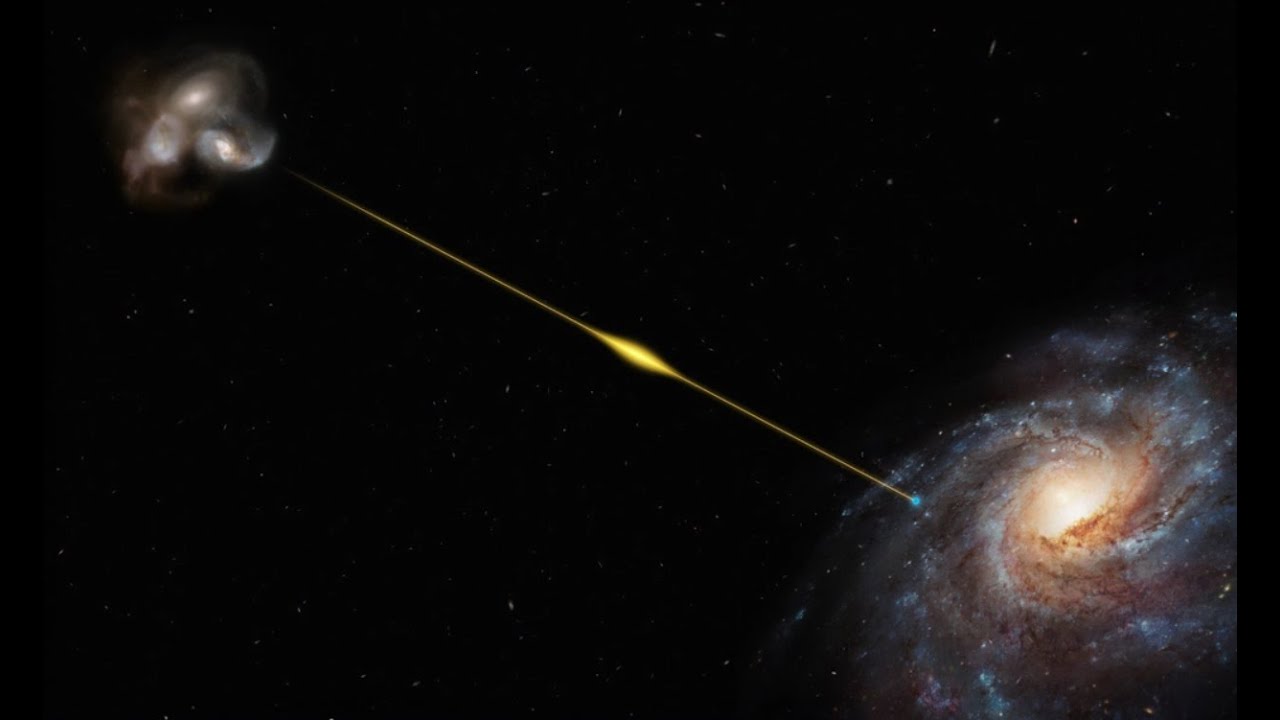
A Cosmic Mystery Unveiled: Radio Signal from 8 Billion Years Ago
This page is to inform and educate a general audience, including science enthusiasts and the curious public, about the recent discovery of an ancient fast radio burst (FRB) known as FRB 20220610A. The page aims to convey the significance of this discovery in the field of astronomy and the mysteries surrounding FRBs.
By Michael B Norris (swagNextTuber)2 years ago in Earth
“Make America Go Away”: Spoof MAGA Caps Soar in Popularity Amid the Greenland Crisis
Political slogans have always been powerful, but in today’s hyper-connected world, they often take on a life of their own. In recent weeks, a new phrase has been popping up across social media, protests, and online marketplaces: “Make America Go Away.” Printed boldly on red caps that closely resemble the iconic MAGA hats, the slogan is a pointed parody—and it’s rapidly gaining popularity amid renewed tensions surrounding Greenland and U.S. foreign policy rhetoric.
By Aarif Lasharia day ago in Earth
Smart phones, Humans and Aliens.
WARNING. I will be tapping into one of your favorite creative tensions: The absurdity of humans worshipping their glowing rectangles as if they were tiny oracles. There’s something deliciously poetic about that contradiction, and it lends itself beautifully to an instructive proviso.
By Novel Allen5 days ago in Poets



Comments
There are no comments for this story
Be the first to respond and start the conversation.